Hark, adventurer! You hold in your mind a grand design—a board game of mythic proportions. You feel the call of Kickstarter, the modern forge where such dreams are hammered into reality, where cardboard and ink become quests that unfold upon tables across the realms. Heed this call, but know this: it is not a portal of instant success, but a perilous and rewarding quest in its own right.
This path demands more than just a brilliant idea. It requires cunning, community, and the courage to see your vision through from a whispered rumour to a treasured artifact in a gamer's collection.

Before you dare speak of funding goals or stretch goals, you must undertake a period of quiet study. Every legendary Kickstarter campaign begins not with a thunderous launch, but with months of careful reconnaissance. The world of tabletop gaming is a vibrant, bustling kingdom filled with wonders. You must understand where your creation will make its mark.
Consider the titans of the craft. Gloomhaven was no mere dungeon crawl; it was a living world, a legacy where your choices echoed through generations. Deckbuilders like Slay the Spire captured the soul of roguelike video games, translating that addictive "one more run" feeling into a deck of cards. These creators were not just making another game; they were forging a unique experience. So, I ask you, adventurer: what unique magic does your game bring to the table?
To answer that, you must become a seeker of whispers, a diviner of the community's true desires. You must journey to the places where your future players gather and listen to their tales.
This is not about chasing fleeting trends. It is about finding a void in the tapestry of gaming—a yearning that has yet to be fulfilled. Perhaps your game blends the crunch of tactical combat with the soul of a well-told story, a fusion many seek but few find.
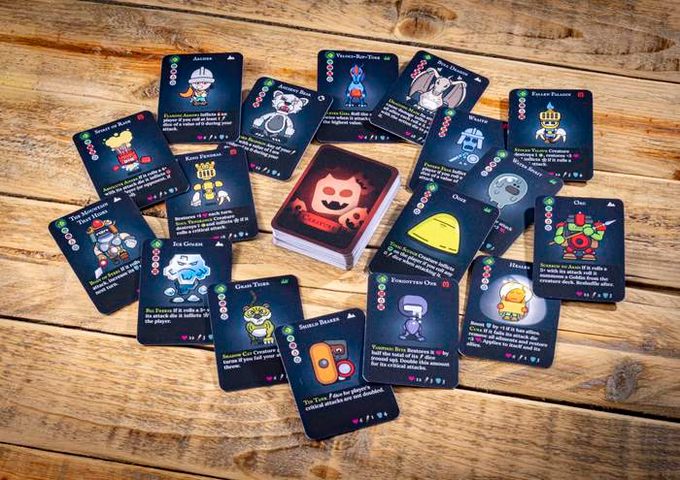
Perhaps it's a roguelite adventure like our own forthcoming creation, TerraClash, a game for ages 12 and up that promises a new quest with every shuffle of the deck. If you wish to see how we are walking this very path, you may follow our pre-launch quest on the TerraClash Kickstarter page.
A triumphant Kickstarter does not simply launch a product. It answers a question the realm has been asking, even if it did not know the words.
Once you have scryed your niche, you may begin to gather your first followers. These are not mere onlookers; they are your founding members, your inner circle. Begin to share visions of your work. Unveil a stunning piece of character art, a clever card mechanic, or a fragment of your world's forgotten lore.
Engage with those who answer the call. Ask for their wisdom. Listen to their prophecies.
This sacred work builds a small, passionate fellowship that will be your vanguard on launch day. They will be the first to pledge their support, the first to spread the word, and their early fervour will summon the momentum you need. Taking the time to build this foundation is a critical strategic decision, and you can find more of our thoughts on that kind of planning in our guide on how to improve decision making skills.
Consider your Kickstarter page not as a merchant's stall, but as the first chapter of your game's epic saga. It is the enchanted gateway through which a curious traveller becomes a sworn ally. This is your moment to draw back the veil and invite souls into the world you have so carefully woven. Your quest is to make it so compelling, so clear, and so imbued with passion that backing your project feels like accepting a quest of their own.
Your campaign's moving picture is your opening incantation, and it must be potent. Forget a dry, robotic recitation of features. This is your call to adventure. You have but 15-30 seconds to seize a wanderer's attention before they continue their journey. Hook them instantly. Show them the world, hint at the stakes, and offer a glimpse of your beautiful artifacts in action.
You must convey the feeling of playing your game—the agony of a fateful dice roll, the genius of a perfectly timed spell, the camaraderie of the fellowship around the table. If you can conjure that energy, you are halfway to victory. Learning how to create compelling product videos is a non-negotiable skill for any modern quest-giver.
Once your vision has them entranced, the rest of your scroll must deliver its promise. None wish to read a great wall of unadorned text, so break your tale into captivating verses and make your page a visual feast.
When speaking of the rules, address your potential backers as you would a friend at your own hearth. Banish dense, technical jargon. Weave the theme into your explanations. Do not just explain how a mechanic works; explain why it exists in your world. Think of a game like Terraforming Mars – every single action feels tethered to the grand theme of breathing life into a dead world. That is the level of immersion you must seek.
Your campaign page is a portal. Every word, every image, every sigil must serve to transport the backer from their screen directly to your game table.
Structuring your rewards is a delicate art. You must find the balance between offering great value and ensuring your quest is sustainable. My counsel? Keep your offerings clear and simple. A confusing labyrinth of choices leads to a paralysed mind, and a potential ally will simply turn away.
A time-honoured structure often appears thus:
Make the value of each tier immediately apparent. Show them exactly what treasures their contribution will earn. This kind of thoughtful planning is a common thread among the best strategy board games that shatter their funding goals on Kickstarter. Your page is a solemn promise, an open invitation to an adventure you are all about to share.
You have designed the game, you have planned the rewards. But a Kickstarter campaign does not simply spring forth from the ether and succeed. In truth, a glorious board games kickstarter does not truly launch on day one; it arrives on a wave of anticipation you have spent months conjuring. This is where the real magic happens.
We now move beyond the artisan's workshop and into the court of public opinion. You must rally a legion of loyal backers who are not just ready, but eager to pledge their support the moment the gates open.
Consider the great bards and sages of the tabletop world—channels like The Dice Tower or Shut Up & Sit Down. Their words carry immense weight. A single positive prophecy from a herald your audience trusts can be the difference between a sputtering campaign and one that smashes its funding goal in mere hours.
But beware a novice’s folly: do not simply cast a prototype into the void and hope for a favourable omen.
Your approach must be strategic. Devising a plan for effective content creation is essential. You are not just sending them a product; you are gifting them an experience to share. Equip them with all they need to create their own great works: a polished prototype, a clear summary of the rules, and access to your finest art.
Building these alliances takes time and genuine respect. Follow their chronicles, learn what games stir their passions, and pen a personal missive. A generic, copy-pasted scroll is a one-way ticket to the forgotten archives.
A trusted reviewer is not a magical sales-golem you command. They are a powerful, independent ally. Treat them as such, and your alliance will be a source of immense strength.
Your potential backers are already gathered in the digital taverns of the internet. Forums like BoardGameGeek (BGG) and subreddits like r/boardgames are the vibrant heart of the tabletop kingdom. You must have a presence there.
Establish your game's page on BGG as soon as you have worthy art and a solid concept. This page will become your embassy in the community. It is the perfect place to:
Every one of these interactions forges a bond. When you treat the community not as a source of coin but as partners on your quest, they become your most ardent champions. This collaborative spirit is what makes the best cooperative board games so special, and the same principle applies here.
Your goal in the pre-launch phase is to build anticipation to a fever pitch. You seek a tidal wave of support on day one. You achieve this by creating an aura of mystique, slowly revealing the wonders of your game. Observe how grand sagas like Magic: The Gathering unveil a new set—they tease cards, reveal lore, and set the community alight with speculation.
You can conjure the same magic on a smaller scale. Reveal one of your hero classes each week on your social channels. Post a short story from your game's world. Let your followers vote on the name for a new location on the map.
Each small revelation gives people a reason to speak of your game and, crucially, to sign up for your launch-day summons. It transforms the pre-launch from a tedious wait into an interactive event.
Games with rich worlds and intriguing mechanics, like our own deckbuilding adventure, TerraClash, thrive with this approach. If you follow our Kickstarter, you’ll see exactly how we’re putting these ideas into practice to summon our own legion. This is your chance to make your board games kickstarter launch a true event, one that the army of backers you gathered yourself cannot wait to attend.
You have pressed the launch button. The gates are open, and your campaign roams the wild lands of the internet. This is it—the next 30 days are a whirlwind, a crucible where good ideas are forged into legendary campaigns. It is an exhilarating and, let us be frank, often exhausting trial that demands your full attention. You are no longer just a game designer; you are the campaign master, the lead storyteller, and the captain steering this vessel through storm and calm.
Your new daily ritual? The campaign update. This is no dry progress report; think of it as your daily dispatch from the front lines. It is your chance to share a page from your creator’s journal. Post some behind-the-scenes art, reveal a snippet of lore about a fan-favourite character, or simply share your unbridled excitement. Every update is an opportunity to fan the flames and remind backers they are part of a living, breathing story.
This entire process is about rallying people to your banner—moving from making initial connections to building a genuine community that will last for ages to come.
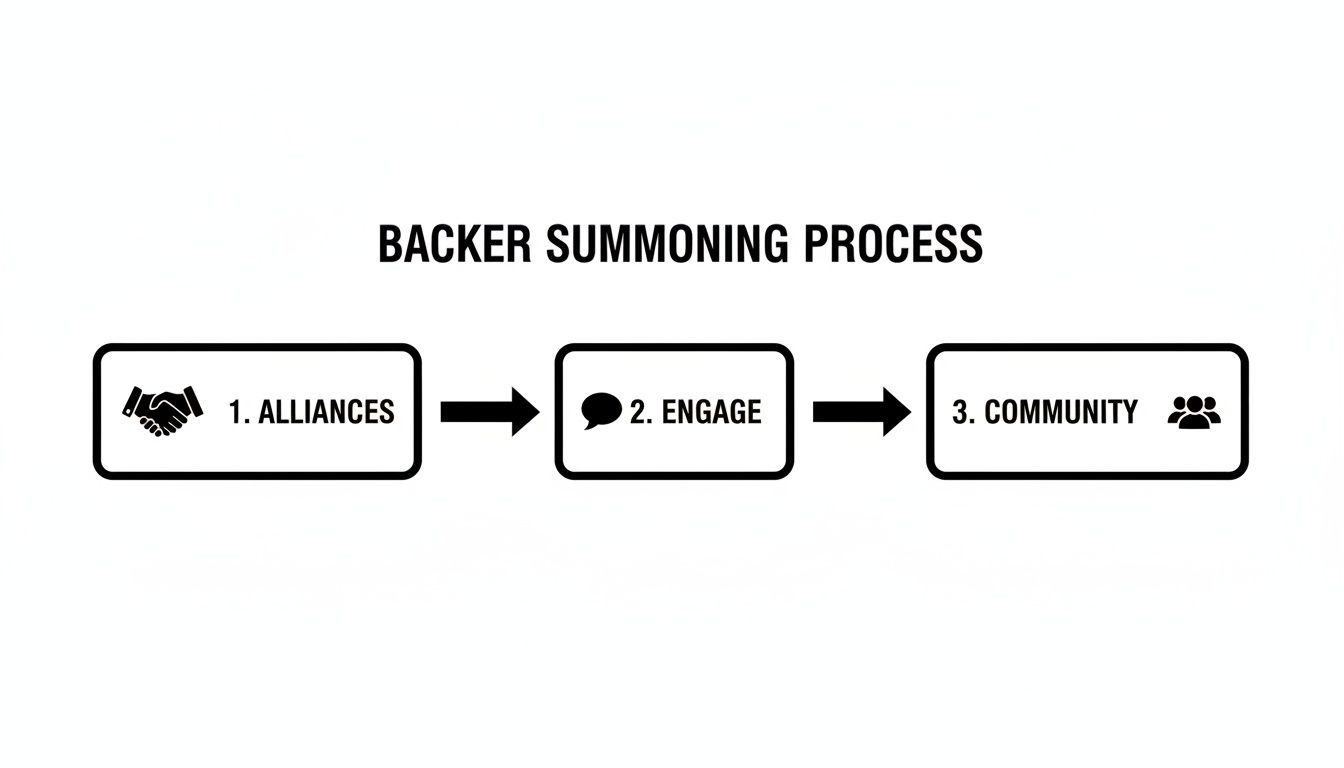
A successful campaign is not a singular event. It is a continuous cycle of outreach, engagement, and nurturing the community you have built.
As the funding total climbs, you will begin to reach those milestones you so carefully plotted. This is the moment to unveil your stretch goals. These are not mere trinkets; they are glorious new upgrades that make the game better for everyone. A well-timed reveal, like transforming cardboard tokens into chunky, screen-printed wood, can inject a huge burst of energy right when you face the dreaded mid-campaign doldrums. For a masterclass in this arcane art, look to the chronicle of the Exploding Kittens campaign; they turned stretch goals into an unstoppable event.
Simultaneously, your comments section will transform into a bustling tavern, filled with questions, ideas, and excited chatter. Treat this space as sacred ground. Be present every single day. Answer questions swiftly and clearly. When a backer offers a thoughtful suggestion, truly listen. You may not act upon every idea, but simply acknowledging their wisdom builds an incredible amount of goodwill and a truly collaborative spirit.
Your comments section is a direct reflection of your campaign's soul. A positive, helpful, and engaged community is one of your most powerful assets. It shows newcomers that this is a quest worth joining.
Remember, your backers are your patrons and your allies. Their feedback is a gift. A well-managed comments section transforms a simple pledge into a true partnership—a shared quest where everyone feels heard. It shows you are a creator who cares, not just about your game, but about the people breathing life into it.
It is no secret that the passion for tabletop gaming burns brightly, but some realms shine with a particular fervour. In the United Kingdom, for instance, board games have utterly dominated Kickstarter's most-funded projects, showing the unwavering dedication of UK backers.
As of January 2025, a stunning four out of the five top-funded Kickstarter projects in the UK were board games. The undisputed champion was Dark Souls: The Board Game, which summoned a staggering £3.77 million in pledges. That is not just a successful board game; that was the most successful project on the entire platform in the region. You can discover more about these successful UK projects and behold the numbers for yourself.
Running a live Kickstarter is an art. It’s a delicate dance of maintaining hype, managing expectations, and building a genuine community. Games with deep lore and high replayability, like our own roguelite deckbuilder, TerraClash, are perfectly suited for this kind of engagement. If you wish to see how we put these principles into practice, be sure to follow the TerraClash Kickstarter journey.
You are the Dungeon Master of this campaign. Lead with wisdom, communicate with passion, and you will guide your fellowship to a triumphant finish.
The campaign clock has struck zero, the funding goal is a distant memory, and the celebratory horns have sounded. Victory! But hold, adventurer, this is no time for rest. The true quest—the one that will forge your reputation in song and legend—is just beginning. A creator’s most sacred vow is not made in the heat of the campaign; it is kept in the solemn promise of fulfilment. Now, you must deliver the treasure.
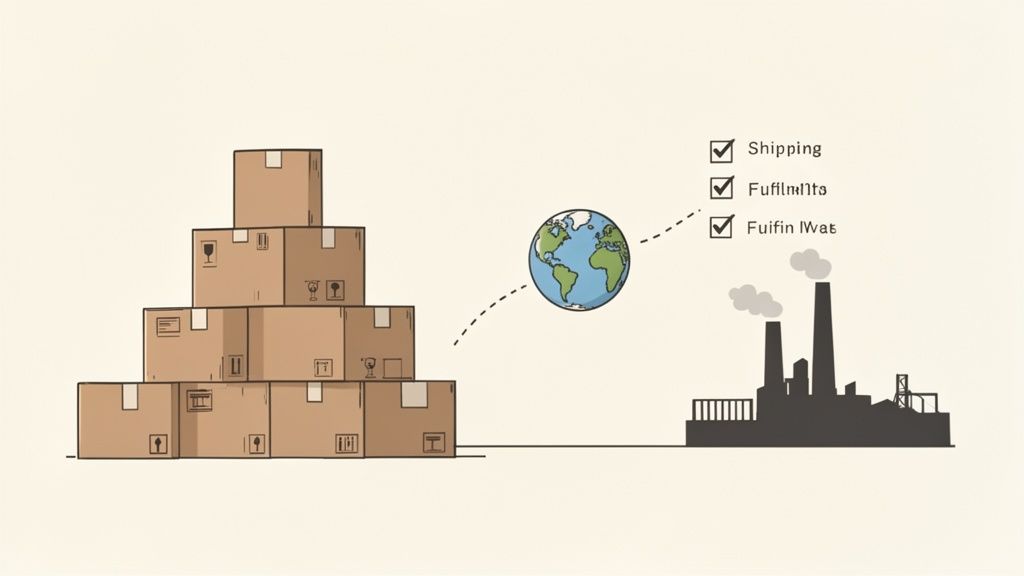
This post-campaign odyssey is where legends are made or broken. It is a marathon, not a sprint, fraught with its own unique perils—from tangled supply chains and cryptic shipping tables to keeping your backers' spirits high during the long, patient wait. Master this final trial, and you are not just shipping a game; you are building a legacy that will rally supporters for every quest to come.
First, you must transform all those digital pledges into a real, physical game. This means forming an alliance with a manufacturer, a critical partnership that will literally shape the quality of your creation. Do not simply seek the cheapest offer; find a forge with a sterling track record in tabletop games. Their experience is worth its weight in gold.
You must provide them with meticulously prepared schematics. I mean perfect schematics. Every card back, token, and rulebook page must be flawless to avoid costly misprints. Expect a council of back-and-forth as you review digital proofs, align colours, and finally, receive that glorious pre-production copy (PPC) into your hands. Scrutinise it. This is your final chance to catch a stray rune or a misaligned sigil before thousands of copies are struck.
The final game that arrives on a backer's doorstep is the ultimate testament to your campaign. Do not compromise on quality in the final hour; it is the physical embodiment of the trust your backers placed in you.
Be warned: this stage requires great patience. Manufacturing and freight shipping can take months, and delays are practically part of the adventure. While the forge works its magic, your next critical task begins.
While your game is being printed and shipped across the great oceans, you have one primary duty: speak to your backers. Silence is your enemy; it breeds doubt and despair. Consistent, transparent communication is the spell that keeps faith alive. A detailed update at least once a month is the bare minimum.
Bring them along on the voyage! Share images from the factory floor. Post a dispatch when the cargo is loaded onto the ship. Let them know when the games have made port and are clearing customs. Even ill tidings are better than no news at all, so long as you deliver them with honesty and a clear plan to overcome the obstacle.
This commitment is what separates a good creator from a legendary one. It is a philosophy you see in action with creators prepping for their own great quests, like the team behind TerraClash. Keeping your community informed long after you have their coin is how you turn backers into a true fellowship. You can see how they are building their own community by signing up for notifications on the TerraClash Kickstarter page.
Finally, we arrive at the last hurdle: logistics. Getting thousands of boxes from a warehouse to individual doorsteps across the globe is a Herculean task. This is no time for a solo mission. Partnering with a reputable fulfilment company that specialises in board games kickstarter projects is not a luxury—it is essential. They understand the arcane complexities of international shipping, customs, and proper packaging.
The desire for these games is booming, especially in lands like the UK. In 2024 alone, the UK playing cards and board games market generated an estimated USD 1,049.0 million in revenue. That number is prophesied to climb to a staggering USD 1,499.5 million by 2030, fuelled almost entirely by the power of crowdfunding. This growth is a mighty tide, and you can learn more about how crowdfunding is driving this tabletop renaissance.
After the dust settles, this entire post-campaign phase can be broken down into a few key quests.
Here is a quick look at the critical missions you will undertake once the campaign ends. Think of it as your adventure log for the final leg of the journey.
| Phase | Key Objective | Pro-Tip from the Guild |
|---|---|---|
| Pledge Management | Finalise orders and collect shipping info. | Use a pledge manager like BackerKit or Gamefound to handle add-ons and addresses. It's a lifesaver. |
| Manufacturing | Oversee the production of your game. | Always, always get a physical pre-production copy. Digital proofs cannot show you everything. |
| Freight & Customs | Get the games from the factory to your fulfilment centres. | Work with a freight forwarder. They know how to navigate the absolute nightmare that customs can be. |
| Fulfilment | Ship individual parcels to every single backer. | Vet your fulfilment partner carefully. Check reviews and talk to other creators about their experiences. |
| Community | Keep backers informed and happy. | Post regular, honest updates. Share pictures, share setbacks, share everything. |
Navigating these stages is the final boss battle of your Kickstarter. It is tough, it’s complex, and it demands your full attention. But when you begin to see backers post images of your game on their tables, their faces alight with excitement—that is when you will know you have truly won. You kept your vow.
When you are deep in the dungeon of planning your first Kickstarter, the same questions often arise like spectral guardians. I have faced them, and I have seen countless other creators ask the same things. Let us tackle some of the great beasts.
This is the dragon's hoard question, is it not? The honest answer is: it varies as widely as the lands themselves. You could launch a smaller project for a few thousand pounds, while grander, miniature-heavy games can easily demand tens of thousands.
Your greatest expenses are almost always these four titans:
My most vital counsel: Budget meticulously before you even dream of your funding goal. A miscalculation here is one of the swiftest paths from a successful campaign to a financial curse.
You cannot simply appear on launch day and expect a crowd to materialise. You must begin gathering your fellowship months in advance.
Be active where your future players already convene. I speak of places like the forums on BoardGameGeek or joining the discourse on subreddits like r/boardgames. Do not just shout about your game; truly engage. Share fragments of your design process, ask for feedback on art, and simply be a member of the community.
The single most potent artifact in your arsenal is an email list. Create a simple landing page and begin collecting addresses. Having a dedicated list of allies ready to pledge on day one is what summons that massive initial surge, which is crucial for any successful board games Kickstarter.
The enchanted number for most tabletop games tends to be around 30 days. It is long enough to build momentum and reach those who might miss the initial summons, but not so long that everyone (including you!) suffers from campaign fatigue.
You will see some quests run for shorter periods, like 15-21 days. This can create a powerful sense of urgency, but it is a high-risk, high-reward gambit. It truly only works if you arrive with a large, fervent community that is ready to charge from the very beginning.
Yes, but do so with a sage's wisdom. Stretch goals, when wielded correctly, are fantastic for keeping excitement high and encouraging people to spread the word.
The key is to offer boons that genuinely add value—like upgrading cardboard tokens to wood, or adding a new hero to the roster—without inflating your production costs or creating a logistical hydra for yourself.
Never, ever conjure them from thin air as you go. Plan your first several stretch goals before you launch. Improvising here is a recipe for disaster.
The road to creating a board game is an adventure in itself. We are on that very journey right now with TerraClash, blending the tactical depth of deck-building with the unpredictable fun of a roguelite RPG. If that sounds like your kind of quest, we would be honoured for you to follow along.
Follow the TerraClash Kickstarter Adventure