Gather 'round, adventurers, and listen well. Beyond the well-trod paths of the mainstream market lies a realm brimming with untold tales and wondrous artefacts: the world of Kickstarter games. Imagine a grand bazaar where artificers and loremasters—indie creators with visions bright and bold—present their creations not to stern-faced guild masters, but directly to you, the heroes who will bring their worlds to life. This is the crucible where the next legendary tabletop adventure is forged, not in a corporate fortress, but by the will of a fellowship as passionate as the creators themselves.
You have arrived at the gates of Kickstarter. Welcome, traveler! This is a nexus of ideas, a place where game designers, artists, and storytellers can unveil their wildest concepts directly to the champions who will wield them. Here, no council of merchants decides what is "marketable." The only measure of worth is the gleam of adventure in a player's eye.
It is much like a quest board nailed to the mightiest oak in a bustling town square. A creator, armed with a brilliant concept for a new game—perhaps a sprawling board game epic like Gloomhaven or a cunning deckbuilder such as Slay the Spire—lays out their grand design. They will show you breathtaking art, whisper the secrets of their game's mechanics, and grant you a glimpse into the world they have built. Instead of seeking a single wealthy patron, they call upon a whole community of heroes to help bring their vision into being.
Backing a Kickstarter game is far more than a simple trade. It is a vow of fealty. You are telling a creator, "I believe in your quest, and I shall lend my strength to see it fulfilled." You become a part of that game's sacred origin story.
This direct pact between creator and community is precisely why Kickstarter is a crucible of innovation. It’s where we discover bold, imaginative titles that might otherwise have remained mere whispers on the wind. Games with deep, branching narratives drawn from fantasy epics or truly experimental mechanics can thrive here because they are judged on the excitement they spark, not on projected coffers of gold.
When you pledge your support, you take on a role far greater than that of a mere customer. You become a collaborator, a patron, and a vital part of the forging process.
Let us break down this sacred pact:
| Your Role As A Backer | What You Contribute | What You Receive In Return |
|---|---|---|
| The Patron | Your coin is the spark that ignites the forge, providing for art, manufacturing, and transport across the realms. | You secure your own copy of the game, often at a favorable price and with exclusive treasures not found in common markets. |
| The Oracle | Your wisdom and insights. Creators often look to their backers to help refine ancient rules, choose powerful art, or enhance magical components. | The satisfaction of helping shape the final artefact and being part of a creative fellowship. |
| The Herald | Your voice! Spreading the word of the quest helps rally more heroes to the cause, unlocking greater power for all. | A mightier, more feature-rich game as the campaign grows, plus the honour of being an early champion. |
This collaborative spirit is what makes the entire ritual so special. It's a shared journey from a whispered legend to a physical artefact you can hold in your hands.
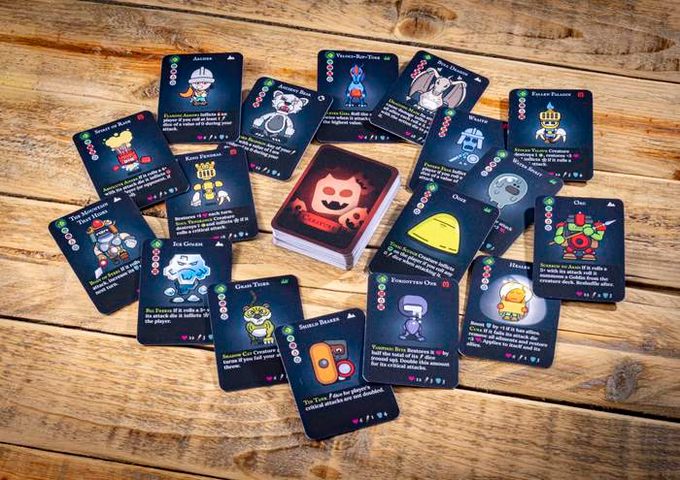
When you decide to support a project like the roguelite deckbuilder, TerraClash, you’re not just acquiring a game. You're stepping forth to help forge a new world.
So, you've found a quest that stirs your spirit and you're ready to join the fellowship. But what does it mean to "back a project" on Kickstarter? Think of it less like ordering from a merchant's catalogue and more like joining the development party as an early patron. Every campaign follows a similar path, and understanding its twists and turns is key to becoming a wise and powerful backer.
First, you will behold the Pledge Tiers. These are simply the different ways you can lend your support. A small offering might grant you a word of thanks and access to the campaign's secret missives. A standard pledge usually secures the core game itself. Then you will often see deluxe or "all-in" tiers, which are laden with exclusive boons—think finely sculpted miniatures, enchanted components, or scrolls signed by the creator. It is all about finding the level of support that feels true to your calling.
This is where the true magic awakens. Once a campaign reaches its initial funding goal, the creators often reveal Stretch Goals. These are bonus upgrades and extra content that are added to the game for everyone once the campaign reaches new, higher funding milestones.
It’s a brilliant way to keep the fires of adventure burning. One goal might upgrade the cardboard tokens to hefty metal coins. The next might add a whole new hero to the roster. It transforms the funding period into a collaborative quest where every single pledge helps make the final prize greater for the entire fellowship.
Once the campaign's final bell tolls and the project is successfully funded, the real work begins. The next phase is Fulfilment—the long road of manufacturing, shipping, and getting the game from the forge into your hands. A good creator will always provide a clear chronicle of the journey ahead, even if it's just an estimate. Delays can occur, as dragons can block mountain passes, but transparency is the most potent of spells.
This timeline gives you a rough idea of what that journey looks like, from the spark of an idea to the finished treasure chest on your shelf.
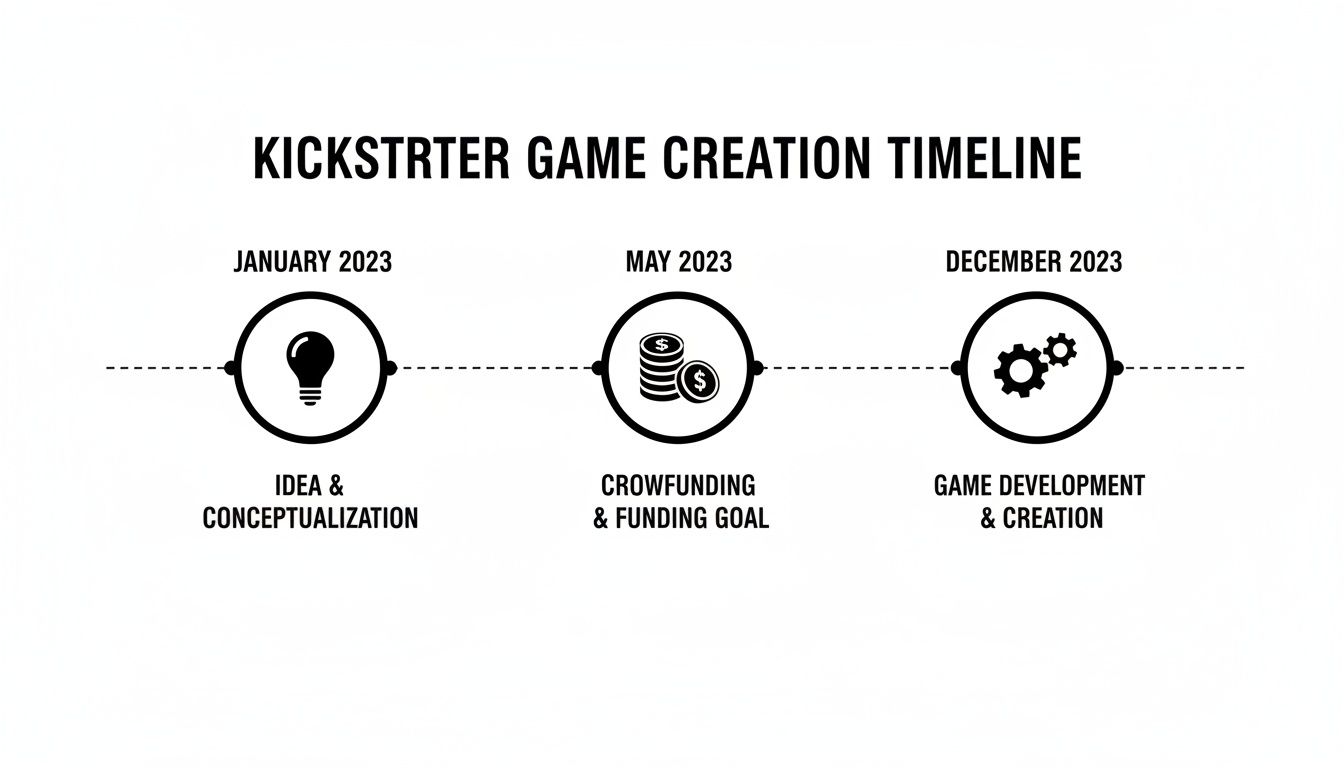
As you can see, the crowdfunding part is just one chapter in a much larger saga. The journey afterwards requires a great deal of patience from backers.
Mastering these fundamentals is the first step to becoming a confident backer. You are not just a customer here; you are an investor, a supporter, and a crucial part of bringing a creative vision to life. Whether it’s a sprawling epic or a tight roguelite deckbuilder like TerraClash, knowing the path makes the whole experience far more rewarding.
Hark, adventurer, you are ready to delve into the wild world of Kickstarter games. It is like a sprawling continent, packed with gleaming new quests all vying for your attention. With so many banners raised, how do you spot the legendary campaigns and sidestep those that are naught but illusions? Let us arm you for the journey.
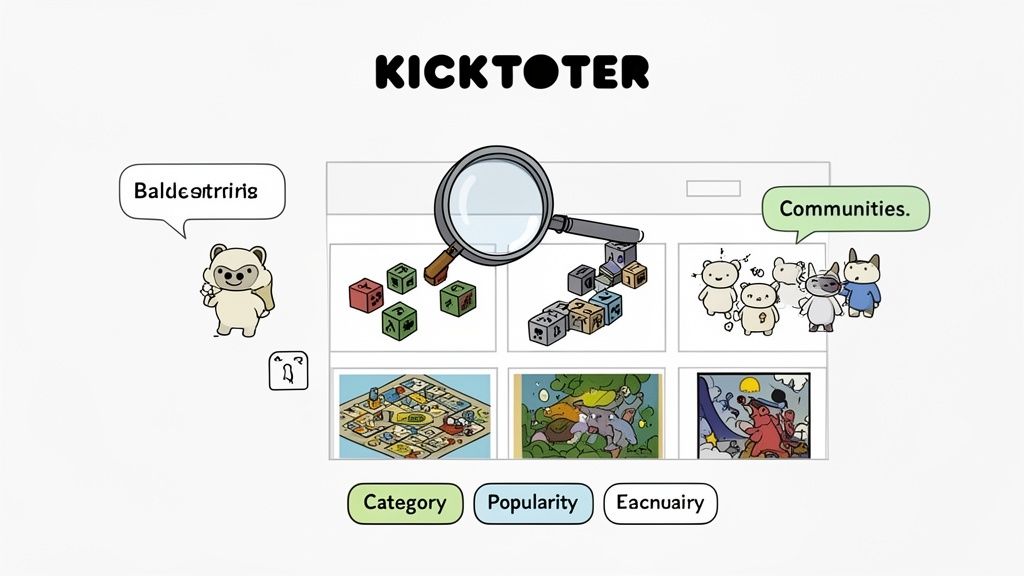
Your first stop is, of course, the Kickstarter platform itself. Think of its search filters and categories as your compass and map. Venture straight to the "Tabletop Games" section, then begin to narrow the paths. Are you seeking card games, miniatures, or a weighty strategy epic? This is your first step to unearthing true hidden gems.
But any seasoned hero knows the best intelligence comes from the community. Do not linger only on Kickstarter; venture forth and speak with the people. Forums like BoardGameGeek (BGG) are incredible archives of player knowledge and honest reckonings. Social media is also a treasure trove—in hidden groups and forums, news of the most exciting projects spreads like wildfire.
Once you have a few potential quests on your radar, it is time to play the seer. You must learn how to read the signs of a well-run, trustworthy campaign. Not all calls to adventure are created equal, and a creator who is serious about their quest will leave plenty of positive omens.
Look for these hallmarks of a solid project:
The passion for tabletop quests is particularly strong in certain lands. In the United Kingdom, for instance, board games have completely dominated Kickstarter's most-funded projects, claiming four out of the top five spots. This shows the UK's immense appetite for immersive tabletop games, with titles like Dark Souls - The Board Game raising a staggering £3.77 million. It is clear this community values a good saga and rock-solid mechanics.
Beyond the gleaming campaign page, you must look at the heart of the game itself. What makes a game truly legendary? It is one that tells a new tale every time you bring it forth. That is why you should always be on the lookout for mechanics that promise deep replayability.
The greatest Kickstarter games are not just a box of rules and components; they are engines for forging sagas. They give you and your friends the tools to create your own epic tales, battle after battle, quest after quest.
When you’re sizing up a new project, look for games that blend accessible rules with true strategic depth. You want something that’s easy to teach but takes a lifetime to master. Unique art and a compelling world are also crucial—they are what pull you in and make every moment feel significant. Games that master this balance often become the cornerstones of a great collection. Whether you adventure solo or search for the best cooperative board games, high replayability is the key to a game that will be cherished for ages.
Ultimately, you’re looking for that spark—a clever idea, a beautiful world, or an ingenious mechanic that just seizes you. Trust your instincts. Your next favourite game is out there, just waiting to be discovered. With a game like TerraClash, for example, that spark might be the promise of an ever-changing world, ensuring no two adventures are ever the same.
Right, you have sifted through the endless scrolls of Kickstarter games, spotted a project that genuinely stirs your soul, and now you hover over that 'Back this project' button. This is where true strategy comes into play. Pledging is not just about tossing coin at a grand idea; it’s a calculated decision about how deep you wish to venture.
There is no single path for all heroes. Think of it as deciding how invested you want to be, both financially and emotionally, in the game's journey from a concept to a chest of wonders on your shelf.
Some experienced backers tread cautiously, especially with a new creator. They might offer a symbolic £1 or £5 pledge. This is not just a small donation; it is a clever stratagem that grants them access to the pledge manager after the main campaign ends. It's a low-risk way to keep a foot in the door, watch how the quest unfolds, and decide later if they want to upgrade to a full copy.
On the other hand, you have the backers who are completely enchanted by the vision and dive straight into the deep end. They go ‘all-in’, seizing the highest tier to ensure they receive every single expansion, unlocked stretch goal, and shimmering exclusive component on offer. It's a mighty commitment, but for the right game, it often represents the greatest value.
So, how do you decide? It truly boils down to your treasure hoard and your faith in the project. Here are the most common ways heroes back games:
Discerning the right pledge level is a balancing act. You're weighing the upfront cost against the potential value of all the extras and exclusives you might receive. In a way, learning how to improve your decision making skills is a massive boon when navigating the tempting world of Kickstarter campaigns.
Do not forget that your contribution is not just about coin. The comments section of a campaign page is its beating heart—a place where backers gather to share their excitement, ask sharp questions, and offer genuine wisdom.
A pledge shows you believe in the artefact. A comment shows you believe in the ritual. By engaging with the creator and other backers, you are helping to shape the final game.
Never underestimate the power of that collective voice. A thoughtful question can lead a creator to clarify an important rule. A wave of enthusiasm from the community can attract new heroes, pushing the campaign over the line to unlock fantastic new stretch goals for everyone.
Every comment and every pledge, no matter the size, helps bring a new game into the world. When you find a project that truly resonates with you—say, a roguelite deckbuilder like TerraClash that promises endless replayability—your support is what makes it all possible. So, pledge with your head, lend your voice to the fellowship, and relish being part of the forging.
Listen closely, for not every treasure chest you find is filled with gold. Some are mimics waiting to bite, and not every campaign is a guaranteed triumph. As a Kickstarter backer, you walk a path that has its share of pitfalls, and learning to spot the warning signs of a troubled project is a skill you’ll want to master quickly. Knowing what to look for will help you sift through the countless Kickstarter games and put your hard-earned coin behind creators who are truly ready for the journey.
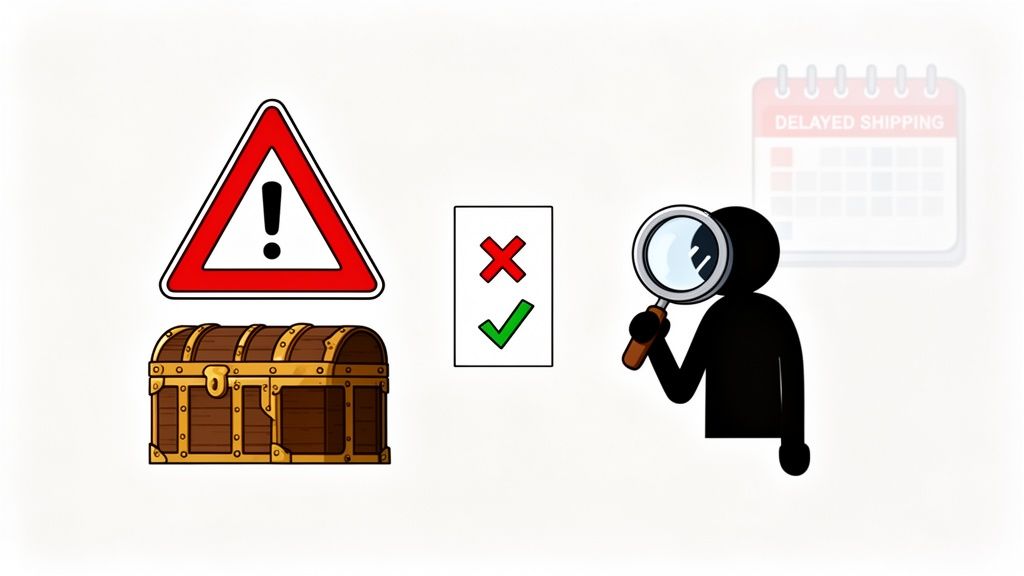
Honestly, the first place I always look is the creator themselves. Do a little scrying. Have they run campaigns before? Did they deliver on their promises? Or is this their very first quest? Everyone must begin somewhere, of course, but a first-time creator means you must scrutinise everything else that much more carefully.
The campaign page itself is your next clue. If it’s all sizzle and no steak—lots of flashy art but thin on actual details—be wary. A cool concept is great, but a real project needs a real plan. I want to see a proper breakdown of the game, a clear rulebook draft, and most importantly, moving pictures of people actually playing it. No gameplay footage often means the game is still just an idea, not a working prototype.
Think of the "Updates" tab on a campaign page as the creator's journal. It is where their true colours really show, for better or worse.
If updates are vague or months apart, that is a massive red flag for me. A creator who is on top of things will be excited to share progress, celebrate hitting goals, and be upfront about problems. Radio silence or fluffy, substance-free posts usually mean things aren't going to plan behind the scenes. Communication is everything in crowdfunding; without it, the project is likely doomed.
A well-run campaign should feel like you're on an adventure with a trustworthy guide. They're keeping you in the loop, pointing out landmarks, and warning you about tricky terrain ahead. If your guide suddenly stops talking, you're probably lost.
Another thing to watch for is wildly unrealistic promises. Is the delivery timeline just too good to be true? Are they promising premium miniatures and a mountain of content for a tiny funding goal? Manufacturing and shipping a board game across the world is a logistical nightmare. Experienced creators know this and build plenty of buffer time into their estimates. Overly optimistic timelines often just scream inexperience.
Even with the best, most transparent creators, some risks are just part of the Kickstarter model. These aren't necessarily red flags that scream "flee," but they are known perils you should be prepared for.
By keeping an eye out for these warning signs, you can back projects with a lot more confidence. You'll learn to spot the creators who communicate honestly, set realistic goals, and aren't afraid to show their work—the kind of creators who are forging something special, like the team behind the TerraClash campaign, who clearly understand what it takes to see a quest through to the end.
So, you did it. The campaign you backed hit its funding goal, the confetti has settled, and everyone’s celebrating a huge success. But this is not the end of the saga. In many ways, the real adventure is just beginning. This next phase is where your patience comes in, bridging the gap between a successful pledge count and a physical game landing on your doorstep.
Once the initial buzz dies down, things can go quiet for a bit. Do not worry, that is normal. Behind the curtain, the creators are deep in spreadsheets, locking in details with manufacturers, and getting everything lined up for production. Welcome to the post-campaign world – it has its own rhythm, and your role shifts from an active backer to a patient patron, trusting the creators to finish their masterpiece.
A few weeks, or sometimes a couple of months, after the campaign closes, an important missive will find its way to you. This is your invitation to the pledge manager, a separate website that acts as the project’s mission control after the Kickstarter ends. This is where you will finalise everything.
Here’s what you’ll typically do in the pledge manager:
Spotted some incredible stretch goals that got unlocked and now regret not aiming for a higher tier? The pledge manager is your chance to upgrade. It’s a crucial step that gives the creators the final, accurate numbers they need for manufacturing, so make sure you complete it promptly.
Once you’ve sorted your pledge, the real wait begins. Turning digital designs into thousands of game boxes and shipping them worldwide is a massive undertaking, and it’s rarely a straight line. This is where a creator’s communication skills become just as important as their game design skills.
A great creator won't just disappear after they have your money. They'll bring you along for the ride, sharing updates on the production saga. You'll see photos of component samples, get news of successful print runs, and, just as importantly, they'll be upfront about any snags or delays. These updates are the breadcrumbs that show you the project is still moving forward.
Following along with these updates keeps you connected to the game’s creation. You get a behind-the-scenes look as it all comes together. Honestly, it is one of the coolest parts of backing Kickstarter games. Seeing a creator post the first-ever image of the art for something like goblin magic cards feels like you’ve been let in on a secret before the rest of the world.
The wait can feel long, I will not lie. But the payoff is incredible. When that beautifully designed box finally arrives, you’re not just unboxing a new game. You’re unboxing a project you helped bring to life. You were there from the beginning, and that shared journey makes that first game night feel extra special. It's precisely this kind of experience you can be a part of with indie titles like TerraClash.
Diving into the world of Kickstarter can feel like starting a new adventure. Even veteran backers sometimes have questions about how it all works. Let's clear up a few of the most common ones that pop up.
This is perhaps the greatest point of confusion for newcomers, and it is a crucial one. In short, no, they are very different things.
Think of a pre-order as reserving a copy of a book that's already been written and is off at the printers. You're just putting your name on a finished product. Backing a Kickstarter project is more like becoming a patron for an author who has a brilliant idea and the first few chapters written. You are providing the funds needed to help them actually finish the book and get it published.
You're joining the journey, not just buying something off the shelf. That means you often get exclusive content and a behind-the-scenes look, but it also comes with the understanding that the final product isn't finished yet. It is an investment in a creative vision, and that carries its own unique set of risks and rewards.
If the campaign doesn't hit its funding target by the deadline, nothing happens! Truly, you will not be charged a single coin.
Kickstarter operates on an "all-or-nothing" model. This is a safety net for both you and the creator. It means that creators do not get stuck with a pile of money that isn't enough to actually produce and ship the game, and backers do not have their money tied up in a project that's doomed to fail.
Your pledge is just that—a pledge. It only turns into a real transaction if the campaign is successful. If not, the project is cancelled, and everyone goes their separate ways.
A wise question. You're looking at a project that might not exist for another year, so how do you know if you'll even like it? A good creator will give you plenty of tools to make an informed decision.
Look for a few key things on the campaign page:
Don't forget to scroll down to the comments section. It's a great place to see what questions other backers are asking and how the creator responds. A game that promises easy-to-learn rules but deep strategic potential, like TerraClash, often hits that sweet spot of being accessible while offering a ton of replayability for adventurers aged 12 and up.
The tabletop scene is constantly buzzing with new ideas and incredible projects just waiting to be discovered. If you’re looking for a fresh challenge that blends clever strategy with endless variety and a stunning art style, the journey of TerraClash might be exactly what you're after.
Learn more about the TerraClash Kickstarter campaign