Hark, adventurer! What sorcery is this Magic: The Gathering Prerelease you hear whispered in the taverns and game halls?
Think of it as a scryer’s glimpse into the future. It is a sacred, joyous gathering of mages that occurs at local game stores one week before a new set of arcane cards is unleashed upon the realms. This is your first sacred chance to crack open fresh packs, behold new spells and creatures, and test your mettle in a friendly tournament where every Planeswalker begins their quest anew.
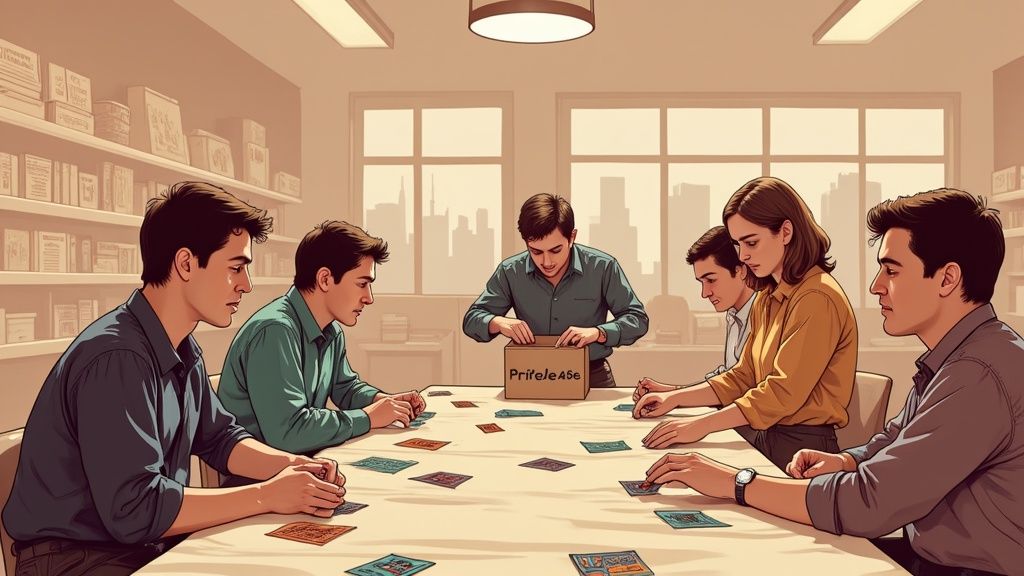
Picture this: you enter your local game store, and the very air hums with mystic energy. It's not just another evening; it's alive with the crinkle of new packs being opened and the collective awe as players discover potent new artefacts. This is a Magic Prerelease, a grand tradition for spell-slingers across all known planes. It’s a unique conclave where you are among the very first to command the magics of a brand-new set.
But do not let the word "tournament" lead you astray. This is no grim, high-stakes battle reserved for archmages. A prerelease is more akin to a grand feast—a celebration of discovery where grizzled veterans and fledgling apprentices stand on equal ground. The goal is not merely to conquer, but to share in the thrill of exploring a new world of spells, creatures, and lore together.
The true beauty of a prerelease is that it is the great leveller. It matters not the size or value of your arcane library back at your tower. Your success here is forged by your wits and how well you can construct a deck from the handful of packs bestowed upon you. It is a pure test of skill and adaptability.
For many mages, this is the essence of Magic. It’s a chance to form alliances where the fellowship itself is the true reward. As one wise guild master told me, the quest is to make every soul feel like a chosen one from the moment they cross the threshold.
This shared, low-pressure quest makes it the perfect gateway for any soul curious about the mystic arts of Magic. At the same time, it’s a cherished ritual for long-time Planeswalkers. It is a unique rite that truly celebrates the deep strategy, breathtaking art, and communal joy that makes this game a legend.
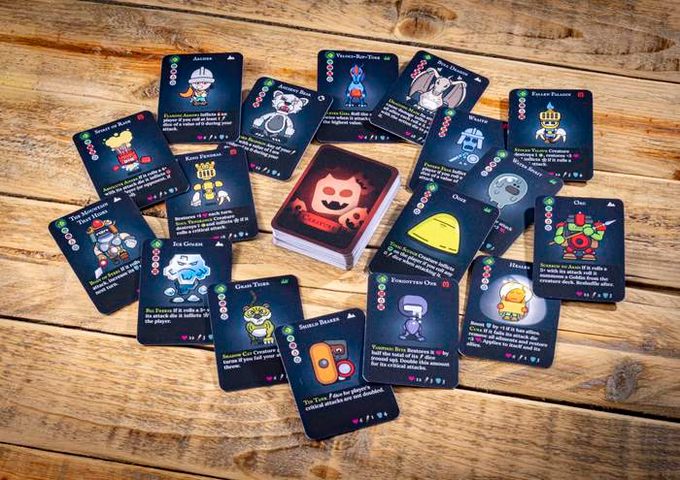
This magical blend of community, early access, and shared discovery is a powerful enchantment that inspires countless other tabletop sagas. You can see its influence in how new realms are born, like the deckbuilder TerraClash, which seeks to summon its own fellowship of dedicated heroes through its Kickstarter quest. That feeling of unsealing a new artefact and immediately putting its power to the test is a universal thrill for gamers.
Ultimately, a prerelease is so much more than a mere tournament. It’s an experience that forges legends, builds friendships, and reminds us all why we gather around the table to weave tales of adventure in the first place. Consider this your official summons to the party.
Right, let's get to the best bit. The Tournament Organiser slides a box across the table, and for the next few hours, it is your entire world. This is your Magic the Gathering Prerelease Pack, and it is so much more than just a box of cards. Think of it as a treasure chest, a puzzle, and an armoury all rolled into one. What you do with what's inside will define your day.
That moment you crack the seal is pure magic. Inside, your main prize is six Draft Booster packs. These are the raw materials you’ll use to forge your deck. Each one is a little bundle of potential—powerful creatures, game-changing spells, and weird artefacts just waiting for a clever player like you to find a home for them.
Before the sands of the hourglass begin to fall on your deckbuilding time, it is wise to lay everything out and survey what the fates have given you. Every single item in your pack has a role to play in the coming battle.
Here's a quick look at the treasure you've just unearthed. This table breaks down exactly what you'll find and what it's for.
| Component | Its Role in Your Quest |
|---|---|
| Six Draft Booster Packs | The heart and soul of your deck. You'll sift through these 90 cards to build your 40-card masterpiece. |
| Foil-Stamped Promo Card | A special, shimmering version of a rare or mythic rare from the set, stamped with the date of the event. It's a fine trophy, but more importantly, you can (and probably should!) channel its power directly into your deck. |
| Spindown Life Counter | A unique 20-sided die, enchanted to help you track your life total. It’s an essential piece of your adventuring gear for the day. |
Getting a good look at your cards is more than just a fun "unboxing" moment. It's your first strategic move. You're a general surveying the troops before a battle, figuring out who your champions are and what your plan of attack will be. If you're new to the game and want to get a better handle on the different kinds of cards you're looking at, our guide on different MTG card types will get you up to speed.
As you spread your cards out, you’ll start to see a shape emerge from the beautiful chaos. Perhaps you've summoned a host of flying creatures, a mountain of powerful red burn spells, or a pair of cards whose synergy is a devastating combination. This is the moment a random pile of cardboard begins to whisper the secrets of the deck it wishes to become.
Your Prerelease pack is a puzzle. Each card is a piece, but not all pieces will fit together. The true skill is looking past the power of a single card and finding the synergies that will actually win you games.
This feeling of discovery, of building something unique from a limited pool of options, is what makes events like this so brilliant. It’s a core part of what makes tabletop games special, and it’s something that inspires us creators to build new worlds. It's the exact same spark that we’re channelling into our own deckbuilder, TerraClash, giving players that same thrill of cracking open something new and forging their own path.
So, listen to what your cards are telling you. Your job is to turn their story into a winning one.
The packs are open. Cards are everywhere. Before you lies a glorious, chaotic pile of potential—your reward and your challenge all at once. This, right here, is the heart and soul of the Magic: The Gathering Prerelease experience. Your next job is to forge a weapon from this raw material: a working, 40-card deck.
Don't worry about lands; the shop—your friendly neighbourhood Tournament Organiser—will have stacks of basic lands for you to use. The real task is figuring out what to do with the ninety-odd cards you’ve just opened. It can feel a bit overwhelming, but there’s a classic, time-tested framework that players have passed down for years to make sense of the madness. It's called B.R.E.A.D.
Think of B.R.E.A.D. as your compass. It’s a simple acronym that helps you sort through your new cards, evaluate their power level, and figure out which ones belong in your deck. It’s all about priorities.
Once you lay your cards out in these piles, you'll start to see a picture emerge. Your strongest colours will be the ones with the best Bombs and Removal. Pick those two colours, then fill out the rest of your deck with your best evasive creatures and solid allies. If you want to dive even deeper into the art of deckbuilding, our guide on how to build a Magic deck has you covered.
This is what you're working with—the raw ingredients from your Prerelease kit that you'll use to cook up your deck.
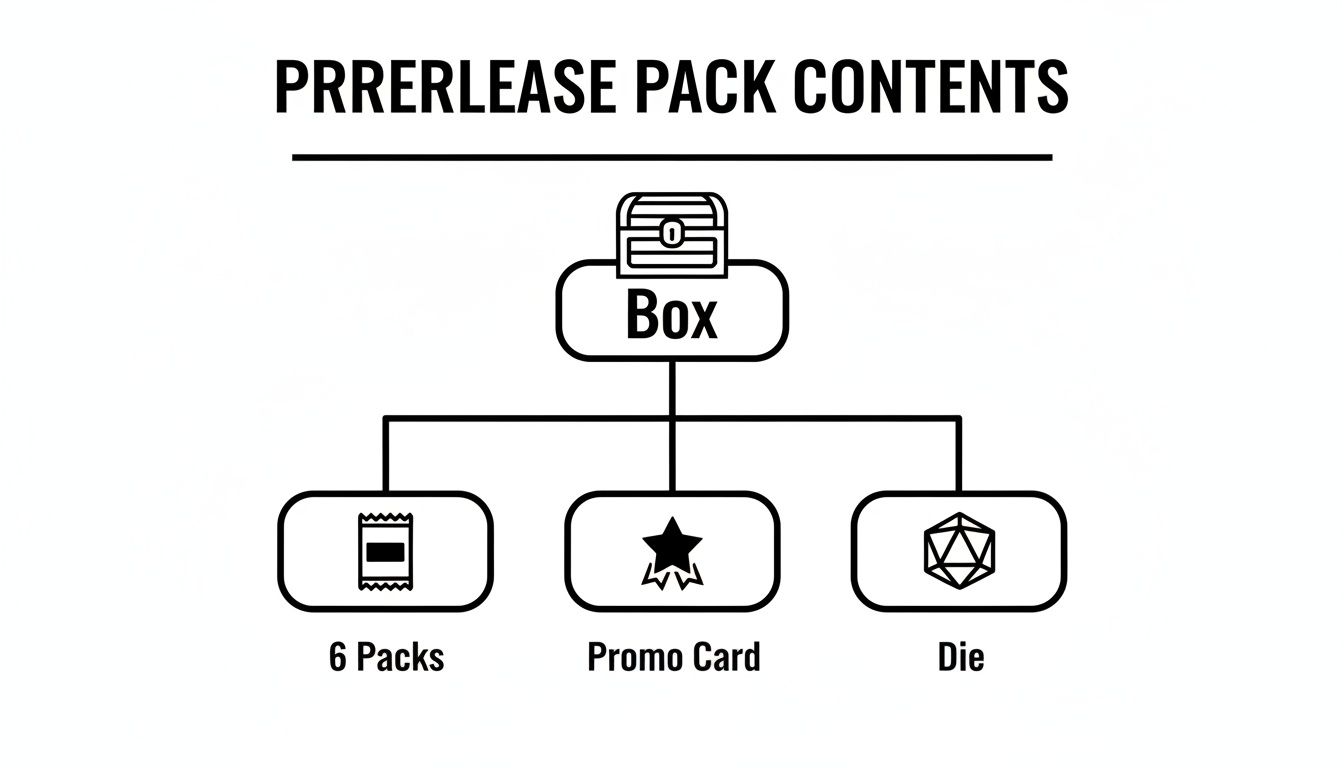
As you can see, those six packs and the foil promo card are your entire world for the next few hours. Every card you play has to come from that pool.
After you've picked your main two colours, the next crucial step is building a solid "mana curve." It's a simple concept: you need a good mix of cheap cards to play early and more expensive, powerful cards to play later.
If your deck is full of expensive spells, you'll just sit there doing nothing for the first few turns while your opponent runs you over. But if your deck is all cheap little creatures, you'll run out of gas and get crushed by their bigger threats in the late game. Balance is key.
A good rule of thumb for a 40-card sealed deck is to play about 17–18 lands and 22–23 spells. This is the classic ratio for a reason—it gives you a great shot at consistently drawing both the lands you need and the spells you want to cast.
🎲 Want to try a solo card and dice RPG tonight? Get TerraClash Lite free: a print-and-play game you can play with ordinary dice.
A great trick is to lay all your chosen spells out on the table in columns by their mana cost (one-cost spells, two-cost, three-cost, etc.). You want to see a nice, gentle slope that peaks around the three or four mana spot. This visual check is the quickest way to spot problems and build a deck that runs smoothly.
Sometimes you’ll open an incredible Bomb card, but it’s in a third colour. The temptation to "splash" it can be overwhelming. Splashing just means playing mostly two colours but adding a couple of cards from a third, along with a few basic lands of that type to be able to cast them.
Be careful here. This is a classic high-risk, high-reward move. When it works, you feel like a genius, casting your game-winning spell out of nowhere. But when it doesn't, you'll stare miserably at that amazing card in your hand with no way to cast it.
For your first few times, it’s usually best to just stick to two colours. Focus on consistency. Once you've got a few events under your belt, you’ll start to get a feel for when a splash is a smart risk and when it’s just a trap.

Right, so you’ve sleeved up your 40-card deck and it's time to find your first match. The room is probably buzzing with excitement, but don't let that intimidate you. A Magic the Gathering prerelease is famously friendly and laid-back; think of it less like a cut-throat competition and more like a big, collective puzzle everyone’s trying to solve together.
The tournament kicks off when the pairings go up. You’ll find your name on a list next to your first opponent. Head over to your assigned table, say hello, and give your deck a good shuffle. The real adventure is about to start.
Most prerelease events use a Swiss pairing system. It sounds complicated, but it's actually a brilliant way to keep things fun. After each round, you'll be paired against someone with the same (or a very similar) win-loss record as you. This means that whether you’re crushing it or still looking for your first win, your matches will always feel competitive and fair.
When you sit down across from someone, just remember you're both there for the same thing: to have a great time and check out the new cards. Good sportsmanship is the glue that holds the whole community together, and it's what makes these events so special.
To keep things running smoothly, just stick to a few simple habits:
The real magic of a prerelease isn't just winning; it's the shared experience of discovery. Everyone is on the same level, figuring out a new set for the first time. The real prize is what you learn from each other.
This is the exact feeling we want to bottle for TerraClash. We're aiming to build a community where players feel like pioneers, all exploring a new world together from day one.
Even the most seasoned players run into weird card interactions that leave them scratching their heads. If you or your opponent get stuck on a rule, don't just guess. Stop the game and call for a Judge.
Just raise your hand and give a clear shout of "Judge!" They aren't there to get you in trouble; they're a fantastic resource to help clarify things and ensure the game is played fairly. Honestly, calling a Judge shows you care about playing correctly—it’s a sign of a good player, not a new one.
Interestingly, the timing of these events has changed over the years. Back with the Shards of Alara set, prereleases were moved from two weeks before a set's launch to just one week before. This ramped up the excitement and made that first taste of the new cards even more special. You can dig into how Magic’s release schedule has changed over the years.
Okay, beyond just being a good opponent, a few strategic tips can really swing a game in your favour. One of the biggest decisions you'll make happens before you even play a single card: the mulligan.
If you look at your opening hand of seven cards and it’s a dud—maybe it has no lands, or only lands of a colour you can't use—you can shuffle it back into your deck and draw a new hand of six. It feels bad to start with fewer cards, but trust me, a solid six-card hand is almost always better than a useless seven-card one.
Another key skill is pacing. Don't just dump all your best creatures onto the board as fast as you can. If you do, you're just asking for them to get wiped out by a single "board wipe" spell. Try to hold a threat or two back in your hand. This kind of patience means you’ll have gas left in the tank to rebuild and take control after your opponent has used up all their big answers. It's a marathon, not a sprint.
So, the final spell has been cast and the last life point ticked down. Your day of epic duels is wrapping up, but there's one last thing to do: claim your loot! Most local game shops offer prizes, which usually means more booster packs from the very set you've just been battling with.
How those prizes get handed out really depends on the store. Some will reward the top players who crushed the competition, giving the lion's share of the packs to the final few at the top of the standings. Others take a more casual approach, spreading the prize packs out so more people get to go home with something extra.
Winning a few packs is a great feeling, no doubt. It’s a solid reward for a day of hard-fought matches. But honestly, the real prize you get from a Magic the Gathering prerelease isn't something you can slide into a deck sleeve or pop into your trade binder.
The true treasure is the experience itself. It’s the war stories you'll be telling for weeks—that time you ripped the one perfect card off the top of your deck to steal a win, the nail-biting match against a new rival, or just laughing together about a play that went spectacularly wrong.
The most important prize is a sense of community. There’s a comradery around sweating top decks, fading removal, and eking out an unlikely win… or loss. It's this shared passion that turns a simple game into something more profound.
You’ll walk away from the event with more than just a stack of new cards. You’ll leave with new friends, a bit more confidence in your deck-building skills, and a great story to tell. This is the exact spirit we're channelling into our own launch events for TerraClash, aiming to build a world where the connections between players are the real reward.
That feeling of belonging is the most powerful magic in the room. It’s what turns a simple tournament into a proper gathering of like-minded people, all celebrating something they love. You're not just playing a card game; you're part of a massive, worldwide community, all exploring a brand-new set together for the very first time.
The friendships you make and the memories you forge across the table are the prizes that stick with you. That shared adventure, that feeling of being part of something bigger, is the best loot you’ll take home. It deepens your love for the game and keeps you coming back for the next one.
The Magic: The Gathering Prerelease is not just another event on the calendar; it is a sacred ritual that has profoundly shaped the entire tabletop gaming world. For decades, it has been the gold standard for blending early discovery with a sense of shared adventure, and it is a blueprint that countless new game creators look to for inspiration. You can see its influence everywhere in the exciting realm of indie games.
Take a new fantasy universe like the deckbuilder TerraClash, for instance. The spirit of the prerelease is alive and well in modern crowdfunding campaigns. A Kickstarter that summons the first, most dedicated supporters to its cause casts the same spell, giving its backers a key to the world before anyone else gets a peek.
This simple act of early access does something incredible. It lets a game's first wave of fans unbox unique treasures and participate in a global launch, turning them into genuine pioneers mapping an unknown world. They are no longer just players; they become part of the founding community, their names woven into the game's history from day one.
This is the model that Magic perfected: building a shared story from the very beginning. It creates a deep, meaningful connection that’s worth more than gold for any new indie game trying to find its audience. It's like assembling your adventuring party before the quest has even officially started. Many of the top Kickstarter tabletop games success stories owe their success to igniting this kind of early passion within the community.
By embracing this spirit, an emerging tabletop saga can build not just a player base, but a dedicated fellowship united by a common adventure and a shared legend.
When the game finally launches, it does not arrive in an empty tavern. Instead, it's greeted by a roaring hall full of allies, eager to draw their cards and face whatever comes next. It's how legendary creatures are born—not just on cardboard, but in the stories players tell. To see how these epic figures can define a game's identity, have a look at our deep-dive on Magic's most legendary creatures and their incredible histories.
Heading to your first prerelease can feel a bit like stepping into a new world. It's totally normal to have a few questions before you dive in. Let's tackle some of the most common ones I hear from players.
This is a big one. The short answer is no, you can't bring your own cards to build your deck with. The whole point of a prerelease is to build a deck using only the cards you open in your prerelease pack on the day. It's all about a level playing field.
However, you absolutely can, and probably should, bring your own basic lands. While your local game store will have a "land station" with plenty to borrow, there's nothing quite like playing with your own favourite full-art lands. It just adds a personal touch.
Feel free to bring your other gear too! Dice, tokens, a life counter, and a playmat are all standard kit and will make your day run a lot smoother.
The entry fee can vary a bit because each store sets its own price. Think of it as the cost of your prerelease pack plus a little extra that goes towards the prize pool for the top-performing players.
You'll often see shops offering presale tickets, which can sometimes have different pricing. If you're weighing up whether to book ahead, you can Learn if presale tickets are more expensive to help you decide. Grabbing a ticket early is usually a good way to guarantee your spot, as these events can sell out.
Remember, the cost isn’t just for the cards; it's an entry fee to a unique shared experience—a day of discovery, camaraderie, and epic tales waiting to be told.
You'll want to clear your schedule for this. A prerelease isn't a quick affair; it's a proper afternoon of gaming. Most events run for three to five rounds, and each round is timed at around 50 minutes.
When you add in the deck-building time at the start, you should plan on being at the store for at least four to five hours. It's a full-on, immersive experience that gives you plenty of time to build, play, and just soak up the atmosphere without feeling rushed.
This sense of adventure and discovery is the very essence of tabletop gaming. At TerraClash, we are building a new world for you to explore, where every campaign is a fresh story waiting to unfold. Join our fellowship and prepare for the journey ahead at https://terraclash.co.uk.