Greetings, adventurer. Every grand Commander deck begins not with a card, but with a quest. A story waiting to be told. Before you even contemplate the ninety-nine souls who will follow you into battle, you must first choose your champion. Heed my words: this is no mere selection of a powerful creature. This is the forging of a bond with a hero whose very essence resonates with your own. They are the harbinger of your strategy, the heart of the grimoire you are about to assemble.
Gather 'round, for we have reached the most thrilling rite of passage in the arcane art of deck building: anointing your leader. Consider this the keystone of the mighty fortress you are about to construct. Are you a fearsome dragon lord, raining fire upon your foes? A cunning sphinx, unravelling the future with riddles and foresight? Or a valiant knight, leading the charge with unwavering resolve? Your Commander is the soul of your deck, the protagonist around whom the entire saga will unfold.
Finding the right Commander is akin to breathing life into a character for an epic campaign. The true magic lies in discovering a playstyle that you will relish for hours around the gaming table.
This sacred process shares much with how the most dedicated Dungeon Masters and their players bring heroes to life. It is a fundamentally creative act. Should you wish to delve deeper into this craft, the scrolls on A Modern Guide to DND Character Design offer profound wisdom on forging compelling characters.
With over a thousand legendary beings vying for your allegiance, the choice can feel as daunting as facing a dragon's hoard. I have witnessed countless aspiring mages falter at this first, crucial step. The sheer weight of possibility can be a heavy burden.
This is why many wise spell-crafters focus on building decks that are not only effective but also born of creativity and accessible resources. A truly great commander is defined by their synergy and your connection to them, not by the gold pieces they command.
Choosing a commander is the ultimate act of self-expression in Magic. It is where you declare to the table, "This is who I am, and this is how I will wage war." Your choice dictates the very soul of the 100-card grimoire you will assemble.
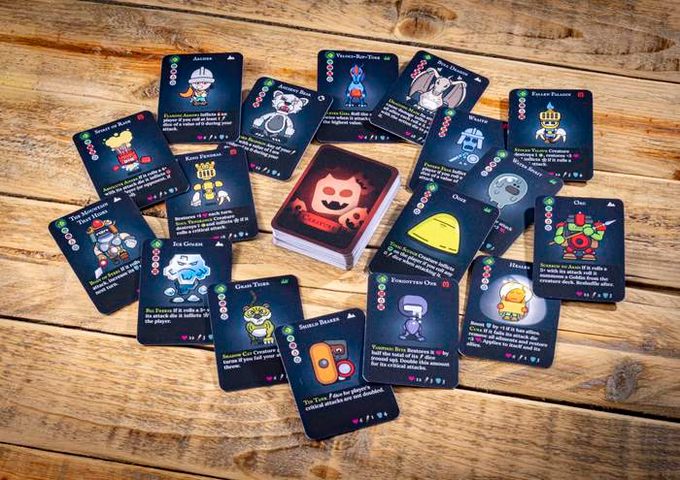
This first decision is your pact with the multiverse. It is the first step on a rewarding pilgrimage, crafting a deck that is a true reflection of your spirit and strategic mind. You will see this same hero-centric design in the chronicles of indie games, such as the realm of TerraClash, where your chosen champion fundamentally shapes the adventure that lies ahead.
So, you have chosen your champion. Excellent. Now comes the grand muster: assembling the loyal legion they will lead into the fray. The other ninety-nine cards in your deck are the heart of your strategy, the army that marches under your commander's banner. Here, the true craft of MTG Commander deck building comes alive—a delicate ritual of weaving creatures, spells, and artifacts into an indomitable force.
Envision it as assembling a classic adventuring party. You would not dare storm a dragon's lair with only warriors, nor would you confront a lich with naught but a handful of rogues. Victory is forged in balance and synergy, where each member's strength shields another's weakness.
This sacred principle of strategic unity echoes across the realms of all great tabletop games. It is the core of any grand campaign, from timeless classics to exciting new indie chronicles like TerraClash, where every unit must act in perfect concert to claim victory.
Before you delve into your collection, pause and reflect. What is the ultimate goal of this deck? How will you achieve triumph? This is your deck's "destiny," the grand design your commander seeks to fulfil. Do you aim to overwhelm the battlefield with a tide of creatures? Or perhaps you seek to weave a cataclysmic combination of spells, ending the conflict in a single, spectacular flash of arcane power?
A wise rule of thumb is to dedicate at least 30 scrolls to your central theme. This includes not just creatures, but every spell and artifact that directly advances your grand design. Achieving this critical mass is what lends a deck consistency, sparing you from those grim fates where you draw spells with no clear path to victory.
Every mighty army requires a solid foundation. In the art of deck building, this means dedicating space for the fundamental components that allow your strategy to flourish. Without them, even the most brilliant of schemes will crumble to dust.
Your ninety-nine cards are not a random pile; they are a carefully chosen fellowship. Each one needs a purpose, a role to play in the epic story your commander is trying to tell. If you neglect your foundations, your fortress will crumble.
Beyond mere numbers lies the true magic: synergy. This is the invisible thread that binds your cards together, making the whole far mightier than the sum of its parts. It separates a mere collection of spells from a truly legendary grimoire. Should you need to refresh your knowledge of the individual components you'll be working with, our guide on the different MTG card types is a brilliant place to begin your studies.
Across many realms, the tides of battle have shifted towards more interactive and dynamic conflicts. Players are constantly experimenting, discovering new synergies that create more balanced and thrilling sagas for all at the table. This creative surge is a testament to the power of community, where deck builders share novel strategies and forge new legends together.
Listen closely, planeswalker. You may possess the most brilliant strategy conceived in the multiverse, a hand brimming with world-shattering spells, but it matters not if you cannot summon the energy to cast them. Your mana base is the very engine of your deck; without a well-forged one, your campaign is doomed before it begins. Too many apprentices are entranced by flashy creatures and potent sorceries, but the masters know that battles are often won or lost upon the lands themselves.
Let us explore how to build a mana base that not only functions but sings—a foundation that ensures you can unleash your spells on time, every time.
This is a craft far more complex than simply adding basic lands. It is a careful balancing act between the core elements, powerful dual lands that channel multiple colours, and clever utility lands that can turn the tide in a moment of crisis. Resource management is the art of kings in strategy games, and in Magic, mana is your ultimate resource.
First, the timeless question: how many lands shall you command? It is a classic deck-building riddle. Command too few, and you will be left stranded, watching as others enact their grand designs. Command too many, and you will draw nothing but barren earth when you desperately need a champion or a spell.
For most Commander decks, the mystical balance lies somewhere between 35 and 38 lands. This range is a superb starting point for any aspiring strategist.
Of course, this is no rigid dogma. If your strategy is a lightning-fast assault with low-cost creatures, you might risk a few less. Conversely, if your grand plan is to control the board and unleash colossal, game-ending spells, you will want to lean closer to 40.
A common consensus among veteran mages is that 36 lands serves as a solid foundation, a number that seems to strike a perfect balance for consistency in both casual gatherings and grand tournaments.
Simply playing one land per turn is a path to certain defeat in the grand theatre of Commander. The format is designed for epic, dramatic plays, and to make them, you must get ahead on mana. This is the art of "ramp." Ramp refers to any magic that accelerates your mana production, allowing you to cast your greater spells turns ahead of schedule.
This concept of resource acceleration is a core tenet in many great tabletop games. I already see similar mechanics being forged in the heart of deck-builders like TerraClash, where gaining an early advantage in resources is a clear path to dominion.
The mana base is the unsung hero of every Commander deck. A flawless seventy-five-card strategy is meaningless if you cannot consistently cast your spells. Devote as much care to your lands and ramp as you do to your splashiest creatures.
Your lands can do so much more than merely tap for mana. Utility lands are your secret weapons, granting you powerful effects without occupying a spell slot in your grimoire. Imagine a Reliquary Tower allowing you to hold an entire library of spells in your hand, or Boseiju, Who Endures acting as a surprise answer to a troublesome permanent. These lands add incredible depth and resilience to your deck.
Just as vital, especially in multicolour decks, is "colour fixing." You must have the right colours of mana at the right time.
To give you a practical starting point, here is a blueprint I often use when scrying the foundations of a new two-colour deck.
This table offers a foundational template for allocating lands and mana ramp in a standard 100-card Commander deck. This serves as a starting point for your own customisation.
| Card Type | Recommended Count | Purpose in the Deck |
|---|---|---|
| Basic Lands | 20-24 | The core of your mana base, ensuring you always have lands to fetch. |
| Dual Lands | 8-10 | Provides access to both of your colours, ensuring smooth draws. |
| Utility Lands | 2-4 | Adds extra effects and flexibility without using spell slots. |
| Mana Rocks | 8-10 | Artefacts that accelerate your mana production early in the game. |
| Ramp Spells | 2-4 | (Primarily for green decks) Spells that search for and play extra lands. |
Remember, this is but a skeleton. Your final count will shift based on your deck's specific needs, your commander's cost, and the grand strategy you aim to enact.
Building a mana base is an art form, a puzzle of numbers, colours, and strategic utility. When you master it, your deck will feel less like a pile of cards and more like a finely tuned arcane engine, humming with power and ready for battle.
Let us speak plainly: the battlefield is a chaotic maelstrom. It is not merely a stage for your own grand performance; your opponents stand across the table, weaving their own schemes and plotting your downfall. They are mustering armies and slinging powerful spells. It is here that the true contest begins, and a single, well-timed spell can turn a desperate defence into a game-winning gambit. This, my friend, is the art of interaction.
A truly great deck is not just a monument to your own brilliant plan. It is a versatile toolbox, perfectly equipped to dismantle whatever your rivals seek to build. To achieve mastery in MTG Commander deck building, you must be both the architect of your victory and the saboteur of everyone else's.
To truly control the flow of battle, you need options. If you possess only one method of dealing with problems, you are setting yourself up for failure. A wise commander carries a diverse arsenal, ready for any threat that rears its ugly head.
Targeted Removal: Think of this as your arcane scalpel. It is a precise, clean answer for a single, high-priority threat. Spells like Swords to Plowshares or Beast Within can instantly neutralize that one terrifying creature or vexing enchantment that stands in your path.
Board Wipes: Sometimes, the tides of battle turn against you. The board becomes clogged, enemy forces overwhelm your defences, and you need a fresh start. A board wipe, like the classic Wrath of God, is your great reset button. It clears the field, giving you the breathing room to reclaim your footing.
Counterspells: Why deal with a problem when you can prevent it from ever manifesting? A perfectly timed Counterspell is the ultimate denial. It is you, declaring a firm "no" to an opponent's game-winning spell, completely derailing their grand moment and leaving them to reconsider their fate.
This philosophy of maintaining a flexible toolkit is a cornerstone of great strategy games. You can see this very principle at play in newer indie TCGs like TerraClash, where having the right answer at the right time is absolutely crucial for survival.
Knowing which spells to include is one thing, but knowing how many is what separates an apprentice from a master. Include too few interactive spells, and you will be a defenceless target. Include too many, and you will have a hand full of answers but no way to actually win the game yourself.
So, what is the mystic number? As a starting point, I always suggest dedicating 10 to 15 slots in your deck to interaction. This gives you a solid chance of drawing an answer when you need one, without diluting your deck's main strategy. It is not a rigid law, but a brilliant guideline when you are brewing a new concoction.
A deck without interaction is like a knight going into battle without a shield. Sure, you might land a few good hits, but you won't survive the counter-attack. True mastery isn't just about executing your own plan; it's about making sure nobody else can execute theirs.
The most powerful weapon you possess is not a card in your hand; it is your sense of timing. It is the wisdom you demonstrate in the heat of the moment.
Do you use your removal spell on that troublesome creature now, or do you hold it for the greater monster you suspect your opponent is about to unleash? Do you counter their simple card-draw spell, or do you let it resolve and save your mana for a spell that directly threatens your life?
These are the moments that forge legends. A well-timed piece of interaction is more than just a clever play—it is a story beat, a tactical masterstroke that your fellowship will recount for weeks to come. It is about reading the table, anticipating what lies ahead, and striking at the most critical moment. That is how you seize control and forge your path to victory.
https://www.youtube.com/embed/Iy-9-4t5cFk
So, the deed is done. You have assembled your ninety-nine, chosen a commander to lead them, and sleeved them for battle. But listen to an old secret every veteran knows: a Commander deck is never truly finished. It is a living, breathing entity that grows and changes with every battle fought. Consider this first draft not a finished masterpiece, but the raw clay you are about to shape.
Here is where the real work—and the true joy—begins. Unleashing your deck upon the battlefield is the only way to divine what truly works. It is one thing to theorise about a powerful combo in the solitude of your study, but it is another entirely to see how it fares against three other mages, each plotting to thwart you.
Every game is a lesson. You will begin to notice patterns. Perhaps there is a card that always seems to linger in your hand, its mana cost just a bit too steep for when you need it. Or maybe you realize you are consistently vulnerable to creatures of the air. These are the threads you will pull to begin weaving a stronger deck.
It is easy to credit a victory to your brilliant strategy and blame a loss on ill fortune. The truth usually lies somewhere in between, and there are lessons hidden in both outcomes. After a night of gaming, take a moment to reflect on what transpired. Ask yourself some honest questions.
This cycle of playtesting, analysis, and refinement is the very soul of MTG Commander deck building. You are not just playing a game; you are actively designing it.
When a player hears "upgrade," they often imagine acquiring expensive, powerful chase cards. While those can certainly bolster your forces, the most impactful upgrades are often the subtle ones that simply make your existing plan more consistent and efficient. The goal is to sharpen your deck’s focus, not to fundamentally alter its spirit.
Let us say you have a creature meant to draw you cards, but it costs five mana and is easily dispatched. Instead of simply banishing it, consider its purpose. Could you replace it with a two-mana enchantment that provides a similar effect, albeit more slowly? Or perhaps an instant that draws you two cards while offering another useful effect?
Your deck tells a story. Every card is a character or a plot point. When you make an upgrade, make sure the new card fits the narrative you're trying to build with your commander. A generically powerful card that doesn’t fit your theme is like a jarring plot twist that makes no sense.
This is a gradual process. You might swap a basic land for a dual land that helps fix your colours, or a simple mana rock for one with a useful secondary ability. These small, incremental changes add up over time, transforming a clunky first draft into a well-oiled machine. If you wish to delve deeper into the basics of deck construction, our full guide on how to build an MTG deck is an excellent place to begin.
It is this spirit of constant evolution and refinement that makes the world of tabletop gaming so rewarding. Your deck is your own personal adventure, and every game is a new chapter waiting to be written.
Every seasoned Planeswalker was once an apprentice, staring at a mountain of cards and wondering where to even begin. Building your first MTG commander deck is a journey, and like any good adventure, it comes with plenty of questions. Let us address some of the great queries that often challenge new players.
It is easy to become lost in the vast expanse of choices. The number of legendary creatures feels endless. Here is the secret: stop searching for the "best" commander and start searching for your commander.
Forget power levels and popular opinion for a moment. Simply browse. Gaze upon the art, read the abilities, and feel what sparks your imagination. Do you relish the idea of leading a chaotic goblin horde? Find a leader who summons tokens or empowers your creatures. Perhaps you would rather sit back and control the game with a flurry of powerful spells? A spell-slinging commander is out there, waiting for you.
The strongest deck isn't the one with the most expensive cards. It's the one you genuinely love to play. Your passion is the most powerful resource you have.
This notion—finding a hero that resonates with your playstyle—is the heart of great tabletop games. It is what makes RPGs so personal and it is a core design philosophy for games like TerraClash, where your first choice shapes your entire adventure.
Rule Zero is the most important rule in Commander, yet it is not written in any rulebook. Think of it as a social contract, the pre-game parley you have with your opponents to ensure everyone is on the same page for the game you are about to play.
It is a brief, friendly conversation to establish things like:
The entire purpose of Rule Zero is to ensure everyone has a good time. It is that shared spirit of respect and fun that makes Commander, and tabletop gaming in general, so very special.
You absolutely do not need a deck filled with costly cards to achieve victory. The true magic to building a powerful deck on a budget comes down to one word: synergy.
Instead of chasing a few expensive "staple" cards, focus on a clear strategy where your cheaper cards all work together in harmony. When you combine a multitude of inexpensive pieces that feed off each other, their collective effect can be far more powerful than a single expensive card.
The Magic community is an incredible resource for discovering clever, budget-friendly alternatives to expensive cards. It is reminiscent of how amazing indie games, like the Kickstarter sensation Gloomhaven, proved that clever mechanics and strong synergy—not flashy, expensive components—are what create a truly legendary experience.
Listen, victory is sweet. No one denies that. But Commander is truly a format about creating epic stories and memorable moments with your friends. Your main quest should be to ensure everyone at the table is having a fantastic time.
Frankly, a deck that creates wild, interactive, and unpredictable games earns far more respect than one that simply grinds out a win as quickly as possible.
Try to see it less as a cut-throat duel and more as a shared adventure. The crazy plays, the shocking comebacks, and the narrow escapes are the real trophies. You will be talking about those long after you have forgotten who actually won.
This spirit of shared adventure and deep strategy is something we at TerraClash are passionate about. If you enjoy crafting unique stories and leading powerful heroes, keep an eye on our indie deck-building game at https://terraclash.co.uk.