Greetings, adventurer! You stand at the precipice of a vast multiverse, a realm woven from pure mana and endless possibility. Like any great spellcaster preparing for a quest, you must first master your tools. In the grand theatre of tabletop combat, from the hallowed planes of Dominaria to the uncharted territories of games like Gloomhaven or the strategic arenas of upcoming deckbuilders, understanding your arsenal is paramount. This grimoire unseals the fundamental knowledge of Magic: The Gathering, detailing the very essence of power contained within its cards.
We shall delve into the core types of magic the gathering cards, from the loyal creatures who fight at your side to the cataclysmic sorceries that reshape the battlefield. This knowledge will serve you well, not just in one game, but as a foundation for understanding the intricate dance of strategy in all deckbuilding quests that lie ahead. Consider this your first step to becoming a master tactician, ready for the clash of spells and steel in any adventure, including those for ages 12 and up. Let us begin.
Behold, the backbone of any Planeswalker's army! Creature cards are some of the most common types of Magic: The Gathering cards you will encounter, representing the myriad beings you summon to the battlefield. From humble goblins to majestic dragons, they are your primary means of assault and defence.
Creatures are defined by their Power and Toughness, found in the bottom-right corner, indicating how much damage they deal and can withstand. These loyal cohorts remain steadfast on the field, ready to charge your foe or stand as a bulwark against their advances. Mastering the flow of creature combat is the first, and perhaps most crucial, step on your path to victory. Cards like the ever-growing Tarmogoyf or the versatile Snapcaster Mage showcase how a single creature can dramatically alter the course of a duel.
For a quick reference on their core mechanics, this summary highlights the essentials of creature cards.
Understanding these fundamentals, like summoning sickness, is key to plotting your attacks and defences. Balancing your army is a delicate art, and knowing how to build a Magic deck with the right mix of creatures and other spells is paramount. You can learn more about crafting your perfect deck on terraclash.co.uk.
Hark, for not all magic is cast with grand ceremony! Instant spells are the swift, whispered incantations of a savvy Planeswalker, cast in the blink of an eye. Among the different types of Magic: The Gathering cards, these are your secret weapons, versatile spells that can be unleashed at almost any moment, even during your rival’s turn. This unparalleled timing flexibility makes instants the heart of interactive and reactive strategies.
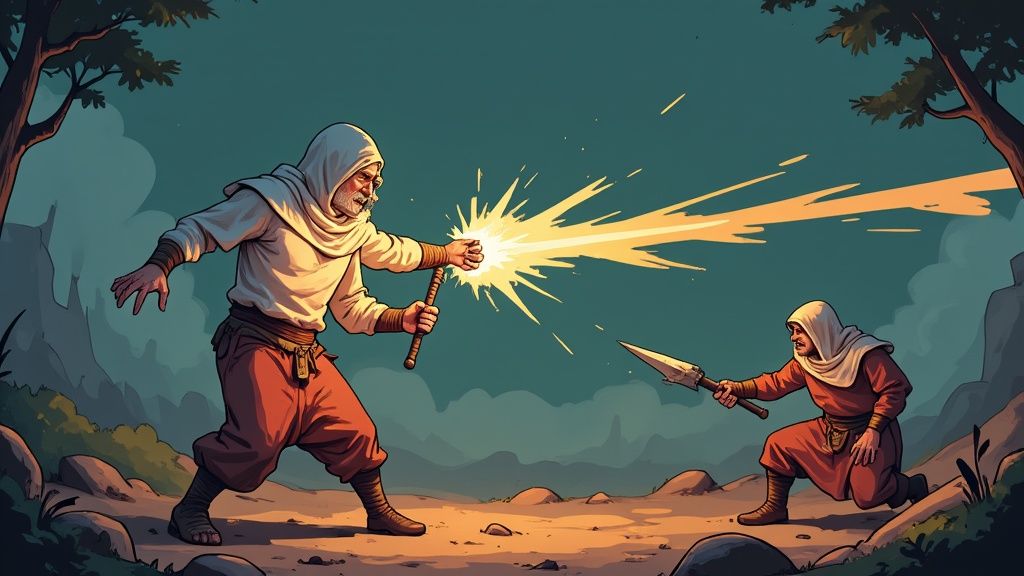
Whether you're negating a game-winning spell with a decisive Counterspell or finishing off a weakened foe with a final Lightning Bolt, instants keep your opponent guessing. The beauty of these spells lies in the element of surprise; leaving just a few mana open can represent a world of possibilities, forcing your adversary to play more cautiously. Mastering the stack and knowing the precise moment to act is a true art form, one that separates novices from seasoned mages. Much like a grandmaster of chess, your power lies not just in your actions, but in the threats you represent.
Step forth, Planeswalker, and command magics of profound power! Sorcery spells are game-changing enchantments and incantations cast during the calm of your turn. Unlike their instantaneous brethren, these spells require careful timing and can only be unleashed during one of your main phases when no other magic is being woven. This restriction is the source of their strength, allowing for effects of a grander scale. They are the tools for a proactive mage, shaping the battlefield to your design.
Sorceries represent your most deliberate and powerful actions, from devastating board wipes like Wrath of God to forbidden knowledge sought through a Demonic Tutor. These spells are your haymakers, the pivotal moments where you clear the board, assemble your forces with cards like Rampant Growth, or tear a crucial card from your opponent's grasp with Thoughtseize. A sorcery resolves and then dutifully retires to your graveyard, its singular, mighty purpose fulfilled. Understanding when to cast these impactful spells is a core tenet of mastering the many types of Magic: The Gathering cards.
Step beyond the fleeting spells of battle and into the realm of enduring magic. Enchantment cards are powerful manifestations of persistent magical energy, remaining on the battlefield to provide continuous, game-altering effects. Unlike a creature that can be slain in combat, these lingering spells represent a deeper, more profound influence on the duel, weaving a magical tapestry that can grant you long-term advantages or cripple your opponent's strategy over time.
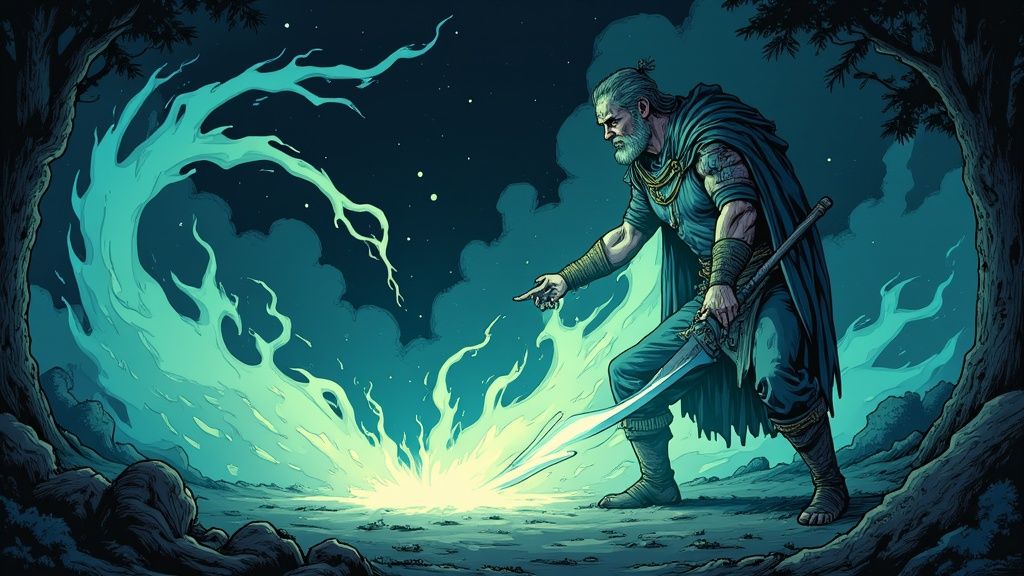
Enchantments come in two main forms: global enchantments that affect all players, and Auras that attach to a specific creature or other permanent, granting it new abilities or weaknesses. Cards like Phyrexian Arena, which offers a steady stream of extra cards at the cost of life, or Doubling Season, which magnificently multiplies your tokens and counters, demonstrate how a single enchantment can define your entire game plan. Understanding the nuances of these different MTG card types is a key step to mastery.
Enter the workshop of the Planeswalker, where magical relics and powerful contraptions await your command. Artifact cards represent enchanted items, constructs, and devices that you bring to the battlefield. Typically colourless, these versatile permanents can be wielded by any mage, regardless of their chosen mana allegiance. From mana-accelerating treasures like the legendary Sol Ring to creature-enhancing equipment like the formidable Sword of Fire and Ice, artifacts offer a vast array of strategic possibilities that can define entire decks.
These potent items remain on the field, their effects shaping the duel turn after turn. Some are even creatures themselves, constructs of metal and magic ready for battle. The sheer utility of artifacts makes them a cornerstone of many strategies, providing everything from card selection with Sensei's Divining Top to overwhelming force in dedicated artifact-focused armies. Knowing when to deploy a key artifact can grant you an insurmountable advantage, turning the tide of battle with a single, well-timed cast. This mastery over mystical objects is a crucial skill for any Planeswalker.
Summon forth a Planeswalker, and you call upon an ally of immense power to fight by your side. These are not mere creatures or fleeting spells; they are powerful mages who join your cause, remaining on the battlefield as potent permanents. Introduced in 2007, Planeswalkers have become some of the most iconic and game-defining of all Magic: The Gathering cards, representing key characters in the sprawling multiverse.
Planeswalkers operate using Loyalty counters, which function as their health. They enter the battlefield with a set number of these counters and can be attacked directly by your opponent's creatures. Each turn, you may activate one of their abilities, either adding or removing loyalty to build towards a devastating "ultimate" ability that can often secure your victory. Legendary figures like Jace, the Mind Sculptor, and Liliana of the Veil demonstrate how a single Planeswalker can control the game, offering repeatable spell-like effects that can overwhelm any foe.
Protecting these powerful allies is crucial to unlocking their full potential. While they share similarities with other legendary permanents, their unique mechanics set them apart. You can discover more about the nuances of legendary cards and how they influence strategy when you learn more about Magic: The Gathering's legendary creatures on terraclash.co.uk.
Herein lies the very essence of power, the resource that fuels every spell and summons every creature. Land cards are the foundation of your magical arsenal, representing the territories you control to draw forth mana. Unlike other spells, laying a land does not use the stack and happens once per turn, a steady and reliable source of might for your grand designs.
Lands are your primary means of producing mana, the magical energy required to cast other Magic: The Gathering card types. While humble Basic Lands provide a single colour of mana, the true art lies in harnessing nonbasic lands. From dual-coloured Shock Lands like Steam Vents that quicken your assault, to utility lands like Strip Mine that can disrupt a foe's domain, your choice of lands dictates the speed, consistency, and versatility of your entire strategy. Mastering your mana base is the first step to mastering the duel itself.
What if a spell could carry the spirit of a creature? Tribal cards are a fascinating and rare breed among the types of Magic: The Gathering cards, weaving creature lineage into the very fabric of your non-creature spells. They are not a card type on their own, but rather a special "supertype" that bestows a creature type, like Goblin or Faerie, onto an instant, sorcery, or enchantment. This allows your spells to sing in harmony with your clan.
Imagine a Tribal Instant - Goblin like Tarfire. While it functions as a simple damage spell, it also counts as a Goblin, triggering abilities and receiving boons meant for your goblin horde. This clever design, popularised in the Lorwyn block, allows Planeswalkers to deepen their themed strategies, making tribal decks more cohesive and powerful. Cards like Bound in Silence, a Tribal Enchantment - Rebel, show how this ancestral magic can manifest in various forms, binding a foe while strengthening your rebellion's synergy. Mastering tribal cards means uniting your creatures and spells under a single, powerful banner.
Gather your wits, Planeswalker, for not all combatants are drawn from your deck. Token cards are the ephemeral manifestations of powerful spells and abilities, brought into existence on the battlefield itself. These magical echoes are not part of your main deck; instead, they are created by other cards, ready to swell your ranks or provide fleeting, yet crucial, resources.
Unlike other types of Magic the Gathering cards, tokens cease to exist the moment they leave the battlefield, vanishing back into the aether. They can represent anything from a legion of Soldier tokens created by Raise the Alarm to a hoard of Treasure tokens offering a quick burst of mana. These disposable assets are perfect for "go-wide" strategies, overwhelming your opponent with sheer numbers or sacrificing them for a greater, more sinister purpose. Mastering tokens means understanding that value can be conjured from thin air, turning a single spell into an entire army.
Venture forth into the realm of shifting realities, where a single card holds two destinies. Double-faced cards are a marvel of spellcraft, presenting two unique faces instead of a traditional card back. These cards either transform based on battlefield conditions or offer a crucial modal choice upon being played, providing unmatched flexibility for your strategic arsenal.
First seen in the haunted plane of Innistrad, transforming cards like the fearsome Huntmaster of the Fells flip between states, reacting to the ebb and flow of spells cast each turn. More recently, Modal Double-Faced Cards (MDFCs) grant you the power to choose which side to play from your hand. You might cast Agadeem's Awakening as a game-winning spell or simply play its reverse side as a much-needed land. This versatility makes these some of the most powerful types of Magic: The Gathering cards, allowing one card to fill multiple roles in your deck. Remember to use opaque sleeves to keep your plans secret from your foe.
Mastering these multifaceted cards is a sign of a truly adept Planeswalker. The strategic depth of choosing between two powerful effects, or building around a creature that changes its very nature, is a challenge that many indie tabletop games are exploring. You can discover more about building a deck with these complex cards and explore similar tactical choices on terraclash.co.uk.
| Card Type | Implementation Complexity 🔄 | Resource Requirements ⚡ | Expected Outcomes 📊 | Ideal Use Cases 💡 | Key Advantages ⭐ |
|---|---|---|---|---|---|
| Creature Cards | Moderate - requires board presence | Mana investment for creatures | Persistent board threats & combat damage | Main win condition and board control | Versatile offense & defense; tribal synergies |
| Instant Spells | Low - cast anytime with priority | Mana held for reactive spells | Flexible, reactive plays & countering | Interactive & control strategies | Maximum timing flexibility; stack interaction |
| Sorcery Spells | Low - main phase only | Mana for powerful effects | Strong, one-time impactful effects | Proactive strategies & board wipes | More powerful than instants; ramp and mass removal |
| Enchantment Cards | Moderate - ongoing effects | Mana for permanent effects | Long-term value & strategic advantage | Control, enchantress, locking decks | Persistent continuous benefits; hard removals |
| Artifact Cards | Moderate - colorless & versatile | Mana & equip costs | Versatile utility & acceleration | Universal inclusion; artifact synergies | Colorless mana use; reusable enhancements |
| Planeswalker Cards | High - complex abilities & loyalty | High mana costs | Repeatable value & game-changing ultimates | Strategic board control & pressure | Multiple abilities; game-winning ultimates |
| Land Cards | Low - fundamental resource | No mana cost; limited play per turn | Essential mana production & deck foundation | Mana base and color fixing | Critical resource; some utility lands |
| Tribal Cards | Low - subtype modifier only | Depends on base card | Enables tribal synergy for noncreatures | Tribal-focused decks | Bridges spells with creature synergies |
| Token Cards | Low - created by other cards | None (generated) | Wide board presence & go-wide strategies | Aggro and value-oriented strategies | Multiple permanents from single card |
| Modal Double-Faced Cards | High - dual faces & transformation | Mana for either face | Flexibility & evolving game options | Limited, draft, flexible deckbuilding | Two cards in one; reduces inconsistency |
The final page of this chapter has been turned, but your own grimoire is just beginning to be written. We have journeyed through the core components of the multiverse, dissecting the ten fundamental types of Magic: The Gathering cards. From the loyal Creatures that fight at your side to the game-altering power of a well-timed Planeswalker, you now possess the foundational knowledge of a seasoned spell-slinger.
Understanding the difference between an Instant and a Sorcery is more than just learning rules; it's about mastering the rhythm of the duel itself. Realising how an Artifact or Enchantment can create a lasting engine of power is the first step towards crafting a deck that is a true extension of your will. These are not just pieces of card; they are the colours on a grand tactical canvas, each with a unique flavour and strategic purpose.
This wisdom is your true reward. It is a universal language that will serve you well, not just in the planes of Dominaria, but across the vast and wondrous landscape of tabletop gaming. Every deckbuilding adventure, from grand established sagas to thrilling indie projects born on Kickstarter, builds upon these core principles of resource, action, and persistent effects. You have learned how to evaluate a card not just for what it is, but for what it allows you to become.
So, where do you venture from here? The path is yours to forge. Pick up a starter deck and challenge a friend. Experiment with building your own library of spells, combining different card types to see what powerful synergies you can uncover. Don't be afraid to fail, for every defeat is a lesson that sharpens your instincts for the next battle. Your journey as a mage has just begun. Go forth, summon your courage, and may your draws be ever in your favour.
If the thrill of mastering unique card interactions and forging new strategies calls to you, keep your eyes on the horizon. The world of TerraClash is preparing to reveal itself, offering a fresh realm of tactical deckbuilding inspired by the very foundations you have learned here. Discover a new adventure at TerraClash and prepare for the clash to come. For more on exciting upcoming projects, check out other indie board games taking platforms like Kickstarter by storm.

