Hark, brave Dungeon Master, and gather ‘round.
You know, as I do, that the very soul of a grand Dungeons & Dragons saga is forged in the crucible of its encounters. It is in that perfect maelstrom of peril and promise that heroes are truly born and legends are written in fire and steel. Yet, let us speak plainly: the arcane mathematics of balancing a worthy challenge can feel like a sorcerer’s tedious homework.
I once spent countless nights poring over dusty monster manuals, my notes a chaotic scrawl of calculations, all to ensure my party of heroes wouldn’t be unceremoniously devoured by a clutch of ill-tempered goblins. It was a chore, a thief of time that stole me away from my true calling: weaving the grand tapestry of our story.
That all changed when I discovered the profound magic of a well-wrought dungeons and dragons encounter builder. These mystical tools are a true blessing from the gods of gaming. They perform the tiresome arithmetic, freeing your mind to conjure the truly wondrous stuff—the narrative, the atmosphere, and the heart-pounding thrill of a perfectly paced battle.
This tome is my offering to you. I shall share the wisdom I have gained, guiding you from the clumsy shackles of spreadsheets to the art of crafting dynamic, thrilling combat that will keep your players on the very edge of their seats. Are you prepared to design adventures that will echo in tavern tales for years to come? Our quest begins now.
Right then, let us speak of choosing your digital grimoire. Selecting a Dungeons and Dragons encounter builder is much like a wizard choosing their first wand; it must feel right in your grasp, a conduit for your power. The perfect tool becomes a seamless extension of your creative spark, while the wrong one feels like naught but a clunky bit of wood.
They are not all carved from the same enchanted oak, you see. Some are simple, elegant calculators—ideal for swiftly gauging if that approaching horde of goblins presents a worthy challenge or a calamitous end. Others are sprawling arcane libraries, deeply woven into platforms like D&D Beyond or virtual tabletops, capable of tracking every wound and foretelling every initiative. The true secret is finding the one that resonates with the unique rhythm of your game.
Gaze upon the image below. It is a fine reminder of the many paths one can tread when forging a memorable conflict.
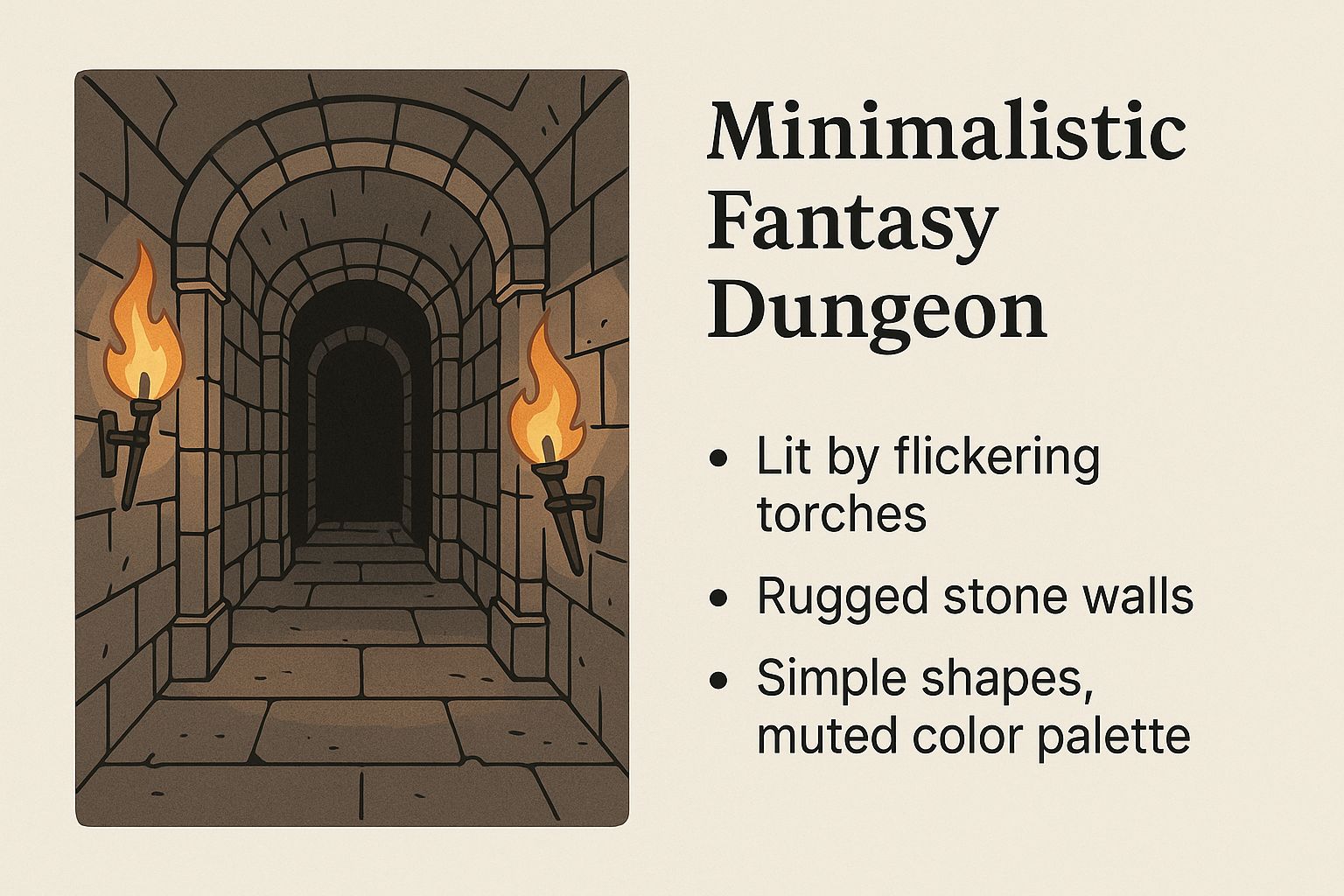
As you can see, a battle is never merely about the beasts. The greatest encounters are a careful alchemy of story, setting, and a finely balanced threat.
Before you delve deeper, take a moment to scry into your own soul. What manner of magic do you seek to conjure at your table?
I recall a time I relied upon a basic online oracle for a climactic boss battle. It performed the calculations, true, but the encounter was as lifeless as a golem without a command word. The tool gave me numbers, not inspiration. It offered no thematic whispers of other creatures that might haunt such a lair, a feature I now consider indispensable.
That trial taught me a profound lesson: a great tool does not merely save you time, it actively ignites the fires of your imagination.
It is about finding your arcane focus. The right builder helps channel your raw ideas into something tangible and thrilling, in the same way that a masterful grasp of a spell save DC in 5e can transform a simple cantrip into a moment of breathtaking drama.
To aid in your decision, let us break down the essences of the main types of encounter builders that dwell in the world. Each possesses its own strengths, depending on your needs.
| Feature | Basic Online Calculator | Integrated Platform (e.g., D&D Beyond) | Virtual Tabletop (VTT) Builder |
|---|---|---|---|
| Speed & Simplicity | Excellent. Swift calculations, minimal incantations. | Good. Requires some navigation but is generally fast. | Varies. Can be complex but powerful once mastered. |
| Monster Database | Usually limited to official SRD content. | Access to all owned sourcebooks and homebrew creations. | Access to purchased assets and user-created tokens. |
| Customisation | Minimal. Basic stat adjustments at most. | High. Create and save custom monsters, spells, and items. | Very High. Edit tokens, maps, lighting, and monster AI. |
| Integration | None. A standalone tool for calculation only. | Links directly to your campaign, character sheets, and compendium. | Fully integrated with maps, tokens, and combat trackers. |
| Best For | On-the-fly adjustments and quick checks during a session. | DMs who plan sessions in detail and own multiple sourcebooks. | DMs running games online who want an all-in-one solution. |
Ultimately, the wisest choice is the one that removes friction from your sacred preparation rites. Whether you need a swift calculator for an impromptu tavern brawl or a fully integrated system for a campaign’s epic finale, the right tool awaits your call.
Come now, let us roll up our sleeves and begin the weaving. A truly great D&D battle is more than the clatter of dice and the crunching of numbers; it is a story unfolding with every swing of a sword and every whispered incantation. Before you even conjure the image of a monster, you must ask yourself the most vital question of all: why does this fight matter?
Is this merely a random scuffle with goblins on the road, or is it a desperate last stand to shield a village from ruin? Perhaps it is the climactic showdown where the very fate of the realm hangs in the balance. Your answer to that question is the living soul of the encounter. It shapes all that follows, from the creatures you choose to the very ground upon which the party makes their stand.
Let us walk through an example. Imagine a party of four valiant 5th-level adventurers plumbing the depths of some forgotten ruins to retrieve a lost artifact. This is no random skirmish; it is a planned ambush by the ruin's ancient, spectral guardians.
Firing up our trusty dungeons and dragons encounter builder, the first rite is to input the party's size and level. This grants us our XP budget. For a pivotal moment such as this, I would aim for a ‘Hard’ or even ‘Deadly’ encounter to truly impress upon them the gravity of the danger.
With the difficulty dialled in, the true artistry begins. We desire more than a mere bag of hit points for the party to cleave through; we seek adversaries that feel as if they have sprung from the very stones of these ruins. Instead of a generic smattering of skeletons, what if we summoned spectral guardians, eternally bound to this place? Their ghostly nature immediately introduces a unique challenge that steel alone cannot solve.
To truly bring the theme to life, consider summoning a few more thematic monsters to the fray:
Every creature should add a verse to the ballad of this place. This is where an encounter builder is a godsend. It handles the tedious maths, freeing you to focus on the narrative. With 58% of UK players gathering weekly, according to scrolls from EN World, DMs need tools that empower them to prepare compelling stories, not just balanced fights.
A great encounter builder does not merely do the sums for you. It acts as your monstrous palette, allowing you to paint a much more vivid and threatening picture for your players.
Finally, never, ever underestimate the power of the environment. A flat, empty chamber is a squandered opportunity. Our forgotten ruin should be a character in itself—a dynamic and perilous arena.
Think about adding hazards that transform a static slugfest into a cinematic showdown. Crumbling pillars that can be toppled for cover (or to crush a foe). Ancient magical glyphs upon the floor that erupt with arcane energy when trod upon. A deep chasm splitting the room in two, forcing players to think tactically about their every step.
These elements give your players more interesting choices than simply "I attack." It beckons them to be creative and sears the entire experience into their memory long after the session ends. This philosophy is central to the art of the DM, and you can learn more of its secrets in our complete dungeon master guide.
By blending carefully chosen monsters with a dynamic battlefield, you create something more than just a fight. You create an experience.
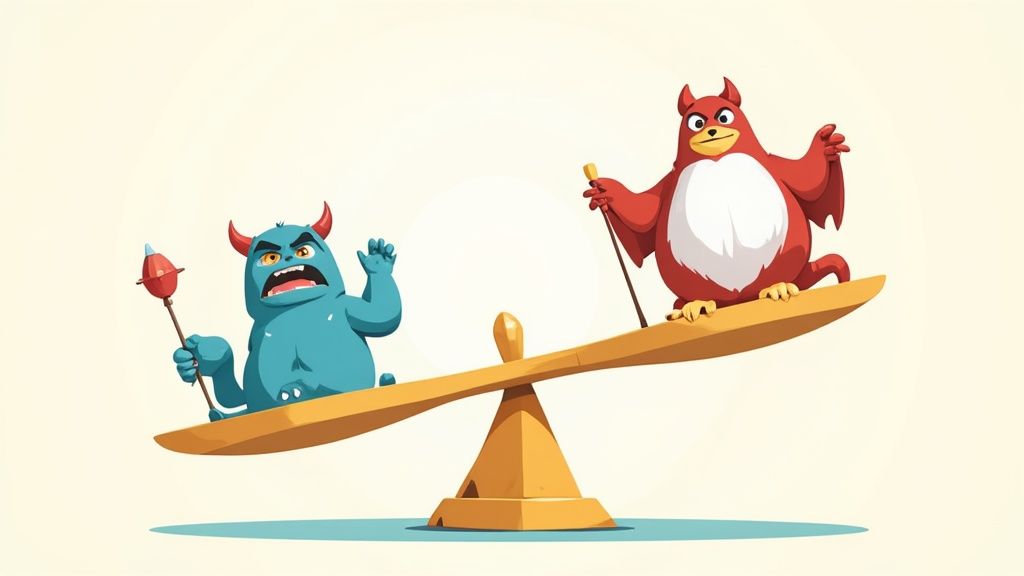
Every Dungeon Master knows the feeling. You aim for a legendary, nail-biting conflict, but it is a razor's edge to walk. Lean too far one way, and your players are stifling yawns; too far the other, and you are presiding over a TPK (Total Party Kill) that leaves a bitter taste for all.
This is where your encounter builder serves you well, but it is merely the first step on the path. It provides the raw data—the Challenge Ratings and XP thresholds—but the true magic flows from you. It is time to gaze beyond the numbers.
One of the first forces I learned to respect is the action economy. In simple terms, it is about who gets to do more things in a single round of combat. This is precisely why a swarm of sixteen goblins can be a far deadlier threat than one hulking hill giant. The giant lands one, perhaps two, mighty blows. Those goblins get sixteen chances to whittle away at your party’s health and resources, overwhelming even the stoutest warrior.
The true skill of a DM is in perceiving how a battle is unfolding in real-time. An encounter that seemed perfectly balanced in the quiet solitude of your preparation can go awry in a flash, all thanks to the fickle whims of the dice. Your sacred duty is not to rigidly enforce the stats you scribbled down; it is to guide the story.
You must be ready to adjust on the fly to keep the tension perfectly tuned.
Think of your encounter builder as a recipe from an ancient scroll. It gives you the ingredients and measures, but you are the master chef who adds the flair and adjusts the seasoning to taste. The numbers are the foundation; your intuition makes the battle legendary.
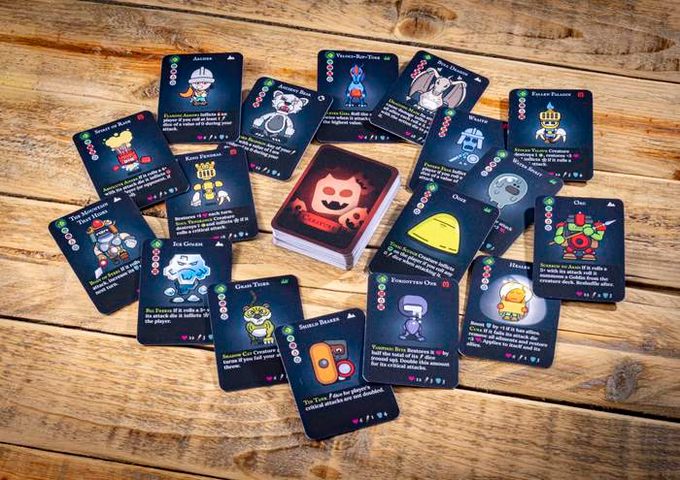
This constant dance of balance is what forges a truly great game. It’s that thrill of risk versus reward that we cherish in all tabletop games. You see this same spirit in the world of deck-building games, where a single card drawn from the deck can completely alter one's destiny. It's the same kind of strategic, heart-pounding moment that games like the TerraClash are built around.
Ultimately, your ability to pace a fight and react to the moment is what transforms a simple combat into an unforgettable story.
The truly legendary encounters are those that tell a story. Consider this: a good D&D encounter builder handles the maths and the mechanics, which liberates you to become the true architect of the action—the battle-bard, if you will. It allows you to transform a simple exercise in dice-rolling into a pivotal moment that players will speak of for weeks to come.
Once the numbers are in their place, the real enchantment begins. Start by asking why these monsters are here. Are they goblin zealots fiercely defending a sacred totem? Or perhaps they are merely a pair of starving owlbears, driven into the party's path by desperation. Even those enchanted suits of armour could be following the final, faded orders of a long-dead master.
Granting every creature a purpose, no matter how simple, immediately changes how they act and feel upon the battlefield. A basic skirmish suddenly becomes a piece of your world's larger, living puzzle.
The wisest DMs know that the most memorable encounters often present paths beyond simply striking things with a sword. Can the party negotiate their way out of this conflict? Could they use the treacherous environment to outwit a much stronger foe?
This yearning for narrative depth is a great part of what fuels D&D's incredible renaissance. Its publisher's revenue has soared by 46.1% since the pandemic began, and tools that help DMs craft compelling stories are key to keeping players enthralled in the UK's booming tabletop scene. You can read more about the growth of RPGs on EN World.
You’re not just building a fight; you're crafting a chapter in your campaign's grand saga. Every detail, from a monster’s snarl to a crumbling pillar, is a chance to build your world.
It is this very idea of strategic depth, where every choice carries weight, that lies at the heart of all great games. This includes the intricate tactics of deck-builders, a spirit we've embraced in TerraClash. If you seek more ways to create unforgettable moments, gaze upon our guide to D&D campaign ideas.
When you first begin to dabble in the art of the encounter builder, certain questions always arise. Consider this a friendly chat with a fellow DM who has spent many seasons behind the screen – here is the practical wisdom I have gathered on my journeys.
A builder provides a fantastic starting point based on raw numbers like party size and level, but it cannot know the whole tale. You are the one who witnesses your players in action.
Is your group laden with powerful magic items? Do they coordinate their assaults like a well-drilled company of soldiers? If so, you should probably consider them a bit tougher than the numbers suggest. Try building what the tool calls a 'Hard' encounter when you're aiming for a 'Medium' challenge.
Conversely, if they have just dragged themselves from a dungeon, battered, bruised, and drained of spell slots, that 'Medium' fight might suddenly feel deadly. The dungeons and dragons encounter builder is your blueprint; your intimate knowledge of the party is the master craftsmanship that brings it to life.
Most certainly! This is where you can become truly creative. Cease thinking of the XP budget as a measure of violence and begin to see it as a 'complexity budget'. It is a brilliant way to gauge the pacing for dramatic social encounters or cunning puzzles.
Allow me to offer a few ideas:
The most common misstep I witness is taking the difficulty rating as gospel without seeing the wider tapestry. A 'Deadly' encounter with a shambling horde of skeletons might be a simple matter for a party blessed with a Cleric who can turn them all to dust.
But for a group without access to radiant or bludgeoning damage? That very same fight could be a waking nightmare.
An encounter builder is your most trusted advisor, not the absolute monarch. Always filter its suggestions through the lens of what you know about your party’s unique strengths, weaknesses, and what is unfolding in the story. You, brave DM, always have the final say.
Variety is the spice of life, and it is the heart and soul of a good D&D session. Use the builder as a bestiary to spark inspiration. Delve into its library and unearth weird and wonderful creatures you have never before unleashed upon your players.
More importantly, vary the victory conditions. Not every battle must be to the last combatant standing. Perhaps the goal is to protect a key character for five rounds, or to snatch an artifact from a treasure chest while holding off the guards. Changing the battlefield is also a potent magic. A brawl in a tight, collapsing mineshaft feels entirely different from a chase across rickety rooftops. The tool handles the maths, freeing you to set a truly unforgettable stage.
It is this blend of tactical thinking and narrative freedom that makes tabletop gaming so special. That is the exact feeling we've poured into every card of TerraClash, where your own creativity and strategy are what lead you to victory. To see how these ideas come alive in a fresh fantasy deck-building adventure for ages 12 and up, come and gaze upon our work at https://terraclash.co.uk. A new adventure will soon be dawning.