There’s a special kind of magic in the rustle of a freshly shuffled deck, isn't there? That feeling when you draw the exact card you need to turn the tables is a thrill that connects players everywhere. This guide is your gateway into the incredible world of modern card games, from laid-back family fun to high-stakes strategic battles. We’ll explore how a simple deck of cards can become a tool for telling epic stories, testing your tactical mind, and bringing people together.
Think of your deck as a hand-picked team, an extension of your own personality, ready for whatever challenge comes its way. We'll look at how this classic hobby keeps reinventing itself, with brilliant new games that are simple to pick up but offer layers of strategic depth to master. That's the sweet spot where so many modern games thrive—they're welcoming to newcomers but give seasoned players a real challenge. So, whether you've been playing for years or are just a bit curious, let’s dive into what makes these games so utterly compelling.
The UK has become a real hotspot for tabletop gaming. It's moved far beyond a niche hobby and is now a massive part of our culture, with dedicated cafés, clubs, and huge conventions popping up all over the country. This boom really shows how much we all crave that social, face-to-face connection and mental stimulation that card games deliver so well.
The numbers back this up, too. The UK's trading card game market was valued at an impressive USD 192.33 million in 2024 and is on track to hit USD 400.1 million by 2033. That’s a compound annual growth rate (CAGR) of 8.45% from 2025 to 2033, proving just how much we Brits love our card games.
One of the best trends we’re seeing is the rise of games that pack a full, strategic punch into a much shorter playtime. Let’s be honest, not everyone has a whole evening to dedicate to a single, sprawling game. This is where fast-paced card games are an absolute game-changer.
Games that offer deep strategy in a short playtime respect the player's time without sacrificing the thrill of a good match. This accessibility is key to bringing more people into the hobby.
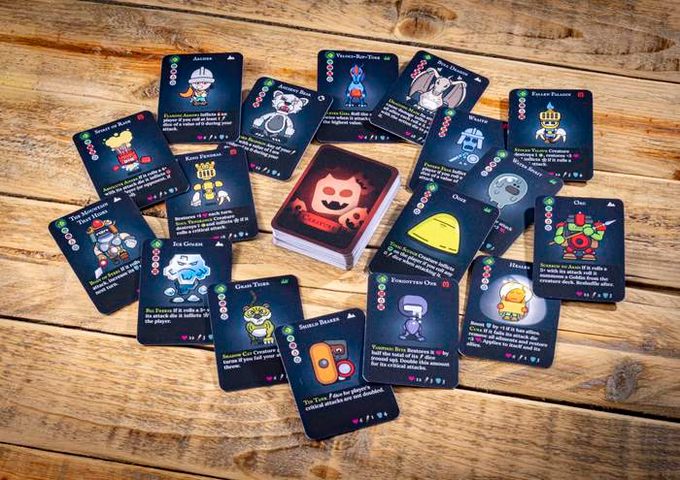
A perfect example is a game like TerraClash™ Grimoire. It’s built for quick, intense 10-15 minute matches. You get a complete, high-stakes battle that’s ideal for a lunch break or for firing off several rounds in one sitting. The pace has that same rapid-fire, decision-making feel of digital card games, but you get to keep the tangible fun of playing with friends around a table.
If you’re just starting out, you might find our guide on easy-to-learn card games really helpful. We're passionate about bringing this world to life, and you can be part of the story by checking out the TerraClash™ Grimoire Kickstarter campaign. To get a closer look at the gameplay and the world, you can also explore the TerraClash™ Grimoire page.
Ever felt a bit lost when players start throwing around acronyms like TCG, LCG, and 'deck-builder'? You're not alone. The world of modern card games is wonderfully rich and varied, but once you get your head around a few key ideas, it all clicks into place. Each type offers its own unique flavour of strategy and fun.
Let's break them down. Think of a Trading Card Game (TCG) like you’re a music mogul putting together a supergroup. You hunt for rare and powerful musicians (cards) in booster packs, hoping to find that one superstar to complete your perfect lineup. The real work happens before the concert (the game) even starts. It’s all about collecting, trading, and crafting your ultimate deck from a massive, ever-expanding pool of cards.
A Living Card Game (LCG), on the other hand, is more like a high-end meal-kit subscription. You get new, fixed sets of cards on a regular schedule. No random boosters here, so everyone has access to the same ingredients. This levels the playing field and removes the frantic 'chase' for rare cards. Your strategy comes from how you combine these known sets, not from what you happen to find.
Then we have deck-building games, which completely flip the script. Imagine you’re a contestant on a high-speed cooking show. Everyone starts with the same basic ingredients—a small, simple deck of cards. As the game unfolds, you use these starting cards to 'buy' more powerful ones from a central market, adding them right into your deck.
Your deck literally grows and becomes more powerful as you play. This means the strategy isn't just about what you do with your hand, but also about which new cards you grab and when. This in-game "inventory management" is a core mechanic many players adore, as it demands you constantly adapt.
This concept of improving your deck mid-game is something fans of card games like Dominion will know well. You get a similar feeling of reactive strategy in TerraClash™ Grimoire, where adapting to the shifting arena and managing your character's gear on the fly is your key to victory.
This map illustrates the core pillars that make card games such a compelling hobby, connecting the central idea of play with story, tactics, and community.
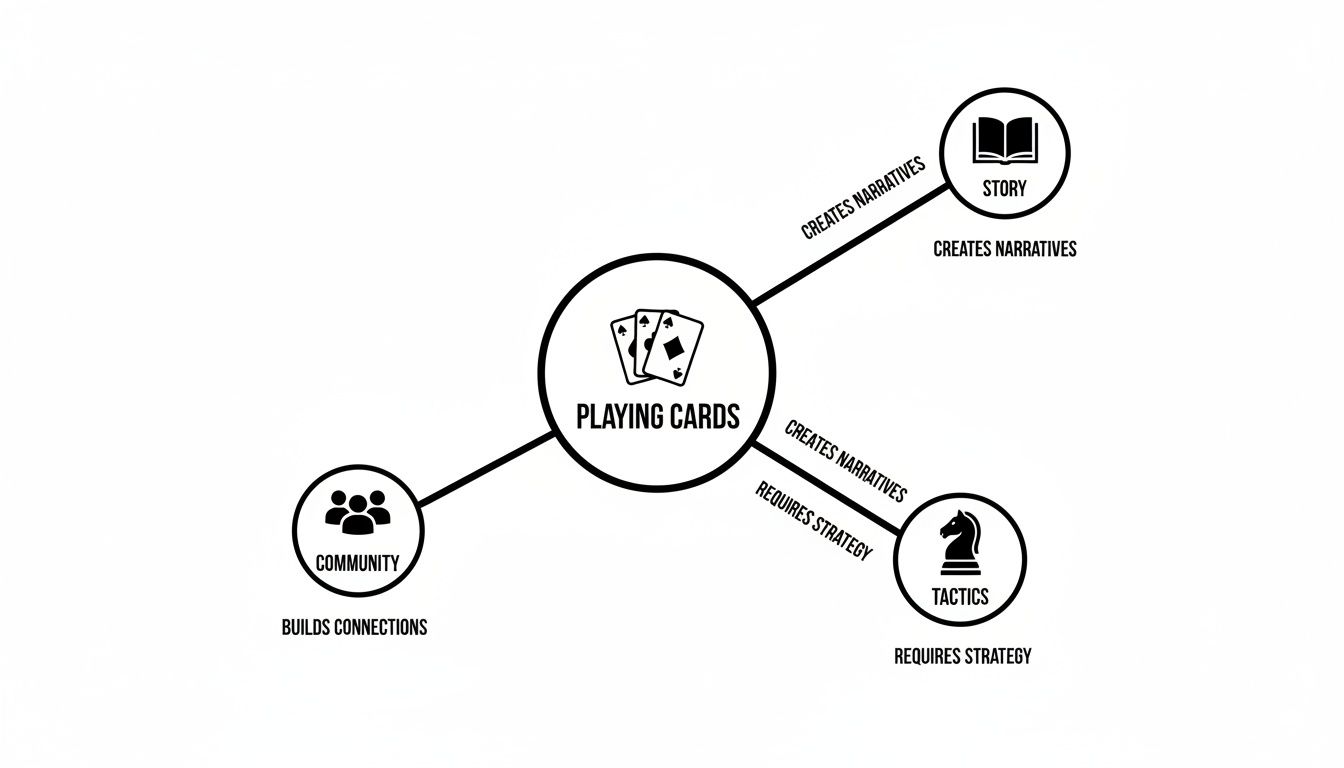
As you can see, the best card games are more than just a set of rules; they are a brilliant blend of strategic decision-making, narrative immersion, and the social bonds formed between players.
Many of the most exciting new card games borrow elements from these different styles to create fresh experiences. A game might take the pre-game deck construction of a TCG but package it in a single, non-collectable box. Others might weave deck-building mechanics into a larger adventure.
The real beauty of modern game design is this fusion of ideas. Designers are constantly finding new ways to mix and match mechanics, leading to games that feel both familiar and wonderfully new.
This is where fast-paced card games really come into their own. Games like TerraClash™ Grimoire capture the strategic depth of building a powerful hand and outsmarting your opponent but condense it into a thrilling 10-15 minute burst of action. It's a perfect blend for those who love deep tactics but don't always have hours to spare.
If this fast, strategic gameplay intrigues you, you can learn more by exploring the TerraClash™ Grimoire page. Even better, you can be part of the game's journey from the very beginning by visiting the Kickstarter campaign and helping bring this exciting world to tables everywhere.
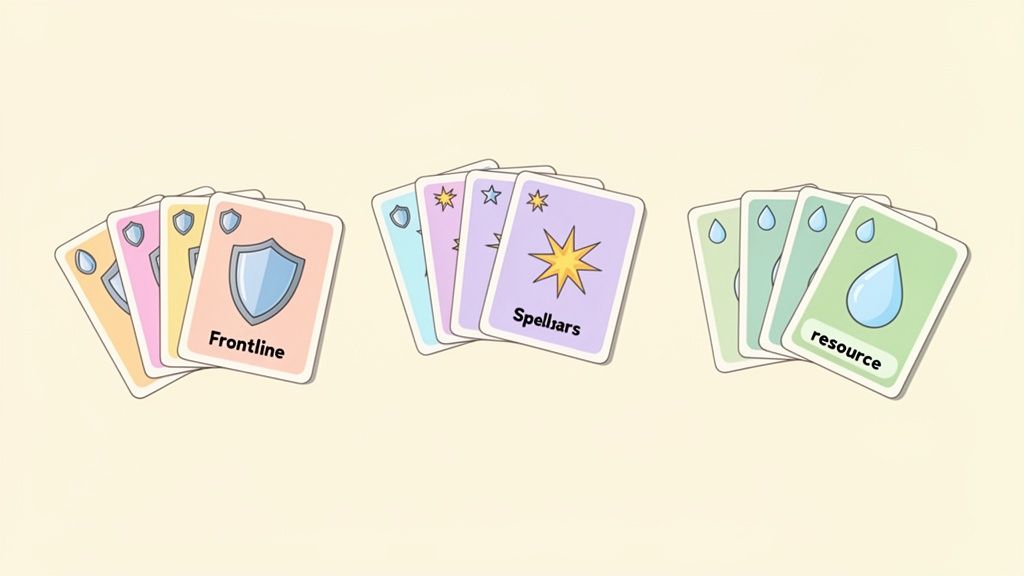
Knowing the different types of card games is one thing, but actually diving in and building your first deck? That’s where the real magic happens. This isn't about following some rigid blueprint; it's an act of pure creativity. You’re part general, part grand wizard, assembling your forces for the battle ahead.
Think of it like this: you need a frontline to dish out and soak up damage (your creatures), some heavy artillery to control the board (your spells), and a reliable supply line to fund it all (your resources or ‘mana’). This simple idea is the heart of so many brilliant card games and a skill you'll sharpen with every single match.
This kind of strategic depth is a huge part of why the hobby is booming. The UK board games market hit a staggering USD 669.2 million in 2025 and is on track to break USD 1,541.2 million by 2034, with card games leading that charge. In fact, a recent survey found that 35% of UK adults play weekly, a number that jumps to 52% for players aged 18-34. It’s clear competitive card gaming has found a massive audience.
One of the first hurdles every new player faces is the mana curve. It sounds technical, but it’s really just a way to visualise the cost of the cards in your deck. A good curve means you can always play something useful, whether it’s a cheap card on turn one or a game-ending powerhouse later on.
If your deck is packed with expensive, flashy cards, you’ll be a sitting duck for the first few turns. On the flip side, a deck full of only cheap, weak cards will get run over as soon as your opponent starts dropping their big threats. The goal is a smooth, steady ramp-up that lets you build momentum turn after turn.
Beyond the raw power of individual cards, the true soul of deck-building is in finding clever card synergies. This is that incredible moment when two or more cards combine to create an effect far bigger than what they could do alone. It's when a simple spell suddenly turns your tiny creature into an unstoppable behemoth, or one card lets you draw three more just when you needed them.
These explosive combinations create the most unforgettable stories in card games. They’re your reward for thoughtful planning and a bit of daring experimentation. Finding a new synergy feels like you’ve cracked a code that no one else has seen. For a peek into how even the weakest cards can become a cornerstone of your strategy, you can check out our deep dive on goblin magic card combos.
The essence of a great deck is not just having the best cards, but having cards that make each other better. It’s a puzzle where each piece you add strengthens the whole picture.
Modern games are designed to make this discovery process incredibly fun. In TerraClash™ Grimoire, for instance, you’re always hunting for the right mix of characters, weapons, and spells to outwit your opponent. And because a match is over in just 10-15 minutes, you get to test your wild ideas in quick, exciting bursts, learning what works and what doesn't at a breakneck pace.
This design puts the power to innovate right in your hands, turning abstract theory into thrilling, hands-on practice. If that blend of fast-paced action and creative strategy sounds like your cup of tea, you can learn more on the TerraClash™ Grimoire page. To help bring the game to life, check out the live Kickstarter campaign and become part of its story.
Not all card games march to the same beat. Some unfold with the deliberate, patient tension of a chess match, demanding you meticulously plan every move and control the board. These are the marathon games, where a victory is ground out over 45 minutes or more, and long-term strategy is absolutely king.
Then you have the others. The frantic, nail-biting duels. These games are all about rapid-fire combos, explosive turns, and razor-sharp tactical decisions. The whole rhythm is different—less a slow march, more a high-energy dance where you react, adapt, and seize victory in a flash.
The card game world offers a huge spectrum of pacing, from sprawling ‘engine-building’ sagas to quick, decisive skirmishes. You'll generally find two main philosophies at play:
Games that lean into these different rhythms cater to different moods and player types. An epic fantasy campaign game is perfect for a dedicated games night. But what about when you want that strategic hit without having to clear your entire evening?
This is where games that respect your time really come into their own. Life is busy, and there’s a growing hunger for entertainment that is short but still deeply strategic. The UK’s collectible card game scene is a brilliant example of this, tying into a broader European boom where physical cards are expected to grow at a CAGR of 11.2% through 2033. This growth is fuelled by a collector culture where UK players value premium fantasy sets—which saw sales surge by 22% in 2023-2024—but also by games that fit neatly into a packed schedule. You can discover more insights about Europe's card game market to see just how player habits are changing.
Fast-paced card games are the perfect solution for the modern player. They deliver all the tactical depth and satisfying moments of outsmarting an opponent, just packed into a much shorter, more accessible timeframe.
A game like TerraClash™ Grimoire is the perfect example of this philosophy in action. It was built from the ground up for speed, delivering a complete, high-stakes strategic battle in just 10-15 minutes. It truly captures the essence of a tactical skirmish, where every single turn matters and the tide can turn in an instant.
Choosing a fast-paced game doesn’t mean you’re sacrificing depth. Far from it. The strategy is simply more concentrated. The feeling you get from pulling off a clever combo or making a game-winning play is just as potent, whether it happens on turn three or turn thirty.
These shorter games are ideal for:
Games like TerraClash™ Grimoire play similarly to other quick, tactical card battles where smart positioning and reacting to your opponent's moves are absolutely key. It’s all about getting that full gaming 'hit'—the tension, the strategy, the triumph—without needing to set aside half your day.
If you’re intrigued by this blend of speed and strategy, take a closer look at the TerraClash™ Grimoire page to see how it works. You can also become a foundational part of our community by supporting the live Kickstarter campaign.
We've explored the vast and varied world of card games, from thoughtful deck-builders to quick-fire duels. Now, let’s look at a game that weaves these threads together into something truly special. TerraClash™ Grimoire will feel like coming home for anyone who loves strategic card games, but it’s an experience that’s entirely its own.
This is a game that gets right to the heart of what modern tabletop gaming is all about: rich, deep tactics packed into a short, punchy session. That fast-paced, 10-15 minute playtime we mentioned earlier? That's the soul of TerraClash. The rules are so straightforward you can teach a new player in minutes, yet the strategic depth is immense. It rewards clever thinking and the ability to adapt on the fly.
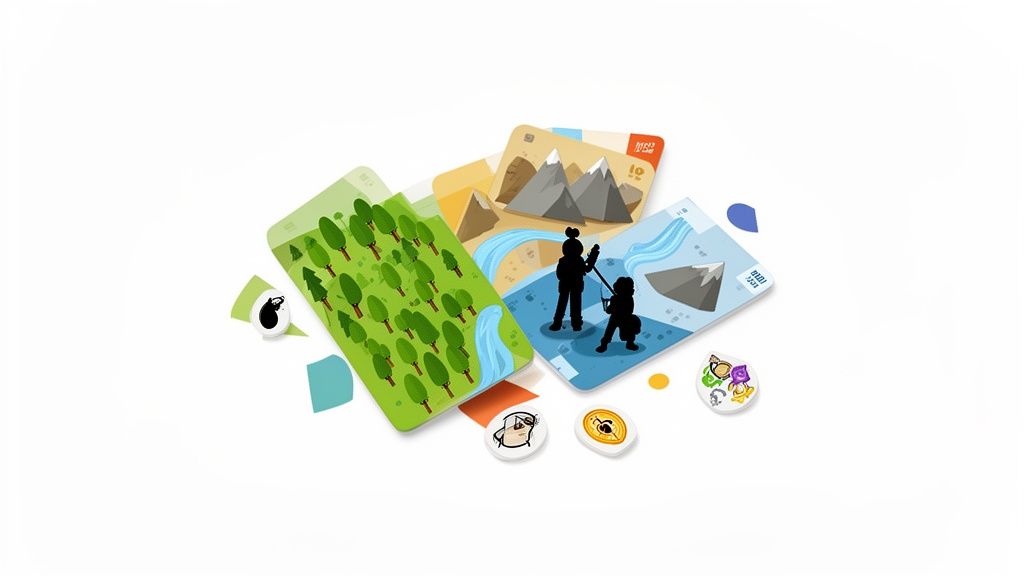
What really makes TerraClash™ Grimoire stand out is how the world itself is a living, breathing part of every match. Before the first card is even played, you'll draw random Terra Cards that assemble to create a brand-new arena. This means the board, the challenges, and the opportunities are different every single time you play.
One game might see you clashing over a resource-rich mountain pass; the next, you could be navigating a treacherous swamp. This constant flux guarantees that no two games feel alike. It keeps the strategy from ever getting stale and forces you to think on your feet, constantly adjusting your plans to the ever-changing landscape.
TerraClash™ Grimoire captures the essence of classic card combat and smashes it together with the thrill of a world that refuses to sit still. It's a game of rapid-fire battles, shrewd inventory management, and tactical positioning in an arena that shifts with every match.
If you're someone who loves the character progression of an RPG or the careful resource management of a deck-builder, TerraClash™ Grimoire will scratch that itch. It has the same strategic DNA as games where you gear up heroes and unleash powerful abilities, but it distils that epic feeling into its signature quick-fire format.
Your success will hang on a few key decisions:
This blend of mechanics makes for a game that’s perfect for a busy life, offering meaningful choices without demanding an entire evening. If this sounds like your kind of adventure, you can see what makes TerraClash™ unique by exploring the Grimoire page.
Diving into the world of modern card games can feel a bit like exploring a new continent. It’s vast and exciting, but that sheer variety can leave you with a few questions. I'm here to tackle some of the most common queries we hear from players, clearing up the fog so you can get straight to the fun.
Think of me as your friendly local game shop expert, ready to point you in the right direction. Let's get started.
This is easily the question I hear most often from newcomers. The good news is, it’s a simple distinction that boils down to one thing: when do you actually build your deck?
With a Trading Card Game (TCG), like the legendary Magic: The Gathering, all the hard work happens before you even sit down to play. You’ll spend hours poring over your personal collection, carefully crafting that perfect 60-card masterpiece you’ll bring to the table. The game itself is about seeing if the strategy you built beforehand can outwit your opponent’s.
A Deck-Building game, on the other hand, completely flips that script. Everyone starts the game on equal footing, usually with the same small, basic set of cards. The real game is using those starting cards to buy more powerful ones from a shared pool, adding them to your deck as you play.
The act of building your deck becomes a core part of your in-game strategy. You're not just playing your cards; you're constantly tuning your 'engine' on the fly to counter your opponents and seize opportunities as they pop up.
This is a piece of the DNA you'll find in TerraClash™ Grimoire. While not a pure deck-builder, it shares that spirit of adapting your game plan mid-battle. You'll constantly be managing your hand as your inventory, deciding which spells and items to grab and when to use them. It turns every match into a dynamic puzzle that really makes you think on your feet.
Absolutely! The idea that deep strategy needs a huge time commitment is one of the biggest myths in tabletop gaming. While I love a sprawling, hours-long epic as much as anyone, the industry has become fantastic at creating games that deliver a rich, satisfying strategic hit in a much shorter time.
Many modern card games are designed specifically for this. They get that we have busy lives but still crave that mental workout and the thrill of outsmarting an opponent. The depth in these games isn't measured in hours; it's found in the weight of your choices, the clever card combos, and the high-stakes moments packed into every single turn.
A game like TerraClash™ Grimoire is the perfect example of this philosophy. It's built from the ground up to give you a complete, tactical duel in just 10-15 minutes. You get all the tension and triumph of a fantasy battle in the time it takes to brew a cup of tea. It's proof you don't need to set aside an entire evening to get your gaming fix.
Honestly, the cost of getting into card games really depends on what you choose. It's true that some, especially competitive Trading Card Games, can become a pricey hobby if you feel the need to chase the rarest cards to stay on top of the competitive scene.
But that’s only one corner of the hobby. There's a massive and growing world of standalone card games that are much more wallet-friendly. These games give you a full, self-contained experience right out of the box.
TerraClash™ Grimoire sits firmly in this camp. It’s a complete game in one box, offering huge replayability without any pressure to keep spending. This makes it a brilliant starting point for anyone curious about strategic card games but worried about the potential cost.
One hundred percent, yes! I've met so many players who adore the epic stories and character growth of Role-Playing Games (RPGs) like Dungeons & Dragons but just can't get a group together regularly. Card games can be the perfect way to scratch that RPG itch in a much more manageable format.
So many card games manage to capture the heart of an adventure:
For instance, TerraClash™ Grimoire gives you that grand feeling of adventure with its fantasy combat, unique character abilities, and deep item system. The battlefield itself changes every game, making each session feel like a brand new quest. It’s the ideal way to get a quick dose of epic adventure when you can't line up schedules for a full-blown RPG campaign. You get the fantasy, the tactics, and the thrill, all in a quick 10-15 minute match.
Hopefully, this has answered some of your burning questions and shown just how approachable and varied the world of modern card games can be. If you're looking for a fast, strategic, and endlessly replayable adventure, we at TerraClash™ truly believe our game is the perfect place to start.
You can learn more about its unique mechanics and vibrant world by visiting the TerraClash™ Grimoire page. To become part of our growing community and help bring this game to more tables, check out our Kickstarter campaign and join the adventure today.