Finding the perfect card game can feel like a quest in itself. You want something quick to learn, engaging enough to play repeatedly, but not so simple it becomes dull. This list is your curated guide to the world of card games easy enough for a total beginner, yet filled with surprising depth. We have gathered fantastic options, from timeless classics to modern gems, that are perfect for any occasion, whether you are looking for a family-friendly activity or a new challenge with friends.
Many people believe simple games lack strategic value, but the opposite is often true. Learning the fundamentals through accessible games builds a solid foundation for more complex tabletop experiences. Throughout this guide, we will explore not only how to play each game but also how their core mechanics, like hand management and deduction, can prepare you for deeper strategic adventures.
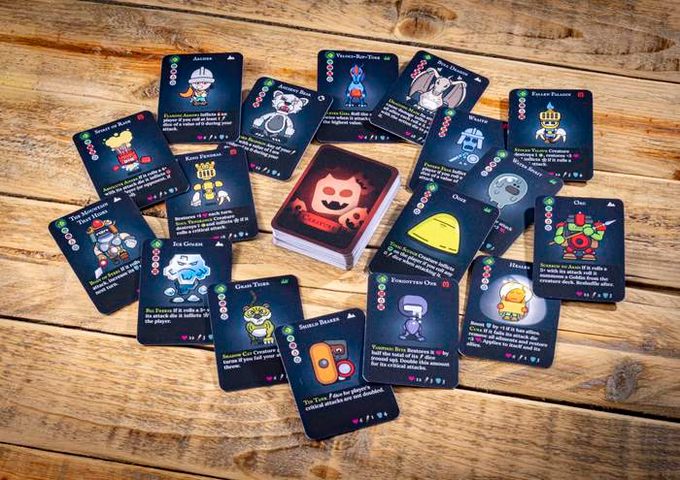
Consider it your training ground for the fast-paced fantasy battles found in games like TerraClash™ Grimoire, which offers a complete, dynamic experience in just 10-15 minutes. By mastering these easy-to-learn games, you will be well-equipped to dive into richer, more intricate worlds. Let's find your next favourite game.
Go Fish is the quintessential first card game for many, a timeless classic passed down through generations. Its beauty lies in its simplicity. The goal is to collect sets of four matching cards, known as 'books'. On your turn, you simply ask a specific opponent for a card rank you already hold. If they have it, they must hand over all their cards of that rank. If they don’t, they tell you to "Go Fish," and you draw a card from the central pile. The game ends when all thirteen books are made, and the player with the most books wins.
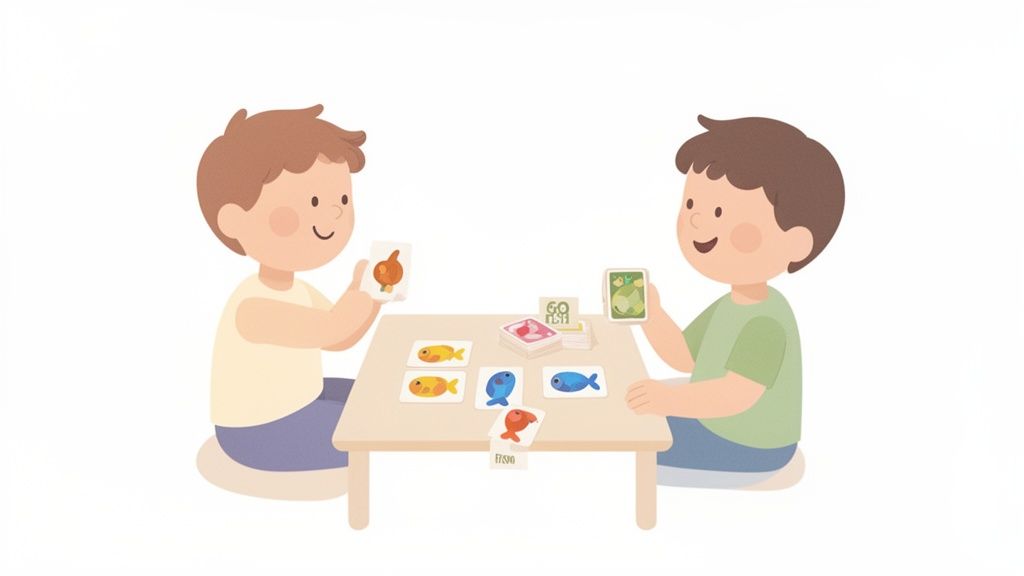
Go Fish is one of the most accessible card games easy enough for young children to grasp instantly, yet it introduces fundamental mechanics found in more complex games. It teaches turn-taking, set collection, and basic memory skills. For example, remembering which player asked for a certain card can give you a clue about what they're collecting.
This gentle introduction to strategic thinking makes it an ideal precursor to modern games. The concept of asking for what you need echoes the resource acquisition found in deck-building games. While far simpler, the act of building sets in Go Fish can be seen as a basic form of the combo-building and strategic hand management you'd find in a fast-paced game like TerraClash™ Grimoire, where you assemble magical spell combinations.
While the basic rules are great for beginners, you can easily modify them to keep the game engaging for everyone.
Go Fish is a foundational game that prepares players for a deeper journey into the world of tabletop gaming. If you enjoy the simple joy of collecting sets here, you're ready for the next step. Consider checking out the exciting world of TerraClash™, a fast-paced game that builds on these basics with thrilling magical duels, which you can learn more about on its Kickstarter campaign page.
Crazy Eights is a classic shedding-type card game where the first player to get rid of all their cards wins. Its simple rule set is a direct ancestor to modern hits like UNO. On your turn, you must play a card from your hand that matches either the rank or the suit of the top card on the discard pile. If you can't play a card, you must draw from the stock pile until you can. The game's namesake, the eight card, is a wild card that can be played on any card, allowing the player to declare a new suit for the next player to follow.
As one of the most recognisable card games easy enough for almost anyone to learn in minutes, Crazy Eights introduces the core concept of card matching and hand management. Players must think one step ahead, deciding whether to play a matching card or hold it to respond to a future play. The strategic use of the eight card teaches players the power of disrupting the flow of a game and controlling the turn, a foundational skill for more advanced games.
This element of turn manipulation and tactical card play is a simplified version of what you might find in a fast-paced game like TerraClash™ Grimoire. In TerraClash™, you'll also react to your opponent's moves, but instead of changing a suit, you're casting powerful spells to counter their attacks and strategically manage your magical resources. The quick decision-making needed in a 10-minute round of Crazy Eights is excellent practice for the lightning-fast duels in TerraClash™.
The beauty of Crazy Eights lies in its adaptability. You can easily adjust the rules to create a unique experience every time you play.
Crazy Eights provides a superb foundation in reactive card play and strategic thinking. If you enjoy the thrill of changing the game with a single card, you’re well-prepared for the dynamic magical battles of TerraClash™. Discover how it builds on these ideas on its Kickstarter campaign page.
War is often the very first card game anyone learns, a rite of passage based purely on the luck of the draw. Its rules are so straightforward they can be explained in seconds. Two players split a deck of cards evenly between them, face down. Simultaneously, they both flip their top card. The player with the higher-ranking card (Aces are high) wins the round and takes both cards, adding them to the bottom of their pile. If the cards are the same rank, it’s time for "War"! Each player places three cards face-down and then flips a fourth card face-up. The winner of this face-off takes all the cards played in that round. The game ends when one player has captured all the cards.
War is the ultimate entry point into the world of card games, making it one of the most fundamental card games easy enough for even toddlers to understand. There is no strategy, no hand management, and no complex decision-making, which removes all pressure and allows young children to simply enjoy the concept of turn-taking and number comparison. It’s an excellent tool for teaching number recognition and the concept of "greater than" in a fun, hands-on way.
While its mechanics are pure chance, the back-and-forth dynamic of winning and losing cards introduces the core conflict present in all competitive games. The excitement of a "War" tie-breaker is a simple introduction to the heightened stakes and tension you might feel in a fast-paced magical duel. For instance, the quick 10-15 minute playtime of a game of War mirrors the rapid, action-packed rounds found in a game like TerraClash™ Grimoire, where every turn can shift the balance of power.
The basic game can become repetitive, but a few simple tweaks can keep it fresh and engaging for young minds.
War serves as the ground floor of card gaming. Once a child masters its simple flow, they have the confidence to move on to games with a little more choice, like Go Fish. If the thrill of a quick, decisive battle appeals to you, consider exploring the strategic depth of TerraClash™, which offers fast-paced magical combat. You can see it in action on its Kickstarter campaign page.
Love Letter achieves a remarkable feat: it packs a full game of deduction, risk, and luck into a mere handful of cards. Each player starts with a single card, and on their turn, they draw one card and then play one, activating its special ability. The goal is simple: be the last player standing or have the highest-value card when the round ends. You might play a Guard to guess an opponent's card and knock them out, or a Prince to force a player to discard their hand. The game, popularised by designer Seiji Kanai, is a masterclass in minimalist design, where every decision is tense and meaningful.
Love Letter is one of the best card games easy enough to learn in two minutes, but its strategic depth keeps players coming back. It’s an excellent introduction to deduction mechanics and reading your opponents. For example, if a player uses a Baron to compare hands with someone and one of them is eliminated, you gain crucial information about the surviving player’s card value. This quick-fire logic is ideal for newcomers.
This focus on character abilities and direct player interaction is a great stepping stone towards more complex duelling games. While Love Letter is about eliminating players, the concept of using specific card effects to outwit an opponent is central to games like TerraClash™ Grimoire. In that fast-paced game, you use spells with unique effects to deplete your rival's life force, much like you use character abilities in Love Letter to knock rivals out of the round. Both games offer thrilling, rapid gameplay sessions of around 10-15 minutes.
The core game is fantastic, but you can tailor the experience to your group for even more fun.
Love Letter proves that a game doesn't need a huge box or a long rulebook to be deeply engaging. If you enjoy the quick, tactical decisions here, the next logical step is a game that expands on these duelling mechanics. Consider exploring the magical battles of TerraClash™, which you can support on its Kickstarter campaign page.
Exploding Kittens is a highly-strategic, kitty-powered version of Russian Roulette. In this wildly popular party game, players draw cards until someone draws an Exploding Kitten, at which point they are out of the game. That is, unless they have a Defuse card, which lets them neutralise the threat and secretly reinsert the Kitten back into the deck. The rest of the deck is filled with action cards that let you skip your turn, peek at the deck, attack other players, and generally cause chaos. The last player left standing wins.
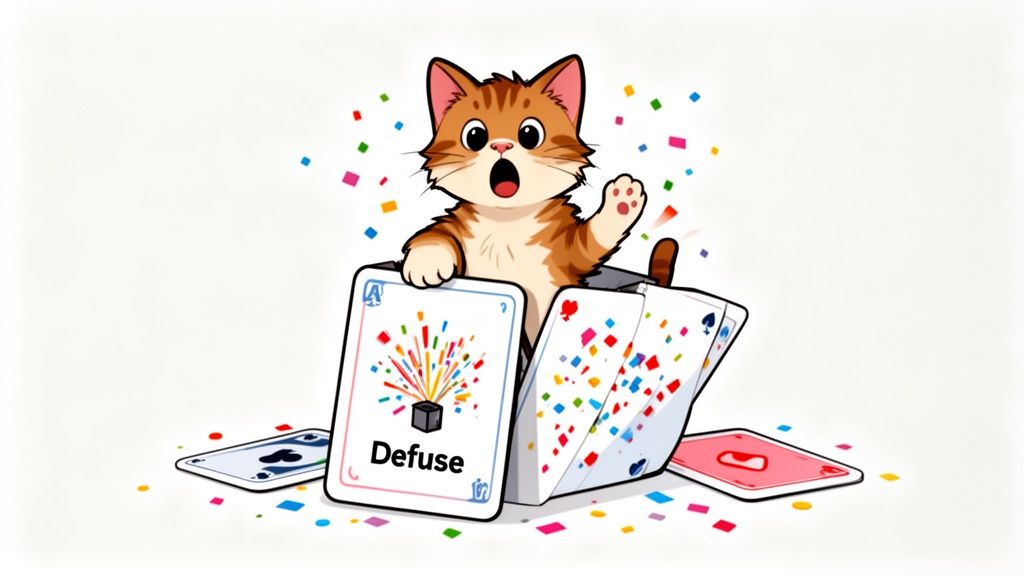
Exploding Kittens proves that card games easy to learn can also be filled with tension, strategy, and hilarious moments. Its core loop of "draw a card, don't explode" is simple, but the action cards introduce a surprising level of tactical depth. Players learn about hand management, risk assessment, and the art of bluffing. You might hold onto a powerful card, waiting for the perfect moment to force an opponent into drawing multiple cards from a deck you suspect is about to blow.
This blend of luck and direct player interaction is a fantastic introduction to more competitive card games. The tactical use of action cards to disrupt opponents' plans is a key skill. It shares a common thread with the fast-paced duels in TerraClash™ Grimoire, where you must manage your magical resources and strategically deploy spells to outwit your rival mage, all within a thrilling 10-15 minute match.
The game's chaotic nature is its main appeal, and you can lean into it for maximum enjoyment.
Exploding Kittens is a gateway game that teaches players the joy of out-thinking their friends in a low-stakes, fun-filled environment. If you enjoy the thrill of using a special card to turn the tables, you'll be well-prepared for the next level. Find out more about building your magical arsenal by checking out the TerraClash™ Kickstarter campaign page.
Uno is a globally recognised household name, a vibrant and fast-paced game of matching and strategy. The objective is straightforward: be the first player to get rid of all your cards. Each turn, you play a card from your hand that matches the colour or number of the card on top of the discard pile. The real excitement comes from the action cards-Skip, Reverse, and Draw Two-which can completely change the course of the game and create memorable, interactive moments.
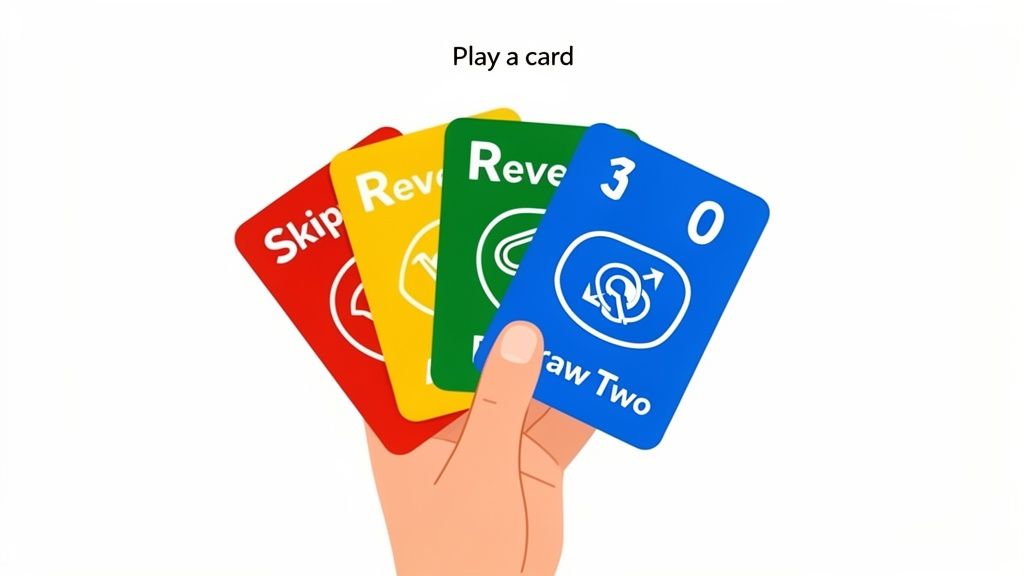
Uno is one of the ultimate card games easy enough for almost any age group to learn in minutes, making it a staple for family gatherings and parties. It expertly teaches hand management and the importance of timing. Deciding when to play a powerful Draw Four or hold onto it for a critical moment introduces a layer of tactical thinking that serves as a brilliant stepping stone to more complex games.
This blend of simple rules and tactical depth prepares players for games where card effects are central. The interactive, reactive nature of Uno's action cards is a basic form of the spell-casting and counter-play you’ll find in TerraClash™ Grimoire. In that fast-paced game, players use magical abilities to disrupt opponents, mirroring Uno’s "take that" mechanics but with a richer, fantasy theme. A game can also be over in 10 - 15 minutes, making it a great quick game to play.
The official rules are just the beginning; Uno is famous for its "house rules" that add new layers of fun and chaos.
Uno's enduring appeal lies in its perfect balance of simplicity and surprise. If you enjoy the quick, reactive gameplay here, you're well-prepared for the dynamic duels in TerraClash™. Learn more about this exciting game on its Kickstarter campaign page.
Skull King is a thrilling pirate-themed twist on classic trick-taking games like Hearts or Spades. Its core lies in a bold prediction: at the start of each of the ten rounds, every player must bid on the exact number of ‘tricks’ they believe they’ll win. You then play out the round, aiming to meet your bid precisely. Cards include numbered suits, powerful Pirates, the fearsome Skull King himself, and special cards that can turn the tide of a trick, leading to dramatic wins and cunning losses.
Skull King is one of those card games easy enough to teach in minutes but provides a surprising amount of depth. It masterfully introduces the concepts of bidding, risk assessment, and bluffing. You learn to read your hand and make an educated guess, a skill that requires both logic and a bit of gut feeling. Paying attention to what others have played is key to figuring out how to win or, just as importantly, lose a trick on purpose.
This blend of prediction and hand management serves as an excellent foundation for more tactical games. The act of bidding based on your hand’s potential is a light version of the strategic planning you’ll find in TerraClash™ Grimoire, where you must anticipate your opponent's moves while planning your own spell combinations. The quick rounds, often lasting just a few minutes, build up to a satisfying full game, much like how the rapid 10-15 minute sessions of TerraClash™ create an epic adventure.
The base game is fantastic, but a few small adjustments can enhance the experience for your group.
Skull King proves that a game doesn't need complex rules to be strategically rewarding. If you enjoy the thrill of outsmarting opponents here, you are well-prepared for faster, more direct duels. Consider exploring the quick-fire magical combat of TerraClash™, which you can learn more about on its Kickstarter campaign page.
Sushi Go! is a delightful and fast-paced "pick and pass" card game where players aim to grab the best combination of sushi dishes as they fly by. Over three rounds, you simultaneously choose a card from your hand, play it face down, and then pass the rest of your hand to the player next to you. Everyone reveals their chosen card, and the process repeats until all cards are played. The goal is to score the most points by collecting matching sets of sushi or dipping them in wasabi for triple value.
As one of the most accessible card games easy enough for anyone to learn, Sushi Go! perfectly introduces the "card drafting" mechanic found in many modern hobby games. It teaches foresight and adaptability. You have to balance taking cards you need with preventing opponents from getting the cards they want. The simultaneous play keeps everyone engaged, and with games lasting only about 15 minutes, it’s a perfect opener for any game night.
The quick decision-making and set collection in Sushi Go! have similarities to the strategic choices in a game like TerraClash™ Grimoire. In both games, you're building combinations from available options to maximise your outcome. While Sushi Go! is about points, TerraClash™ uses a similar rapid-fire decision process for building spell combos to defeat monsters and rivals in an exciting 10-15 minute fantasy adventure.
The beauty of Sushi Go! is its quick, light-hearted nature. You can enhance the experience with a few simple tips.
Sushi Go! is a fantastic gateway into modern board gaming mechanics, wrapped in a charming and delicious theme. If you love the fast pace and combo-building, you're ready for adventures that use these skills in a more thematic setting. Discover how these mechanics translate into magical combat on the TerraClash™ Kickstarter campaign page.
We’ve journeyed through a landscape of wonderfully accessible card games, from the simple turn-based duels of War to the strategic bluffing of Skull King. Our exploration has shown that the label "easy" doesn't mean a lack of depth or excitement. Instead, it signifies a low barrier to entry, a gateway into a world of shared laughter, friendly competition, and memorable moments around the table.
The games we've covered, like Uno and Crazy Eights, build a foundation of core mechanics, teaching you about hand management, turn order, and reacting to your opponents' plays. Others, such as Love Letter and Exploding Kittens, introduce you to the power of special abilities and calculated risk. You've realised that even simple rules can create compelling decisions and thrilling outcomes. These are the fundamental building blocks of the entire tabletop hobby, and by mastering them, you've already taken your first steps into a larger world.
If you’ve found yourself enjoying the quick, engaging nature of these games but are ready for an experience with a little more narrative flavour and strategic progression, the next step doesn't have to be a complicated one. Many modern games build upon the very principles you've just seen. The fast-paced decision-making of Sushi Go! and the character-driven deduction in Love Letter are direct precursors to more thematic adventures.
This is precisely where TerraClash™ Grimoire finds its place. It was designed to capture that 'easy to learn, hard to master' spirit that makes the best card games easy and engaging, but it infuses it with the soul of a grand fantasy quest. Each game is a fast-paced 10-15 minute session where you build your character, battle fierce monsters, and make choices that shape your journey. It takes the simple card-playing mechanics you're now familiar with and elevates them into a deep, replayable deck-building experience without a steep learning curve. If you want a game that feels like a big adventure in a small, quick-to-play package, this is your perfect destination.
The true value of starting with easy card games is discovering what you enjoy. Do you like bluffing? Direct competition? Cooperative planning? Once you know, you can confidently seek out new experiences that expand on those elements. Your journey is just beginning, and with the skills you've picked up, you’re perfectly equipped for whatever challenge comes next. Happy gaming!
Ready to take your card gaming to the next level without a complicated rulebook? TerraClash offers the depth of a deck-building adventure in a fast, beginner-friendly format. Explore the world of TerraClash and see how easy it can be to become a hero.