Hark, brave souls and masters of the tabletop realm! You, who have shuffled decks under flickering tavern lights and rolled dice against fate itself, know the thrill of a well-played card. The air crackles with potential, a single piece of cardboard holding the power to turn the tide of battle, a feeling that resonates through countless fantasy adventures.
Today, we delve into the grimoires of a legendary game, seeking to understand the arcane principles behind Magic the Gathering best cards. This is more than a simple catalogue of power; it is an exploration of the very foundations of strategy that define great deckbuilding games. We will dissect the concepts that make a card truly legendary, from the explosive potential of mana acceleration to the subtle art of hand disruption and the raw might of creature dominance.
Understanding these core mechanics is the key to mastering any tabletop battlefield. The lessons learned from these iconic pieces of cardboard transcend a single game, offering timeless wisdom for your own strategic creations. The same principles of resource management, board control, and powerful synergies are the cornerstones of new adventures, like the roguelite quests awaiting in the indie game, TerraClash, a new campaign forged for adventurers aged 12 and up. By examining the anatomy of these powerful cards, you are not just learning about one game's history; you are honing the skills needed for every future duel and every new tabletop world you choose to conquer. Let us begin our journey into the heart of cardboard power.
In the grand tapestry of spellcraft, few forces are as fundamentally game-altering as the ability to bend time itself, to summon forth immense power long before your rivals expect it. This is the realm of fast mana acceleration, a cornerstone strategy that defines many of the magic the gathering best cards. It is the art of generating more mana than the standard one land per turn, allowing you to cast powerful spells and creatures far ahead of the natural curve.
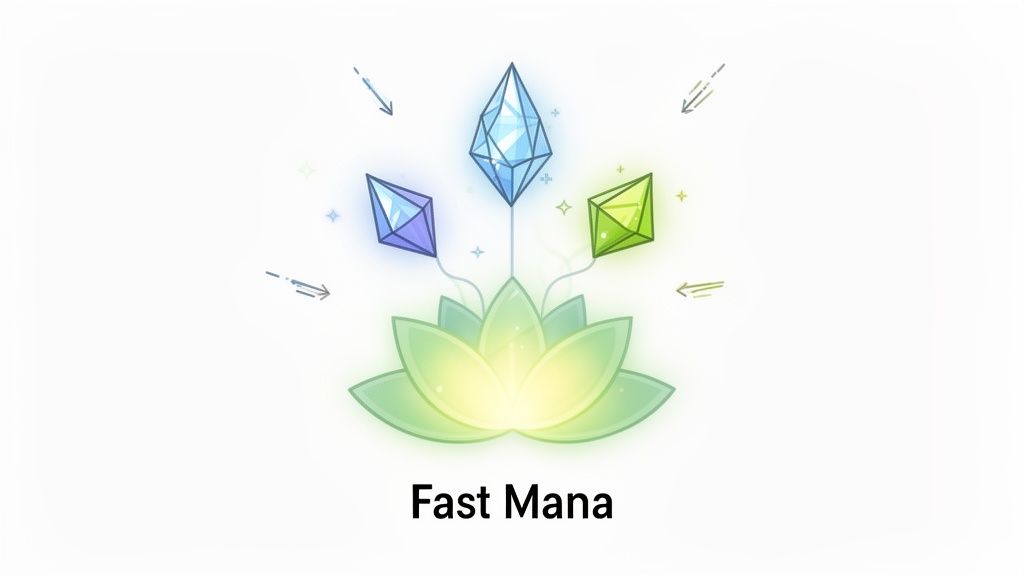
Think of the legendary Black Lotus, a card so potent it can produce three mana of any single colour for free, enabling explosive, game-winning plays on the very first turn. In other formats, the ubiquitous Sol Ring provides a consistent two-mana advantage from a single-mana investment, a staple in Commander decks for its sheer efficiency. Even the humble Llanowar Elves, a one-mana creature that taps for green mana, has been a foundational piece of green strategies for decades, proving that acceleration comes in many forms. These cards are the magical conduits that fuel your arcane engine, letting you outpace your opponents and seize control of the battlefield.
To truly master fast mana, one must think like a grand architect, planning several moves ahead. Merely adding mana sources is not enough; you must have a powerful payoff to justify their inclusion.
The principle of accelerating resources to gain a strategic edge is a universal truth in tabletop gaming. In the roguelite deckbuilder, TerraClash, this same concept allows you to gain an edge in your adventure, mirroring the strategic depth found in Magic. You can follow its journey towards its Kickstarter campaign here.
If mana is the fuel, then cards are the spells themselves, the very options at your command. The art of card draw and establishing advantage engines is the lifeblood of any successful mage, ensuring a steady flow of answers, threats, and resources. Having more cards than your opponent is a direct path to victory, and many of the magic the gathering best cards are celebrated for their ability to keep your hand full and your options open. It is the practice of converting one resource, such as mana or a creature, into several new ones from your library.
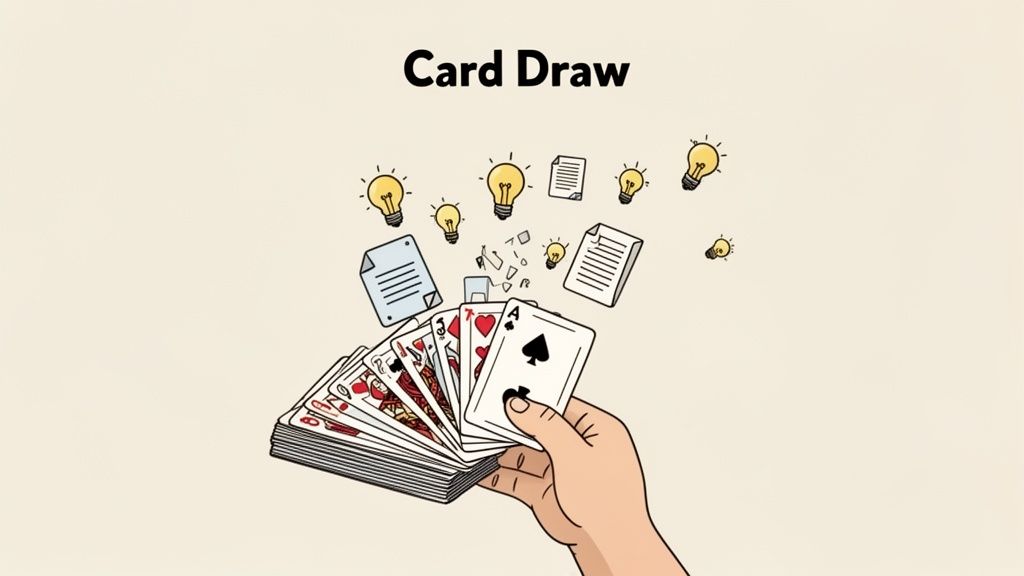
Consider the raw power of Ancestral Recall, a spell that turns a single blue mana into three fresh cards, an exchange so efficient it remains one of the most powerful effects ever printed. In a different vein, enchantments like Rhystic Study tax your opponents, creating a passive stream of card advantage every time they fail to pay the toll. Artefacts like Skullclamp can turn a board of small creatures into a powerful draw engine, while planeswalkers such as Jace, the Mind Sculptor offer unparalleled card selection and advantage turn after turn. These cards ensure you are never without a plan, always ready to pivot and respond to the ever-changing battlefield.
To keep the arcane knowledge flowing, you must be a shrewd librarian, selecting the right tools to access your deck's power without faltering. Simply drawing cards is not enough; it must be done with purpose and timing.
The concept of managing your hand and expanding your available options is a key tenet of strategic deckbuilding. In the forthcoming roguelite adventure, TerraClash, expanding your available options provides the crucial flexibility needed to overcome unexpected challenges. You can follow its unfolding saga on its Kickstarter campaign page here.
In the grand theatre of magical combat, the most ancient and direct path to victory is through the summoning of loyal minions to overwhelm your foe. This is the art of creature-based board dominance, a strategy as old as the game itself, where a well-organised army dictates the flow of battle. It represents a fundamental truth in the multiverse: a powerful presence on the battlefield is often the deciding factor, making cards that enable this strategy some of the magic the gathering best cards.
Think of the mighty Elvish Archdruid, a leader who not only provides mana but also grants a crucial +1/+1 bonus to all other Elves you control, turning a small band of creatures into a formidable legion. Consider the ever-adapting Tarmogoyf, a beast whose power and toughness grow with the variety of spells cast, becoming a colossal threat for a minimal two-mana investment. Even a utility creature like Snapcaster Mage asserts dominance by giving a spell in your graveyard a second life, providing both a body on the board and a critical strategic advantage. These creatures are the backbone of many winning strategies, proving that might on the battlefield often makes right.
To command a creature-focused deck is to be a master general, understanding that synergy and timing are paramount. A disorganised mob is easily defeated; a unified army is unstoppable.
The timeless strategy of assembling a synergistic force is a core element of many great tabletop games. In the deckbuilder TerraClash, this principle is central to your adventure. Combining the abilities of your heroes will determine your success against the encroaching darkness. Follow the journey to its Kickstarter campaign here to see how you can build your own legendary fellowship.
In the silent chess match of a Magic duel, some mages prefer to dismantle their opponent's strategy piece by piece rather than amass their own grand army. This is the path of control, a strategy built upon the foundation of a robust Control and Removal Suite. It is the art of answering threats, countering game-altering spells, and dictating the pace of the battle until your opponent's resources are exhausted, leaving you to claim victory in the quiet aftermath.
The power of this archetype lies in its efficiency and inevitability. Consider the elegant finality of Swords to Plowshares, which for a single white mana exiles any creature, no matter how colossal. Think of the quintessential red spell, Lightning Bolt, a versatile tool that can remove an early threat or deliver the final points of damage. The iconic blue Counterspell simply says "no" to an opponent's plan, while a board-clearing spell like Wrath of God resets the entire battlefield. Even proactive disruption like Thoughtseize dismantles a strategy before it begins, making these some of the magic the gathering best cards for any reactive player.
To become a master of control, you must be a patient sentinel, anticipating your opponent's every move and having the perfect answer at the ready. It's a discipline that rewards foresight and resource management.
The core principle of neutralising threats to manage the flow of combat is a key tactical element in tabletop gaming. In the roguelite deckbuilder, TerraClash, this concept is reflected in defensive manoeuvres and abilities that disrupt enemy attacks, teaching the importance of tactical neutralisation. You can follow its journey towards its Kickstarter campaign here.
Beyond mere brute force or attrition, there exists a path to victory woven from intricate connections and explosive chain reactions. This is the art of the combo, where a player assembles a specific sequence of cards that, together, create an effect so powerful it ends the game on the spot. These combinations are the pinnacle of strategic deckbuilding, turning seemingly innocuous cards into pieces of a game-winning puzzle and solidifying their place among the magic the gathering best cards.

This strategy is epitomised by classic pairings like Kiki-Jiki, Mirror Breaker and Pestermite, which can create an infinite army of hasty creatures to overwhelm an unprepared opponent. Modern iterations include the devastatingly efficient Thassa's Oracle combined with Demonic Consultation, allowing a player to win instantly by emptying their own library. These engines don’t just create value; they are the arcane machinery of certain victory, a testament to a player's ability to see the grand design hidden within their deck.
To successfully pilot a combo deck is to be a master watchmaker, carefully assembling delicate parts under immense pressure. Victory requires not just knowledge of your own plan, but anticipation of your opponent's attempts to disrupt it.
The concept of crafting game-winning synergies from individual components is a core tenet of deep strategic gameplay. In the roguelite deckbuilder TerraClash, players discover this same thrill by combining hero abilities and powerful items, creating emergent strategies that can turn the tide of battle. Uncover the secrets of powerful combinations by following the game's journey to its Kickstarter campaign here.
Beyond mere creatures and sorceries lies a unique class of ally: the Planeswalker. These powerful spellcasters are not just one-shot effects but persistent engines of advantage, capable of dominating the battlefield with their loyalty abilities. A strategy built around these iconic figures is one of attrition and overwhelming value, turning the game into a puzzle that opponents must solve or be consumed by. This is why cards that enable Planeswalker-centric strategies are counted among the magic the gathering best cards.
Think of the infamous Jace, the Mind Sculptor, a card so versatile and potent it can control your opponent’s draws, bounce threats, and ultimately win the game on its own. Consider Liliana of the Veil, whose relentless assault on an opponent's hand and board can strip them of all resources. More modern powerhouses like Teferi, Time Raveler completely warp the rules of engagement, shutting down interaction and generating card advantage with infuriating efficiency. These cards act as your lieutenants on the battlefield, executing a multi-turn plan that grinds your foes into submission.
To successfully command these powerful allies, you must treat them as the centrepiece of your grand design, protecting their influence as they secure your victory.
This concept of a persistent, powerful ally who grows in strength mirrors the character progression systems in RPGs. In the roguelite deckbuilder TerraClash, your hero gains abilities and enlists allies that provide continuous advantages throughout a run, echoing the strategic depth of commanding Planeswalkers. You can follow its journey towards its Kickstarter campaign here.
While towering beasts and cataclysmic spells often seize the spotlight, the true foundation of power in Magic lies in the very ground beneath your feet: your mana base. Land optimization and mana consistency is the subtle yet crucial art of ensuring you can cast your spells on time, every time. It is a discipline that separates apprentices from archmages, recognising that mana is the fundamental resource that fuels every action you take. An optimised mana base is a finely tuned engine, one of the most vital components when discussing magic the gathering best cards.
Think of the iconic fetch lands like Scalding Tarn, Arid Mesa, or Flooded Strand. These cards don't just find a single type of land; they provide unparalleled flexibility, searching your library for the exact colour you need at the precise moment you need it. This thins your deck, increasing the chance of drawing potent spells later in the game. Utility lands such as Wasteland and the even more powerful Strip Mine add another strategic layer, allowing you to disrupt your opponent's plans by destroying their most critical lands. These cards prove that your land drops can be as impactful as any creature you summon.
Building a consistent mana base is a science that requires foresight and careful calculation. It’s about more than just including enough lands; it’s about including the right lands.
The wisdom of resource management is a universal principle in strategic gaming. In the roguelite deckbuilder, TerraClash, this concept is mirrored in how you must efficiently manage your resources. Just as a well-built mana base in Magic ensures you always have the right power, managing your abilities in TerraClash ensures you are always prepared for the dangers ahead. You can follow its journey towards its Kickstarter campaign here.
In the chaotic dance of duelling mages, not all paths to victory are paved with grand, late-game incantations. Some of the most effective strategies are built on pure, unbridled aggression and the relentless pursuit of tempo. This philosophy dictates that overwhelming your opponent with a flurry of early threats is paramount, aiming to secure victory before their more powerful, slower magic can even be brought to bear. This focus on early-game dominance is a hallmark of many of the magic the gathering best cards.
Think of the blistering speed of a Goblin Guide, a one-mana creature that attacks immediately, putting immense pressure on your opponent from the very first turn. Consider the subtle power of Delver of Secrets, which can transform into a formidable flying threat for a single blue mana, controlling the skies while you disrupt the enemy's plans. Modern powerhouses like Ragavan, Nimble Pilferer and Dragon's Rage Channeler epitomise this, combining efficient threats with the ability to generate card advantage and disrupt the opponent's strategy. These cards are the swift, decisive blades in a spellcaster's arsenal, designed to strike hard and fast.
To champion an aggressive strategy is to live on a knife's edge, where every decision in the first few turns can dictate the outcome of the entire duel. You are the storm, and your goal is to break your opponent's defences before they can find shelter.
The art of seizing momentum is a vital lesson for any tactician. In the realm of the deckbuilder TerraClash, adopting an aggressive stance can overwhelm foes, demonstrating how early pressure can snowball into an unstoppable victory. This principle of tempo is a core element you can explore on its journey to its Kickstarter campaign here.
Beyond the clash of creatures and the weaving of powerful sorceries lies a more insidious form of magic: the art of dismantling your opponent's mind. This is the domain of discard and hand disruption, a strategy that wins not by overwhelming force, but by stripping away your rival's options before they can ever be realised. These are some of the magic the gathering best cards because they attack a resource as vital as life itself: the hand.
This strategy is epitomised by the infamous Thoughtseize, a spell that lets you peer into your opponent's grand plan and surgically remove their most crucial component for a small price in life. The brutal efficiency of Hymn to Tourach trades precision for chaos, tearing two cards at random from your foe's grasp and potentially wrecking their entire strategy. Modern strategies often leverage creatures that benefit from this mayhem, such as Tinybones, Trinket Thief, who grows in power as your opponent's hand dwindles. Attacking the hand is a proactive and devastating way to control the flow of the game, ensuring your opponent can never assemble their most potent combinations.
To master the art of hand disruption is to become a master of psychological warfare, forcing your opponent into impossible choices and capitalising on their weakened state.
The concept of dismantling an opponent's strategy before it can unfold is a powerful lesson in proactive control. In the roguelite deckbuilder TerraClash, denying your adversaries their key abilities and resources is a crucial path to victory, echoing the deep strategic value of hand disruption in Magic. You can follow its development towards its Kickstarter campaign here.
In the realms of Magic, there is a strength found not in singular titans but in the unwavering unity of a tribe. This is the essence of tribal and lord-based synergies, a strategy where the whole becomes far greater than the sum of its parts. By building your deck around a specific creature type, you create a harmonious engine where each new ally amplifies the power of those already on the battlefield, making them some of the magic the gathering best cards when combined.
These strategies rely on "Lords," creatures that grant bonuses to all other creatures of their type. Picture the noble Elvish Archdruid, who not only strengthens your Elven army but also taps to produce a torrent of green mana based on their numbers. See the Lord of Atlantis, who grants all Merfolk the ability to swim past island-bound defences, making them unblockable. Even the chaotic Goblin Warchief embodies this principle, making your Goblin horde cheaper to cast and giving them haste to swarm the enemy immediately. These cards are the chieftains and champions who turn a simple collection of creatures into an overwhelming, unified force.
To lead a successful tribe, you must think like a battlefield commander, ensuring your forces are well-supported and organised for maximum impact. A tribe without leadership is merely a mob; a leader without a tribe is a lone warrior.
The concept of creating strength through unity is a powerful theme in fantasy gaming. In the deckbuilder TerraClash, this idea is mirrored in building your party, where combining heroes with complementary skills unlocks potent abilities and multiplicative advantages, rewarding thoughtful team composition just as a tribal deck does. You can follow its journey to its Kickstarter campaign here.
| Strategy | 🔄 Implementation Complexity | ⚡ Resource Requirements | 📊 Expected Outcomes | 💡 Ideal Use Cases | ⭐ Key Advantages |
|---|---|---|---|---|---|
| Fast Mana Acceleration | Low–Medium; sequencing matters | High-value singles or multiple ramp cards | Large early tempo and faster plays | Combo ramps, aggressive starts, TerraClash early upgrades | Immediate resource surge enabling early pressure |
| Card Draw and Advantage Engines | Medium; timing and curve-sensitive | Moderate; mix of cheap and efficient draw | Increased consistency and long-term card advantage | Control, midrange, combo consistency, inventory flexibility | Sustained option generation and consistency |
| Creature-Based Board Dominance | Medium; curve and synergy planning | Moderate; many creature slots and support | Steady board pressure and combat wins | Aggro, tribal, commander, unit composition parallels | Reliable on-board threats and synergy payoff |
| Control and Removal Suite | High; reactive play and timing-critical | Moderate; need answers and defensive mana | Slows opponents and secures long games | Control decks, defensive plays, tactical neutralization | Converts threats into tempo and board control |
| Combo and Synergy Engines | High; precise assembly and protection | Often high card-specific requirements | Explosive, game-ending outcomes when assembled | Combo decks, tutors, high-reward strategies | Exponential value or instant wins when successful |
| Planeswalker-Centric Strategies | Medium–High; protection and loyalty management | High-value permanents and supporting control cards | Consistent repeatable advantage and late-game finishers | Control, midrange, persistent-ally playstyles | Durable, flexible value sources with powerful ultimates |
| Land Optimization and Mana Consistency | Medium; deck-building focused | Significant land selection and possible costly lands | Fewer flood/screw issues, consistent plays | Any multi-color or demanding mana curve decks | Stable mana enabling reliable execution |
| Aggro and Tempo Strategies | Low–Medium; tight curve and sequencing | Low–Moderate; efficient low-cost cards | Fast clock and pressure; early wins | Aggressive starts, beating slower decks, momentum play | Quick, efficient wins and tempo domination |
| Discard and Hand Disruption | Medium; requires meta knowledge | Moderate; targeted discard and supporting threats | Limits opponent options and disrupts plans | Disruptive control, preemptive denial strategies | Preemptive resource denial and decision pressure |
| Tribal and Lord-Based Synergies | Medium; requires critical mass of tribe | Moderate; many tribe-specific cards and tutors | Exponential buffs and cohesive board states | Tribal decks, multiplayer synergy, class-based parallels | Multiplicative synergy across many creatures |
And so, our long and winding journey through the vast multiverse of Magic concludes. We have stood before the titans, the game-changers, and the subtle enablers that define what it means to be one of the Magic the Gathering best cards. From the explosive surge of fast mana that propels strategies into the stratosphere, to the intricate web of control and removal that stifles even the most aggressive assaults, you have seen the foundational pillars upon which legendary decks are built.
This expedition was never just about a list of powerful cardboard. It was a cartography of strategy itself. You've witnessed how engines of card advantage create unstoppable momentum, how dominant creatures can command the battlefield, and how elegant combo pieces can weave together to achieve the impossible. Each card, each strategy, is a lesson in resource management, timing, and foresight. These are not just rules for a single game; they are the fundamental dialects of tabletop combat and strategic thinking.
Now, the deck is in your hands. How will you apply this newfound knowledge? The path forward is not about simply acquiring these iconic cards, but about understanding the principles they embody.
As your collection of these powerful artefacts grows, remember that with great power comes the need for great preservation. These cards are not just tools of the game; they are pieces of history and art. Ensuring you know the best way to store trading cards for ultimate protection is crucial for maintaining their condition and value for years of duelling to come.
The strategic DNA we've explored, the intricate dance of resource management and tactical deployment, echoes throughout the grand library of tabletop gaming. You can feel its pulse in the epic deckbuilding of Dominion, where you build your kingdom card by card, and see its spirit in the cooperative quests of Gloomhaven, where every card played is a critical decision. The joy of crafting a perfect engine of synergy is a universal thrill.
For those whose hearts stir for fresh quests and uncharted territories, a new chapter is being written by independent creators. A new campaign is on the horizon, calling for brave adventurers to help forge its destiny. The world of TerraClash is preparing to launch its Kickstarter, offering a unique roguelite deckbuilding adventure that blends tactical card play with the thrill of a dice-rolling RPG. It is a world designed for heroes aged 12 and up, ready for a new challenge.
If the thrill of discovery, the cunning of strategy, and the desire to be part of a game's creation story call to you, keep your eyes on the horizon. Your next great adventure may be just a pledge away.
See the TerraClash Kickstarter here: TerraClash Digital on Kickstarter
If your quest for strategic depth and rich fantasy worlds continues, the journey doesn't have to end here. Discover the roguelite deckbuilding adventure of TerraClash, where every choice forges a new path to glory. Explore the world of TerraClash and prepare for your next campaign. You may also wish to explore other indie adventures like those found on Kickstarter's tabletop games section.

