Greetings, adventurer. You feel a pull towards the Warlock, do you not? A wise choice. This is no path for the studious acolyte or the devout cleric. Warlocks seek a shortcut to power by forging a pact, a solemn deal with an entity far beyond the mortal veil. That entity, your Patron, is the very soul of your character—it defines your Warlock subclass and sets the tone for the legend you shall weave.
Think of your Patron as the source code for your arcane might. It is more than a mere mechanical choice; it is a relationship, a story, and the wellspring from which your unique powers flow. This single, fateful decision shapes your identity, your role in the fray, and the very flavour of the magic you command.
Will you be a champion of light, bound to a Celestial? Or perhaps you will draw your strength from the soul-twisting bargains of a Fiend? Maybe you have heard the maddening whispers of a Great Old One from beyond the stars. Each path offers a completely different journey.
To build a Warlock is to weave together three key threads of destiny. Understanding how they intertwine is the true secret to creating a hero who is both mighty in battle and a legend in the telling.
This sacred chart illustrates how these choices flow from that initial, crucial decision of who your Patron is.
As you can see, all paths begin with the Patron. That choice ripples outwards, influencing which Pact Boon and Invocations will best serve your grand design.
This incredible layering of choices is what makes the Warlock so compelling. The spells you gain from your subclass are but the beginning; for a full glimpse into your arcane arsenal, consult our complete Warlock spells list. It’s this deep customisation and rich storytelling potential that makes the class a favourite for players who love to tinker with fate.
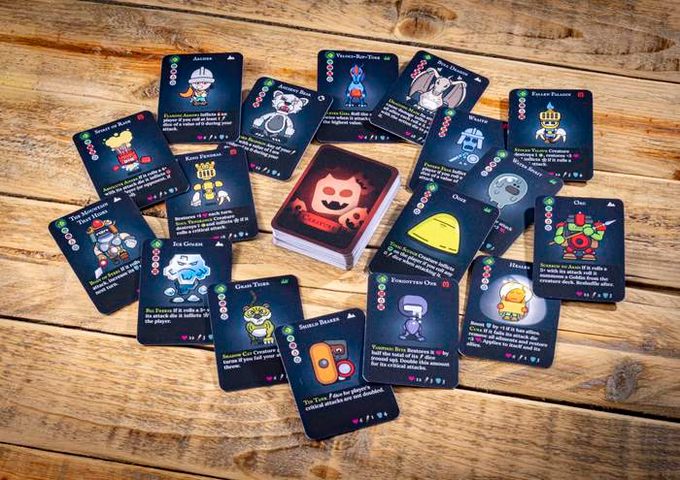
The art of building a Warlock—combining a Patron, a Pact, and a handful of Invocations—feels much like crafting the perfect deck in a card game. Each choice must synergise with the others to create a winning strategy, a tale of triumph.
Now, let us gaze upon the patrons themselves. The path to power awaits. The only question is, whose hand will you take?
Before we delve into the deeper lore, here is a quick overview to guide your first steps. This table summarises the core identity and typical role of every official Warlock subclass.
| Patron Subclass | Core Theme | Typical Role | Complexity |
|---|---|---|---|
| The Archfey | Deception, charm, and fey magic | Controller, Trickster | Medium |
| The Celestial | Healing, divine light, and support | Healer, Support Caster | Medium |
| The Fathomless | The ocean's depths, tentacles, and control | Controller, Utility | Medium |
| The Fiend | Fire, destruction, and dark bargains | Blaster, Damage Dealer | Low |
| The Genie | Elemental magic, wishes, and utility | Damage Dealer, Utility | High |
| The Great Old One | Psionics, madness, and forbidden lore | Controller, Infiltrator | Medium |
| The Hexblade | Curses, shadows, and melee combat | Melee Damage Dealer | Low |
| The Undead | Fear, undeath, and necrotic power | Controller, Debuffer | Medium |
| The Undying | Immortality, necromancy, and survival | Tank, Utility | Low |
This table provides a starting point, but the true magic lies in the details. Each patron offers a unique set of tools and, more importantly, a unique story to tell.

Not all power comes from fiendish deals or whispers from the void. Some patrons are as old and fundamental as the world itself, their strength drawn from the untamed magic of the Feywild or the crushing, silent pressure of the ocean floor. The warlock subclasses we're exploring here are for those who wish to command the battlefield with charm, illusion, and relentless control.
To make a deal with an Archfey is to tangle your soul with a creature of pure impulse and overwhelming glamour. These lords and ladies of the fey are beings of raw emotion, their power wrapped in breathtaking beauty and terrifying whims. Warlocks who serve them become masters of misdirection, bending the minds of mortals and weaving illusions that feel more real than truth itself.
Conversely, a pact with The Fathomless plunges you into the abyssal deep. Your patron could be a kraken dreaming in a sunken city, an ancient water primordial, or even the collective consciousness of the ocean itself. This pact grants you the raw, elemental might of the sea, letting you conjure spectral tentacles to ensnare foes and command the very tides of battle.
To play an Archfey warlock is to be a trickster and a manipulator. Your magic is a bewildering dance of charm and fear. Your purpose is to control the flow of a fight, not with brute force, but with cunning enchantments that turn enemies against each other or leave them utterly baffled.
Your core feature, Fey Presence, is a magnificent tool for this. It lets you charm or frighten creatures in a small area, which can halt a group of foes for one crucial moment. This ability sets the tone for the entire subclass: you are here to dictate who fights, when they fight, and whether they can even remember why they drew their weapon.
As you level up, your patron gifts you even greater powers of illusion and escape:
An Archfey warlock is not a direct damage dealer; they are a master strategist playing a high-stakes game. Think of it as a player carefully setting up a combo in a deckbuilder—your success comes from anticipating moves and using your unique abilities to completely disrupt your opponent's plans.
Where the Archfey is subtle, The Fathomless is relentless. This patron transforms the battlefield into your personal aquatic domain, slowing enemies and crushing them with the power of the deep. You are a warden of the abyss, and your magic feels ancient, heavy, and unstoppable.
Your signature ability is the Tentacle of the Deeps, a spectral appendage you can summon as a bonus action. This tentacle can attack, slash an enemy's speed, and provide constant pressure, letting you control key areas and protect your allies. It gives you something powerful and useful to do every single round, long after you've cast your main spell.
Later abilities build on this theme of oceanic control and resilience:
Choosing between these patrons is a choice between two very different flavours of natural power. Will you be the enigmatic courtier, whose smile is as dangerous as any blade? Or will you be the grim priest of the deep, whose magic carries the weight of the endless ocean? Both paths offer unique ways to master the battlefield and tell a compelling story—a principle that drives the best tabletop experiences, from grand D&D campaigns to the tactical card battles found in games like the roguelite deckbuilder, TerraClash.
Some warlocks look past the whispering woods and starry skies, seeking power from far darker, more dangerous sources. They delve into the fiendish and the funereal, striking deals not with fey lords or unknowable entities, but with the grim architects of the Lower Planes themselves. This is a path paved with hellfire and shadowed by the grave.
These bargains are for raw, uncompromising power, often paid for with a sliver of one’s soul. For those who dare to traffic with devils, demons, or the chilling spectre of death itself, the rewards are immense. This is the warlock for players who want to be a terrifying, overwhelming force on the battlefield, burning through foes with infernal magic or paralysing them with the sheer dread of the grave.
This is the quintessential warlock pact, the one that likely springs to mind first. You have signed a contract—perhaps literally, perhaps metaphorically—with a powerful being from the Lower Planes. We speak of the great names here: an archdevil like Asmodeus, a demon lord like Orcus, or some other entity of pure, distilled evil. In return, The Fiend offers a very direct, no-nonsense path to destructive might.
Your first taste of this power is Dark One's Blessing, and it is a game-changer. Whenever you reduce a hostile creature to 0 hit points, you gain a welcome cushion of temporary hit points. This simple but brilliant feature encourages you to be aggressive. It rewards you for every enemy you strike down, making you surprisingly tough to kill in the thick of a fight.
As you prove your worth, your patron grants you even more control over the fires of hell:
Where The Fiend offers blistering destruction, The Undead grants you something far more insidious: pure, unadulterated terror. Your patron is a deathless being of incredible power—a legendary lich, a vampire tyrant like Strahd von Zarovich, or maybe even a god of the grave. You don't just wield dark magic; you become a conduit for necrotic energy and fear itself.
The heart of this subclass is Form of Dread. You can transform into a nightmarish figure, gaining temporary hit points and, once per turn, forcing any enemy you hit with an attack to make a save or become frightened of you. Control is the name of the game here. A terrified enemy is a neutered enemy, and you can spread that panic around the battlefield with ease.
Your bond with the grave also grants you some grim, but useful, abilities:
Choosing between these two is really about deciding what flavour of menace you wish to be. Are you the infernal soldier, whose soul is collateral on a loan of hellfire? Or are you the grim knight, channelling the chilling authority of a deathless monarch?
Both paths offer compelling ways to dominate the battlefield, forcing your enemies into tactical dilemmas. It’s a bit like playing a strategic card game, such as TerraClash, where understanding and exploiting your opponent's weaknesses is the absolute key to victory.

Not every pact is signed in blood with a devil or sworn in a moonlit glade to a fey queen. Some warlocks gaze past the veils of the world, their desperate pleas echoing into the silent, star-dusted void or across elemental planes of unimaginable scale. These patrons aren't creatures you can easily bargain with or even comprehend; they are forces of cosmic madness and raw, foundational power.
Striking a bargain with an entity like this makes you a conduit for truly alien magic. You might find your mind becoming a gateway for whispers that dream in the dark between the stars, filled with truths that could shatter a lesser person's sanity. Or perhaps you've bound yourself to elemental royalty, giving you command over the very building blocks of creation. These paths offer bizarre and potent forms of control, turning you into a truly unpredictable force on the battlefield.
This is one of the most unsettling pacts you can make. Your patron is not some scheming devil; it is a being that exists outside of reality as we know it. It could be dreaming in a sunken city beneath the waves or drifting silently through the blackness of space. The most terrifying part? It probably doesn't even know you exist. You are like an ant siphoning a tiny speck of power from a sleeping, uncaring god.
This strange connection floods your mind with psionic might, making you a master of telepathy and subtle manipulation. Your first gift is Awakened Mind, which lets you touch the thoughts of others without ever speaking a word. This unlocks incredible potential for infiltration, silent interrogation, and psychological warfare.
As your mind attunes to these cosmic whispers, your powers only grow stranger:
To play a Great Old One warlock is to be the keeper of secrets no one else could handle. You are the investigator, the spy, the quiet manipulator whose greatest weapon is the information you can pull straight from an enemy's mind.
Where the Great Old One is all about creeping, mental horror, the Genie is a pact of spectacular elemental power and incredible utility. You've bound yourself to a noble genie, a master of one of the four elemental planes. This is one of the most customisable warlock subclasses 5e offers, because your choice of genie—Dao (earth), Djinni (air), Efreeti (fire), or Marid (water)—completely changes your spell list and damage focus.
Your pact begins with the Genie's Vessel, a tiny magical sanctuary you can enter as an action. It's the perfect safe house for a short rest or a brilliant spot from which to launch an ambush. You also gain Genie's Wrath, which lets you add a blast of extra damage to one of your attacks each turn, with the damage type matching your patron's element.
Your command over the elements only deepens from there:
| Genie Type | Damage Type | Associated Spells |
|---|---|---|
| Dao | Bludgeoning | Sanctuary, Spike Growth |
| Djinni | Thunder | Thunderwave, Gust of Wind |
| Efreeti | Fire | Burning Hands, Fireball |
| Marid | Cold | Fog Cloud, Sleet Storm |
At higher levels, you even gain the ability to fly and, eventually, the power to grant a limited version of the Wish spell. That’s a truly campaign-altering ability that makes the Genie an absolute powerhouse, blending raw combat strength with unmatched utility.
These patrons highlight the sheer breadth of stories a warlock can tell. Much like in a deckbuilding game, the most powerful combinations come from unexpected sources. If forging unique strategies from a hand of varied powers appeals to your adventuring spirit, you might find a new challenge in the world of TerraClash, where every card drawn opens a new tactical door.
Not all warlock pacts are whispered in forgotten tombs or signed in demonic blood. Power flows from every corner of the multiverse, and for every deal struck with a fiend, another is sworn in the brilliant light of the heavens. For every curse born of the Far Realm, a prayer is answered by a celestial being.
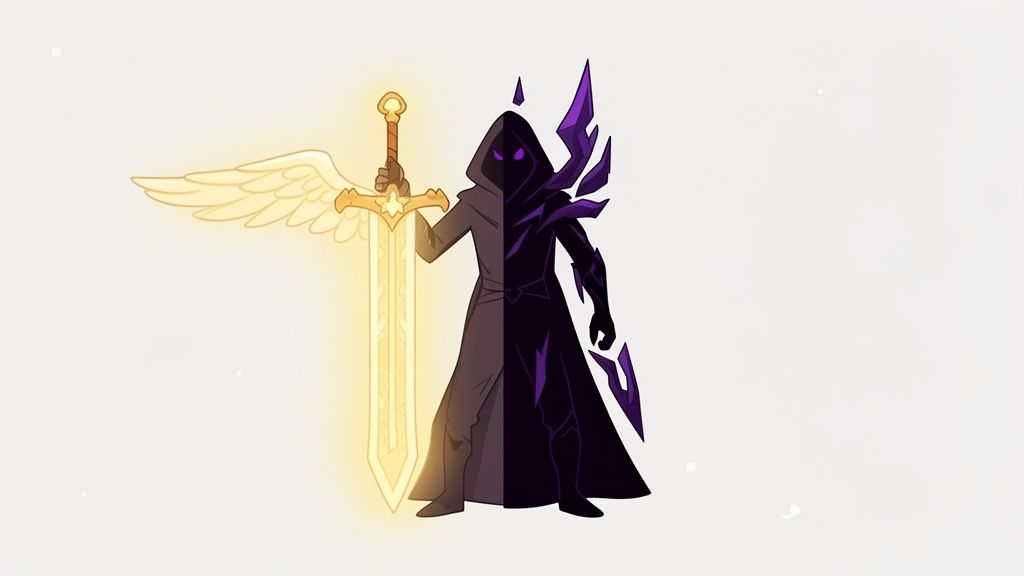
We now gaze upon two subclasses that perfectly capture this duality. One path binds you to the divine forces of the Upper Planes, turning you into a warrior of light. The other ties your soul to a sentient, shadow-touched weapon, channelling its arcane might into every swing of your blade. They both offer incredible power, but they couldn't be more different in flavour or function.
Think a patron must be evil, or at least a bit selfish? Think again. The Celestial warlock strikes a bargain with a powerful entity from the Upper Planes—perhaps an ancient ki-rin, a mighty solar, or some other being of pure goodness. This pact doesn't just grant you power; it transforms you into a beacon of hope, creating a fantastic blend of arcane caster and divine healer.
Right out of the gate at level 1, your defining feature is Healing Light. This gives you a pool of d6s that you can use as a bonus action to heal allies from a distance—a massive advantage. It's incredibly efficient, letting you mend your friends without sacrificing your main action, which you can still use to cast a devastating Eldritch Blast. You also get spells like Cure Wounds and Guiding Bolt for free, cementing your role as the party's arcane medic.
As your bond with the heavens deepens, you unlock even more radiant abilities:
And then we have the Hexblade. It is one of the most popular—and let's be honest, most powerful—warlock subclasses for a reason. Here, your patron is not a creature at all. It is a sentient weapon, forged in the dreary expanse of the Shadowfell, and it is hungry for power. This pact turns you into a fearsome front-line warrior, a perfect fusion of martial skill and arcane devastation.
The Hexblade's true magic lies in how it seamlessly blends steel and spell. Your first-level feature, Hexblade's Curse, is a game-changer. You can mark a single target for death, gaining a damage bonus against them, an increased chance to land a critical hit, and even healing yourself when they finally fall.
But the real star of the show is Hex Warrior. This feature lets you use your Charisma modifier for your attack and damage rolls with a chosen weapon. Suddenly, you don't need to juggle Strength or Dexterity alongside your main spellcasting stat. You can pour everything into Charisma and be amazing at everything.
The Hexblade is the quintessential "gish" build—a character who is equally adept with a sword and a spellbook. It brilliantly solves the warlock's usual struggle with weapon combat by making you completely single-ability-dependent on Charisma.
Your journey as a Hexblade continues to build on this foundation, making you a warrior whose power is drawn directly from a legendary, and often quite sinister, artefact.
To truly see how these two paths diverge, it helps to place their key features side-by-side. This table shows what each subclass gains at the major turning points in their progression.
| Level | The Celestial Feature | The Hexblade Feature |
|---|---|---|
| 1 | Healing Light & Bonus Cantrips/Spells | Hexblade's Curse & Hex Warrior |
| 6 | Radiant Soul (Damage boost & resistance) | Accursed Specter (Raise a shadow slave) |
| 10 | Celestial Resilience (Party-wide temp HP) | Armor of Hexes (Defensive curse reaction) |
| 14 | Searing Vengeance (Cheat death with an explosion) | Master of Hexes (Transfer your curse) |
As you can see, one is all about support, healing, and radiant bursts, while the other is laser-focused on single-target damage and martial dominance.
This choice between divine intervention and a cursed blade is a classic fantasy dilemma. It truly gets to the heart of what makes tabletop games so compelling, where one decision can shape your entire playstyle. If you enjoy digging into that kind of deep, strategic character building, you might get a kick out of the complex combinations in the roguelite deckbuilder, TerraClash.
Most warlocks chase after flashy, explosive power. They want hellfire, soul-stealing blades, or whispers from the maddening cosmos. But some deals are struck for a much quieter, more precious prize: persistence. A pact with The Undying isn’t for the warlock hungry for battlefield glory; it’s for the one who wants to look death in the eye and say, "Not today, thank you."
Your patron is a being who has already cheated the grave, a master of necromantic secrets. Think of the legendary lich-king Vecna, a deathless pharaoh, or an ancient vampire lord. They don't offer raw power as much as they offer the ultimate secret: how to simply endure.
Let us be clear: this subclass is often overlooked because it is a defensive powerhouse, not a damage-dealing cannon. Its gifts make you incredibly difficult to kill, especially when you're up against the sort of undead monstrosities your patron probably keeps as pets. It all begins with Among the Dead, which basically makes you invisible to lesser undead. Unless you attack them first, you can stroll through crypts and forgotten tombs as if you own the place.
The real heart of The Undying warlock is this sheer, stubborn survival. While other casters are focused on ending fights quickly, your job is to be the one still standing when the dust settles, the linchpin who wins by simply refusing to die.
This theme is baked right into your core abilities:
"The Undying warlock plays the long game. They are not the sudden firestorm; they are the patient mountain, eroding their enemies' will to fight through a sheer, stubborn refusal to fall."
To truly make an Undying warlock sing, you must lean into your strengths. Pick spells and invocations that bolster your defences and control the flow of battle. Your aim isn't to top the damage charts, but to manipulate your foes and make sure you and your party are the last ones standing. Making those control spells count is key, so it pays to understand how to boost your spell save DC in 5e.
From a roleplaying perspective, this subclass is a gift. You could be a former cultist who learned a few too many of their lich-master's secrets, or a desperate historian who stumbled upon a forbidden ritual for eternal life and struck a deal to see it through.
This is the perfect character for a grim, high-stakes campaign where every day could be your last. You're not just another spell-slinger; you are a walking, talking testament to the idea that, with the right bargain, even the end is negotiable.
So, the paths are revealed. You’ve peered into the void, flirted with fey royalty, and considered deals with beings beyond mortal comprehension. The ways of power are laid out before you, but now the real question remains: which one will you walk? Which otherworldly patron will you bind yourself to as you set out to make your mark on the world?
Remember, though, that your patron is but the start of your tale. The true flavour of your warlock comes from the choices you make along the way. Your Pact Boon and the strange, arcane secrets you uncover with your Eldritch Invocations are what will truly set you apart, transforming you from just another spellcaster into a legend in your own right. If you want a hand piecing it all together, our guide on how to make a Dungeons and Dragons character can help you begin your journey.
The tales you can spin are as limitless as the imagination itself. If you love that feeling of blending unique powers to conquer impossible odds, your next great quest might just be waiting in the roguelite deckbuilder, TerraClash. Check out its upcoming Kickstarter campaign – it’s a gateway to a whole new world of tactics and high fantasy. Go on, seek out incredible indie creators, back stories you believe in, and never, ever stop forging your own legend.
Making a pact is a momentous decision. It is natural to have a few last-minute questions before you sign your name upon the scroll (metaphorically or, well, literally). Let us clear up some of the most common queries that arise when you are about to bargain for otherworldly power.
If you are just starting your journey, you cannot go wrong with The Fiend. It is the most straightforward and immediately satisfying of the pacts.
The Fiend is all about direct, impactful power. Its core feature, Dark One's Blessing, gives you a constant supply of temporary hit points whenever you take down an enemy. This makes you surprisingly resilient and encourages you to get stuck in, letting new players feel powerful without having to juggle a ton of complex mechanics right away. It's a fantastic introduction to the sheer destructive fun of being a warlock.
It is easy to confuse these two, since they both deal with, well, not being alive. But they play completely differently. Think of it as the difference between a terrifying ghost that haunts the battlefield and an ancient mummy that simply refuses to stay down.
Absolutely! A pact is not always a life sentence. Stories evolve, and sometimes that means your source of power must change, too. Perhaps you find a way to break your contract, your patron is destroyed, or you simply have a change of heart and seek out a new entity to bargain with.
Mechanically, this is entirely possible. As long as you have a good story reason and your Dungeon Master is on board, you can swap your subclass when you level up. It can lead to some truly incredible character development.
"A pact is a living thing, an agreement between two wills. When one of those wills changes, the pact must either adapt or be shattered. Such moments are where the greatest stories are born."
While you can make any combination work, some pairings just click together beautifully, creating a warlock that feels incredibly potent and cohesive.
Your path is chosen, your questions answered. The power is yours for the taking. If the thrill of combining unique abilities and forging strategies from a hand of fate excites you, then your next adventure may await with TerraClash. Explore the upcoming Kickstarter and prepare to enter a new realm of tactics and fantasy.
Discover more and get ready for the campaign at TerraClash Digital on Kickstarter.