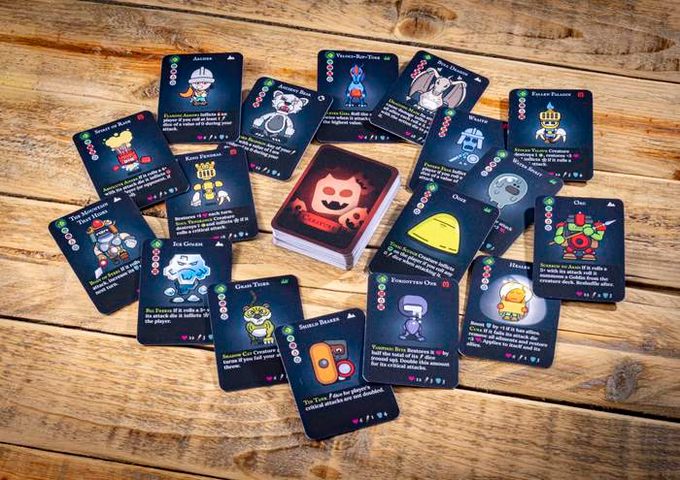
Hark, adventurer! To bring a tabletop game forth from the ether and into the mortal realm is a quest of great renown. It is not a mere plea for coin, but a sacred rite of gathering a fellowship—believers, champions, and fellow dreamers. It is about weaving a grand narrative around your vision, forging a community bound by shared passion, and proving your creation is an adventure worthy of their pledge. This is the hallowed path trod by countless indie creators, the very magic that turns a spark of an idea into a tangible artifact of joy and conquest.
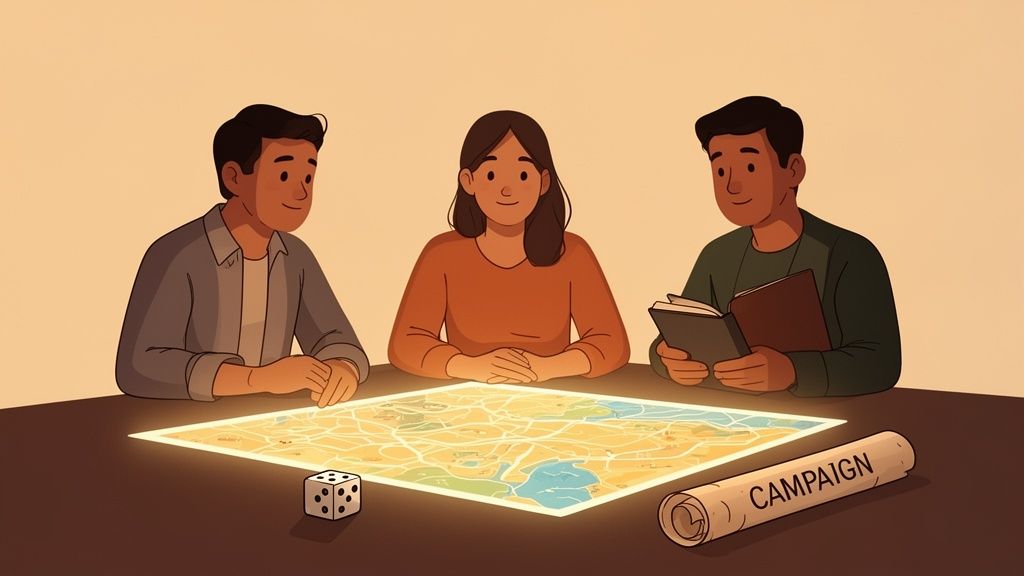
So, a vision has taken root in your soul. A world, teeming with untold sagas, cunning mechanics, and perilous quests, cries out from within your imagination. But how, pray tell, does one draw this ethereal spark from the mind and forge it into a physical form—a box filled with beautifully printed cards and custom-etched dice, ready for the revelry of game night? For most humble creators, the answer lies in the ancient art of crowdfunding.
But heed this secret, for it is vital: this journey is about far more than merely reaching a funding goal. It’s about summoning a community. You seek champions who believe in your quest so fiercely they will pledge their support long before a finished game graces their table. They are not simply pre-ordering an item; they are joining your adventure, becoming the founding citizens of the world you are building.
Before you embark, it is wise to consult the chronicles of campaigns that came before. Triumphs like the legendary Gloomhaven did not simply manifest from thin air. They rallied their followers by tapping into the very essence of what makes a tabletop gamer's heart beat faster. It is this shared spirit we must channel.
We all drink from the same well of inspiration, after all. We are moved by:
Consider this guide your well-worn map, marked with the arcane secrets to a successful campaign. We shall delve into the methods by which you can rally the collective energy of players to breathe life into your own legend. This is no dry recitation of marketing tactics; it is a deep dive into connection, passion, and the forging of community.
Time and again, the most triumphant campaigns are not those with the largest war chests. They are powered by the genuine enthusiasm of a creator who is unafraid to share their love for the games that inspired them. Do not be shy. Speak of the tactical depth of Magic: The Gathering, the narrative richness of Dungeons & Dragons, or the clever engine-building of an indie darling like Scythe or Wingspan.
By being open about your game's lineage, you begin to speak a common language with potential backers. You show them you are one of them—a player first, a creator second. Such authenticity is the most powerful spell you can cast.
As you prepare to launch your own quest, whether it’s for a game like TerraClash—a deckbuilding adventure for ages 12 and up—or another tale entirely, hold this truth close. Your goal is to find those kindred spirits who see the same glimmer of magic in your creation that you do. The road is long, but with a loyal fellowship at your back, you can literally bring a new world into being.
For any brave souls ready to answer the call, the TerraClash Kickstarter awaits.
Before you charge headfirst into planning your campaign, it pays to survey the landscape. For indie tabletop creators, the UK crowdfunding scene is more than a mere marketplace—it is a living, breathing community, a realm where fantastic ideas can genuinely take flight.
In truth, the UK has become a veritable fortress for crowdfunded games. But why here? It is a potent alchemy: a deeply passionate player base, a storied history of design innovation, and a lineage of high-profile successes that have cleared the path for creators like you.
Gaze upon the sagas of what has come before. We have witnessed massive campaigns for brand-new worlds and fresh interpretations of beloved franchises capture the public's imagination, proving the immense power of a great concept. The creators behind these triumphs understand a crucial truth: they are not merely selling boxes; they are extending an invitation to a new world, a promise of shared adventure and noble rivalry.
Consider the sprawling dungeon-crawlers and epic fantasy battles that have summoned thousands of backers. Their success is no accident. It points to a deep hunger for games with rich lore and intelligent, engaging mechanics. Players seek experiences that feel like the fantasy epics they adore, but with the tactical crunch of modern deck-builders and strategy games.
The true magic lies in the shared journey. When someone backs your project, they are not just pre-ordering a game. They are reserving their seat at the table for an adventure you will all write together. They are trusting you to be their guide.
This bond is what transforms a hopeful Kickstarter into a runaway success. Understanding this from the outset is your most vital strategic gambit.
The sheer scale of some UK campaigns is staggering. Tabletop games have ascended from a niche hobby to genuine blockbusters, with several projects smashing past the £3 million mark.
As of early 2025, an incredible four of the five most-funded UK Kickstarter projects of all time are board games. The vanguard is led by Dark Souls – The Board Game, which summoned an astonishing £3.77 million. This is proof that games built upon rich, compelling worlds can inspire incredible loyalty. For any creator forging a fantasy deck-builder or a dungeon-crawl adventure like TerraClash, these figures should be a massive boon to your morale—a huge, enthusiastic audience awaits your call. You can see a full breakdown of these funding milestones on Statista.
To grant you a clearer vision, here are a few examples that show the breadth and depth of what is possible in the UK.
This table illuminates some successful UK-based tabletop Kickstarters, offering a glimpse into what resonates with backers in the fantasy and strategy genres.
| Campaign Example | Genre | Key Appeal to Backers | Relevance to Your Quest |
|---|---|---|---|
| Dark Souls™ - The Board Game | Dungeon-Crawl, Co-op | Strong IP, challenging gameplay, stunning miniatures | Shows the immense power of a recognised world. |
| League of Infamy | Dungeon-Crawl, "Evil" Party | Unique anti-hero theme, high-quality components | Proves a clever twist on a classic formula can stand out. |
| Gloomhaven: Jaws of the Lion | Fantasy, Campaign | Lower entry price, streamlined rules for a complex system | Illustrates how to make a big-box experience more accessible. |
| Uprising: Curse of the Last Emperor | 4X, Co-op, Fantasy | Deep co-operative strategy, immense replayability | Highlights the appetite for complex, collaborative gameplay. |
These campaigns are not just about large sums; they are about creators who understood their audience and delivered on their sacred promise.
So, how do you discover your own path to success? It begins with understanding what the community values. In the UK, players adore intricate mechanics, but they also crave the camaraderie that blossoms around the table. Many of the most successful games are those that foster teamwork and create unforgettable stories.
If you wish to gain a better feel for that dynamic, you can explore our guide on the best cooperative board games to see what truly makes players unite.
The opportunity is there for creators with a clear vision. Your crowdfunding quest is not a burden you must bear alone. It is a call to adventure for players everywhere. By studying what has worked for others and attuning yourself to the desires of the community, you are preparing yourself for the journey ahead. The UK's crowdfunding scene isn't just a place to ask for coin—it's the proving ground where your own legend can begin. A campaign like the one for TerraClash is exactly that kind of call, just waiting for its heroes to answer.
Let us be frank, no hero has ever succeeded alone. The most potent weapon in your crowdfunding armoury is not your game's clever mechanics or its gorgeous art; it is the community you build before you even think about pressing the launch button. To successfully fund a game is to summon your champions early, turning strangers into allies who are genuinely excited for the adventure to begin.
This entire process is about forging real connections, not just amassing follower counts. It is about whispering a call to arms that resonates with the right people, rather than shouting into the social media void. The campaign itself should feel like the grand finale of a saga that began months ago, in the quiet corners of the internet where true tabletop fans gather.
And the potential is vast. Just look at the UK tabletop scene alone – it buzzes with activity, ready to back exciting new projects.
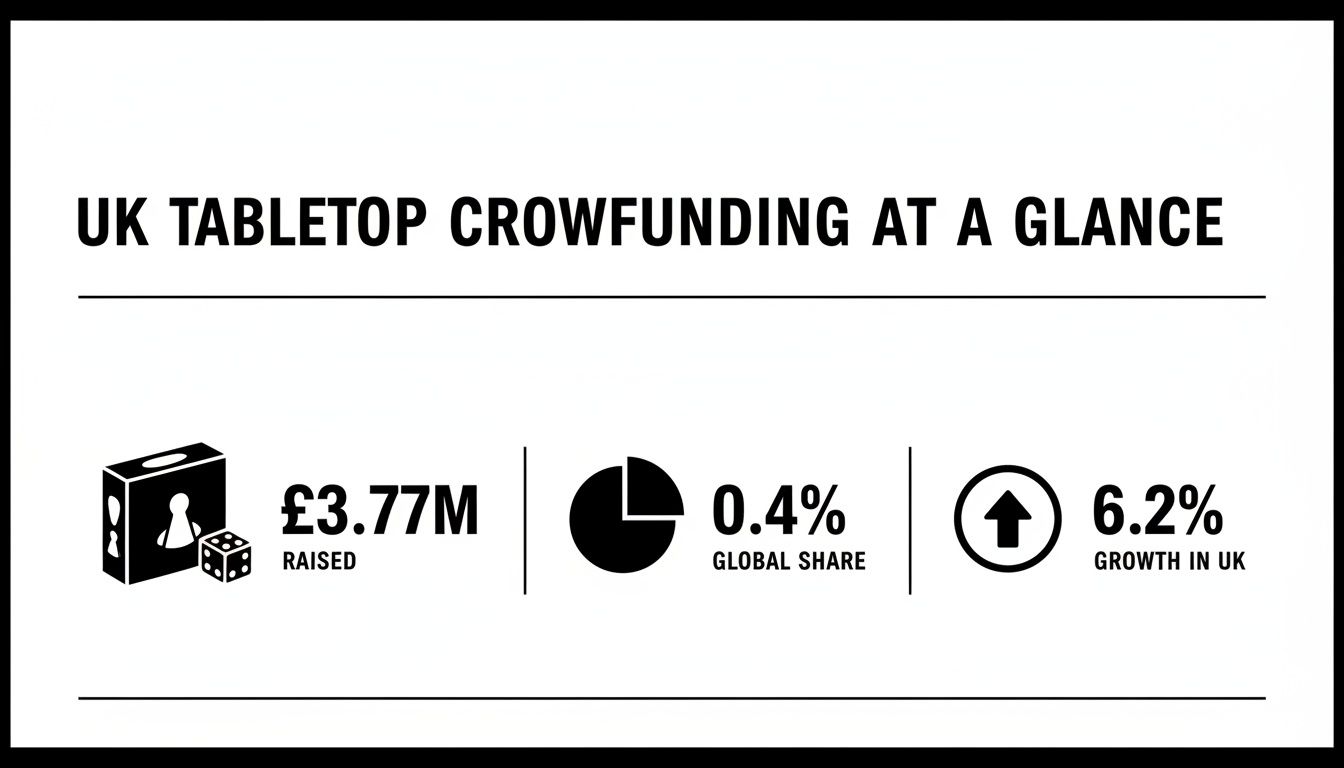
These numbers show there's a passionate audience out there with a real appetite for new adventures. Having a pre-built community to rally is an almost unfair advantage.
Your future backers are already out there, gathered around digital campfires, sharing tales of their latest tabletop triumphs. Your task is to seek them out.
Begin by exploring the forums of BoardGameGeek, which is essentially the Great Library of our hobby. Then, delve into the winding paths of Reddit, visiting communities like r/boardgames, r/tabletopgamedesign, and r/deckbuilding. This is where you will find players discussing everything from the sprawling strategy of Gloomhaven to the fine details of their favourite indie titles. Do not forget to search for Facebook groups and Discord servers dedicated to the kind of fantasy lore or strategic depth that first inspired your game.
But heed this warning: do not simply appear and drop a link to your project. That is a swift path to being ignored. You must engage authentically. Join conversations. Share your own passion for the games that influenced you. Speak of a clever mechanic you admired in another deckbuilder or celebrate the amazing narrative in a beloved RPG. Become a genuine, trusted voice in the community.
Once you have become a familiar presence, you can begin to share glimpses of the world you are creating. This is not a hard sell; it is more like slowly unfurling a map to a new and wondrous land.
This kind of openness builds trust and makes people feel like they are part of your journey. They become invested in your quest and genuinely wish to see you succeed. Every post is another breadcrumb leading them closer to your campaign.
Think of your pre-launch content like a Dungeon Master setting the scene. You're building atmosphere, introducing key characters, and hinting at the epic adventure to come. The goal is to make your audience lean in, desperate to know what happens next.
A vital step here is creating a direct line to your most ardent followers. An email list is, without a doubt, the most powerful tool for this. For some solid, practical advice on getting started, check out these strategies to build an email list.
By gathering your fellowship long before launch day, you ensure that when you finally call for aid, you will be met with a resounding cheer, not crickets.
So, we have arrived. We stand at the heart of the quest. Your Kickstarter page is the sacred scroll that will either summon legions of backers or be lost to the digital winds. It is the grand tapestry where you weave together art, rules, and passion to convince a stranger to join your cause.
Banish the thought of it as a sales pitch. It is the first chapter of your game's story. Your duty is to make potential backers feel the satisfying snap of a new card between their fingers, hear the clatter of dice upon the table, and taste the sweet victory of a perfectly played strategy—all before they have pledged a single piece of silver.
This is where you reveal the very soul of your creation. You must convey its essence without bogging people down in a labyrinth of dense rules. Focus on the experience. It is a delicate balance, one that legendary campaigns for games like Root or Wingspan mastered perfectly. They used evocative language and stunning visuals to make players feel the game before they ever touched a component.
Your campaign page requires a powerful opening, a proper call to adventure. Begin with a captivating headline and a short, punchy introduction that explains what your game is and why it is so special. It should resonate with the fantasy lore we all love, speaking directly to fans of grand quests and tactical challenges.
A high-quality pitch video is often the first, and most powerful, spell you can cast. It brings your world to life in a way static text and images cannot. Learning how to make an effective explainer video is time well spent; a great video is like a charismatic bard, singing the praises of your game and drawing in a crowd.
From there, your story should unfold logically, guiding the backer on a journey:
Visuals are the lifeblood of your campaign. High-quality photos of your prototype, detailed character illustrations, and a clean, organised layout are utterly non-negotiable. People must see the treasure before they will fund the expedition to retrieve it.
Do not just list your components; show them in action. A picture of a miniature is fine, but a shot of that same miniature on a beautifully designed game board, locked in mid-battle, is far more compelling. This helps backers envision the game on their own table, surrounded by friends.
It's also the perfect place to hint at your game's depth. You could show how different cards, like the formidable Goblin magic cards, can drastically alter a battle—giving a taste of the strategy without getting lost in the weeds.
A Kickstarter page should be a feast for the eyes and the imagination. It must promise not just a box of components, but a world of experiences. Every image, every paragraph, should work in concert to build excitement and establish trust.
Tapping into this is more important than ever. Crowdfunding has fundamentally reshaped how tabletop games reach players here in the UK. Platforms like Kickstarter have led to a massive boom in the variety and volume of board games being published. This trend sits within a UK market for playing cards and board games that generated approximately $1.049 billion in 2024.
For UK gamers who love fantasy lore, crowdfunding is now the main way to discover experimental mechanics that a traditional publisher might consider too risky. By crafting your page with care, you show this savvy audience that your quest is one worthy of their support.
The summoning ritual is complete. You have struck the launch button, and your campaign is finally live. This is the moment where all that painstaking preparation meets the real world. It is a whirlwind of adrenaline, hope, and constant page refreshing, and it requires a steady hand. The quest has shifted from planning to active stewardship.
Right now, it is all about momentum. The initial surge of pledges from your core followers gives you a fantastic head start, but campaigns are marathons, not sprints. There will be quiet days. Your job is to maintain the energy and ensure new adventurers are always discovering your project. You do this by continuing the story you started building months ago.
Communication is your most powerful tool during these crucial weeks. Your backers are not just customers; they are your adventuring party, your patrons, your co-conspirators. They have bought into the journey and wish to hear tales from the road.
This means regular, meaningful updates are non-negotiable.
This is also a great time to talk about the games that inspire you. Discuss the tactical depth you admire in a classic deck-builder like Dominion or the incredible world-building of an epic fantasy RPG. You are not just filling airtime; you are reinforcing the shared passions that brought everyone together in the first place.
Your campaign is a living story. Each update is a new chapter, and each backer is a new character joining the tale. Keep the narrative flowing, and your fellowship will remain captivated, eager to see how the epic concludes.
So what happens when the clock strikes zero and the funding goal is a distant memory? The quest is not over. In many ways, the real adventure is just beginning. Your backers have placed their faith (and their money) in you, and now you must deliver on that promise.
This next phase—production and fulfilment—is where many campaigns falter. Transparency is everything. Delays happen. Supply chains can be unpredictable beasts. The key is to communicate openly and honestly. An update delivering bad news with sincerity is infinitely better than a long, worrying silence. Your backers will respect you for it.
The UK, in particular, has become a real hotspot for tabletop crowdfunding. This is no fluke; it is a reflection of a strong, supportive culture for creative projects. Global data shows that reward-based crowdfunding, the natural home for board and card games, is projected to hit USD 1.22 billion by the end of 2025. Success rates here are far higher than in other crowdfunding models.
For a UK-based fantasy game like TerraClash, this ecosystem is a massive advantage. It connects creators with backers who expect—and appreciate—ongoing support and a rich narrative long after they have made their pledge. You can delve deeper into these crowdfunding statistics and their global impact to see the trends for yourself.
Ultimately, running a great live campaign and a smooth fulfilment process is about building a legacy. Do it right, and you turn one-time backers into lifelong fans. They will remember the journey, the excitement, and the care you took. These are the people who will be first in line for your next call to adventure, ready to support whatever new world you dream up.
And for those ready to answer that call, the TerraClash Kickstarter is where the next great story begins.
Alright adventurers, gather 'round the campfire. Let's tackle some of the great questions that arise when one is on the verge of launching a game. It is natural for these thoughts to swirl—nearly every creator I have ever known has pondered them. Let us clear the fog of war.
You must go to where the players gather, but you cannot simply arrive and begin shouting about your game. That is a swift path to being shunned.
Your first move should be to frequent the right digital taverns. Think of the great forums on BoardGameGeek or specific subreddits like r/boardgames and r/tabletopgamedesign. These halls are filled with people who genuinely love games.
But heed this wisdom: do not just promote. Participate. Join in discussions about other games. Speak of a mechanic you love in another deckbuilder or share your thoughts on a new fantasy title. When you begin to share small pieces of your own project—an early card sketch, a design puzzle you are trying to solve—people will see you as a fellow creator, not just another merchant. That is how you turn strangers into your first true fans.
A question of great weight. The short answer is: far more than you likely think.
You absolutely need a fully playable prototype that has been tested in the fires of many playtest groups. Your core mechanics must be as solid as dwarven stone, and the rulebook should be clear and nearly final, even if it needs a final scribe's polish.
On the visual front, a significant portion of the art must be done. We speak of enough to give backers a crystal-clear vision of the final quality and aesthetic. You do not need every single piece of art complete, but your campaign scroll must look magnificent.
Remember, you are not just selling an idea. You are asking people to trust you to finish a quest you have already invested in heavily. This also means having solid estimates from manufacturers and fulfilment partners. Show them you have done your scrying.
A good rule of thumb I've observed from countless successful campaigns is to have at least 80% of the art complete and the rules 95% finalised. This level of polish screams professionalism and massively reduces the risk of post-campaign delays, which is a huge factor in building backer confidence.
Ah, the list of potential monsters is long, but a few stand out. The greatest, most fearsome dragon is underestimating shipping and fulfilment costs. Truly, this beast can single-handedly devour a successful campaign. Do your research, get real quotes, and build it into your budget from the very first day.
Another trap is getting carried away with stretch goals. They are excellent for keeping the hype fires burning, but every new component, every upgrade, adds cost, complexity, and potential delays to your timeline. Keep them smart, meaningful, and achievable.
Finally, do not go silent after the campaign funds. The "post-campaign quiet" is a true trust-killer. Your backers have put their coin and faith in you. Keep them in the loop with regular, honest updates—even when the news is not good. Consistent communication is the magic spell that keeps your community on your side. Avoiding these classic blunders makes the path to successfully crowdfund games much smoother.
In a genre filled with epic quests and mighty heroes, you must find your unique hook. What is the one thing your game does better or differently than any other? Is it a clever new mechanic, a deeply personal story, or a jaw-dropping art style? Whatever it is, that is the heart of your message.
Do not just list features; sell the feeling. Instead of saying "variable player powers," you could say "forge your own legend with unique hero abilities." Connect with what players already love—perhaps your game has the tactical depth of a classic deckbuilder but the adventurous spirit of a fantasy RPG—and then show them your unique twist.
For instance, with TerraClash, we've spoken of a deckbuilder that plays like a roguelite roleplaying adventure, offering a new randomised quest every time you play. This instantly helps people grasp the concept and its appeal. And, of course, invest in quality. Nothing sells a vision better than incredible artwork and a professional, exciting campaign video.
Bringing a game from a mere idea to a finished box on someone’s table is a perilous journey, but it is one of the most rewarding quests a creator can undertake. At TerraClash, we have been on this road ourselves, driven by a love for creating amazing adventures.
If you seek a new quest, a deckbuilder with deep replayability and a rich fantasy world, we would be honoured to have you join our fellowship.
Pledge to the TerraClash Kickstarter campaign today!