Hark, adventurer, your quest begins here. Launching a successful Kickstarter for board games is not a matter of luck or a simple roll of the dice. It is a grand campaign, meticulously planned and built upon a powerful vision and a story that ensnares the soul. It is about taking that idea you've been sketching in the flickering candlelight and forging it into a real, tangible game that a fellowship of backers cannot wait to hold.
Every great saga begins with a spark. You possess a concept, a world buzzing with untold tales, but turning it into a funded reality is a different beast entirely. Your first incantation must shape a narrative that hooks players from the very beginning. This is about more than mere rules and mechanics; you must give your game a soul.
In ages past, you would have had to plead your case to the great publishing houses, hoping they might see the magic in your idea. Those days are dust. Platforms like Kickstarter have placed the power directly into your hands. You are the gatekeeper now, and it is up to you to decide if your dream is made manifest. It's an incredible opportunity, but it also means the fate of the realm rests on your shoulders.
Before you can ask anyone to back your project, you must build a world they yearn to step into. What is the core conflict? Who are the heroes and villains? What defines this place—is it ancient magic, forgotten technology, or something else entirely? Pull inspiration from the ether: the epic struggles in classic fantasy tomes, the sprawling worlds of your favourite video games, or even the echoes of historical events.
Think of the stories that have always captivated you. Was it the fellowship of a small band facing impossible odds, like in The Lord of the Rings? The political backstabbing of rival factions in A Game of Thrones? The sheer thrill of exploring ancient, forgotten ruins found in games like Dungeons & Dragons? These themes resonate because they tap into something fundamental within us—the desire for adventure, connection, and discovery.
Your game's narrative is the compass for all that follows. It dictates the art style, the tone of your campaign scroll, and even the mechanics players will wield. A strong story gives your project a heart, making it so much more than a box of cardboard and plastic.
A rich story is your foundation, but it must translate into gameplay that is actually fun. The greatest Kickstarter campaigns for board games are those that seamlessly blend their narrative with their mechanics. Look at how Gloomhaven uses its legacy system to build an ever-evolving world, or how the deckbuilding in Clank! perfectly captures the tension of a risky dungeon delve.
Your lore should not be mere flavour text in a rulebook; it must be an active part of the experience.
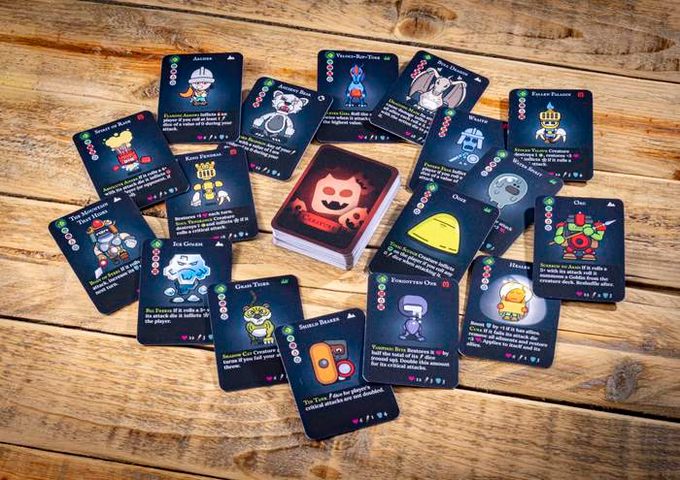
This initial creative phase is about laying the groundwork for a legend. You are defining the soul of your project and creating something that will call out to players and invite them to join your journey. It is the very path we are on with our own deckbuilding saga, TerraClash, a game for adventurers aged 12 and up, as we prepare to rally our own champions. For more on what makes a game truly stand out, you can check out our guide to the best strategy board games. Every successful campaign, including our own forthcoming quest with the TerraClash Kickstarter, begins with this one essential step: a clear, enchanting, and epic vision.
No hero succeeds alone, and no Kickstarter campaign is funded without a community. Your quest for a successful launch starts long before you ever hit the 'publish' button—it begins in the bustling taverns of social media and the hallowed halls of tabletop forums. You must gather your fellowship first.
This is all about community building. I have seen too many creators craft a masterpiece only to unveil it to an empty room. The true magic is not just in your game, but in the anticipation you build around it. You must become a storyteller, sharing tantalising glimpses of your world—a stunning piece of art, a snippet of lore, a clever mechanic—to get people genuinely excited.
These early followers are more than potential backers. They are your scouts, your town criers, and your most trusted advisors. They are the ones who will shout your call to adventure from the rooftops when the time is right.
Think of it like this: your game's development is a journey in itself, and you want to bring people along for the ride.
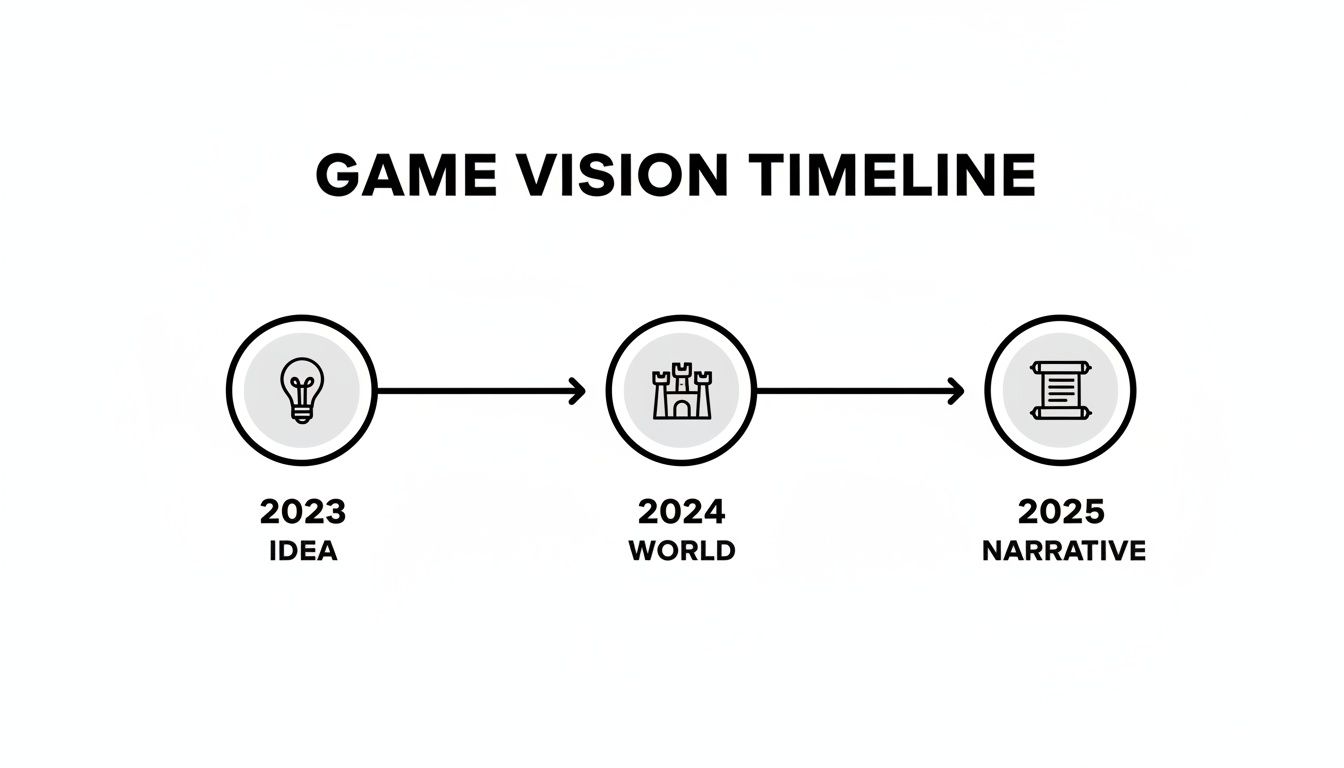
Each of these stages is a chance to share your progress and build that all-important connection with your future players.
So, where do you find these first loyal companions? You must venture into the digital wilds where your people gather. Places like BoardGameGeek, Reddit communities (think r/boardgames and niche subreddits), and dedicated Facebook groups are fertile ground.
But do not just show up hawking your wares like a travelling merchant. You must come as a fellow enthusiast.
This is not about building a mailing list; it is about forming a party of adventurers who are personally invested in your quest's success. For those looking to build a financial foundation early on, it’s also worth exploring strategies for securing funding and partnerships, which can give you a powerful head start.
A strong community is your most powerful spell. When your campaign launches, their combined voices will amplify your call across the realms, drawing in wanderers who might otherwise have passed you by.
As launch day draws near, you need a rallying point. This is your Kickstarter pre-launch page. Think of it as a beacon, a signal fire telling the world that something epic is on the horizon. This is where you direct your growing community to gather, so they can be notified the moment your quest officially begins.
Getting people to hit that "Notify me on launch" button is critical. A high follower count signals to the Kickstarter algorithm—and to browsing backers—that your project has serious momentum. That massive surge of support on day one? It often makes the difference between a campaign that soars and one that stalls.
Much like a real campaign, the funding journey for a board game has its own dramatic rhythm. The initial rush, the quiet middle, and the frantic final days all require a different focus.
A typical board game Kickstarter doesn't see a steady stream of pledges. Instead, it follows a predictable "U-shaped" curve. Understanding this rhythm helps you plan your marketing beats and manage your own sanity during the quieter moments. It’s a bit like the ebb and flow of a great battle.
| Campaign Phase | Typical Funding Distribution | Creator's Focus |
|---|---|---|
| The First 48 Hours | 30-40% of total funds | Maximise the launch-day explosion. Drive your email list and social followers to the page. |
| The Mid-Campaign Lull | 20-30% over several weeks | Maintain momentum. Share behind-the-scenes content, unlock stretch goals, and engage with backer comments. |
| The Final 48 Hours | 30-40% of total funds | Create urgency. Remind fence-sitters the campaign is ending. Announce final stretch goals. |
Knowing this pattern ahead of time prevents panic during the "trough of sorrow" in the middle. Your job is to keep the energy up and prepare for that final, glorious charge.
This pre-campaign phase is your time to build trust and negotiate treaties. The work you do here lays the foundation for everything that follows. It's how you go from being a lone creator to the celebrated leader of a victorious fellowship.
Think of your Kickstarter page as the grand entrance to your dungeon. It is not just a merchant's stall; it is the place where a potential backer decides whether to join your adventure or continue on their way. This is your one chance to pull them into the world you have built, so every word and every image must be enchanted.
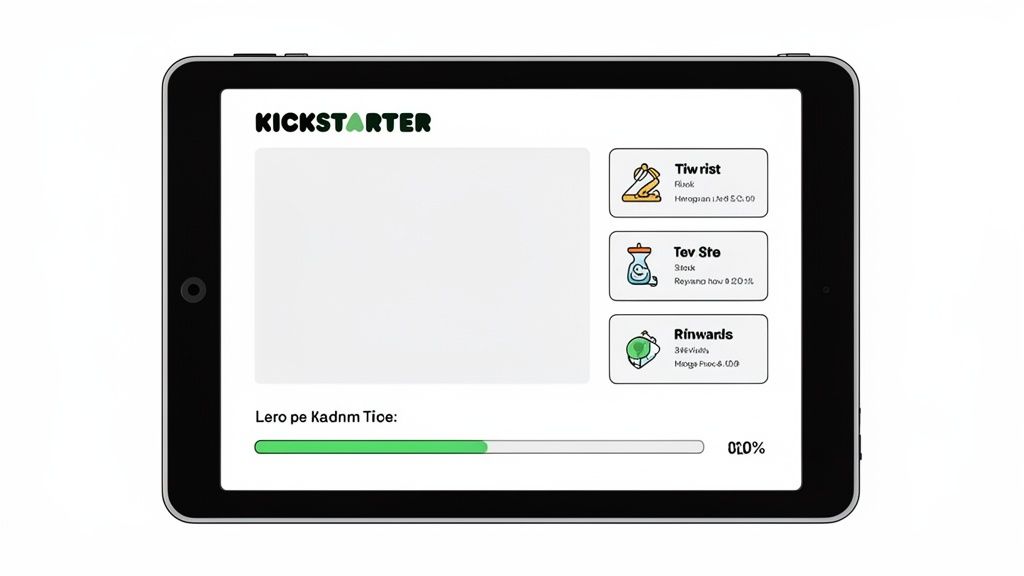
The flow of your page is crucial. You must guide visitors from initial curiosity to genuine excitement, and finally, to making a pledge. It is a journey. You control the pacing, revealing arcane secrets at just the right moments to build up to that big call to action.
Right at the top, you need a spell of great power. That means a killer banner image and, most importantly, a great video. The video is your direct portal to your audience—it is where you show off the game, the art, and the passion that has gone into it. This is your moment to connect.
Your video is genuinely the most important asset on the page. Take the time to learn how to create marketing videos that convert browsers into backers. Show them your world, explain the core hook of the game, and give them a reason to join your community.
Immediately after the video, your opening text must get straight to the point. Answer these three questions instantly:
Once you have hooked them, it is time to guide them deeper. A well-structured page is easy to follow. Use clear, logical headings to break up the content into digestible chunks. Think "What Treasures Lie Within?", "How to Play", "Lore of the Realm", and "Pledge Levels".
Fill these sections with high-quality photos of your prototype, component close-ups, and gorgeous artwork. People need to see the game to believe in it. Show, do not just tell.
Just look at the UK board game scene for inspiration. The relaunch of the fantasy game Damnation: The Gothic Game pulled in an amazing £77,186 from 1,507 backers, which is fantastic for a relaunch. What’s really interesting is that a whopping 63% of their funding came in the last three days. It just goes to show how a strong finish, driven by a page that keeps people engaged, can make all the difference.
That brings up a vital point: your page is not static. It needs to keep people coming back.
Your Kickstarter page is a living hub for your campaign. You will be constantly adding updates, unlocking stretch goals, and answering questions. It needs to feel active and exciting from day one until the very end.
Getting your reward tiers right is a delicate balance of alchemy. Each pledge level should feel like a worthwhile step up. Obviously, the main event is the game itself, but what else can you offer to sweeten the deal?
Think about things that add to the experience. A deluxe edition with upgraded components? An art book packed with lore? Some creators even offer tiers where backers can name a character or a location in the game. It's a great way to make people feel truly part of the project.
A word of warning, though: do not go overboard. Too many choices can paralyse people. Keep your tiers clear, focused, and easy to understand. With our own game, TerraClash, we put great thought into how it connects to a larger world of adventure—your reward tiers should do the same for your project. If you're curious, you can see how we build lore into our own game in our article on Goblin Magic Cards.
Your Kickstarter page is the beacon that will draw supporters to your project. Put the time and effort in to make it shine, because it is the vessel that will carry your dream into reality, with the help of the amazing community you build along the way.
You have done it. You hit the big green launch button, and your Kickstarter is out in the wild. This is where the real adventure begins – a frantic, exhilarating, and sometimes terrifying 30-day marathon. The key to surviving, and thriving, is to think of yourself as the captain of the ship, steering your crew of backers through the inevitable highs and lows.
Your single most important job during these 30 days is communication. Backers are not just pre-ordering a product; they are investing in you and your vision. They have put their trust in you, and they want to be part of the journey. Regular, honest, and exciting updates are how you keep their faith and make them feel like part of the team.
Do not let your page gather dust. Aim for an update every two to three days to keep the energy high. This is your chance to share progress, pull back the curtain on your creative process, and celebrate victories together.
So, what should you be talking about?
This constant communication turns a passive audience into a passionate community. They will become your biggest advocates, sharing the project and bringing new people into the fold.
Every kickstarter for board games campaign has a predictable, almost dramatic, rhythm. You get the huge initial explosion, the long, quiet middle, and then a final frantic surge towards the end. Knowing this pattern is crucial for managing your own sanity.
That initial rush comes from the community you spent months building. These are your die-hard fans. But after the first 48-72 hours, things will slow down. A lot. This is the infamous "mid-campaign lull," and it happens to almost everyone. Do not panic. It is not a sign of failure; it is just part of the process.
The middle of the campaign is the ultimate test of your community management skills. This is your time to get in the trenches, answer every single question, and let your passion shine through. Your constant presence keeps the momentum from dying out completely.
This quieter period is a golden opportunity to dive into the details. Think about fantastic indie deckbuilding games like Slay the Spire; a huge part of their appeal is discovering clever strategies and synergies. Your updates can create that same feeling of discovery for backers, keeping them engaged while you gear up for the grand finale.
The last 48 hours are pure chaos (in a good way). Kickstarter sends out reminder emails, and all the people who were "on the fence" come rushing back. This final surge can often be bigger than your first day. It’s the perfect time to reveal your most exciting stretch goals – the awesome extras that backers can unlock if they help you push past the finish line.
Stretch goals are an incredibly powerful tool, but they must be handled with care. Every single one adds complexity and, more importantly, cost to your manufacturing and fulfilment. Plan them out meticulously before you even think about launching. A well-designed set of stretch goals tells its own story, showing backers exactly how their support is making the game bigger and better. It's a path we're mapping out right now for our own game, the TerraClash kickstarter.
Running a live campaign is a true test of endurance. But by communicating openly, understanding the natural rhythm of the campaign, and managing expectations (both yours and your backers'), you can guide your project to a fantastic finish.
So, you did it. The campaign is funded, the digital confetti has settled, and you are probably feeling a massive sense of relief. But take a deep breath, because this is where the real work begins. The journey is not over once the funding goal is hit; that is just the end of the first chapter. Now it is time to deliver on your promises.
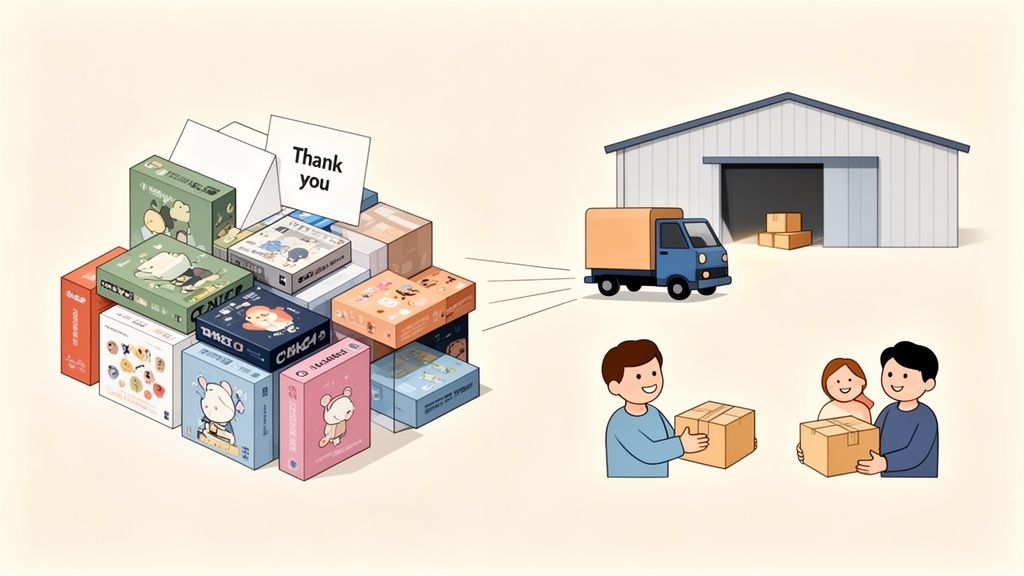
This final leg of the journey, from a successful campaign to a game in your backers' hands, is where your reputation is truly forged. Get it right, and you will build a loyal following who will eagerly back your next project. Get it wrong, and you might find it difficult to ever run a campaign again.
The biggest mistake you can make post-campaign is going silent. The funding period might be over, but your communication needs to be more consistent than ever. Remember, your backers have put their trust (and money) in you. Radio silence is the quickest way to turn their excitement into anxiety.
Think of it this way: they have paid for a ticket to a show that starts in six months. They need to be reminded that the crew is still building the stage.
This ongoing conversation is what maintains goodwill, even when things inevitably go off-script.
Choosing a manufacturer is a massive decision, and it is one you should have mostly figured out before the campaign even ends. Get quotes, ask for samples, and talk to other indie creators about their experiences. A good, reliable manufacturer is your most important partner in this phase.
Then there is the beast that is shipping and fulfillment. This is, without a doubt, one of the most complex and expensive parts of the entire project. So many campaigns have been sunk by underestimating shipping costs. It is absolutely critical to have this dialled in from the very beginning.
Here is the bottom line: Every single backer, from the person who pledged £1 to the all-in whale, deserves clear communication and the reward they were promised. Honouring that commitment is what separates the pros from the amateurs.
The potential for success is huge if you can navigate these final steps. In the UK alone, the board games segment has captured an incredible 79.75% revenue share of the wider toys and games market. That is a powerful testament to just how passionate players are. It is this thriving community that allows projects like our own TerraClash kickstarter to find their audience. If you want to dive deeper, you can explore more insights about the UK board games industry.
Getting your game from a spark of an idea to a physical box on someone's table is a proper adventure. The final act—fulfillment—is your chance to stick the landing. By being transparent, choosing your partners wisely, and keeping every promise, you set the stage for your next successful campaign.
Right, you are about to jump into the wild world of crowdfunding a board game. It is a massive undertaking, and if you are like most people starting out, you probably have a million questions swirling in your head.
Let's cut through the noise. I have seen countless campaigns succeed and, frankly, even more fail. Based on that experience, here are the straight-up answers to the questions that keep first-time creators up at night.
This is the big one, is it not? There is no magic number, but launching a Kickstarter campaign with empty pockets is a recipe for disaster. You have to spend money to make money, and in this space, that means investing in quality upfront.
Your non-negotiable costs are going to be:
Many successful creators also budget for some initial marketing to get the ball rolling. Think of it this way: your initial investment is a signal to potential backers that you are serious. It shows you respect their potential pledge enough to have built a professional foundation first.
Hands down, the most common pitfall is underestimating the power of a community. So many new designers fall into the "if you build it, they will come" trap. They slave away for months, perfect the game, launch it on Kickstarter... and are met with crickets.
Why? Because nobody knew they existed.
A brilliant game is not enough. The real work—and the part people often neglect—is building an audience before you launch. You need to be active on social media, get involved in forums like BoardGameGeek, and, most importantly, start an email newsletter. A campaign launched to a cold audience is almost guaranteed to fail. You need a crowd of people waiting and excited on day one.
The single most dangerous assumption you can make is that a good game will sell itself. It will not. Your community is everything; they are your initial momentum, your evangelists, and the core group that makes everyone else feel safe to pledge.
Setting your funding goal is a nerve-wracking balancing act. It is not a guess, and it is certainly not just your dream number. It has to be rooted in cold, hard maths.
You need to calculate the actual cost to produce and deliver your game to every single backer. This means getting quotes and building a detailed spreadsheet that includes:
Your funding goal must cover all of these expenses. Setting it too high might scare backers away and lead to a failed campaign. But setting it too low is even worse—you could fund successfully and then realise you do not have enough money to actually make and ship the game, destroying your reputation. Do your homework here. Be meticulous.
Absolutely, but with a major dose of caution. Well-designed reward tiers and add-ons are fantastic for increasing your average pledge amount. Backers love getting a "deluxe" experience that will not be available later.
Some popular options include:
The danger is complexity. Every single new item you offer adds another layer to your manufacturing and fulfilment logistics. It is easy to create a tangled mess that becomes a nightmare to sort out. My advice? Keep it simple and meaningful. Offer a few high-value extras that genuinely enhance the game, rather than a mountain of cheap trinkets that will just give you a headache later.
Whether you're making a sprawling RPG or a tight deckbuilder like Slay the Spire, these principles hold true. A successful campaign is built on careful planning and a genuine connection with the people who will eventually play your game.
Speaking of grand adventures, we're gearing up to launch TerraClash and are looking for a few good heroes to join us from the very beginning. To be the first to know when our quest goes live, follow our pre-launch page right here: TerraClash Kickstarter.