Hark, adventurer, and listen close. The hero falls. A hush settles over the battlefield, broken only by the ragged breathing of the survivors and the victorious snarling of monsters. For a moment, it feels as though the story's final page has turned. But then, with a simple touch and a whispered word, a flicker of life is preserved against the encroaching darkness. This, brave soul, is the essence of Spare the Dying in 5e—a cantrip that does not heal, but holds the very door shut against death itself.
Pull up a chair, gather 'round the fire, and let us speak of those moments that truly define a campaign. It is not always the mighty swing of a sword or the cataclysmic burst of a fireball that turns the tide. Sometimes, victory hinges on something far quieter: the simple, defiant refusal to let a companion fall into the abyss.
The Spare the Dying cantrip is that refusal made manifest. It is a direct intervention from the gods, a last-ditch effort when a hero teeters on the very brink of oblivion. When the healing potions are all spent and the last spell slot has been woven into the air, this is your final bastion.
This humble spell gets to the heart of what makes tabletop sagas so compelling—camaraderie, high stakes, and the breathless drama of a desperate gamble. It's a choice to put the party first, snatching a friend from death's cold grasp when all seems lost. These are the moments that echo in taverns for years to come, the tales we recount when the adventuring day is done.
That feeling of making a game-changing play is a universal magic in the world of fantasy gaming. It’s a thrill that has captivated a huge and ever-growing fellowship of players.
In the UK's thriving tabletop gaming scene, participation has surged, mirroring the broader gaming industry's massive economic contribution. This passion is on full display at community events, with places like the UK Games Expo seeing attendance jump from 45,000 in 2022 to over 56,000 in 2024.
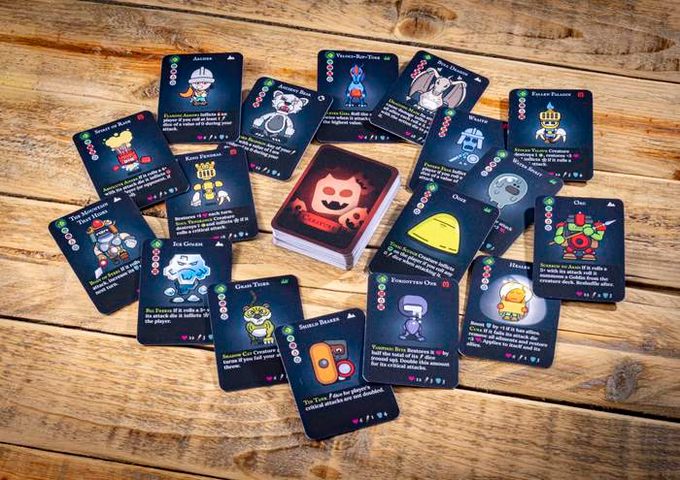
This incredible growth speaks to our shared love for epic stories and tactical challenges. You can discover more about the UK’s incredible gaming industry growth. The core appeal—making that one pivotal choice when everything is on the line—is something we see in all manner of great games, from sprawling RPGs to strategic deck-builders. In a game like TerraClash, a single card drawn at the right moment can be the difference between glorious triumph and utter defeat, echoing that same life-or-death decision.
To truly master the weave of Spare the Dying, you must look past what it does and understand how it works. The spell is a classic D&D trade-off, a moment of risk versus reward, and its components are what create that tension right there at the table.
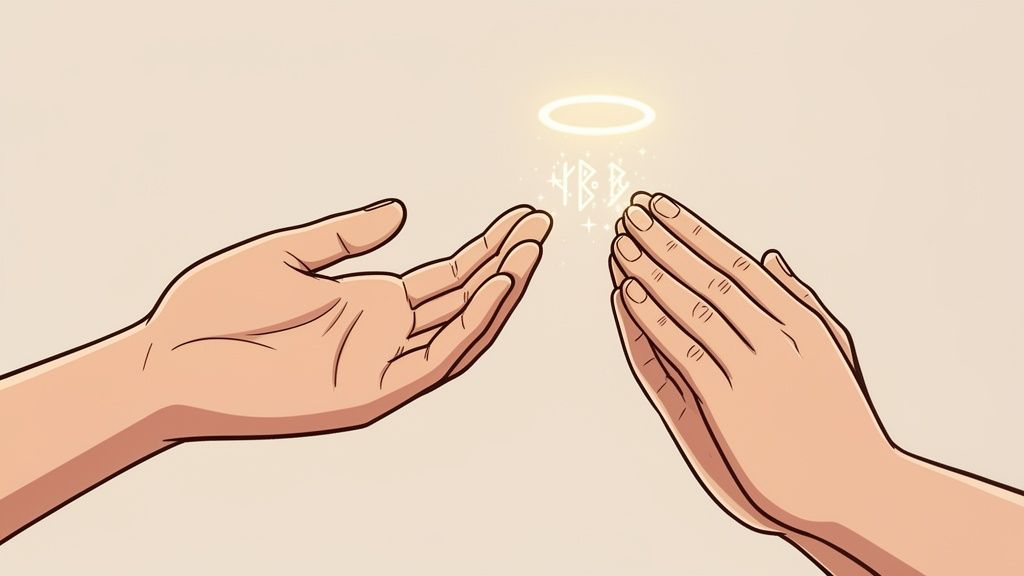
The cantrip's mechanics are not just dry rules written in a dusty tome; they are the building blocks of a dramatic story. Let us break them down.
Range (Touch): This is the heart of the spell, and its greatest challenge. You cannot simply shout a blessing from the back line. You must be there, kneeling beside your dying friend, which often means putting yourself square in the enemy's sights. It turns a simple spell into a genuinely brave, and sometimes foolish, act.
Components (Verbal, Somatic): You must be able to speak a quick prayer and have a free hand to make a calming gesture. These verbal (V) and somatic (S) requirements are key. If you are gagged, magically silenced, or your hands are bound, you cannot cast the spell. Simple, but crucial.
Casting Time (1 Action): Here lies the tactical crux. Spending your one action to stabilise an ally means you are not attacking, you are not dodging, and you are not casting a more powerful spell. It is a direct choice: do you give up your turn to ensure your friend gets another?
This kind of design is what makes the grand tapestry of Dungeons & Dragons so compelling. With Nielsen BookScan data showing that over 120,000 core rulebooks were snapped up in the UK alone in 2024, it's clear these moments of high-stakes decision-making are what we crave. The fantasy genre is thriving, and there's a huge overlap with card game fans, which points to that shared love of smart plays and grand stories. If you're curious, you can explore more about the UK's online gaming habits here.
To cast Spare the Dying is to make a choice. It’s a moment where you must weigh the immediate threat against the future of your party. The spell’s ‘Touch’ range is a test of courage, forcing the caster into the very danger that felled their friend.
Understanding these fundamentals is just as vital as grasping core concepts like your Spell Save DC. The spell’s entire purpose is defined by this choice. It’s not a quick fix; it's a calculated gamble when the world hangs in the balance. This is the kind of nail-biting, tactical thinking that defines the best tabletop games, whether it’s a grand RPG adventure or a tense card duel in a game like TerraClash.
In the heart of a chaotic battle, someone must be the one who can step in and pull an ally back from the brink. It is a sacred duty, the solemn charge of standing sentinel at death's door. While many picture a pious Cleric for this job, the truth is that the weave of magic is a little more complicated than that. More than one path leads to the knowledge of Spare the Dying.
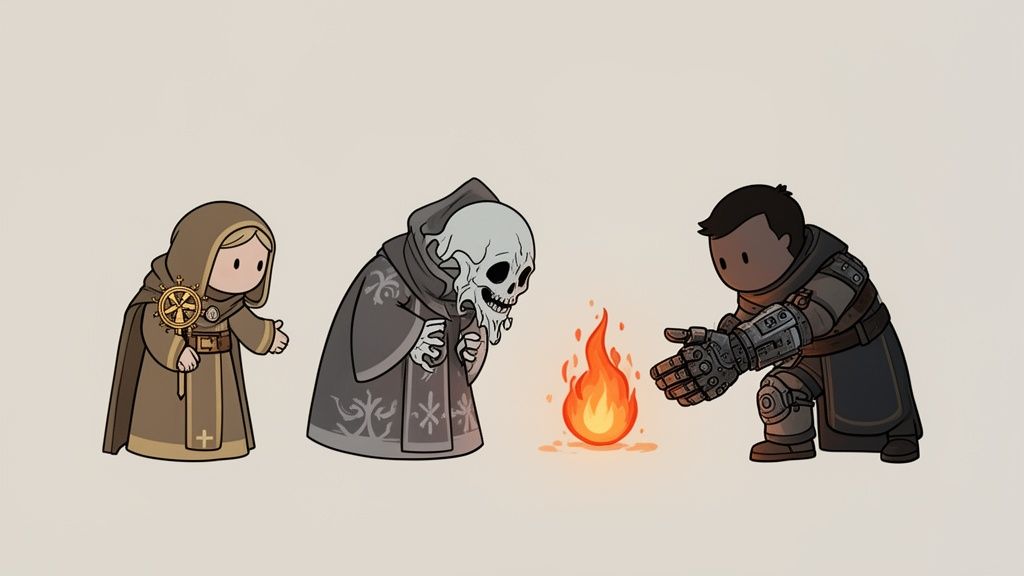
The Cleric is, without a doubt, the most common guardian of this life-saving magic. Their divine connection gives them a direct line to the forces governing life and death. For a Cleric, this cantrip isn't just a spell; it's a fundamental expression of their faith and will.
Of course, not all Clerics see this duty in the same light. The divine domain they serve colours their entire philosophy, shaping how and why they use the cantrip.
Life Domain: For a Life Cleric, using Spare the Dying is a powerful affirmation of their entire belief system. They are sworn protectors of vitality, and every soul they pull back from the edge is a small victory for health and endurance. Their magic is a warm, reassuring presence pushing back the cold touch of oblivion.
Grave Domain: These Clerics are masters of the boundary between life and death. They do not see death as an enemy to be defeated, but as a natural part of the great cycle. They use this spell with a unique insight, ensuring that a soul only crosses the threshold when its time has truly come. For them, Spare the Dying isn't about defying death, but about enforcing its proper schedule.
At its heart, the Grave Domain Cleric is all about mastering the transition between life and death. The ability to cast Spare the Dying as a bonus action and from 30 feet away is a perfect reflection of this mastery, making them arguably the most efficient stabilisers in the entire game.
This one feature completely changes how they operate in combat. They can save a downed ally and still take another action, like attacking or casting a different spell, all in the same turn. That is a massive advantage when the shadows lengthen.
But it is not just the holy orders who can learn this trick. Other clever folks have figured out how to replicate this life-saving magic. The Artificer, a master of magical engineering, has this cantrip on their spell list. For an Artificer, it’s less a whispered prayer and more a precise application of arcane theory—a finely-tuned procedure to halt the body’s shutdown sequence.
And finally, the path is open to just about anyone with the dedication to learn it. By taking the Magic Initiate feat, even a raging Barbarian or a sneaky Rogue can touch the divine, borrowing a sliver of clerical power. This can create fantastic character moments—the unexpected protector who holds the party’s fate in their calloused, but now blessed, hands. Choices like these add incredible depth, proving that the will to protect a friend can blossom in the most unlikely of heroes. This same spirit of tactical guardianship is central to deck-building games like TerraClash, where protecting key allies is the very foundation of victory.
Knowing the rules of a spell is one thing, but knowing the perfect moment to use it? Ah, that is what separates the veterans from the novices. Spare the Dying might seem simple on the page, but in the chaos of a real fight, timing its use is an art form. Getting it right is the difference between a close call and a total party kill.
Picture this: your party’s rogue, quick and nimble but not exactly tough, takes a goblin arrow to the chest and goes down. They’re bleeding out, their fate now in the hands of the dice as they start making death saves. The Cleric is on the other side of the room, too far to reach them. Every second counts. This is where heroes are made.
In that heart-stopping moment, you have a choice. Do you burn your action on a Medicine check and hope you roll high enough? Do you use a precious spell slot for Healing Word? A great option, if you have one left. Or do you fall back on the one thing you know will work, guaranteed?
The right call is not always obvious. A good Dungeon Master will throw these kinds of impossible choices at you—it is part of the grand game. If you're keen to learn more about crafting these moments, a comprehensive guide to the art of being a DM can be an invaluable resource.
Let’s try another scenario. The party’s tank, a mountain of a warrior in full plate, finally gets overwhelmed by a dragon's fiery breath. They crash to the ground, no longer the impenetrable wall you were all hiding behind. Your main healer is tied up with other threats, and the last healing potion was chugged two rounds ago. What is the play?
This is exactly where Spare the Dying shines. It is not for topping someone off or healing a scratch. It’s for when you are out of options, when the action economy is brutal, and when a single failed death save means a friend is gone for good. Its real magic is its reliability. It costs nothing but your action, and it just works. Every time.
In combat, your action is gold. Spending it to stabilise a friend isn't just a defensive move; it's an investment. You're ensuring an ally who can dish out damage or lock down an enemy gets a chance to get back in the fight. It's the ultimate team play.
This kind of tactical thinking is what tabletop gaming is all about. It’s no surprise that the UK gaming scene is booming, with revenue hitting an estimated £4.6 billion in 2024. People love these strategic, story-driven games. The core idea of using a simple action to keep a key player in the game, even if they're just on 1 hit point, is a concept you see everywhere—from D&D to tactical video games.
Learning to use this cantrip well is about developing a feel for the rhythm of a fight. It’s knowing when a guaranteed save is worth more than one more swing of your sword. Use it when no one else can get to the downed ally, when spell slots are dry, and when you absolutely, positively cannot afford for them to die.
A whispered prayer is a powerful thing, but every seasoned adventurer knows it is wise to have more than one trick up your sleeve. Spare the Dying is a fantastic safety net, but it’s just one tool in a whole box of options for pulling a friend back from the brink. Knowing when to use it, and when to reach for something else, is the real key to mastering the clutch save.
The battlefield is all about choices, and each one costs you something. Do you have a spell slot to spare? Is your action better spent finishing off that bugbear? The decision you make when an ally hits the floor can easily swing the entire fight.
Sometimes, the best tool isn't magic at all. When your arcane power is running low, or you just don't have it, a bit of practical skill can be a real lifesaver.
The most universal alternative is the Wisdom (Medicine) check. Anyone can try it. For the cost of an action, you attempt to staunch the bleeding and get your friend stable. The catch? You need to beat a DC 10 check. It’s available to everyone, which is great, but there’s always that risk of failure. A bad roll could mean you've just wasted your turn while your friend bleeds out.
For those who don't like to gamble, there's the humble Healer's Kit. This simple pouch takes luck right out of the equation. Using one of its ten charges costs an action but automatically stabilises a creature. No roll needed. It's cheap, it's reliable, and it gives you the same guaranteed result as Spare the Dying. You just have to remember to keep it stocked!
When an ally drops, this quick flowchart can help you decide what to do next.
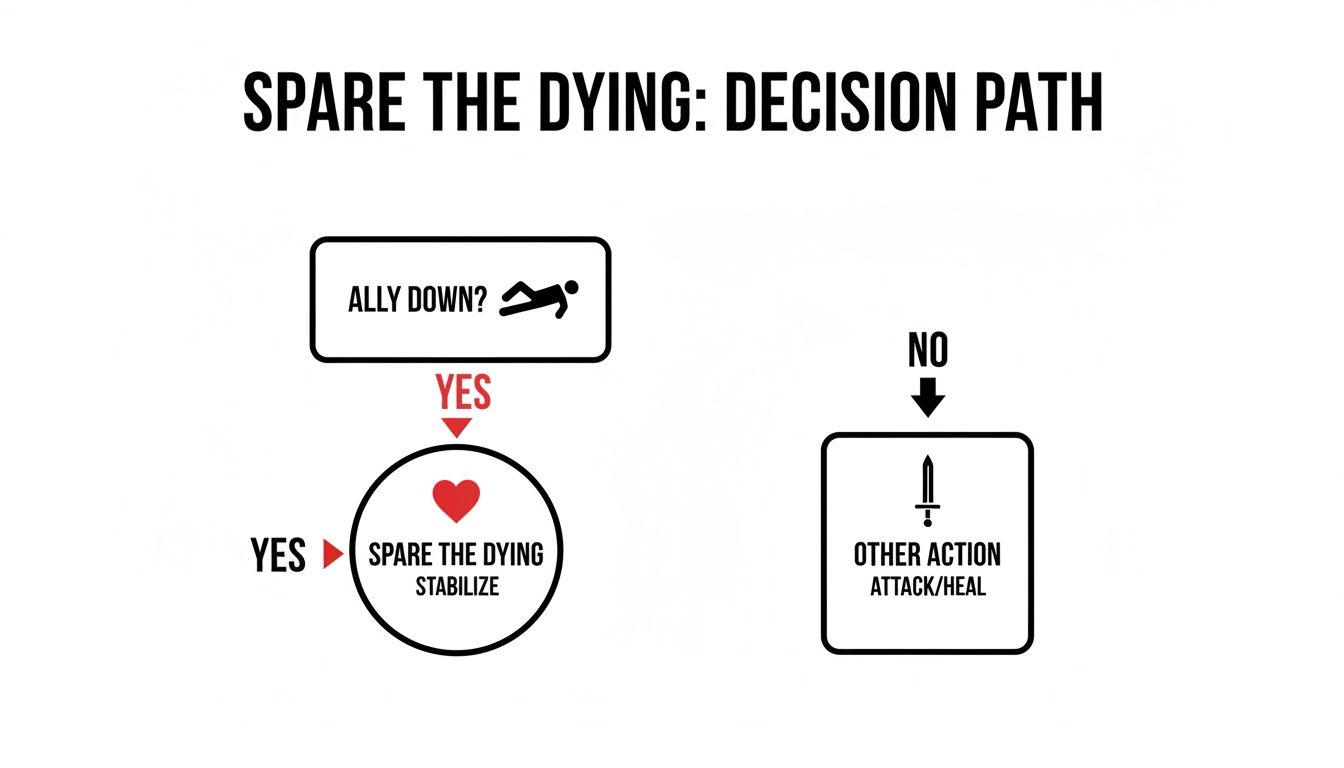
As you can see, the core tactical decision often boils down to stabilising a friend versus taking another action to control the fight.
Let us be honest: stabilising an ally is good, but getting them back on their feet and swinging is a whole lot better. That's where spells that actually restore hit points, like Healing Word, completely outshine Spare the Dying.
Healing Word is often seen as the gold standard for in-combat saves, and for good reason. It’s a bonus action with a generous 60-foot range. It doesn’t just stop death saves; it gives the target hit points, bringing them back to consciousness and letting them act on their turn. The only downside is that it costs a spell slot, which is a significant resource.
This classic D&D dilemma—a free cantrip versus a spell slot—is at the heart of resource management. Potions offer another route back to the land of the living, and if you're curious about their mechanics, you can dive deep into the world of the humble D&D healing potion in our dedicated guide.
At the end of the day, Spare the Dying finds its perfect niche when your back is against the wall. You're out of spell slots, your healer's kit is empty, and you simply can't afford to fail a Medicine check. In those desperate moments, it becomes the ultimate, unbreakable safety net.
When a companion is making death saves, you have a few ways to stop the countdown. Each one comes with its own costs and benefits, and choosing the right one for the situation is a mark of a skilled player. Here's how the most common options stack up.
| Method | Action Cost | Resource Cost | Key Advantage |
|---|---|---|---|
| Spare the Dying | 1 Action | None (Cantrip) | Guaranteed success with zero resource cost. |
| Medicine Check | 1 Action | None | Available to any character at any time. |
| Healer's Kit | 1 Action | 1 use | Guaranteed success without needing magic. |
| Healing Word | 1 Bonus Action | 1 Spell Slot | Heals the target, getting them back in the fight immediately. |
As the table shows, there is a clear trade-off between resource cost and the outcome. While Healing Word is often the best tactical play, Spare the Dying remains an incredibly valuable tool for its sheer reliability when other resources have been exhausted.
We have all been there. That heart-in-your-throat moment when the Barbarian is down, the monster is roaring, and victory feels like it's slipping through your fingers. It is in these moments that the most memorable stories are forged, and not just in Dungeons & Dragons. The thrill of snatching victory from the jaws of defeat is a feeling that connects us across all sorts of games.
Think of a tense game of Gloomhaven. You are down to your last two cards, the objective is just out of reach, but you draw the one perfect ability that turns the entire scenario on its head. That same exhilarating rush, that feeling of a desperate gamble paying off, is what makes these games so compelling. These are the moments we talk about for years.
You can find this spirit of the clutch save threaded through countless indie tabletop games. Take a deck-builder like TerraClash, for example. In that game, you are constantly juggling your resources, trying to shield your most important allies from a relentless onslaught. Every card you play feels weighty, echoing the life-or-death decision a Cleric makes when choosing to cast spare the dying 5e.
It is this shared theme of tactical sacrifice and desperate guardianship that creates such a strong bond between different gaming experiences. This is the narrative glue that holds together everything from sprawling RPG campaigns to quick, intense card games. For Dungeon Masters trying to craft these nail-biting encounters, exploring alternatives to World Anvil for campaign creation can be a great way to map out those epic, unforgettable plot twists.
At its core, the last-minute save is all about hope. It’s the belief that even in the darkest moment, one clever move, one whispered prayer, can turn the tide completely. It's the point where a game becomes a story.
This is the magic we chase every time we sit down at the table. If you seek more of that feeling, platforms like Kickstarter are treasure troves of innovative indie games, where the next great tabletop saga is just waiting for champions like you to discover it.
Even a cantrip as seemingly simple as Spare the Dying can cause a bit of head-scratching around the table. As a long-time Dungeon Master, I have seen these same questions arise time and time again. Let us clear the air on some of the most common rules debates that come up when someone's trying to pull a friend back from the brink.
One of the first things players ask is, "Can I cast Spare the Dying on myself?" It is a fine thought, but the answer is a hard no. The spell requires you to touch another living creature. More importantly, when you're down at 0 hit points and making death saves, you are incapacitated. You cannot take actions, which means you cannot cast a spell on yourself, or anyone else for that matter.
Next up is a classic rules-lawyer favourite: "Can I stabilise my friendly zombie sidekick?" The wording here is crystal clear. The spell targets a living creature. Undead, like zombies and skeletons, are explicitly not considered living creatures in the D&D rulebook. The same logic applies to constructs, like a friendly golem.
Think of it this way: Spare the Dying isn't a magical patch-up kit. It’s a quiet, divine plea for a soul to cling to its mortal body for a moment longer. It works on people, on wolves, on griffons—anything with a pulse. But constructs and the undead? They're simply outside the spell's compassionate reach.
Finally, what about lingering effects? If your friend was taken down by a nasty poison, does Spare the Dying cure it? Nope. The spell does one thing and one thing only: it stabilises a dying creature, stopping the death saves. It does not remove any other conditions. So, if your ally was felled by a wyvern's sting, this cantrip will stop them from bleeding out, but that poison is still going to be coursing through their veins when they awaken.
These moments of tactical choice—deciding how and when to save an ally—are what make for truly unforgettable adventures. That same spirit of clutch plays and high-stakes teamwork is what we have poured into our own game, TerraClash. If you get a kick out of making game-changing decisions, check out our innovative deck-building game, designed for adventurers aged 12 and up, at https://terraclash.co.uk. For more tales of indie tabletop adventures, check out other great games like Frosthaven and keep an eye on Kickstarter for the next big thing.