Hark, adventurer! A hero's journey, from the humble farmhand to a world-saving legend, is the very soul of any great saga. In the realms of Dungeons & Dragons, this ascent is not merely a tale told, but a progression measured in DnD EXP levels. Two ancient paths lie before you: the time-honoured method of earning Experience Points (EXP) or the story-driven rite of Milestone levelling.
A hero's rise is what transforms a simple tale into an epic. In D&D, this metamorphosis from a wide-eyed novice to a seasoned legend is guided by a core system of advancement. To understand these methods is the first step for any player wishing to shape their destiny, or any Dungeon Master seeking to weave a truly memorable story.
At its heart, there are two philosophies for a character's growth, and each lends the campaign a completely different flavour.
The classic, and for many the original, method is the earning of Experience Points. Think of EXP as a tangible reward for every deed your character accomplishes. Every goblin outsmarted, every ancient riddle solved, and every quest completed adds to a running total. When that number reaches a sacred threshold, ding!—you ascend to a new level, unlocking a fresh arsenal of skills and powers.
This path gives you a granular, moment-to-moment feeling of progress. You always know exactly how close you are to that next surge of power.
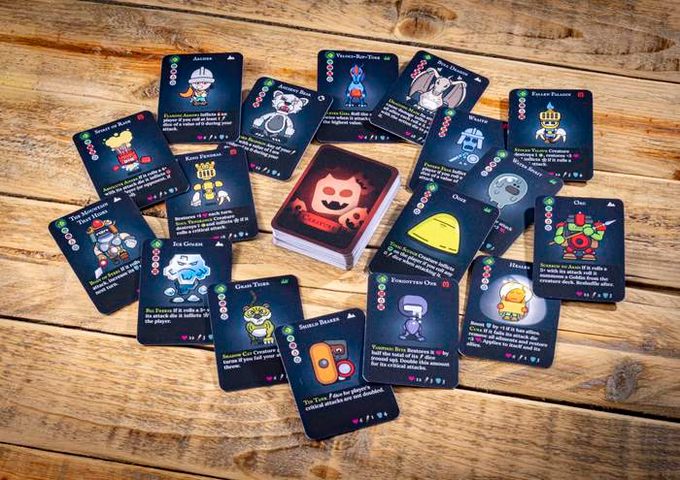
This sense of tangible growth is a cornerstone of great tabletop games, inspiring indie creators on platforms like Kickstarter to forge new worlds, much like the deckbuilder TerraClash, where every choice contributes to your legacy.
On the other hand, many modern Dungeon Masters prefer the path of Milestone levelling. This narrative-first approach casts aside the tracking of individual points. Instead, characters level up when they reach a major story beat or achieve something of great significance.
Imagine it: defeating the dragon that terrorises the valley, unmasking the traitor in the royal court, or discovering the lost city. These are the moments that feel worthy of newfound strength. This method keeps the spotlight firmly on the unfolding drama and the party’s impact upon the world.
For those just setting out, understanding these two styles is key. If you are new to the grand adventure, you might find our comprehensive guide on D&D for beginners a useful companion on your quest.
Both systems are powerful; they simply appeal to different kinds of players and campaigns. The best choice often boils down to whether your fellowship prefers a game focused on tactical challenges or one that leans into epic storytelling. It’s worth noting just how many new players are picking up the dice; observations from the UK Games Expo 2025 revealed a huge number of D&D players were beginners, often starting right from 1st level. You can read more about the UK's booming TTRPG scene and its player demographics over at Richard Green Games.
Let us break down the key differences between these two primary methods for character advancement in the world of Dungeons & Dragons. This quick comparison should help you divine which style might be the best fit for your table.
| Aspect | EXP Leveling | Milestone Leveling |
|---|---|---|
| Pacing | Controlled by player actions; can be faster or slower depending on the party's deeds. | Controlled by the Dungeon Master; tied directly to the saga's progress. |
| Focus | Encourages seeking out challenges, combat, and exploration to earn points. | Encourages focusing on narrative goals and completing story arcs. |
| Bookkeeping | Requires the scribe to track points for every monster, trap, and social encounter. | Requires no tracking at all, only the DM's judgement on when to bestow new power. |
| Best For | Sandbox campaigns, dungeon crawls, and groups who enjoy tangible rewards for their valour. | Story-heavy campaigns, new players, and groups who prefer a cinematic feel. |
Ultimately, there is no wrong path. The best system is the one that makes the game more fun for everyone at your table. Whether you're counting every last point or awaiting that grand "level up!" moment from your DM, the goal is always the same: to tell a great story together.
The road from a nervous level 1 adventurer to a world-shaking level 20 legend is not a single, arduous grind. It is a journey broken down into four distinct stages, or what the lore calls Tiers of Play. Think of them as chapters in your character's grand saga.
Each tier represents a massive shift not just in raw power, but in the very scale of the problems your character can solve. Understanding these tiers helps Dungeon Masters craft adventures that feel right for the party's current abilities, and it helps you, the player, appreciate just how far your hero has come.
This is where all legends begin. From levels 1 to 4, you are essentially an apprentice adventurer. You are tough, yes, but still learning the ways of the world. The threats you face are immediate and local: a goblin clan raiding nearby farms, a strange curse afflicting a single village, or bandits preying on merchants along the King's Road.
You’re not saving the world yet. You’re saving your world. The deeds may seem small, but this is where you build your foundation, earn a name for yourself, and forge the bonds that will carry you through the tougher fights ahead.
This handy diagram illustrates the two main ways characters grow, whether it's through the classic experience point system or by hitting major story beats, known as Milestones.
Ultimately, both paths—ticking up EXP from monsters or completing a huge narrative arc—are perfectly valid ways to climb the ladder toward legendary status.
Once you reach level 5, the game changes. You have graduated from local odd jobs to tackling problems that threaten entire regions. The stakes are officially higher.
Instead of merely clearing out a cave, you might be tasked with stopping an orc horde from sacking a city, delving into the haunted ruins of a lost civilisation, or unravelling the plots of a kingdom-spanning cult. Your name begins to travel on the winds; bards sing tales of your exploits, and nobles may seek you out for aid. You are no longer just an adventurer—you are a recognised hero.
Welcome to the grand stage. In Tier 3, you are a force to be reckoned with, wielding power that can genuinely change the course of history. Your adventures now spill beyond the borders of a single kingdom and often into other planes of existence.
This is the tier where you might battle ancient dragons, confront powerful archmages in their towers, and put a stop to extra-planar invasions. The fate of entire nations can now rest on your shoulders, and the choices you make can literally redraw the map.
At the pinnacle of mortal power, you enter Tier 4. You are, for all intents and purposes, a living legend walking the earth. Your strength is now comparable to that of demigods, and your adventures reflect this reality.
The quests at this stage are cosmic in scope. You might be marching into the Abyss to challenge a demon lord on their home turf, defending the world from the wrath of an angry god, or deciding the fate of reality itself. You have transcended being a mere hero. You are now a fundamental force, and your story will be told for eternity.
Experience points, or EXP, are the lifeblood of your character's journey. They are what turn a farmhand into a folk hero. But how are they truly earned? As a Dungeon Master, you quickly learn that bestowing DnD EXP levels is a delicate dance, a way to guide the story and celebrate heroism in all its forms. This is a core part of being a DM, or as some prefer, Game Keepers, since you're the one shaping how your players feel about their progress.
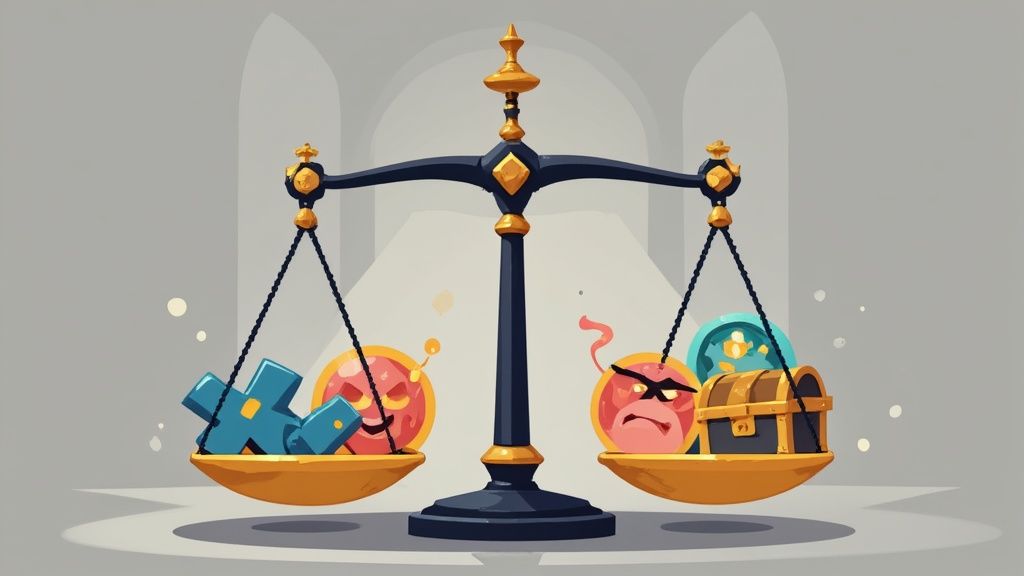
It is easy to get tunnel vision and focus only on slaying monsters. The ancient tomes lay it out neatly: a creature has a Challenge Rating, and you gain a set amount of EXP for defeating it. But if that is all you reward, you risk creating a party of "murder hobos"—adventurers whose only solution is violence because, alas, it is the only one that pays.
That is why experienced DMs know that true heroism often happens far from the battlefield.
A hero's worth is not just measured in the monsters they have slain. Sometimes, the greatest victory is the fight that never happened. Think about all the other ways your players can be brilliant:
When you begin awarding EXP for these moments, you are telling your players that you value their creativity. It opens the game up and makes it far more engaging. This approach mirrors the design of many modern board games, where strategy and creative thinking are rewarded just as much as brute force—a philosophy that inspires us at TerraClash, which is a game designed for ages 12 and up.
A great campaign is not just a series of fights; it's a tapestry of challenges. Rewarding ingenuity, diplomacy, and exploration ensures that every player, regardless of their character's combat prowess, feels their contributions are vital to the party’s ascent through the DnD EXP levels.
So, how do you put a number on such deeds? While combat EXP is straightforward, rewarding other successes requires a bit more judgment. A good rule of thumb is to consider the difficulty and the resources the players used. Outwitting a cunning spymaster in a battle of wits could be just as challenging as fighting his two thuggish bodyguards, so it should probably be worth a similar amount of EXP.
If you're looking for help getting the numbers right for any kind of challenge, our guide on using a 5e encounter builder is a fantastic resource for any DM.
The tabletop scene in the UK has absolutely exploded, especially since the pandemic. A 2022 survey revealed that a staggering 85% of respondents noted a bigger interest in D&D since 2020. With so many new people discovering these worlds, it is more important than ever to make sure the game feels rewarding in all its facets.
https://www.youtube.com/embed/dd_rmqHV5Xc
Hark! Sometimes, counting up every kobold dispatched simply doesn't do justice to the epic saga you are weaving. This is where Milestone Levelling enters. It is an incredibly popular alternative that puts the story firmly in the driver's seat, letting the narrative, not the grind, decide when your heroes grow in power.
Instead of keeping a running tally of every monster, Milestone ties character progression directly to monumental achievements. The party levels up when the story demands it. This gives you, the Dungeon Master, pin-point control over the campaign's pacing and ensures the heroes are always ready for the next great challenge.
So, what truly counts as a milestone? Think about the major turning points in your favourite fantasy epics. We're talking about the moments that define the characters and shift the very foundations of their world.
A milestone could be something like:
Suddenly, the whole DnD EXP levels system transforms from mere bookkeeping into a powerful storytelling tool. The party's focus naturally shifts from "what can we fight for XP?" to "how do we move this incredible story forward?".
By tying advancement to story beats, Milestone Levelling encourages your players to truly delve into the world and its narrative. It guarantees that the party's power level always feels perfectly in sync with the dramatic weight of what they have just accomplished.
This narrative-first approach is not unique to D&D. You can see its echo in many beloved tabletop games. The sprawling legacy campaigns of Gloomhaven, for instance, see the world and its characters evolve through key events, not just a string of fights. It is a design philosophy that is a huge inspiration for indie creators, including us as we develop TerraClash, where a player's journey and growth are intrinsically linked to the unfolding adventure.
At the end of the day, it puts the emphasis right back where it belongs: on telling a memorable story, together.
As a Dungeon Master, you are not just a storyteller; you are the conductor of the adventure's orchestra. You control the rhythm, the tempo, the crescendos and lulls that guide your players from fumbling village novices to world-shaking heroes. Getting the pace of that progression just right is one of the trickiest arts of the craft.
It is a balancing act every game designer knows well, whether they are creating a massive Kickstarter epic or a tight deckbuilding game like our own TerraClash.
Go too fast, and the world loses its teeth. That fearsome dragon you have been foreshadowing for months becomes a trivial speedbump on the road to glory, and the players begin to feel invincible. But drag your feet, and the campaign grinds to a halt. Players grow bored, frustrated, and the whole thing can feel like a pointless slog. It is all about finding that sweet spot.
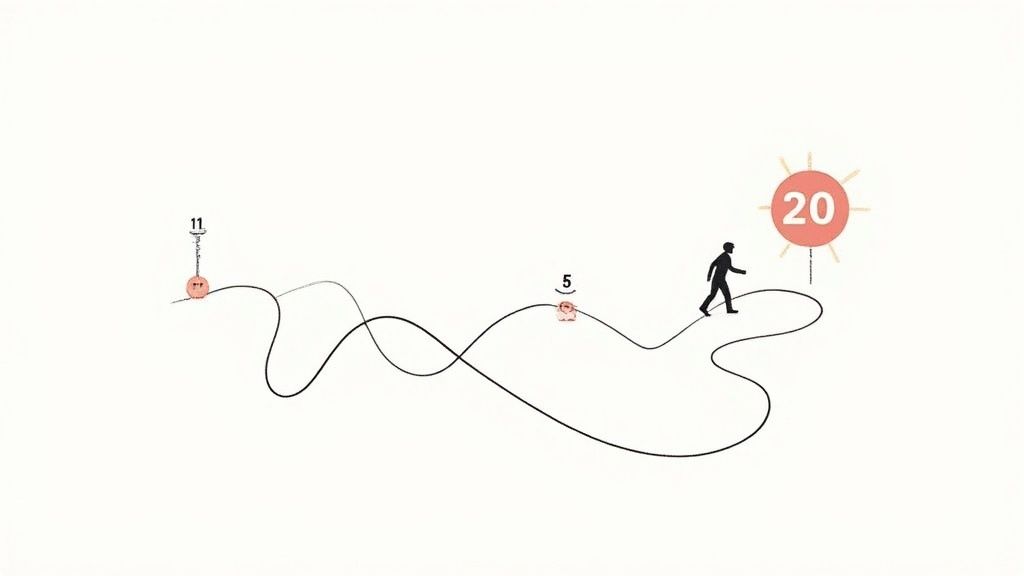
Sooner or later in a long-running campaign, you will face a classic challenge: a new player wishes to join. How do you smoothly introduce a fresh-faced level 3 character into a seasoned party of level 7 veterans without it feeling awkward?
The trick is to make their arrival an event. Do not just have them appear at the tavern. Instead, weave their story into the current adventure. Perhaps their unique background holds the secret to a puzzle the party is stuck on, or their fresh perspective is exactly what is needed to navigate a tricky social encounter.
Your goal is to avoid making them feel like a mere tag-along or sidekick. Make them the star of their own introductory scene. Our guide for Dungeon Masters offers more advice on weaving compelling narratives that can truly help you integrate new adventurers into the fold.
It’s a relevant challenge, especially as the UK D&D scene continues to boom. A 2023 survey found that 48% of players are millennials, with another 33% from Gen Z. With 58% of UK players gaming every week, keeping the table fun and engaging for everyone is absolutely crucial. You can dive deeper into D&D player demographics in this insightful report.
A satisfying arc of power is not just about reaching higher dnd exp levels; it is about ensuring each level feels earned and impactful. A well-paced campaign makes the journey, not just the destination, the true reward for every player at the table.
The thrill of levelling up is not unique to Dungeons & Dragons. That moment when your hero’s power finally crests a new wave, ready to face down bigger threats, is a feeling woven into the very fabric of tabletop gaming. While the dnd exp levels system is iconic, it is far from the only way to chart a hero's journey.
Let us look to how other designers tackle this. Consider the rise of legacy games, grand sagas like Gloomhaven, where your impact is etched onto the world itself. In these games, progression is not just about a few new numbers on your character sheet; it’s about seeing a fledgling village you protected grow into a fortified town, or watching a blighted forest slowly heal because of your actions. The world evolves with you, making your choices feel truly permanent and meaningful.
Then you have the world of deckbuilding games, a design philosophy that we’ve taken to heart while creating our own adventure, TerraClash. In games like this, your power is not a level—it is the hand of cards you draw. Every new card you add to your deck is a new spell mastered, a better weapon forged, or a cunning tactic learned on the battlefield.
Instead of big, sudden leaps in power, your strength grows with every deliberate choice you make. You carefully sculpt your deck, turning a handful of basic cards into a finely-tuned engine of victory. It's a different kind of satisfaction, one built on:
Diving into these different systems is like browsing a grand library of game design. It is a brilliant reminder of the sheer creativity bubbling up from the indie community, where creators on platforms like Kickstarter are always finding new ways to tell heroic stories. Whether it’s through a world that remembers your deeds or the strategic draw of a card, each approach proves that the real magic is in the journey of becoming a legend.
Even the most weathered Dungeon Masters and veteran players find themselves double-checking the ancient scrolls now and then. The journey from a farmhand to a hero is paved with questions, so let us shed some light on the most common ones about D&D EXP levels.
So, you have vanquished the goblin horde. Now what? The Dungeon Master's Guide keeps it simple: add up the total experience points from the encounter and divide it evenly among all the players who took part.
This approach is all about teamwork and shared victory. It means the tank who soaked up all the damage and the wizard who finished the fight with a perfectly placed Fireball both get the same reward. It keeps the party on an even footing, preventing any one character from wildly out-levelling the others and fostering a sense of camaraderie.
Thankfully, in this current era of D&D 5th Edition, losing your hard-won experience is almost unheard of. Veterans of older editions might tell you horror stories of level-draining monsters that could literally suck the power right out of you, but those days are largely gone.
A Dungeon Master could, of course, homebrew a specific curse or a nasty trap that drains EXP, but it is not a standard rule. It is a particularly harsh penalty that most DMs avoid because it can feel more frustrating than fun for the players.
There is no single right way to do this; it truly boils down to what your table prefers.
This sense of tangible progression is a feeling we cherish, inspiring us at TerraClash to create a deckbuilding adventure where every card you acquire marks a new step on your own heroic journey. If you've enjoyed this guide, keep an eye on our progress as we prepare to launch our own quest. https://terraclash.co.uk