Greetings, adventurer. You stand at the threshold of creation, a spark of an idea flickering in your mind—a desire to forge a new world, complete with its own heroes, conflicts, and arcane laws. That spark is a powerful magic. The true quest, however, is to shape that raw energy into a roaring fire—a card game that fellow travellers will gather around, eager to share in the tales you've spun. This journey begins not with rules, but with a world waiting to be born.
Welcome, creator. You're here because a story has taken root in your soul—a legend itching to be told, a battlefield awaiting its champions. Every great card game, from the humble kitchen table chronicle to the epic sagas known across the realms, started exactly where you are now. You’ve felt that pull to craft your own saga, and this guide is your enchanted map for the journey ahead.
This sketch captures that very first moment of creation, where a world is born from pure imagination.
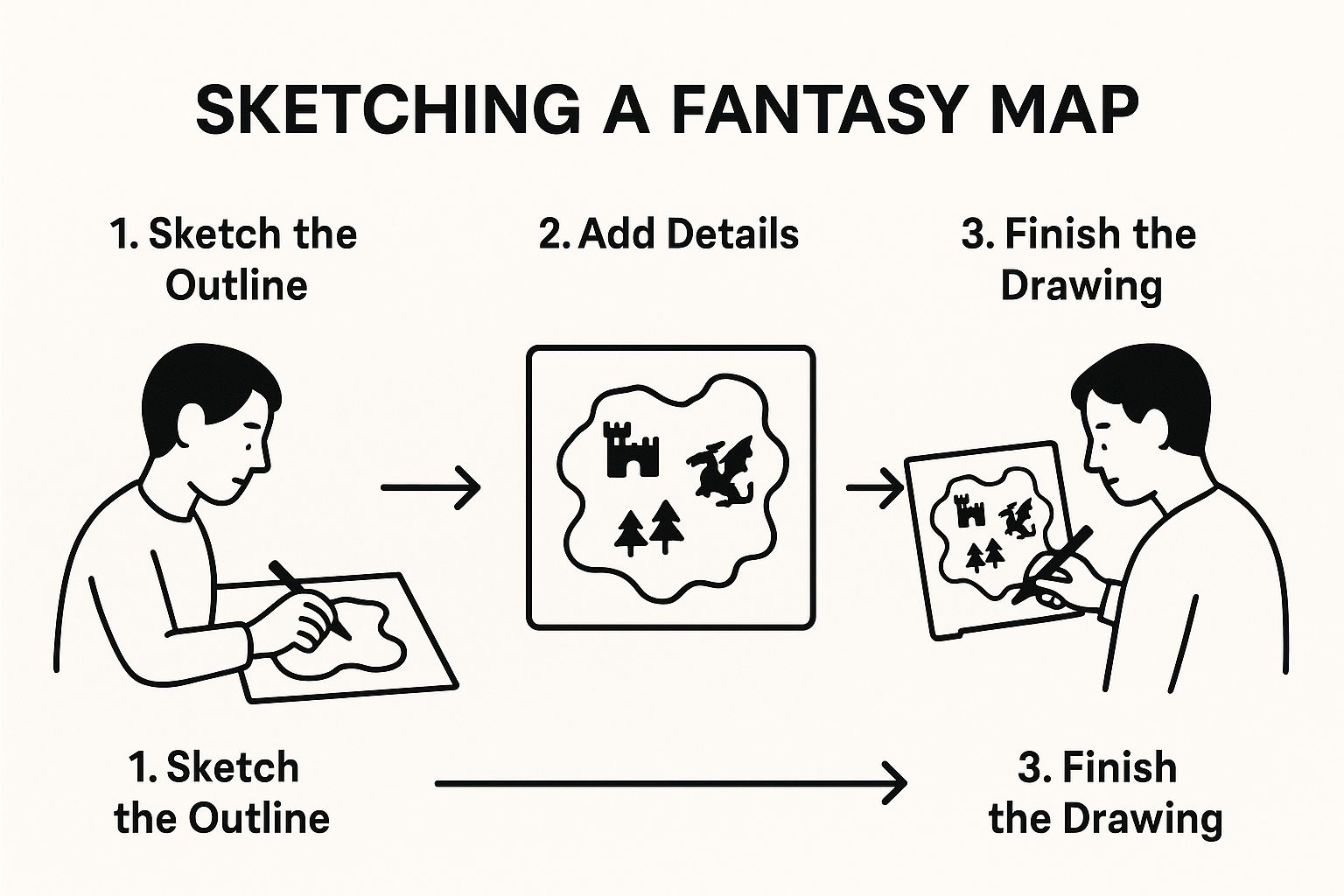
Before a single incantation is written or a card is forged, the heart of your game beats within the world you envision.
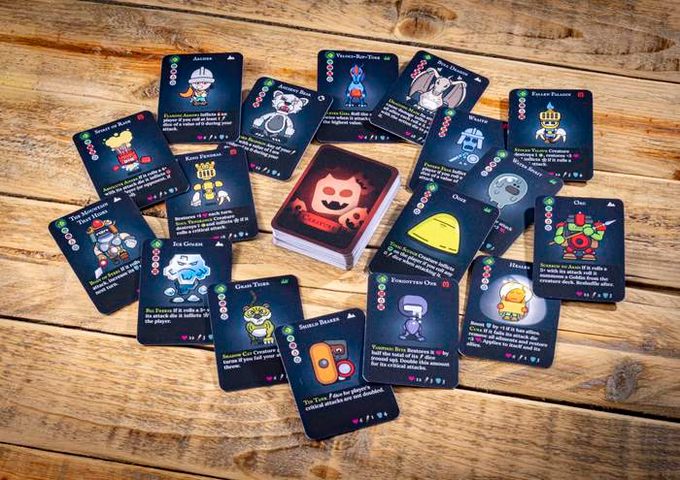
We shall journey through the entire process together, from wrestling that core idea from the ether to forging a prototype you can actually wield. We’ll gaze into the scrying pools of modern classics and indie darlings to see what magic makes them tick, preparing you to forge your own path. Believe me, fellow traveller, when we were conjuring our own world, TerraClash, we learned that the most powerful magic of all is a rock-solid foundation.
Before we delve into the arcane arts of game mechanics, let us first consult the stars. These are the foundational questions that will shape all that follows, ensuring your theme, mechanics, and player experience all sing from the same ancient hymn. Think of this as your pre-quest briefing—defining the grand adventure before you take the first step.
The greatest games are not just a collection of rules, but a portal to another world. Your first task is to decide what that world feels like, sounds like, and plays like. This core vision will be your guiding star through the mists of creation.
Before we begin our quest, let us consult the foundational pillars that every game creator must consider when forging a new world.
| Pillar of Creation | The Creator's Guiding Question |
|---|---|
| The Core Theme | What is the central story or concept? Is it a high-fantasy epic, a sci-fi dogfight, or something else? |
| Player Role | Who are the players in this world? Are they rival wizards, starship captains, or scheming merchants? |
| Core Emotion | What do I want players to feel? Cleverness, suspense, triumphant power, or the thrill of exploration? |
| The End Goal | How does one claim victory? What is the ultimate objective that drives every decision a player makes? |
These pillars are not a mere checklist; they are the bedrock upon which your realm is built. Heeding them from the start will save you from countless temporal paradoxes and redesigns later.
Many of the most celebrated indie games began with a simple but powerful concept. Consider the elegant bluffing in Skull or the deep, immersive narrative woven into every card of Arkham Horror: The Card Game. Each knew exactly what experience it wished to bestow upon its players. To stir your own creative cauldron, you can explore the lore behind great fantasy card games that have captured imaginations for ages.
Your game's journey starts now, by answering these fundamental questions.
Strip away the gorgeous art and the epic lore, and what remains of any great card game? Its mechanical heart. This is the intricate clockwork engine that makes everything tick, the hidden logic that dictates every move, every battle, and every choice a player makes. As a creator, this is where you become the archmage, weaving the very laws of reality.
This core system defines how players actually play. Will they slowly build their power from a central pool of cards, like the dungeon-delving heroes in Clank!? That is the path of the classic deck-builder, a mechanic where a handful of weak starting cards is honed into a finely tuned grimoire of power. It's a style we fell in love with while designing TerraClash for young adventurers aged 12 and up, mostly because it beautifully mirrors a hero's journey from apprentice to master.
Or perhaps you prefer the nail-biting decisions of a drafting game. Picture 7 Wonders, where you pluck cards from a shared hand, constantly attempting to out-divine your opponents while piecing together your own grand strategy. Every single choice is a calculated risk, a fate woven one thread at a time.
Before you can build something that feels truly alive, you must understand the fundamental building blocks—the runes of game design, if you will. These are the concepts that give your game structure.
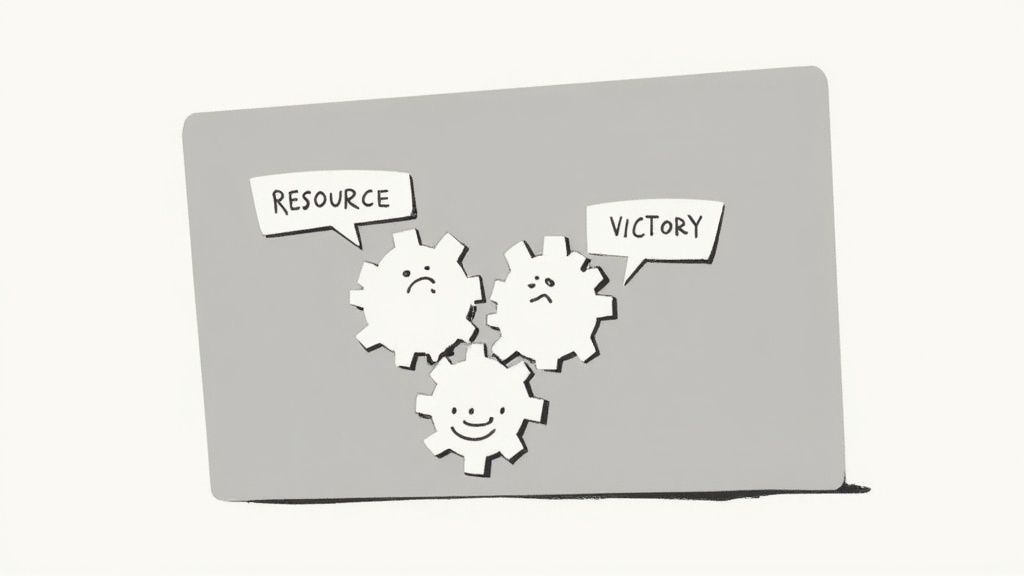
Resource Management: This is the lifeblood of your world. Whether it's the iconic mana in Magic: The Gathering or the gleaming gold in Dominion, resources are what allow players to act. How do they gather their power, and what does it cost them to unleash it?
Action Points: This mechanic sets the rhythm of your game. Granting players a strict number of actions each turn, as in the co-op classic Pandemic, forces them into agonising choices. Every move must be made to count.
Victory Conditions: How does one achieve victory? Is it a race to a certain number of victory points? Must they defeat a final, epic beast, or are they working towards a secret goal? You must forge a clear and satisfying endgame to make the journey worthwhile.
The goal is not merely to copy the mechanics from your favourite games. It is to understand why they work so well. Dissect them in your mind, see what makes them tick, and then weave those principles into something new that perfectly serves the story you wish to tell.
Look at the sheer elegance of Love Letter. It’s a whole game of bluffing and deduction packed into just sixteen cards. That's a world away from the sprawling, intricate systems of a game like Gloomhaven: Jaws of the Lion.
Both are brilliant designs, but they offer completely different quests. One is a sharp, social game you can play in minutes; the other is a deep, sprawling campaign. The mechanics you choose will absolutely define that experience. If the idea of building an engine from scratch appeals to your creator's soul, you should definitely consult some of the best deck-building games to see how the masters practice their craft.
Ultimately, your game's mechanical heart is what will linger with players long after they've put the cards away. It is the silent storyteller in the background, shaping every decision and every moment of triumph. Choose its components with care.
An idea is but a whisper in the wind until you can hold it in your hands. This is where the real magic begins: prototyping. It is time to take all those brilliant mechanics and concepts swirling in the astral plane of your mind and give them physical form. You need nothing fancy – a stack of index cards and a trusty quill will serve you well.

This first version will be rough. Truly rough. And that is exactly as it should be. Scribble down your card effects, sketch some placeholder icons, and simply get a feel for how the components interact. Do not seek perfection; seek something playable.
The moment you begin playing with this rough draft, your game will start to speak to you. You will immediately spot things you could never have foreseen on paper, from unexpected card combinations to glaring holes in your magical logic.
Think of these early playthroughs as a conversation with your creation. The game will tell you what is working and what is not.
This cycle of playing, listening, tweaking, and playing again is the secret enchantment. Just look at the journey of modern classics like Wingspan; they passed through countless paper-and-ink iterations before they became the polished artifacts we know and love.
Your first prototype is not meant to be a masterpiece. It is built to fail, and to fail fast. Every crossed-out word and hastily scrawled new rule is a sign that you are getting closer to the heart of your game.
Creating this first physical version is a massive milestone. It is the moment you transition from someone with an idea to a genuine game designer. And what a time to be doing so. The tabletop scene is booming, with more adventurers seeking new quests than ever before. The demand for new, creative card games has never been higher.
The trick at this stage is to keep everything simple and easy to change. Forget professional artwork or slick graphic design for now. Your one and only focus should be on the gameplay. Is the core loop fun? Are the rules solid? Nailing this foundation is how you create those fantastic easy-to-learn card games that hide surprising layers of strategy. It is the true art of game design: spinning simple rules into genuinely exciting decisions.
https://www.youtube.com/embed/QWjp6Vw81TI
No legendary blade is forged in a single strike. It is heated, hammered, and plunged into the quenching waters time and time again. Your game is no different—it must be tempered in the crucible of playtesting. It is time to gather your most trusted adventuring party and brace yourself for some honest, sometimes even brutal, feedback.
This is not a quest for praise; it is a hunt for truth. Your role is not to defend your creation but to be a silent loremaster, watching a new story unfold. Pay close attention to your players.
Where do they hesitate before playing a card? Which rules make them furrow their brows in confusion? And most importantly, when do their eyes light up with a spark of genuine excitement? These moments are the glimmers of gold you seek.
Running a good playtest is a delicate art. You must guide the session without poisoning the well, which means asking open-ended questions that invite raw, unfiltered thoughts. Banish questions like, "Did you have fun?" Instead, ask, "What was the most frustrating moment for you?" or "Tell me about a time you felt truly clever."
The answers will reveal the hidden truths of your design. The real skill is learning to separate constructive critique from simple personal taste. It’s a journey every successful creator has walked, from the makers of the beautiful Wingspan to the solo developer pouring their heart into a first project.
A playtester's confusion is not their failure; it is your game's cry for clarity. Listen to it. That feedback is more precious than any dragon's hoard because it holds the key to making your game truly intuitive.
This community-driven approach is the very lifeblood of the tabletop world. This incredible growth is fuelled by a desire for social, strategic games, with board game cafes becoming the perfect testing grounds for aspiring creators.
Once the dice are put away, you will be left with a pile of notes—a mix of praise, confusion, and sharp-edged criticism. Your next task is to find the patterns in these runes.
This is exactly the path we are on with TerraClash, listening intently as our testers help us shape its world. Every piece of feedback is another hammer blow, making the final game stronger, sharper, and more worthy of the adventures it will hold.
Very well, creator. You have mastered the mechanics and your game is genuinely fun to play. That is a momentous achievement. Now comes the part where we breathe a soul into your creation. This is where you transform your collection of cards and tokens into a world people can get lost in, full of legendary heroes and terrifying monsters.
We speak of world-building. It is the art of weaving a story that connects everything, making every card draw and dice roll feel like it is part of a grander narrative. A strong theme is not just a pretty wrapper; it is the very heart of the experience, giving weight and meaning to every choice a player makes.
First, you must decide what your world looks and feels like. Is it a grim, shadowy place fraught with peril? Or is it a bright, whimsical realm filled with impossible colours and mischievous spirits? This decision is your creative North Star. It will guide every artist you work with, or the style you develop if you are illustrating it yourself.
Consider the vast difference in feel between two classic games. You have the dreamy, almost surreal art of Dixit, where every card is a beautiful, open-ended story prompt. Then you have something like Arkham Horror: The Card Game, which uses its art to create a thick, palpable atmosphere of dread. It pulls you right into its Lovecraftian setting.
The games that linger in our memories are the ones that create a completely cohesive atmosphere, pulling us from our world and straight into theirs. Your art style is the most powerful spell you can cast to achieve this.
This is what turns a game from a fun distraction into a genuinely memorable experience. It’s a philosophy we have poured into our own project, TerraClash, making sure every single illustration tells a piece of a much larger story. The art and the lore must dance together, each making the other stronger.
With your visual style decided, the lore provides the 'why'. It is the history, the factions, the grand conflicts, and the personal motivations that give meaning to all those clever mechanics you designed. It is the reason a player is not just discarding a card—they are unleashing a devastating fire spell to scatter a horde of goblins.
A fine way to begin is by simply asking questions. Take up your quill and start brainstorming:
The answers you conjure will become the flavour text on your cards, the narrative hooks in the rulebook, and the thematic justification for why certain cards work the way they do. This rich sense of place is a massive part of what makes so many games so compelling.
Do not underestimate the power of this magic. Players across the globe are drawn to games with rich worlds and beautiful art, fueling an ever-growing desire for new adventures.
You have journeyed far, creator. The mechanics are humming, the art is breathtaking, and the world you've built feels alive. But now comes the final push: preparing your game to leave the nest and find its audience of fellow adventurers.
This stage is less about creative sparks and more about meticulous planning, but it is every bit as important. It is like polishing a magical lens before a grand reveal. The most crucial piece of this puzzle? Your rulebook. Get it wrong, and you risk sabotaging all your hard work.
A good rulebook does not just state the rules; it teaches the game. You must walk players through it, from the main objective and initial setup right into what a standard turn looks like. My counsel is to use plenty of examples, clear diagrams, and a welcoming, conversational tone to guide them.
Clarity is paramount. Consider the elegant design of many cooperative games, where each player receives their own reference card. It is a simple, brilliant touch that ensures nobody feels lost or overwhelmed. That is the feeling you want to create—a game that feels inviting the second the box is opened.
The days of toiling in isolation are over. It is time to start gathering a fellowship around your creation. This means venturing forth and sharing your work on platforms where your kind of people gather, whether that's niche forums, social media, or the bustling town square of Kickstarter.
Crowdfunding is about so much more than raising coin—it is about building a tribe. Just look at giants like Frosthaven. It became a colossal success because the creators brought their community along for the epic quest. They shared regular updates, genuinely listened to feedback, and made their backers feel like they were part of the adventuring party. That is the blueprint.
Your game is not just yours anymore. Soon, it will belong to the players who will laugh, strategise, and create memories around your table. Building a community is how you give your creation the best possible chance to find them.
By sharing your progress—glimpses of art, design chronicles, amusing tales from playtesting—you build excitement and trust. It transforms people who might have scrolled past into true supporters who are invested in seeing you succeed. This community will be your greatest asset. It is certainly the approach we are taking with our own games.
We hope this guide has served as a worthy map for the wild, rewarding journey of game design. We at TerraClash have been on this same path, and we wanted to share what we’ve learned. Our own Kickstarter campaign will be launching very soon. To follow our quest, see how we're putting these ideas into practice, and to join our own growing community, come and say hello at https://terraclash.co.uk.