You know the moment. The fighter lands a huge hit, the cleric is down to scraps of healing, and the monster in front of you refuses to stay hurt. Its wounds close. Its grin returns. The table goes quiet for a second because everyone can feel the fight slipping away.
That is where chilling touch 5e earns its place.
A lot of players glance at the spell and file it under “decent ranged cantrip”. That undersells it badly. In practice, Chilling Touch is one of those spells that teaches a deeper lesson about Dungeons & Dragons. The best move is not always the loudest one. Sometimes the winning play is the one that cuts off the enemy’s plan.
As a Dungeon Master, I love spells like this because they reward attention. As a fan of sharp, fast card games, I love them for the same reason. They ask a simple question. Are you only counting damage, or are you reading the board?
The troll had already hit the barbarian twice. The party wizard was nearly out of bigger spells. Every turn felt the same. The group dealt damage, the troll staggered, then the thing started knitting itself back together.
That sort of combat creates panic. Players often respond by reaching for their strongest attack, hoping brute force will solve the problem. Sometimes that works. Sometimes it wastes a round.
Chilling Touch changes the terms of the fight. It does not just chip away at hit points. It tells the target, “No, you do not get that back.”
That is why the spell feels so satisfying in play. It creates a swing without looking flashy. The wizard points, the spectral hand appears, necrotic force lands, and the creature loses access to one of its best defensive tools. Suddenly the rest of the party’s attacks matter more.
Two things cause confusion straight away.
At the table, both assumptions can hide what makes the spell strong. Chilling Touch is not about elemental flair. It is about control through disruption.
The best users of this cantrip usually spot one of these battlefield truths:
A cantrip becomes dangerous when it answers a problem other spells leave untouched.
That is a particular appeal of chilling touch 5e. It rewards calm thinking in ugly fights. If your group has ever stared at a troll, vampire, or any enemy that keeps recovering, this spell stops being “nice to have” and starts feeling like the clever answer that was there all along.
Chilling Touch is a control cantrip disguised as a damage spell. If you come to it expecting icy damage or a melee grab, the card text, so to speak, reads very differently from the title.
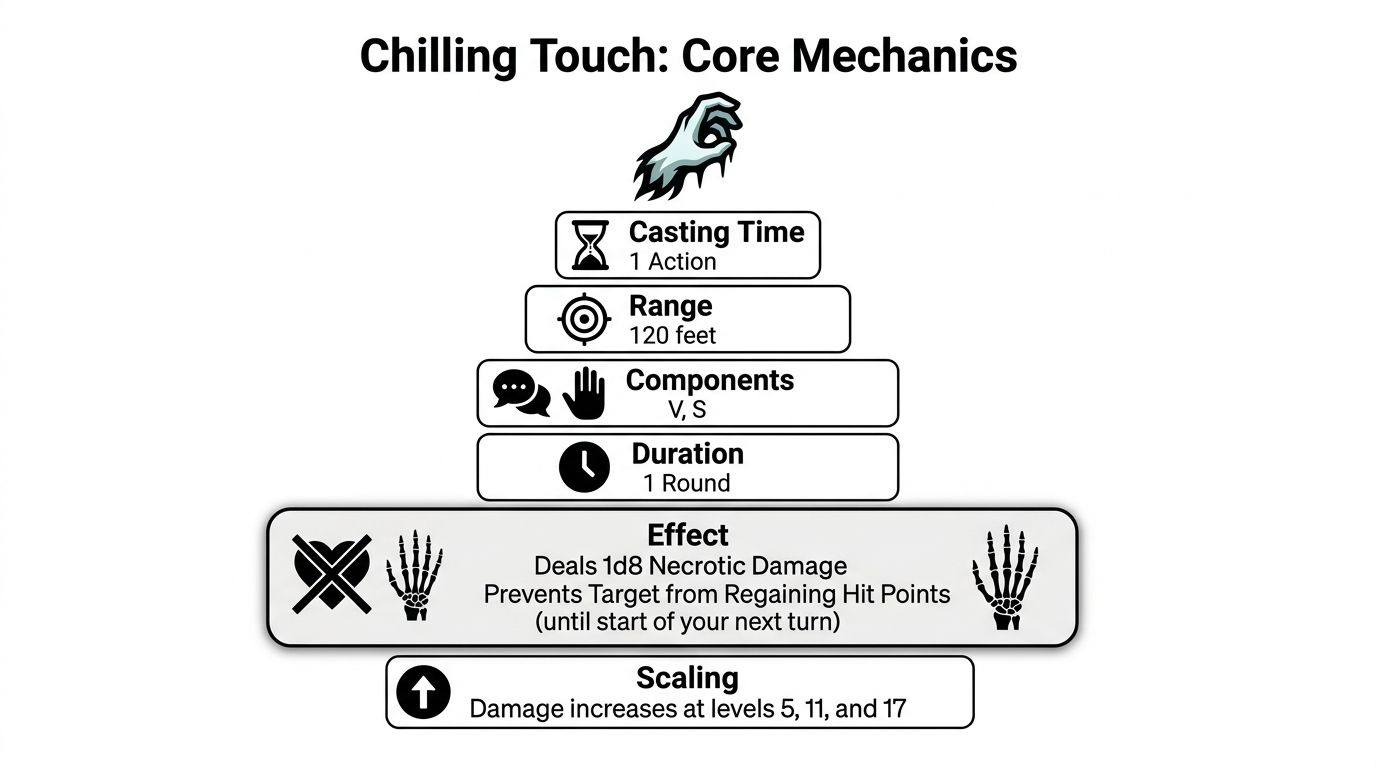
A seasoned DM usually explains it in four parts. Once those four parts are clear, the spell becomes easy to judge at the table.
Start with the rules text in plain English:
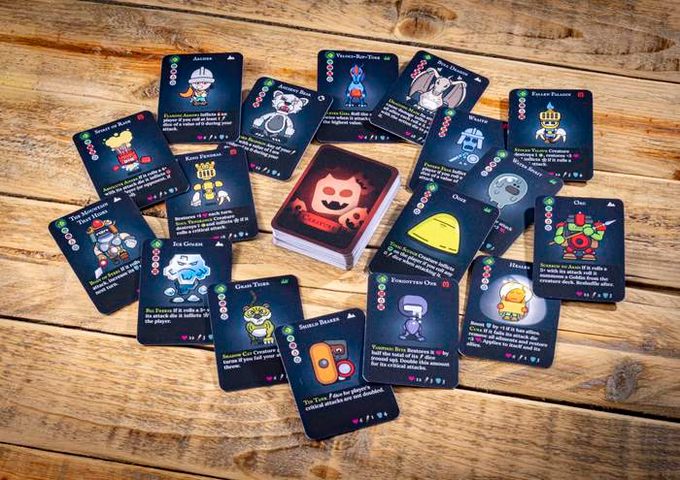
That package is why the spell keeps showing up in smart play. In card game terms, it behaves less like a simple damage card and more like a tempo play that also clips life gain. TerraClash™ Grimoire uses this same design principle in its faster turns. A modest hit becomes far more threatening when it also shuts off the opponent’s stabilising line.
The first mistake is reading the flavour instead of the rule. “Chilling” sounds like frost, but the spell uses necrotic damage. If a creature shrugs off cold, that tells you nothing. You need to check for necrotic resistance or immunity.
The second mistake is trusting the spell name’s second word. “Touch” suggests melee, yet 5e treats it as a ranged attack spell. Older editions are part of the confusion here, because the spell used to work very differently.
Those two misunderstandings matter in play because they lead to poor target choices. A player may hold the cantrip back against the wrong monster, or step closer than needed, because the name points them in the wrong direction.
Like other cantrips, Chilling Touch improves with character level:
This scaling keeps the spell relevant without spending spell slots. It will not replace your biggest burst option, but it does stay useful across a long campaign because the control effect remains attached to damage that continues to rise.
There is also a rules lesson hidden here that newer players often miss. Chilling Touch asks for an attack roll, not a saving throw, so your decision-making changes. Cover, range, and the target’s Armour Class all matter more than its Constitution or Wisdom. If you want a clearer comparison between attack-roll spells and save-based casting, this guide to spell save DC in 5e lays out the distinction neatly.
The key takeaway: Chilling Touch is a long-range necrotic cantrip that rewards timing, target selection, and pressure.
The damage is fine. The healing lock is what wins fights.
A creature that regains hit points can erase your party’s progress. That changes the value of every action your side takes. When Chilling Touch lands, it does more than injure the target. It protects the value of everyone else’s attacks.
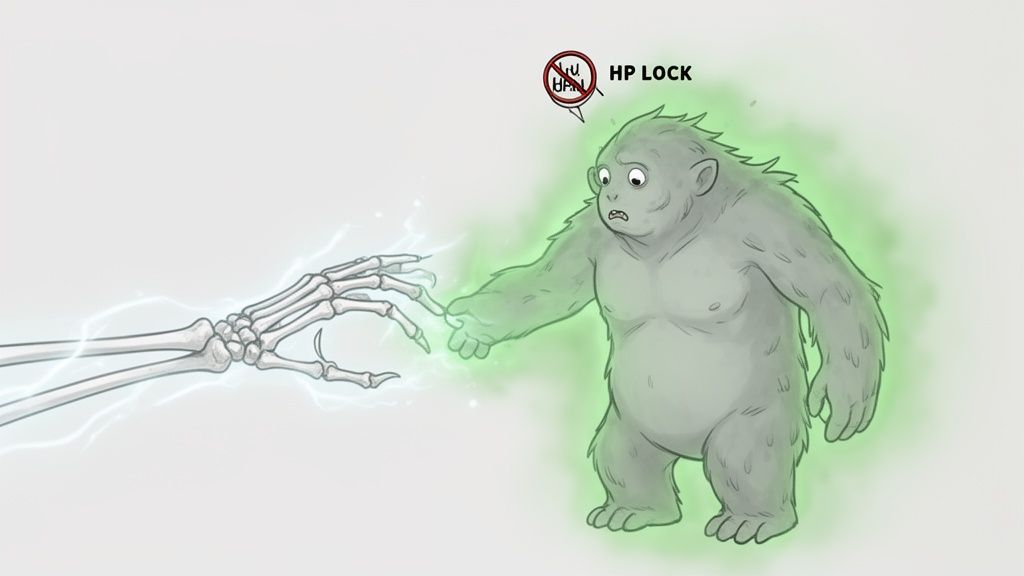
A troll is the classic example because players feel the problem immediately. They hit it hard. It heals. Morale drops.
When Chilling Touch connects, that rhythm breaks. The troll cannot lean on regeneration for that window. Suddenly the party can pile on pressure without watching the target undo their effort.
The same logic applies to vampires and any foe relying on magical or natural recovery. It also matters when enemy support characters are trying to restore hit points. If the target cannot regain them, a healing spell aimed at that creature loses its purpose for the moment.
Do not ask only, “Who can I damage?”
Ask this instead:
That is advanced play in very plain clothing. A cantrip can turn into battlefield control when you choose the right target.
Tell your group what the spell has done.
Say it clearly. “That target cannot regain hit points until my next turn.” That one reminder helps the DM track effects, helps allies plan, and stops the table forgetting the rider in the chaos of combat.
If your campaign often uses consumables and recovery, a quick refresher on dnd healing potion timing can also help players see when healing windows matter most.
Chilling Touch rewards target priority more than damage greed.
That is why experienced players keep it prepared. It answers a specific problem cleanly, and D&D rewards that sort of precision.
A cantrip with 120 feet of reach changes how a caster moves. You can contribute from deep behind the front line, hold a safer angle, and still influence the most important target on the map.
That alone makes chilling touch 5e attractive. Its targeting nuance makes it more interesting.
Chill Touch works as a ranged spell attack, but it does not behave like an arrow streaking through the room. The spectral hand manifests in the creature’s space. According to this rules discussion on the spell’s targeting, that means it requires line of sight but not a traditional projectile path, so it can negate partial cover while still failing against full cover.
That creates a very practical difference on cluttered battlefields.
A chair, a table, another combatant, or awkward positioning may interfere with how players picture ordinary ranged attacks. Chilling Touch is less bothered by those details, provided you can still see the target properly. You cannot cast it around a corner. You can, however, pressure enemies that might feel more awkward to shoot with a physical missile.
Try these habits in play:
Against undead, the spell adds another layer. On a hit, the undead target has disadvantage on attack rolls against you until the end of your next turn, as noted in the same rules discussion.
That turns Chilling Touch into a tidy piece of self-protection. It is not only “damage plus denial”. Against undead, it also says, “and you are less reliable if you come for me.”
This changes target priority. If an undead creature is likely to focus the caster, Chilling Touch can soften incoming pressure while the party deals with the rest of the encounter.
Choose your target by asking two questions:
If the answer to either is yes, Chilling Touch becomes a strong candidate for your action.
Not every caster uses Chilling Touch in the same way. The spell is available to classes that approach combat very differently, and that is where the fun starts.
A wizard uses it with clinical precision. A sorcerer treats it as part of a tempo game. A warlock values its reliability when the battlefield asks for necrotic pressure rather than a different ranged option.
Wizards often shine when they read the encounter faster than everyone else. Chilling Touch suits that style.
A wizard can stand back, identify the enemy whose recovery matters most, and shut it off while preserving bigger spell slots for later turns. In long adventuring days, that discipline feels excellent. You still contribute meaningful pressure without burning resources every round.
This spell also fits the wizard mindset of solving the actual problem rather than adding more damage to the pile.
Sorcerers care about action texture. They like shaping rounds in clever ways.
Chilling Touch suits sorcerers who want a cantrip that rewards target choice. The spell is especially satisfying for players who enjoy picking apart encounter logic. If the enemy’s advantage comes from healing, regeneration, or a specific type of resilience, the sorcerer gets to answer that directly.
That is less explosive than a dramatic blast spell, but often more important.
Warlocks usually have a signature ranged attack in mind, so Chilling Touch competes with strong options. Still, there are campaigns where necrotic damage and healing denial give it a special role.
If your table features undead, regenerating foes, or healing-heavy enemies, Chilling Touch can become a purposeful secondary cantrip rather than a default one.
Some characters take the spell not because it defines the build, but because it patches a tactical gap.
| Character Level | Damage Dice | Average Damage |
|---|---|---|
| 1-4 | 1d8 | 4.5 |
| 5-10 | 2d8 | 9 |
| 11-16 | 3d8 | 13.5 |
| 17+ | 4d8 | 18 |
A few concepts stand out:
The best build for Chilling Touch is often the one that lacks another clean answer to regeneration.
That is the key comparison. Do not ask only whether it is your strongest cantrip. Ask whether it covers a weakness in the party’s toolkit.
The party is one round from losing. The troll is barely standing, the cleric is out of position, and a bigger damage spell looks tempting. Then Chilling Touch becomes the smarter play, because stopping recovery matters more than adding another flashy number to the board.
Good spells and good card effects reward the same habit. They ask you to read the state of play before you commit. Chilling Touch is a fine example. Its damage is only part of its value. The true lesson is about timing, pressure, and choosing the action that closes off the opponent’s best reply.
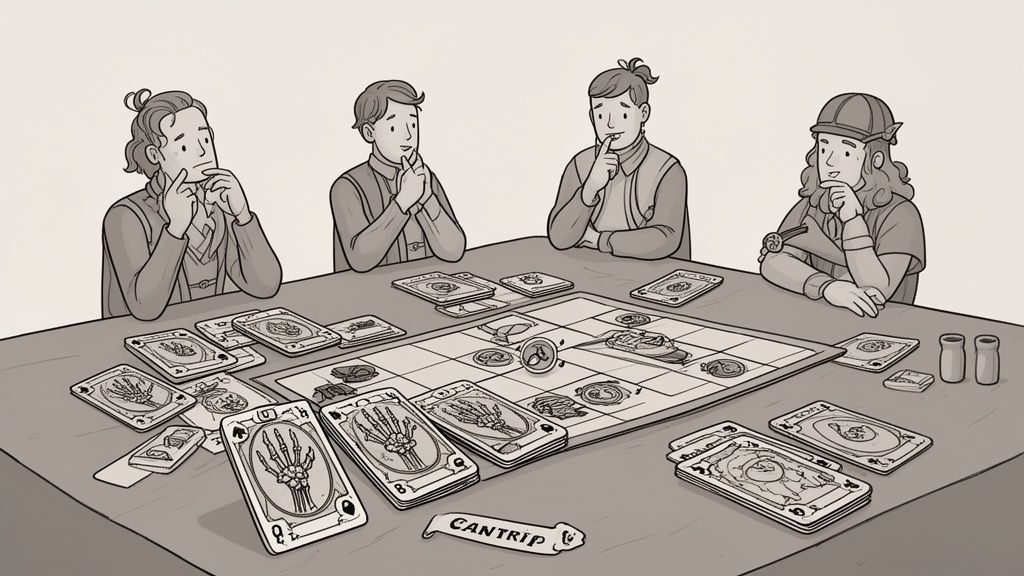
Card game players know that the strongest move in a turn is often the one that breaks an engine. You are not chasing the largest number on the card. You are cutting off healing, resource loops, or a stabilising play before it happens.
Chilling Touch trains that exact habit of mind. You cast it when the target’s next turn matters more than your current damage total. In D&D terms, that means asking which enemy is about to recover, which threat needs to stay vulnerable, and which attack changes the whole exchange instead of merely nudging a hit point total.
A common point of discussion among players is how much weight to give the rider compared with the damage. The practical answer at most tables is simple. If the rider blanks the enemy’s best route back into the fight, the spell has already done its job well. That sort of sequencing and denial is the same skill modern card games ask for every few seconds.
Fast games sharpen this lesson because they remove the luxury of slow, obvious set-ups. You have to spot pressure points quickly. You have to see which action does two jobs at once.
That is one reason roleplayers often enjoy learning the fundamentals of how to play card games. The better designs reward efficient choices, clean timing, and smart disruption. Chilling Touch follows that same logic. One action deals damage and interferes with recovery, which is exactly the sort of compact decision space that makes a quick game feel rich.
You can see that design instinct in TerraClash™ Grimoire as well. Its appeal is not just speed. It is the pressure to identify the play that interrupts momentum, forces awkward responses, and turns a small effect into a winning one. If Chilling Touch has ever felt satisfying because it ruined the opponent’s plan at the right moment, you already understand the kind of strategic pleasure that modern fast-paced tabletop card games are built to deliver.
No. It deals necrotic damage.
The spell name causes endless confusion, but the rules effect is not cold-based. If a player picks it for frost flavour alone, they may be surprised.
No. It is a ranged spell attack.
The older version of the spell influences expectations, especially for long-time players, but in 5e you attack from range.
At many tables, yes. The important question is whether the spell hits and whether the target is affected by the rider. Damage resistance and the rider are not automatically the same thing.
If this edge case matters in your game, the cleanest approach is for the DM to rule consistently and announce it clearly.
If the target cannot regain hit points for the spell’s duration, that generally affects magical healing aimed at that creature during the window.
The key is not the source of the healing. The key is the target’s inability to regain hit points.
Multiple sources of disadvantage do not usually stack into a worse penalty. If an undead already has disadvantage against you from another effect, you still roll with disadvantage, not something harsher.
If you have line of sight, partial obstructions are less of a problem than they are for a projectile-style attack. If the target has full cover or is fully out of sight, Chilling Touch will not solve that.
Yes, if your group expects regeneration, healing support, or attrition-heavy fights. No, if you already have better tools for those problems and want pure damage instead.
If you enjoy tactical fantasy decisions, quick turns, and games that reward reading the board rather than pushing damage, take a look at TerraClash. You can explore TerraClash™ Grimoire, try the print and play core game at https://terraclash.co.uk/product/terraclash-print-and-play-core-game-fb/, and follow the project on its Kickstarter campaign.