Welcome to the world of card games and playing cards—it's like opening a book to find a thousand different stories waiting to be told. Whether it's the tense quiet of a Poker night powered by a simple 52-card deck, or the sprawling, imaginative universes tucked away in modern tabletop games, cards have always been a fantastic way to bring people together for a bit of strategic fun.
This guide is your personal invitation to dive into what makes card games so special. We’re going to explore the social, hands-on experience that’s driving a real renaissance in tabletop gaming, pulling people away from their screens and gathering them around the table for some good old-fashioned challenge and laughter.
Honestly, the simple joy of shuffling a fresh deck and settling in for a memorable game is making a massive comeback. You can see it everywhere. In fact, the numbers back it up: the UK's market for playing cards and board games was valued at USD 785.38 Million this year and is expected to rocket to USD 1,437.48 Million by 2033. That kind of growth isn't just a blip; it shows a real, heartfelt hunger for offline fun. If you're curious, you can dig into the full analysis from Deep Market Insights.
Think of this as your starting line. We'll cover everything from the classic games you grew up with to the fast, furious skirmishes of modern card games. The sheer variety is incredible, and I guarantee there's a game out there that's perfect for you.
Whether you're a seasoned strategist or just looking for a fun way to connect with friends, the world of card games offers something for everyone. It’s a hobby that scales with your interest, from casual games to deep, strategic competitions.
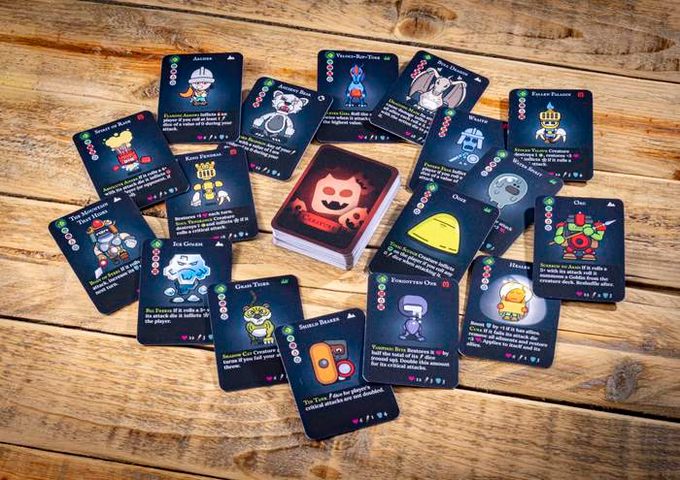
Some games, for instance, are epic undertakings that demand hours of deep focus. Others are built for quick, energetic rounds that get your heart pumping. A brilliant example of the latter is TerraClash™ Grimoire, which packs a whole fantasy adventure into a thrilling, fast-pace game that can be done in 10 - 15 minutes. It's perfect for when you're short on time but still want a complete, satisfying experience. You can get a real sense of what it's like over on the TerraClash™ Grimoire page.
If you’re just starting out, learning the rules is half the fun! We’ve actually put together an article with some beginner tips, which you can read right here: how to play card games. And if you fancy being part of bringing the next great tabletop adventure to life, you can support its journey on Kickstarter.
When someone says ‘card game’, what comes to mind? For many, it’s the classics like Bridge or even a boisterous game of Uno. But that’s just scratching the surface of a massive, wonderfully varied world of entertainment. To really get a handle on it all, let’s explore the main genres you’ll stumble across.
First up, you have the timeless trick-taking games. In classics like Bridge or Hearts, the goal is to win each round—or ‘trick’—usually by playing the highest card of a particular suit. It’s a delicate dance of timing, prediction, and knowing exactly when to play your trump card.
Then there are shedding games, which flip that idea on its head. Here, the aim is to get rid of all your cards as fast as you can. Think of the frantic fun of Uno, where the first player with an empty hand wins. It’s pure, fast-paced chaos!
A huge part of the modern card game scene is dominated by collectible card games (CCGs). This is the world of Magic: The Gathering, where part of the fun is building your deck by acquiring cards from randomised booster packs. This introduces the thrill of the hunt, trading with friends, and the excitement of pulling a super-rare card.
Deck-building games, on the other hand, offer a completely different kind of strategic puzzle. Games like Dominion start everyone off on a level playing field with the same small, basic set of cards. Over the course of the game, you use those cards to ‘buy’ better ones from a shared pool, slowly moulding your deck into an efficient, point-scoring machine.
This dynamic deck-building mechanic is at the very heart of modern fantasy adventures. It rewards quick thinking and adaptation, as you must build your strategy on the fly in response to the game's flow and your opponents' actions.
This very mechanic is the engine that powers TerraClash™ Grimoire. It’s a fantasy adventure where you craft your deck in the heat of battle to snatch victory. The best part? A full game wraps up in just 10–15 minutes, making it perfect for those quick, satisfying gaming sessions. If that sounds like your cup of tea, you can learn more about it on the TerraClash™ Grimoire page.
A close cousin to CCGs are Living Card Games (LCGs). They do away with the random booster packs. Instead, expansions are released with fixed, known sets of cards. This means you can buy exactly what you want without having to chase after rare finds.
The whole tabletop scene is absolutely booming right now. This chart really puts the UK's impressive market growth into perspective, highlighting its value, distribution, and global share.
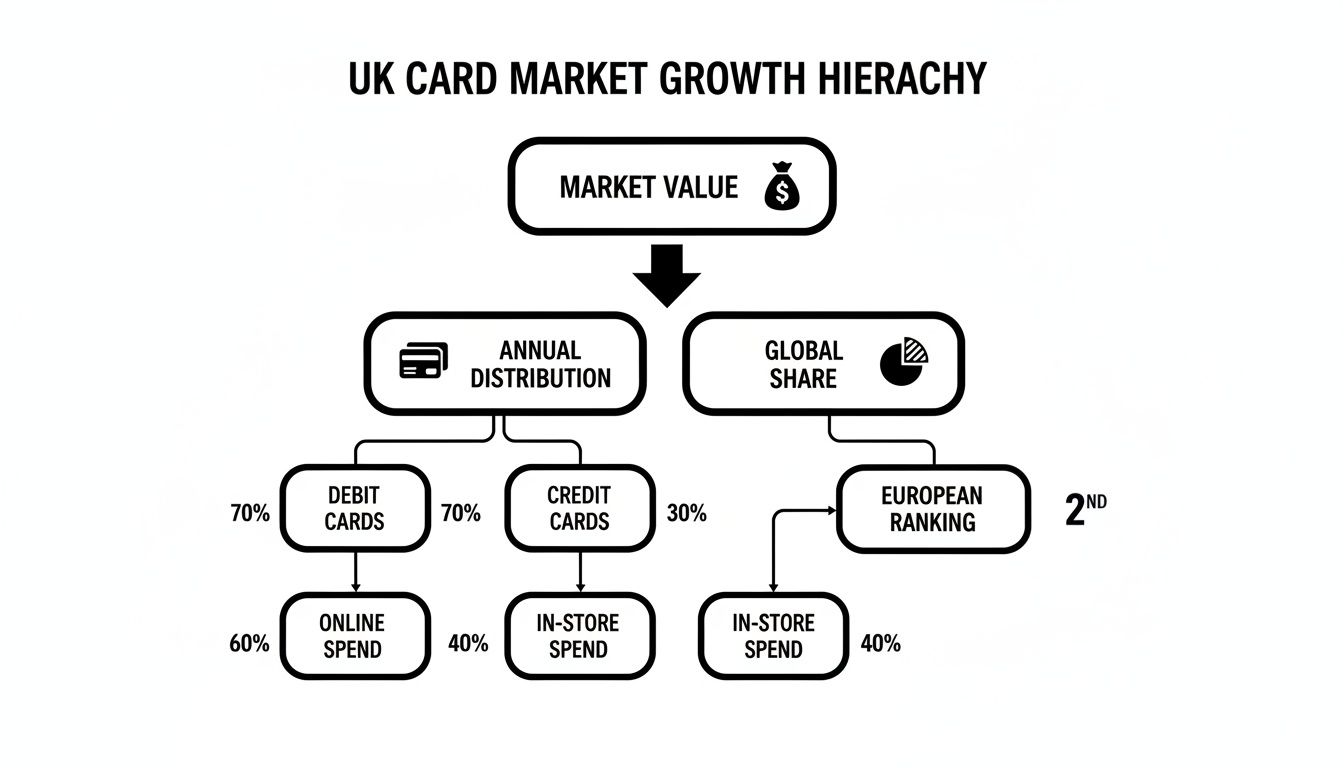
As you can see, the appeal of gathering around a table with a good card game is stronger than ever. If you want to dive even deeper into this world, you might enjoy our look into fantasy card games. And if you're keen to be part of this growing community, you can help bring the next great indie game to life by checking out the TerraClash™ Grimoire Kickstarter campaign.
The cards themselves are the very soul of any game. Their physical qualities—how they feel, shuffle, and stand up to repeated play—can make or break the entire experience. Crafting a truly great playing card is a careful blend of thoughtful design and material science, turning a simple game into a tactile pleasure. Let's look at the anatomy of the perfect card for your favourite card games playing cards.
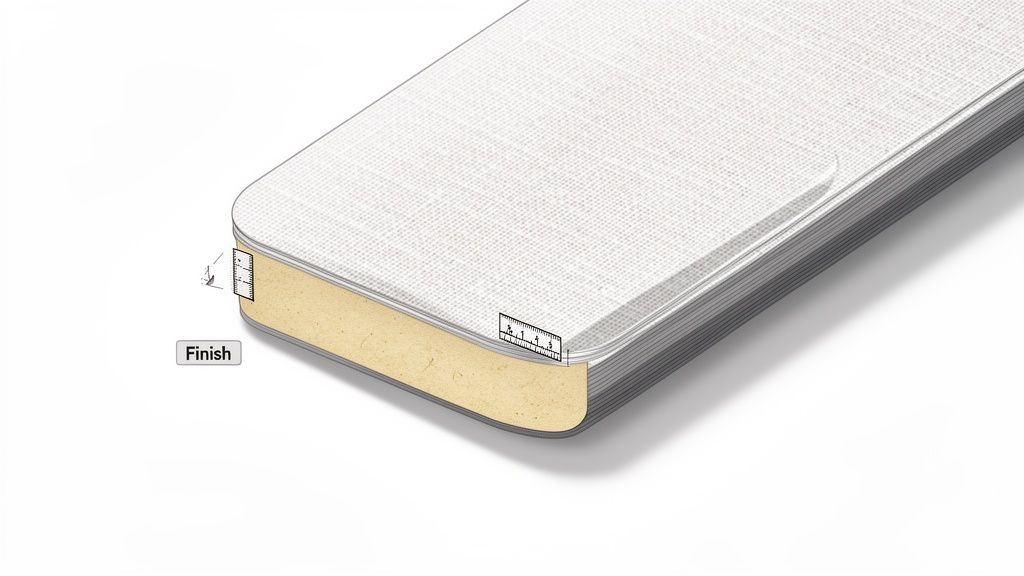
It all begins with the material. The vast majority of cards are crafted from paper cardstock, which often includes a special core layer. This hidden core is what stops you from seeing through the card when it's held up to the light—essential for keeping your hand a secret! For games destined for heavy use or rowdy pub tables, some designers even turn to durable PVC plastic, which stands up brilliantly to spills and bends.
But the real magic is in the finish. This is the subtle texture applied to the card’s surface, whether it's a classy linen pattern or the ‘air-cushion’ dimpling famous in high-end decks. This finish dictates how the cards slide, shuffle, and feel in your hands. A quality finish lets cards glide over one another like silk, preventing that frustrating clumping and sticking.
A card’s shuffleability and durability are everything. They’re what ensure your beloved game can survive countless sessions of enthusiastic play without showing its age. Let’s be honest, no one enjoys playing with bent, sticky, or frayed cards; it just pulls you right out of the moment.
This is especially true for fast-paced deck-builders. In games like Dominion or the fantasy adventure TerraClash™ Grimoire, your hands are always moving—shuffling, drawing, and laying down cards. The physical quality of the components is absolutely vital for smooth, uninterrupted gameplay, particularly when a whole match can be decided in just 10 - 15 minutes. You can get a sense of this rapid action over on the TerraClash™ Grimoire page.
Ultimately, high-quality cardstock does more than just ensure longevity; it serves as the canvas for the game's world. Vibrant, unique art pops on a well-made card, immersing you deeper into the game's story and bringing it to life right in your hands.
🎲 Want to try a solo card and dice RPG tonight? Get TerraClash Lite free: a print-and-play game you can play with ordinary dice.
That visual appeal is a huge part of the joy. A beautiful card doesn't just look nice; it pulls you into the game's universe, making every draw and every play feel more significant. This dedication to quality and storytelling is something the community really gets behind, often through platforms like Kickstarter. If you're curious to see how a community helps bring a game to life, have a look at the TerraClash™ Grimoire Kickstarter campaign.
Step away from the mainstream giants for a moment, and you'll discover a vibrant, exciting world of independent card games. This is a scene that’s absolutely flourishing, driven by passionate creators and the tight-knit communities that form around their work.
This is where you find the real innovators—the designers who pour their unique stories and fresh gameplay ideas into a humble deck of cards. Forget about multi-million-pound marketing budgets; this movement is fuelled purely by creativity and a direct, honest connection with players.
Crowdfunding platforms have really become the launchpad for this new wave of tabletop gaming. They give creators a way to sidestep the traditional gatekeepers and bring their visions straight to the people who will appreciate them the most. And it’s working. In fact, community-backed projects on platforms like Kickstarter are booming, with the tabletop games category alone pulling in 220 million dollars in pledges this year. This shows just how much appetite there is for new and inventive card games.
This indie spirit is exactly what gives birth to truly special games. Think of incredible art styles that might never get approved in a corporate boardroom, or daring mechanics that completely flip established norms on their head. It's a space where a game can be deeply personal and wonderfully unconventional.
For anyone inspired to create their own game, exploring custom printing options is a crucial part of the journey. This is where a vision starts to become a reality, allowing a creator to control every detail—from the feel of the cardstock to the final finish—to make sure the game in hand is exactly what they imagined.
The indie movement gives us refreshing alternatives to the big-name titles, often with more personal storytelling and bolder gameplay. It’s living proof that a great game really can come from anywhere.
TerraClash™ Grimoire is a perfect example of this in action. It’s an indie fantasy deck-builder born directly from a community hungry for a new challenge. The game captures that indie ethos perfectly, offering a fresh, fast-pace game that delivers a complete strategic experience in just 10-15 minutes. It’s the kind of project that thrives because it offers something different, something made with genuine passion.
Diving into the indie scene is a fantastic way to find your next favourite game. But it’s more than that. It’s a chance to support the creative minds who are pushing the boundaries of what a card game can be and what it can mean to its players.
Deck-building games are a fantastic and rewarding corner of the tabletop world. They have a special kind of magic. Unlike games where you show up with a deck you’ve painstakingly built beforehand, here everyone starts on a level playing field with just a few basic cards. Your job? To build a lean, mean, point-scoring machine right there at the table.
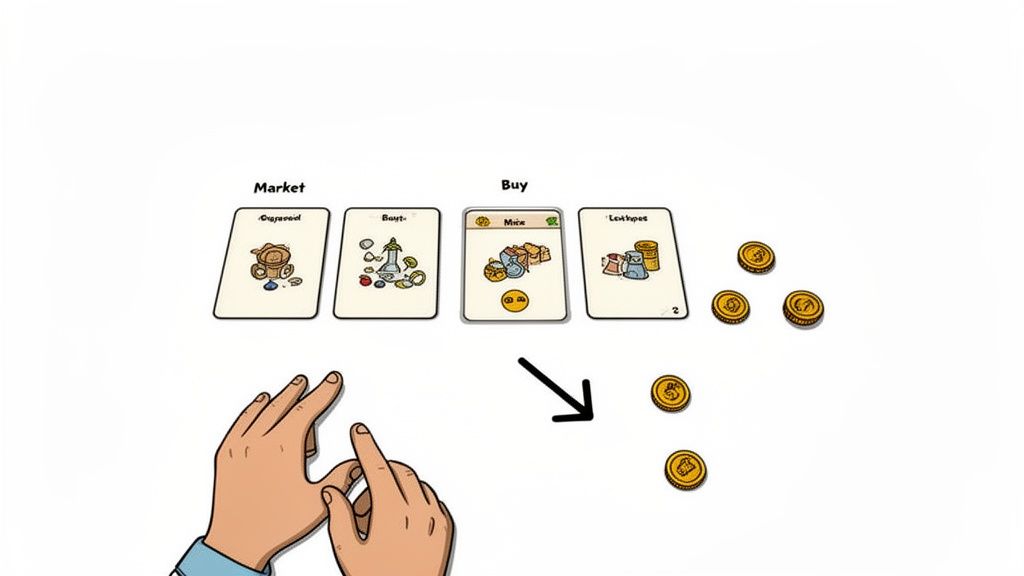
This part of the guide is all about getting you comfortable with that first game. We'll walk through the central ideas that make the genre so addictive and give you the confidence to dive straight in.
At the heart of every deck-builder is a shared pool of cards available for everyone to buy from. People call it different things—the ‘market’, the ‘river’, the ‘gallery’—but the idea is the same. On your turn, you’ll use your simple starting cards, which usually just give you a bit of in-game cash, to purchase better, more exciting cards from this central display.
Any new cards you buy typically go into your discard pile. Once you run out of cards to draw, you’ll give that pile a good shuffle, and voilà—your deck is now seeded with the powerful cards you just bought. This creates a brilliant, evolving puzzle. The deck you end the game with will be a world away from the one you started with, shaped entirely by the choices you made, turn after turn. The real skill is spotting cards that work well together, creating powerful combinations or synergies that propel you towards victory.
Game length is also a big deal in modern deck-builders. Some are epic sagas that can fill an entire evening, but many newer titles have put the focus on delivering that same strategic hit in a much shorter time. For example, the fantasy deck-builder TerraClash™ Grimoire is built from the ground up for speed, with most games wrapping up in a brisk 10 - 15 minutes.
When you’re just starting out, keep it simple. The goal isn't to play perfectly but to get a feel for how your deck grows and changes. Focus on these fundamentals and you'll be well on your way.
Deck-building isn’t about having one perfect plan. It's about staying flexible. The best players are the ones who can read the game as it unfolds and make the most of the cards in front of them.
There’s a real satisfaction in this dynamic style of play. If you're keen to see a fast, modern take on the genre, you can explore the TerraClash™ Grimoire page to get a feel for its world. To discover other great titles, you might enjoy our guide to the best deck-building games. And if you'd like to support a promising indie project, check out the TerraClash™ Grimoire Kickstarter campaign.
Let’s be honest, walking into a game shop or browsing online can feel a bit overwhelming. With thousands of card games out there, how on earth do you find one you'll actually love? Think of it less like a difficult choice and more like a personal quest. It’s all about matching a game to your mood, your mates, and the time you’ve got to spare.
First things first, what kind of experience are you after? Are you looking for a tense, head-to-head duel for two, or something a bit more raucous for a big group? Do you need a quick 10-15 minute filler game for in-between moments, or are you ready for a deep, strategic epic that will take up the whole evening?
Answering these simple questions is the best way to start narrowing down the field. The UK playing cards market is a great example of just how much we still love getting together for a good game. Despite all our screens, this market is set to grow at a compound annual rate of 8.9%, fuelled by Britain’s long and rich tradition of card gaming. If you're curious about the numbers, you can find more insights from Research and Markets.
Once you've got the basics figured out, you can think about the flavour. A game's theme and artwork are more than just window dressing; they pull you into its world. If a theme excites you, you're halfway to loving the game before you've even played a hand. Many of the best modern games masterfully weave their mechanics into these fantastic settings.
For example, some games manage to capture the strategic feel of the classics but pack it into a much shorter playtime. A brilliant case in point is TerraClash™ Grimoire, a fantasy deck-builder that serves up a complete, satisfying game in just 10-15 minutes. It has that familiar feel of other card games you might love, but it’s built for how we play today—fast and furiously.
Finding your next favourite game is a personal journey. Whether you value quick action, deep strategy, beautiful art, or the thrill of supporting new creators, there is a perfect game waiting for you.
And for those of us who love to be in on the ground floor, backing a new project is an amazing way to discover something truly special. You get to be part of the story and help a new game come into existence. You can see what that’s like by checking out campaigns such as the one for TerraClash™ Grimoire on Kickstarter.
Stepping into the vast world of card games can feel a bit overwhelming. Whether you're just starting out or you're a veteran player looking at a new type of game, a few questions always seem to pop up. Let's tackle some of the most common ones.
The main distinction boils down to one simple thing: when you build your deck.
With a Collectible Card Game (CCG), like the classic Magic: The Gathering, all the deck construction happens before the game begins. You buy randomised booster packs, trade with friends, and carefully curate your ultimate deck ahead of time. The strategy is all in the preparation.
A deck-building game turns that idea on its head. Everyone starts on a level playing field with the same small, often weak, set of cards. The game itself is about acquiring better cards from a central market, building and refining your deck as you play. This is the very heart of TerraClash™ Grimoire, where adapting your deck mid-battle is the only way to win.
That's the million-dollar question! It honestly depends. You can learn some party games in the time it takes to deal the cards, while a heavyweight strategy game might take a full evening before the rules really click.
The good news is that modern game designers know your time is valuable. Many games are now built to be taught in minutes, not hours.
A fast-pace game like TerraClash™ Grimoire is a perfect example. You can pick up the basics in no time, but there's a surprising amount of strategic depth for experienced players to sink their teeth into. Best of all, a complete match is usually over in a punchy 10–15 minutes.
You bet they are. The tabletop gaming scene is more vibrant than ever. In a world of screens, many of us are craving that real, face-to-face social connection you only get from sitting around a table with friends. The tactile feel of shuffling a deck or playing the perfect card is something a digital version just can't replicate.
Digital and physical gaming aren't even really competitors; they often feed into each other. You just have to look at the massive success of tabletop games on crowdfunding sites like Kickstarter to see how passionate and engaged the community for physical games is.
Ready for an adventure that fits in your pocket? TerraClash™ Grimoire blends the thrill of deck-building with fast, addictive gameplay. Find out more on the official Grimoire page and see how you can help bring it to life by visiting the Kickstarter campaign.