Gather 'round the fire, adventurer, and listen close. We speak tonight of an elixir whispered about in hushed tones, from the grandest wizard's tower to the grimiest goblin den: the Potion of Invisibility. A single, shimmering drop from this fabled vial promises a power both ancient and absolute—the power to simply... vanish.
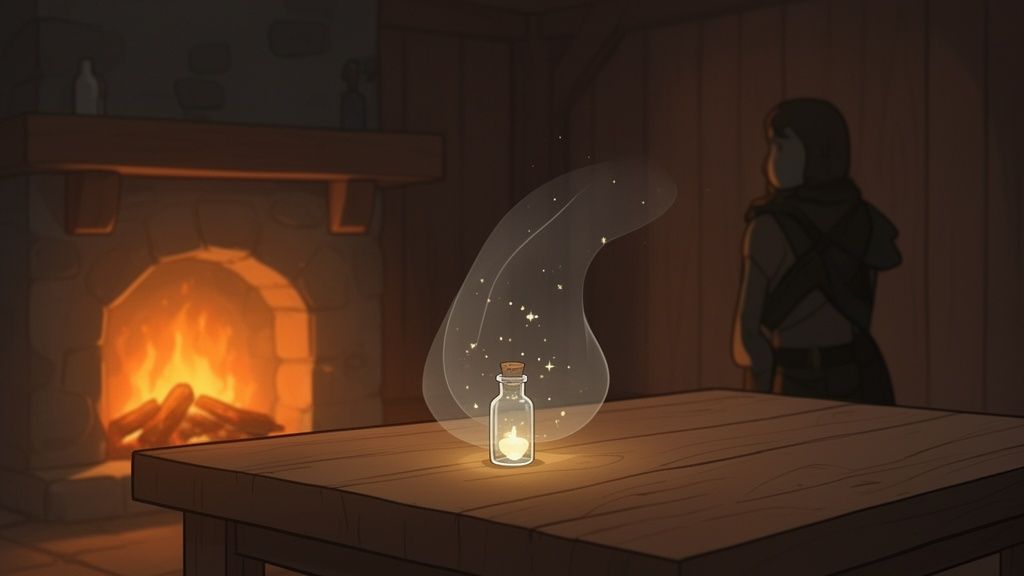
What is it about this small phial that seizes the imagination of heroes and scoundrels alike? It is the promise of ultimate freedom, is it not? The thrill of ghosting past slumbering sentinels, the power to choose your moment, to be the unseen hand that turns the tide of fate. This is no mere tool for a hasty retreat; it is an instrument of pure, unadulterated cunning.
From the oldest sagas recited by fireside bards to the most intricate modern tabletop quests, the dream of becoming unseen is a cornerstone of fantasy. It inverts the very rules of engagement. Suddenly, brute strength kneels to cleverness, and the cacophony of a frontal assault is replaced by the silent perfection of a surgical strike. This simple, elegant concept is the seed from which the most memorable moments at the gaming table have grown.
Consider the possibilities, once the world can no longer see you. An adventurer could:
In the timeless tales spun during Dungeons & Dragons sessions, a potion of invisibility has a legendary knack for turning a near-certain doom into a triumphant escape. In modern deck-builders, it adds a delicious layer of tactical depth, rewarding those players whose minds are always three moves ahead. It is far more than a gimmick; it is a strategic key that unlocks a hundred new paths.
In worlds of swords and sorcery, the loudest armies are often undone by the quietest footsteps. The true master of the battlefield is not the warrior who is seen, but the one who chooses when to be seen.
This guide, brave adventurer, is dedicated to uncorking the secrets of this iconic elixir. We shall delve into its mechanics and explore the clever stratagems it offers to those who favour wit over raw power. It is a journey for anyone who understands that sometimes, the greatest strength lies in not being seen at all—a core principle woven into the fabric of forthcoming games like the TerraClash Digital.
The Potion of Invisibility is not merely another trinket found in a dusty chest. Nay, it is a direct conduit to the most ancient stories ever told. Long before we cast dice upon a table, the power to become unseen was a matter of myth and legend—a gift from the gods, a trickster's most beloved tool, or a hero's desperate gambit to cheat destiny. That ancient mystique is precisely what grants it such potent flavour in the games we cherish today.
Every time a character on your tabletop vanishes from sight, they are tapping into a timeless fantasy. They walk in the same shadowy footsteps as Perseus, who donned the Cap of Hades to sneak past Medusa’s petrifying gaze. They channel the spirit of Bilbo Baggins, whose magic ring allowed him to pilfer treasures from beneath a dragon’s very snout. These are not just old tales; they are the sacred blueprints for the game mechanics we now wield ourselves, turning epic myths into tactical choices.
Translating such deep-seated lore into balanced and thrilling gameplay is where true design sorcery happens. The great artificers of the gaming world have a talent for bottling the essence of these myths, turning them into rules that conjure genuine tension and unforgettable moments. You can see their handiwork in many of our favourite games:
The greatest stories are not merely told; they are experienced. Invisibility in games grants us the chance to become that cunning hero, the one who wields wit and shadow to overcome impossible odds. It transforms a simple mechanic into our own personal legend.
This rich history is what gives items like the potion of invisibility their satisfying weight. It is more than a temporary status effect; it is a reverent nod to a thousand tales of guile and surprise. This is the very spirit that today's indie creators seek to capture, taking these classic concepts and giving them a fresh, wondrous spin. In games like TerraClash, you can feel that heritage, where ancient lore provides the direct inspiration for new and exciting gameplay, ready for the next generation of adventurers.
Wielding a potion of invisibility is about more than mere disappearance; it is about seizing control of the entire field of battle. Here we delve into the true artistry, moving beyond simple escapes and into the realm of tactical genius. Any wise adventurer will tell you that vanishing is not the end of the play—it is merely the opening move.
Think on it. You could slip past a heavily fortified gate, not to flee, but to snatch a quest-defining artefact from within. Picture your hero, completely unseen by a hulking boss, moving into the perfect position for a decisive, tide-turning blow. That is the sort of tale your party will recount in taverns for years to come.
This is the true power of strategic stealth.
The very concept of invisibility has a rich and storied history, journeying from ancient folklore all the way into the tabletop games we play today. It is a fascinating lineage to behold.
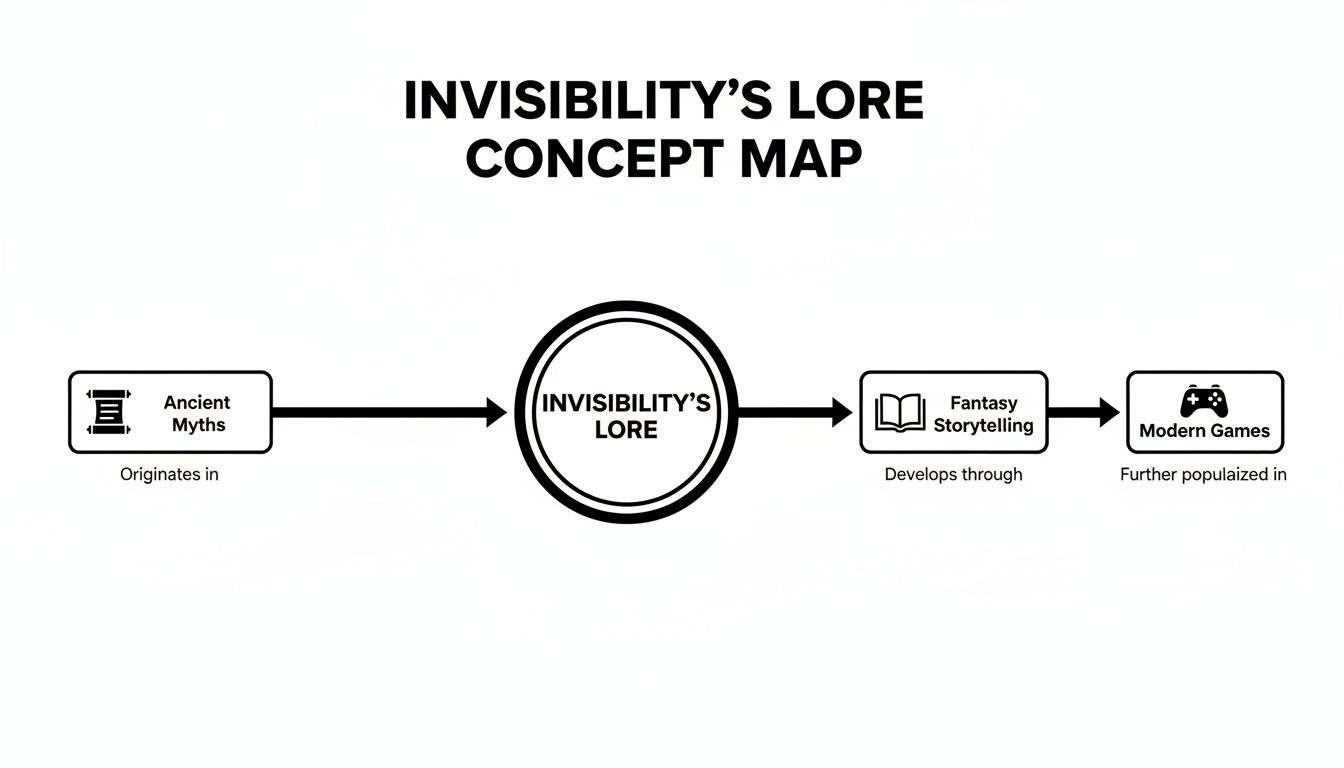
One can trace a clear line from old legends to modern mechanics, with timeless fantasy storytelling bridging the chasm and turning myth into interactive gameplay.
The Potion of Invisibility is a brilliantly versatile tool, equally potent for the bold attacker and the cunning defender. Truly, its use is limited only by your own imagination.
Across the many adventuring parties of the UK's brilliant tabletop scene, the idea of an 'invisibility potion' has truly captured players' imaginations, especially in fantasy deck-building games. This mirrors the explosive growth of role-playing games (RPGs) throughout the realm. The UK gaming market has become a titan, valued at a staggering USD 32.15 billion. RPGs are poised for the fastest growth at a 14.8% rate, all fuelled by immersive tales where magical items allow players to outwit their foes.
Understanding how to apply these effects in different situations is the key to mastering the game.
Here is a glimpse at how you might employ an invisibility effect across different tabletop scenarios, from delving into dungeons to clashing in the arena.
| Scenario Type | Offensive Tactic | Defensive Tactic | Utility Application |
|---|---|---|---|
| Dungeon Crawl | Bypass trash mobs to assassinate a key boss or spellcaster. | Break line of sight to reset aggro and allow for healing. | Scout ahead to disable traps or identify enemy positions. |
| Arena PvP | Set up a guaranteed critical hit or combo without being countered. | Vanish to avoid a powerful ultimate ability or combo setup. | Reposition to a more advantageous spot on the map. |
| Campaign Quest | Infiltrate an enemy stronghold to steal a critical quest item. | Escape a failed negotiation or an ambush from a superior force. | Eavesdrop on conversations to gather crucial intelligence. |
| Boss Encounter | Position behind the boss to strike a weak point. | Disappear to drop a persistent damage-over-time effect. | Revive a fallen ally without drawing immediate attention. |
As you can see, adventurer, invisibility is no one-trick pony. Its value shifts dramatically based on your objectives and the threats you face.
The true masterstroke, however, is combining invisibility with other abilities. In a deck-builder, you might play an invisibility card to guarantee your next high-damage attack lands without being blocked. Suddenly, a simple potion becomes the lynchpin of a devastating combination.
A wise adventurer uses invisibility not to hide from the battle, but to choose precisely where and when the battle is won. It transforms the chaotic clash of steel into a finely orchestrated dance of shadows and surprise.
In games like TerraClash, such items are designed to reward exactly this kind of clever, synergistic thinking. It is not just about possessing a powerful item; it is about spotting the unseen connections between your cards, your character, and the battlefield to create those truly legendary moments.

Ah, the Potion of Invisibility. For any game master or designer, the very name conjures a mix of excitement and a healthy dose of fear. How does one bestow upon players this kind of power without them simply waltzing past every challenge you have so painstakingly crafted? It is a true balancing act.
The truth is, it is a tightrope walk across a chasm. Make the potion too weak, and it will be forgotten at the bottom of a hero's pack. But make it too strong, and it becomes a "solve all problems" elixir that can drain the very life and tension from your adventure.
The real magic, you see, lies in the limitations. That is where a simple power evolves into a truly interesting tactical choice.
Good game design is not about granting players power; it is about granting them meaningful decisions. Balancing invisibility is one of the finest examples of this art. Designers possess a whole toolkit of mechanics to keep the game engaging for the unseen player, without making their companions feel like mere spectators.
Here are a few classic methods for keeping this power in check:
The point is not to steal the fun from the player using the potion. It is to make its use a calculated risk. A well-designed Potion of Invisibility should feel like a razor-sharp dagger—incredibly powerful, but you must know exactly when and how to wield it.
The appeal of items like the Potion of Invisibility in UK gaming circles mirrors the boom in competitive fantasy sports. In both arenas, players relish the thrill of outmanoeuvring their opponents with clever, unseen strategies. The UK fantasy sports market reached USD 1,538.4 million and is projected to climb to USD 3,067.0 million by 2030, which proves how much we value a good tactical advantage.
Learning about these design choices gives you a true appreciation for the craft that goes into a great tabletop game, a skill you can explore further in our Dungeon Master's Guide. It is this dedication to rules that are both fair and exciting that makes games like TerraClash so much fun for adventurers aged 12 and up.
Ah, but where do the boldest legends truly begin? It is rarely in the gleaming halls of established kingdoms. More often, it is around a flickering firelight, fuelled by a creator's singular vision. The true heart of tabletop gaming beats strongest in the indie scene, where passionate artisans build entire worlds from little more than imagination and cardboard. This is where the old ways are re-examined and reborn with brilliant creativity.
Here is where you find the true spirit of adventure. Communities rally on platforms like Kickstarter to breathe life into new sagas, helping small studios forge the next generation of classics. These designers are not merely rehashing the past; they are twisting it into wondrous new shapes. A classic potion of invisibility is no longer just a simple tool for stealth; it becomes something more. Perhaps it leaves behind a faint, shimmering echo, or maybe its effects are tied to the phases of the moon.
Indie games are the frontiers where the rules get wonderfully strange and exciting. This freedom leads to mechanics you have never before witnessed, offering fresh challenges that delight even the most grizzled adventurers.
In the hands of an indie creator, a familiar trope becomes a key that unlocks a door you never knew existed. They invite us not just to play a game, but to become co-authors of its unfolding legend.
When it comes to conjuring unique visual effects for something like a potion of invisibility—think shimmering distortions or transparent character layers—efficiency is paramount. New methods for developing these effects, such as using AI-powered 3D assets for games, are helping small teams create stunning visuals without the need for a king's ransom.
The potion of invisibility is a fine metaphor for the hidden growth within the UK’s niche fantasy tabletop scene. Tucked away in a gaming market worth USD 7.9 billion (projected to hit USD 15.6 billion by 2033), deep strategies are quietly thriving. With UK gaming revenue now overwhelmingly digital—where a staggering £9.32 of every £10 is spent online—accessible indie games are finding a massive audience of fantasy fans. You can delve deeper into these trends over at imarcgroup.com.
This vibrant landscape is precisely where games like TerraClash find their home. They embody this spirit of boundless freedom, taking classic ideas and reimagining them for a new era of adventurers hungry for something different. Think of this as a tribute to the creativity that fuels our beloved hobby, and an invitation for you to explore some fantastic D&D campaign ideas of your own. When you support an indie project, you help forge the legends of tomorrow.
We have pulled back the curtain on the Potion of Invisibility, but an item like this is truly just a single thread in a much larger tapestry. The real adventure in any tabletop game lies not in one piece of gear, but in the stories you create, the nail-biting decisions you make, and the strategies you unleash when the odds are stacked against you.
Think on the tales we have explored—the narrow escapes, the perfectly timed ambushes. That is the stuff of legends, born from a fusion of clever mechanics and a little shared creative chaos. Whether you are a veteran of countless campaigns or just beginning to wonder what all the fuss is about, that feeling of outsmarting an opponent is universal.
The greatest quests are not found printed in a rulebook. They are discovered by players bold enough to take a chance, roll the dice, and see what fate has in store. Your table is where new sagas begin.
If crafting those kinds of moments sounds like your brand of adventure, then the world of indie and passion-project games is calling your name. These are the spaces where designers are truly pushing the boundaries, blending old-school ideas with brand-new twists to create something special. Your next great story is out there, waiting.
To see one of these new worlds taking its first steps, why not gaze upon the TerraClash Kickstarter page? You can witness exactly how a game like this comes to life and perhaps even become one of its founding heroes.
The world of tabletop gaming is a vast and wondrous place, and it is natural to have a few questions as you navigate its winding paths. Here are some common queries we hear from fellow adventurers.
A fine question! In traditional card games, you spend hours, even days, meticulously assembling your perfect deck before you even sit down to play. Deck-building games turn that tradition on its head.
You begin with a small, humble set of basic cards. The game itself is about acquiring more powerful cards from a central pool to add to your deck as you play. This means your strategy must evolve with every turn, forcing you to adapt and think on your feet. It is less about a pre-planned masterstroke and more about clever, in-the-moment tactical decisions.
Backing an indie game on a platform like Kickstarter is not just a pre-order; it is joining the development quest itself. You are not merely a customer; you are a patron helping to forge a new world.
Indie creators often pour their hearts into unique mechanics and stunning art styles that you simply do not see from the great houses. As a backer, you often get a front-row seat to the creative process, and become part of a founding community that believed in the vision from day one. It is a chance to champion true passion in the hobby.
Supporting an indie project is like being the patron for a new legend. You are not just a customer; you are one of the first believers in a world waiting to be born.
They can look intimidating, I grant you! But in truth, many of the best modern fantasy games follow a simple design philosophy: "easy to learn, difficult to master."
The core rules are often straightforward enough for a newcomer to the hobby (often ages 12 and up) to grasp in a single session. The true depth comes from how the different cards, characters, and strategies interact. Many even include solo or cooperative modes, which are perfect for learning the ropes without the pressure of a head-to-head battle.
If the thrill of exploring new worlds and mastering deep mechanics is calling your name, then your next great adventure might be just around the corner. TerraClash was forged in this very spirit of creativity and strategic freedom. Come see the journey unfold and lend your strength to the cause by visiting the TerraClash Kickstarter campaign.

