Greetings, travellers, and be welcome. Gather 'round the hearth, for I shall unveil a tapestry woven from the threads of countless worlds! Before you lies a chronicle to guide you through all Dungeons and Dragons races, a mystical compendium to spark the flame of your next great hero. Herein, you shall find beings of stoic earth, graceful forest, and fiery ambition—each a new path, a potential soul for you to inhabit on epic quests.
Choosing a race is the first great step in any adventurer's journey, a decision that defines not just your innate abilities but your very place in the world. It shapes how you see your surroundings and how the denizens of the realm, from humble villagers to ancient dragons, see you. This choice is the foundation upon which your legend is built. As a Dungeon Master, I have watched heroes of every shape and size rise to glory, their origins granting them unique strengths and perspectives that proved vital to their quests.
The spirits of these powerful archetypes echo in many realms, from sprawling roleplaying campaigns of old to new, exciting card-based sagas like TerraClash. In a tactical card game, for example, the essence of a character's lineage might shape their entire strategy, influencing the very feel of their deck. This guide is your star-chart, offering a deep dive into the classic and beloved playable peoples from across the history of D&D. We will explore their core traits and lore, helping you find the perfect form for your next adventure. Let us begin.
Ah, the humble human. Do not mistake their lack of pointed ears or dragon's breath for weakness, traveller. Among all dungeons and dragons races, humans are the embodiment of raw, untamed potential. They are the cosmic clay, shaped not by ancient magic or divine decree, but by sheer force of will. Their brevity of life fuels a burning ambition, a need to carve a legacy into the world before their time is spent. This makes them exceptionally adaptable, capable of mastering any path they choose.
In most editions, particularly the popular 5th Edition, humans are mechanically defined by their versatility. The standard human gains a small bonus to every ability score, representing a well-rounded nature. The real gem, however, is the Variant Human, a popular choice that grants a feat at level one. This single choice can define a character from the outset, creating powerhouse builds like a polearm-wielding Paladin or a sharpshooting Rogue before the adventure even truly begins.
DM's Tip: When a player chooses a human, encourage them to explore what drives their character's ambition. Is it a desire for power, a need to protect their community, or a quest for knowledge to leave a lasting mark on history?
Where humans burn brightly and briefly, the elf is a steady, ancient flame. Elves are beings of ethereal grace and profound longevity, their lives spanning centuries, granting them a perspective on the world few others can comprehend. They move with a supernatural poise, their connection to the natural and arcane worlds woven into their very essence. To an elf, a human’s entire life can seem like a fleeting season, a perspective that can manifest as serene wisdom or a detached, melancholic air.
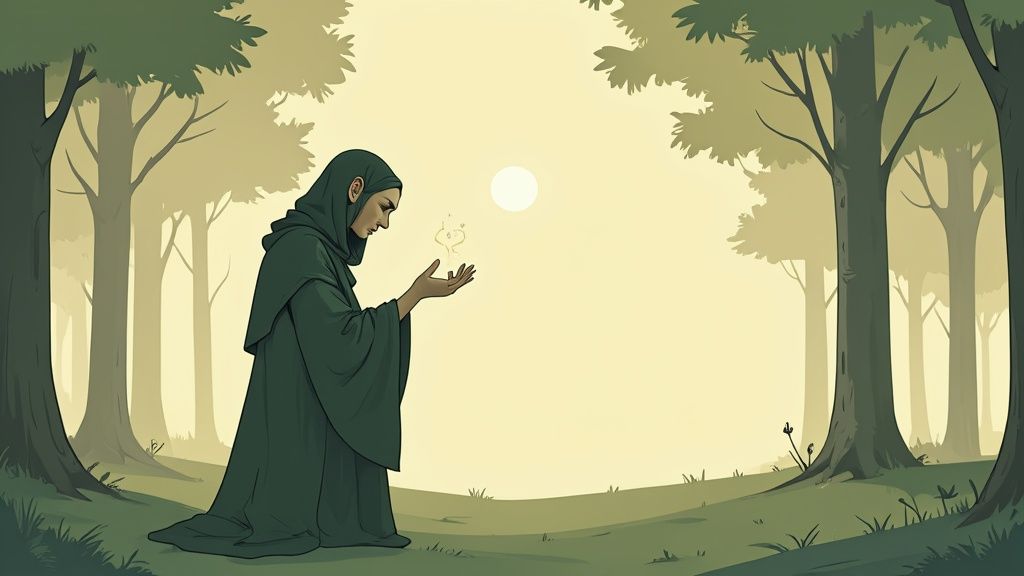
Mechanically, elves are often defined by their grace and heightened senses. A bonus to Dexterity is a common feature, making them natural Rangers, Rogues, and finesse-based Fighters. Key traits like Fey Ancestry grant them an advantage against being charmed and immunity to magical sleep, a nod to their otherworldly origins. Different subraces offer unique specialisations: the magically-inclined High Elf gains an extra cantrip, while the stealthy Wood Elf can attempt to hide even when only lightly obscured by natural phenomena. This makes choosing your elven heritage a crucial step when you learn how to make a Dungeons and Dragons character.
DM's Tip: Challenge your elf players with dilemmas that their long lifespan complicates. How do they react when a forest they swore to protect is threatened by a city founded by the great-grandchild of a human friend they once knew?
Step aside, tall folk. We now delve into the heart of the mountain, where the stoic and unyielding dwarves hold court. Of all dungeons and dragons races, dwarves are the bedrock, a people as sturdy and enduring as the stone they carve. They are master artisans, fierce warriors, and loyal clan members, possessing a grim determination and a deep connection to the treasures of the earth. Their long memories mean they never forget a slight, nor a kindness, making them the staunchest of allies and the most stubborn of foes.
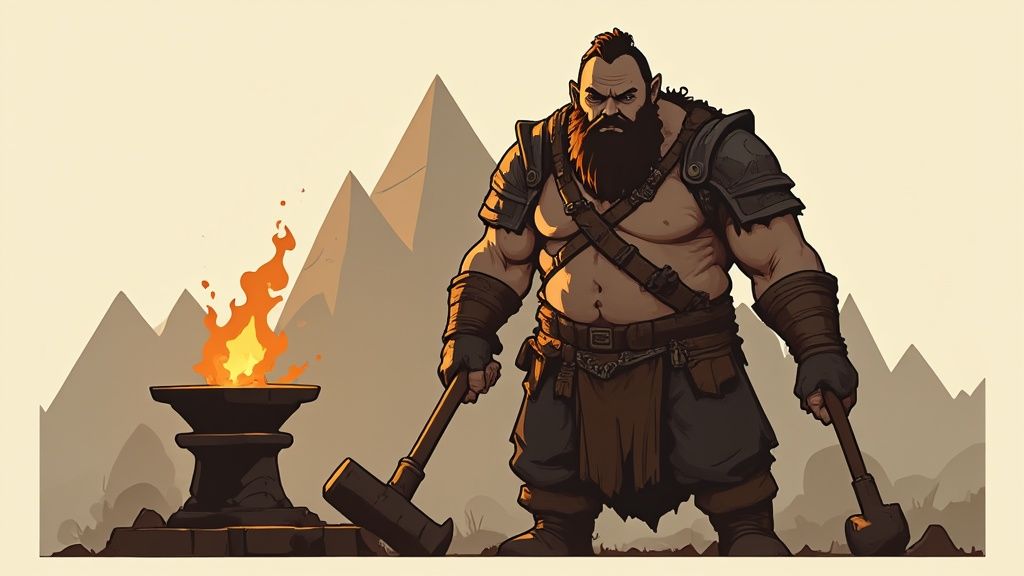
Mechanically, dwarves are built to last. A bonus to Constitution is their hallmark, making them naturally tough and able to withstand punishment that would fell lesser folk. Subraces like the Mountain Dwarf gain proficiency with armour and weapons, creating natural-born soldiers, while Hill Dwarves gain extra hit points, making them exceptionally resilient clerics and front-line fighters. Their resistance to poison and advantage on saves against it makes them a nightmare for assassins and venomous beasts.
DM's Tip: Lean into the dwarven concept of a grudge. What ancient wrong has a dwarf's clan sworn to avenge? This can be a powerful, multi-generational plot hook that defines a character's entire motivation, from seeking a legendary axe to reclaiming a lost mountain home.
Do not be fooled by their small stature or their love for a well-stocked pantry. The halfling is a testament to the idea that great courage can be found in the smallest of hearts. Standing at a mere three feet, they are creatures of comfort and community, yet possess an unshakeable spirit and an almost supernatural luck that sees them through the direst of situations. Where others rely on brute strength, the halfling relies on nimbleness, a cheerful disposition, and the uncanny ability to avoid trouble just when it seems certain.
Mechanically, halflings are defined by their incredible fortune. The Lucky trait, a cornerstone of their design in 5th Edition, allows them to reroll a natural 1 on an attack roll, ability check, or saving throw. This makes them remarkably consistent and reliable, sidestepping critical failures that could derail an entire plan. Subraces like the stealthy Lightfoot or the resilient Stout add further customisation, making them perfect Rogues, Bards, or even surprisingly sturdy Barbarians. Their Brave trait also gives them advantage against being frightened, reflecting their stalwart hearts.
DM's Tip: Emphasise a halfling's connection to home and community. Their adventures are often not for glory, but to protect the quiet, simple life they cherish. What beloved person, place, or recipe drives them out into the dangerous world?
Hark, for the blood of dragons flows through mortal veins! Dragonborn are a testament to draconic might, proud humanoids who carry the legacy of their ancient, fearsome kin. They are not merely scaled folk; they are a people defined by honour, clan, and an inner fire that manifests as a devastating breath weapon. Their very presence commands respect, their loyalty is hard-won but unbreakable, and their dedication to a chosen path is as resolute as a dragon's hoard is deep. To underestimate a Dragonborn is to invite a storm of elemental fury.
Mechanically, Dragonborn in 5th Edition are a striking blend of martial prowess and innate magic. Their key features are a Draconic Ancestry, which grants them resistance to a specific damage type (like fire for a Gold Dragon ancestor), and a powerful Breath Weapon that mirrors their heritage. This makes for fantastic character concepts, such as a Paladin of Bahamut whose righteous fury is matched by a cone of chilling frost, or a Sorcerer whose own magic is bolstered by their inherent resistance to lightning. They are natural-born leaders and front-line combatants.
DM's Tip: Delve into the concept of clan for your Dragonborn player. Is their clan a source of great pride and support, or is it a burden they seek to escape? This relationship can drive an entire character arc, providing allies, rivals, and deep-seated motivations.
Whispers often follow those with an infernal touch. Born of a pact made generations ago, tieflings walk the world as a constant reminder of the influence of the Nine Hells. Among all dungeons and dragons races, their appearance, marked by horns, a prehensile tail, and eyes like hot coals, often inspires fear and mistrust. Yet, this very prejudice forges in them a powerful self-reliance and a defiant charisma that can charm the most stubborn of hearts or command the respect of the most formidable foes.
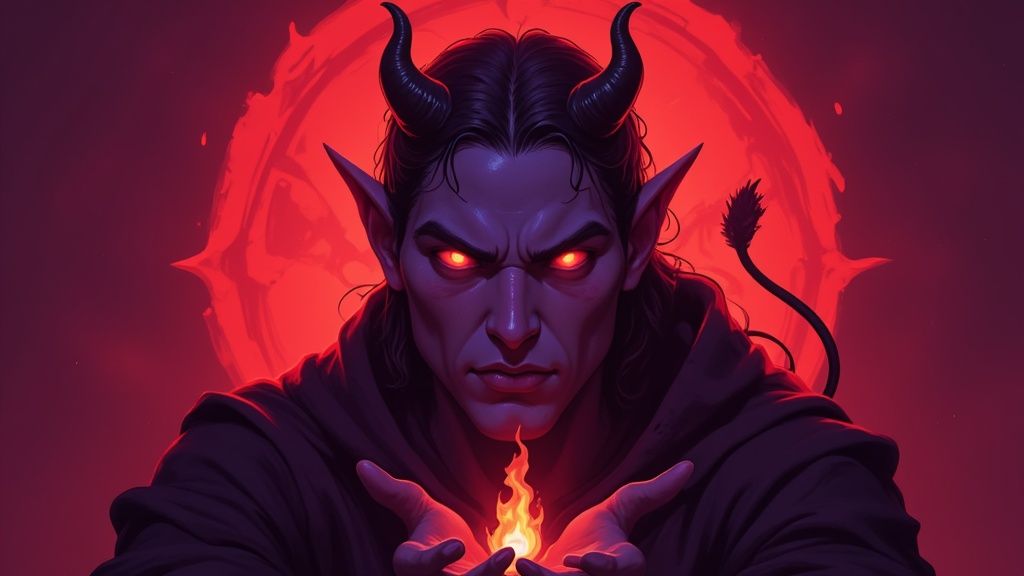
In 5th Edition, a tiefling's heritage grants them an inherent boost to their Charisma, making them natural Warlocks, Sorcerers, and Bards. Their fiendish legacy also manifests as innate magical abilities, such as the power to conjure hellish flames or beguile others with infernal charm. This connection to a dark power source provides a rich vein for storytelling, creating characters who either embrace their lineage, fight against it, or seek to understand its true meaning.
DM's Tip: Challenge a tiefling player's relationship with society. How do common folk react to them? Do they find kinship with other outcasts, or do they strive for acceptance from the very people who shun them? Their story is one of identity.
Torn between two worlds, the half-orc stands as a testament to fierce resilience. They carry the blood of both humans and orcs, a heritage that often earns them scorn from both sides. This perceived conflict, however, forges an indomitable will and a strength that is both physical and emotional. Among all dungeons and dragons races, the half-orc is the survivor, the warrior who gets back up no matter how many times they are struck down, their fury a fire that refuses to be extinguished.
Mechanically, half-orcs are built for the front lines. In 5th Edition, they boast enhanced Strength and Constitution, alongside key abilities like Relentless Endurance, which lets them drop to 1 hit point instead of 0 once per day. Their Savage Attacks trait adds an extra damage die to their critical hits, making them devastating wielders of greataxes and greatswords. This raw power makes them natural Barbarians, Fighters, and even aggressive Paladins whose intimidating presence enhances their divine crusade.
DM's Tip: Challenge your half-orc player with social encounters where brute force is not the answer. Explore their internal conflict: do they embrace their orcish heritage, reject it, or find a unique balance? Their story is one of identity.
Step lightly, adventurer, for you are in the presence of gnomes, the living sparks of ingenuity and whimsy. Where others see a pile of rocks, a gnome sees the gears of a future clockwork marvel. They are one of the most intellectually vibrant dungeons and dragons races, their minds buzzing with a thousand thoughts, schemes, and joyful observations. Their small stature belies a colossal intellect and an even bigger heart, often overflowing with an insatiable curiosity about the world's intricate workings.
Gnomes in 5th Edition are defined by their keen minds and resilience to magic. All gnomes gain an Intelligence bonus and the prized Gnome Cunning trait, giving them advantage on saving throws against magical effects targeting Intelligence, Wisdom, or Charisma. Subraces diverge wonderfully: Rock Gnomes are natural tinkerers, able to create clockwork toys and gadgets, while Forest Gnomes have a druidic touch, possessing minor illusion magic and the ability to speak with small beasts. This makes them exceptional Wizards, Artificers, and nature-loving Rogues.
DM's Tip: Embrace the gnome's curiosity. A gnome character is the perfect hook for a mystery or a quest to uncover a lost piece of lore. Ask your player what invention, puzzle, or ancient secret their gnome is currently obsessed with.
Caught between two worlds, the half-elf walks a path few can understand. They possess the grace and keen senses of their elven parentage, mingled with the drive and adaptability of their human side. This duality makes them natural diplomats, leaders, and wanderers, forever seeking a place to truly belong. Among all dungeons and dragons races, the half-elf is a testament to the idea that one's identity is not defined by heritage alone, but by the choices they make and the connections they forge. Their extended lifespan gives them a unique perspective, a blend of elven patience and human immediacy.
Mechanically, the half-elf is a powerhouse of versatility, particularly in 5th Edition. They receive a significant boost to their Charisma, making them perfect for Bards, Paladins, Sorcerers, and Warlocks. Crucially, they also get to increase two other ability scores of their choice, allowing for highly customised and optimised character builds. This flexibility, combined with their fey ancestry granting advantage against being charmed, makes them one of the most consistently powerful and popular choices for any role.
DM's Tip: Challenge your half-elf player by exploring their identity. Do they feel like an outcast in both human and elven societies? Do they try to embrace one side over the other, or do they proudly forge a new culture for themselves?
Behold the mighty Goliath, a testament to the raw power of the mountains. These towering figures are not merely tall humans; they are kin to the very stone and peaks they call home, said to have the blood of giants flowing in their veins. Theirs is a culture forged in the crucible of harsh climates and fierce competition, where every individual is expected to pull their own weight and contribute to the tribe's survival. To a Goliath, life is a grand contest, and they strive to be the victor.
In 5th Edition, Goliaths are a powerhouse of physical prowess. They possess natural athletic ability and a significant bonus to Strength and Constitution, making them perfect front-line combatants. Their defining feature is Stone's Endurance, an incredible ability allowing them to shrug off a portion of incoming damage once per rest. This makes a Goliath Barbarian or Fighter exceptionally durable, capable of weathering blows that would fell lesser mortals.
DM's Tip: Challenge a Goliath player's sense of fair play and competition. Introduce an opponent who cheats, a rival who shows unexpected mercy, or a puzzle that cannot be solved with brute force. How does their rigid worldview adapt?
Step into the light, adventurer, and behold the Aasimar. These beings are mortals with a touch of the divine, their blood infused with the power of the Upper Planes. Unlike angels, they are not purely celestial; they walk the mortal coil, often feeling a pull towards a grand destiny they may not fully understand. Among all dungeons and dragons races, Aasimars are a beacon, their presence a constant reminder that even in the darkest of worlds, heavenly power endures. This divine spark often manifests physically as luminous eyes, a faint halo, or even ethereal, non-functional wings.
Mechanically, Aasimars are designed to be paragons of divine might, often excelling in Charisma-based classes like Paladins, Sorcerers, and Bards. In 5th Edition, their subraces (Protector, Scourge, and Fallen) offer powerful transformations, allowing them to temporarily unleash their celestial power. This provides a brilliant moment of cinematic flair in combat, whether it's sprouting radiant wings to fly or searing nearby foes with divine energy. Roleplaying an Aasimar involves a constant dialogue with one's heritage: do they embrace their celestial guide and righteous path, or do they resent the burden of a pre-ordained destiny?
DM's Tip: Provide your Aasimar player with a celestial guide, an angelic being who communicates with them through dreams or visions. This NPC can be a source of quests, moral dilemmas, and crucial lore, creating a deeply personal storyline.
Listen closely, for the story of the Kenku is one of tragedy, creativity, and sound. These avian humanoids were cursed long ago, stripped of their wings and, most cruelly, their voice. They cannot speak with originality, only mimic sounds they have heard perfectly. Do not mistake this for a lack of intelligence; their minds are sharp, and their curse has forged them into masters of observation and imitation, making them one of the most unique of all dungeons and dragons races.
Mechanically, Kenku are a dream for creative players. In 5th Edition, their Kenku Training feature grants them proficiency in two skills of their choice, representing their knack for picking things up quickly. Their true defining trait is Mimicry, allowing them to perfectly replicate any sound they have heard. This is not just for voices but for anything from the squeak of a dungeon door to the roar of a dragon. This creates incredible roleplaying opportunities, forcing players to communicate through a collage of collected sounds.
DM's Tip: Challenge your Kenku player by asking, "Where did you hear that sound before?" This encourages them to build a backstory through the sounds they use and rewards them for creative problem-solving beyond simple speech.
| Race | Play complexity (🔄) | Mechanical requirements (⚡) | Expected outcomes (⭐📊) | Ideal use cases (💡) | Key advantages |
|---|---|---|---|---|---|
| Human | Low — straightforward, broad options | Low — no special prerequisites; benefits any build | ⭐⭐⭐⭐ 📊 Reliable, flexible performance across levels | Any class; best for customized builds and multiclassing | +1 all stats, extra feat, bonus skill — maximum versatility |
| Elf | Moderate — subrace choice affects playstyle 🔄 | Medium — favors Dexterity/Intelligence/Wisdom | ⭐⭐⭐⭐ 📊 Strong for skill & magic longevity (long rest economy) | Rangers, Dexterity-based fighters, Wizards, Rogues | Darkvision, trance, Fey Ancestry, Perception proficiency |
| Dwarf | Low — simple, durable traits 🔄 | Low — favors Constitution/melee classes ⚡ | ⭐⭐⭐⭐ 📊 High survivability and utility in low-magic/underground play | Cleric, Fighter, Paladin, any frontliner | +Con, poison resist, tool/weapon proficiencies, Stonecunning |
| Halfling | Low — straightforward but tactical play 🔄 | Low — favors Dexterity; small-size tactics ⚡ | ⭐⭐⭐⭐ 📊 Exceptional reliability in skill checks and stealth | Rogue, Ranger, Bard, skill-focused builds | Lucky rerolls, Brave, Nimbleness, natural stealth |
| Dragonborn | Low — simple mechanical package 🔄 | Low — favors Strength/Charisma combinations ⚡ | ⭐⭐⭐ 📊 Good burst AoE & thematic presence; situational durability | Paladin, Sorcerer, Barbarian, front-line casters | Breath weapon, damage resistance, Strength+Charisma bonuses |
| Tiefling | Low — flavorful with minor complexity 🔄 | Low — favors Charisma casters; benefits spellcasters ⚡ | ⭐⭐⭐⭐ 📊 Strong social/magic utility; good thematic impact | Warlock, Sorcerer, Bard, social casters | Darkvision, fire resistance, free spells (Infernal Legacy) |
| Half-Orc | Low — mechanically direct and aggressive 🔄 | Low — favors Strength/Constitution ⚡ | ⭐⭐⭐⭐ 📊 Excellent melee damage and survivability spikes | Barbarian, Fighter, Paladin (melee-focused) | Relentless Endurance, Savage Attacks, +Str/+Con |
| Gnome | Moderate — subrace choices matter 🔄 | Medium — favors Intelligence; small-size tactics ⚡ | ⭐⭐⭐⭐ 📊 Strong against magic, great for inventive builds | Wizard, Artificer, support casters, stealthy casters | Gnome Cunning (spell save advantage), cantrips, Tinker/Speak with beasts |
| Half-Elf | Low — very adaptable, minimal complexity 🔄 | Low — favors Charisma plus two other stats ⚡ | ⭐⭐⭐⭐ 📊 Highly versatile social & support performer | Bard, Warlock, Paladin, any social-oriented class | +2 Cha, +1 to two stats, extra skills, Darkvision, Fey Ancestry |
| Goliath | Low — straightforward strength-focused play 🔄 | Low — favors Strength/Constitution; size benefits ⚡ | ⭐⭐⭐ 📊 Strong frontline presence and environmental resilience | Barbarian, Fighter, melee-heavy classes | Stone's Endurance, Powerful Build, Athletics proficiency |
| Aasimar | Low — simple celestial traits 🔄 | Low — favors Charisma/Wisdom for divine casters ⚡ | ⭐⭐⭐⭐ 📊 Good support/healing and thematic radiant power | Cleric, Paladin, support casters, healers | Celestial Legacy spells, resistances (radiant/necrotic), healing ability |
| Kenku | High — roleplay & mechanical constraints 🔄 | Medium — favors Dexterity/Wisdom; needs verbal-spell workarounds ⚡ | ⭐⭐📊 High niche utility in stealth, social deception, and heists | Rogue, Monk, skill-heavy builds; creative roleplay scenarios | Mimicry, expert forgery, perfect auditory recall; unique roleplay tools |
And so, our grand tour of heroes concludes, but as every Dungeon Master knows, the end of one chapter is merely the prelude to an epic new beginning. We have journeyed through misty elven forests, delved into the stone halls of resolute dwarves, and even walked the shadowed streets with the enigmatic tieflings. This exploration of all Dungeons and Dragons races has revealed a vibrant tapestry of cultures, abilities, and stories waiting to be told.
The true magic, however, lies not in the statistics or the lore written in a book, but in the moment a player breathes life into one of these archetypes. The choice of a race is the foundational stone upon which a legendary character is built. It informs their worldview, shapes their interactions, and provides the unique flavour that distinguishes a stoic Goliath barbarian from a wisecracking Halfling rogue, even if both are equally skilled in a fight.
The insights gathered here are more than just a catalogue; they are a toolkit for creation. Consider the essential takeaways from our journey:
Mastering the art of character creation transforms a game from a simple tactical exercise into a collaborative narrative. When you deeply understand the potential within each race, you can build a hero who not only contributes to the party's success but also enriches the shared story. This principle of crafting unique, flavourful heroes is the very soul of tabletop gaming, a spirit that inspires new worlds and new systems.
A character is not merely a collection of stats and abilities; they are a promise of an adventure yet to unfold. Each choice, from their race to their first hesitant steps into a dungeon, is a verse in the epic song of their legend.
This creative spark extends beyond the D&D table. The same archetypes—the stalwart defender, the nimble scout, the wise mystic—echo throughout the fantasy genre, inspiring creators to forge new legends. When designing deck-building games like TerraClash, creators often draw from this rich wellspring of fantasy, reimagining what it means to be a hero and how their unique cultural and ancestral traits can be represented through the art and mechanics of a card. The core essence of what makes a Dwarf feel different from an Elf is a powerful design tool, ensuring every faction and champion feels distinct and compelling.
Your quest, brave adventurer, is to take these sparks of inspiration and ignite a bonfire. Whether you are crafting your next Dungeons & Dragons hero or exploring other fantastic realms, remember the limitless potential you hold. Go forth, tell a story that has never been told, and may your hero’s legend be ever sung in the taverns and halls of the worlds you save. If you seek more tales of adventure and wish to support fellow creators on their quests, consider exploring brilliant indie projects on platforms like Kickstarter. Many fantastic worlds, from the strategic depths of 'Gloomhaven' to the clever asymmetry of 'Root', are waiting to be discovered.
Inspired by the rich diversity of fantasy heroes? See how these classic archetypes are reborn in the world of TerraClash. Our deck-building game translates the unique spirit of fantasy races into strategic card-based combat. Discover your new champion at TerraClash.

