Hark, adventurer! The path from a spark of an idea to a funded quest on Kickstarter is a perilous and rewarding journey. It is an epic filled with its own trials, challenges, and, if the dice gods are smiling, a hoard of treasure at the end. But all grand campaigns begin long before the first call to arms.
Every great board game—be it a sprawling chronicle of a fantasy realm or a swift clash of cards—begins as a simple thought. You possess a vision for a new world, a cunning mechanic, a tale that must be told with meeples and dice. That is the magic spark.
But an idea alone is not a game. Your first, and perhaps most vital, quest is to draw that concept from the ether of your mind and onto the physical plane. It is time to conjure a prototype.
Fear not! This first incarnation is meant to be crude. Think scribbled runes on parchment, tokens borrowed from fallen games, and a map drawn on the back of a tavern menu. The goal here is not beauty; it is function. You need something tangible that you and your fellowship can actually play, to see if the thrill you imagine translates into a real experience.
Before you charge ahead, take a moment to survey the terrain. The world of tabletop gaming is vast and ever-shifting. What legends are being told right now? What quests are fellow adventurers backing on Kickstarter?
Delve into the chronicles of successful Kickstarter UK board games. Discern what magic made them resonate with the masses. Are players hungry for deep, story-driven campaigns like those found in the fantasy epics of old, or do they seek light, endlessly replayable party games? This is not about mimicry; it is about understanding the grand saga your game is about to join. For instance, if you are crafting a cooperative game, you'll find the greatest of these forge an incredible sense of shared struggle and triumph.
Heed my words: your future backers are the ultimate arbiters. Listen to the whispers in the community. Understand the quests they seek. You are attempting to craft the very experience they have been waiting for, even if they do not yet know it.
The UK is a fertile ground for such endeavours. We have a passionate, supportive fellowship that loves to champion new projects. Indeed, board games consistently triumph on Kickstarter here. A behemoth like Dark Souls - The Board Game summoned an incredible £3.77 million. This proves the legions are here, ready to pledge their support for worthy games.
With a prototype in hand, it is time for the most crucial—and sometimes brutal—part of your quest: the ordeal of playtesting.
Gather your allies, your kin, and most importantly, sages who will give you brutally honest counsel. Observe them as they play. Do not overly guide them with the rules. See where they falter, what brings forth a hearty laugh, and which moments create that intense, leaning-over-the-table silence.
Every piece of feedback, even the harshest critique, is a precious gem. A broken mechanic is not a failure; it is an opportunity to reforge the game, making it stronger. This cycle of play, feedback, refinement, and repetition is what transmutes a worthy idea into a legendary game. It is where you find the balance and uncover the heart of the fun.
This groundwork is your foundation. It is the solid stone upon which you will build your entire campaign, and it happens long before you start worrying about arcane arts like the role of OEM manufacturing. Getting this right is what prepares your game to stand apart, perhaps even becoming the next beloved indie saga like the roguelite deckbuilder, TerraClash™, which is about to embark on its own funding quest.
Before you can even dream of launch day, you must ensure your core pillars are as solid as a dwarven fortress. This scroll breaks down the essential preparations you must complete.
| Pillar | Objective | Key Action |
|---|---|---|
| Concept & Prototype | Validate the core game idea is fun and functional. | Create a playable, lo-fi prototype and test it yourself. |
| Market Research | Understand your target audience and the competition. | Analyse successful Kickstarter campaigns in your genre. |
| Playtesting | Identify and fix broken rules, balance issues, and confusing elements. | Run multiple playtest sessions with diverse groups. |
| Community Building | Start gathering a small, engaged following. | Share development progress on social media or a blog. |
Mastering these fundamentals is non-negotiable. They are the bedrock of a successful campaign, turning a hopeful idea into a project that backers can confidently champion.
Let us speak of the less glamorous, but no less vital, side of crafting a board game: the numbers. A brilliant game can fall to ruin if its finances are not in order. I have seen too many passionate creators ensnared because they underestimated the true cost of their quest. This is not just about making a game; it is about managing a treasury.
To pull off a successful Kickstarter campaign, you must become as meticulous as a guild accountant with your scrolls and ledgers. Your funding goal is not a number plucked from the ether. It is a carefully calculated shield that must protect you from manufacturing costs, artist fees, surprise customs levies, and the beast that is UK VAT.
You must account for every single copper piece. This means seeking solid quotes from artisans for everything—from card printing and miniature sculpting to the chest itself. It means factoring in your artist fees, marketing expenditures, and even the cost of prototyping. And please, for the sake of your sanity, build in a contingency fund of at least 10-15%. Something always goes awry on a long journey.
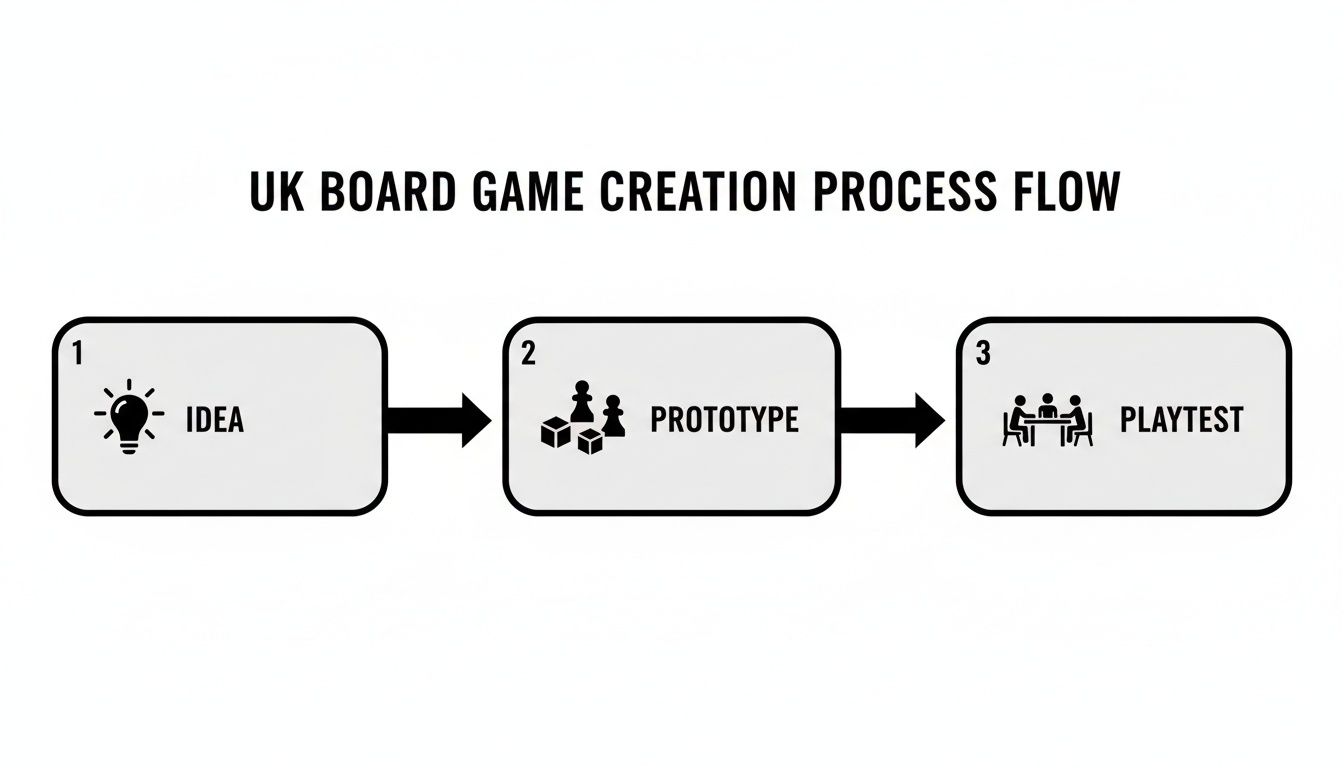
As this flowchart shows, you need a solid prototype before you can even think about budgeting. You cannot calculate the cost of a dream; you must calculate the cost of a real, tangible artifact.
Here in the UK, we have a beast known as Value Added Tax (VAT), and ignoring it can sink your vessel before it even sets sail. It is a common and devastatingly costly mistake for first-time creators.
Your obligations to the VAT dragon are not optional. As soon as your total revenue (including your Kickstarter funds) crosses the crown’s threshold (currently £90,000), you are legally required to register for and pay VAT. This means you either must build that 20% into your backer prices or pay it from your own coffers. Guess which one will lead to ruin?
My counsel? Speak to an accountant. Truly. Do not attempt to face this beast alone. A good accountant who understands the ways of e-commerce and crowdfunding is worth their weight in gold. They will help you navigate the rules and ensure you are compliant, so you can focus on making a legendary game.
Once your beautiful games are forged, how do you actually deliver them to the heroes who funded you? Fulfilment is a massive logistical puzzle, especially when shipping across distant lands. You have two main paths before you.
The golden rule here is transparency. Be upfront about shipping costs on your campaign page. Do not hide them or try to absorb them into the pledge price unless you are absolutely certain your treasury can bear it. Backers understand that shipping costs coin, but they despise surprise fees in the pledge manager after the campaign has ended. It erodes trust, swiftly.
Mastering your budget and logistics is what separates a dream from a deliverable treasure. It is how incredible sagas like the roguelite deckbuilder TerraClash™ can successfully navigate the journey from a grand idea to a game on a hero's table.
Now, let us speak of the most sacred parchment you will pen for the next 30-odd days: your Kickstarter page. Think of it less as a shopfront and more as the grand hall where you will welcome potential adventurers into your world. This is where you must perform the heavy lifting, turning a casual glance into a firm pledge.
This page is your spellbook. It must be woven with the right words and images to convince people not just to buy a game, but to believe in your vision and join your quest.
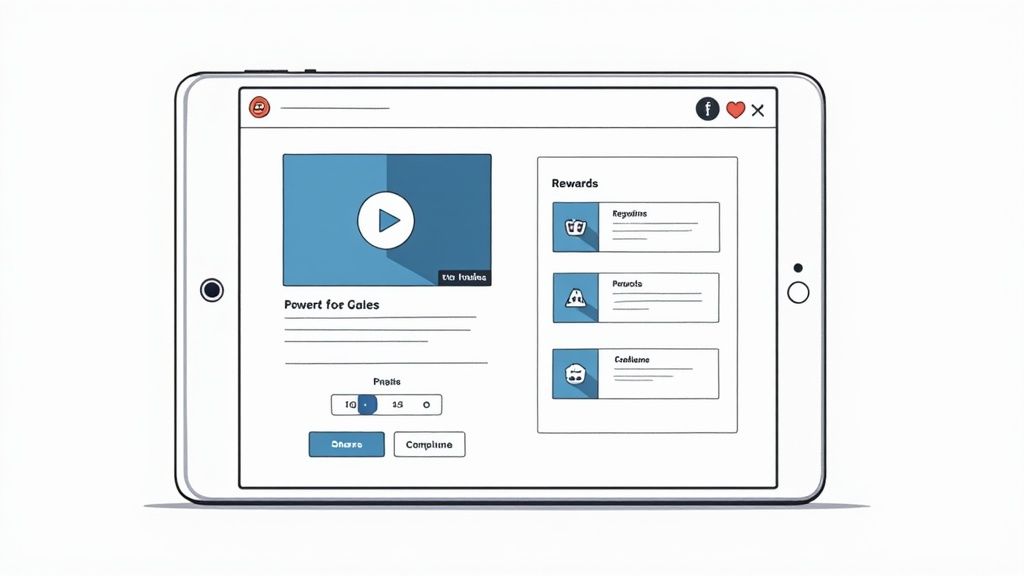
It all begins with your project video, your moving tapestry. You absolutely need one, and it must be potent. Keep it short, punchy, and absolutely dripping with the flavour of your game. We want to see the gorgeous art, feel the quality of the components, and most importantly, see heroes having a blast playing it. The first 60 seconds are make-or-break. If you have not hooked them by then, they are lost to the mists.
Once their interest is piqued, the rest of the scroll must draw them in. Start with a powerful, one-sentence hook that captures the essence of your game. What is the core conflict? Who are the players? What makes your game stand out from the thousands of tales already told?
A truly great Kickstarter page does not just list features; it tells a story. It anticipates a backer's questions and answers them before they are even asked, building confidence with every downward scroll.
Getting this structure right is a massive part of building trust. A clear, logical, and beautiful page shows you have considered every detail, much like the intricate design found in the best strategy board games.
Your reward tiers are not just price tags. They are different ways for people to join your cause. An "early bird" special is a classic incantation for a reason—it drives that critical day-one funding surge. Just ensure your standard pledge still feels like a great bargain for all who arrive later.
And then we have stretch goals. These are your secret weapon for keeping the campaign exciting long after you have reached your funding target. Do not make them feel like content you were holding back. They should feel like genuine upgrades and shared victories.
Think of stretch goals as a communal celebration. Instead of just saying "£20k - Thicker Cardstock," frame it as "At £20k, we're upgrading the entire fellowship's gear!" This turns a simple financial milestone into a shared victory, giving everyone a reason to share the campaign and bring more heroes into the fold.
This is how you keep the energy high from start to finish. The most successful Kickstarter UK board games are masters of turning their funding period into a memorable event. It is this community-focused approach that projects like the roguelite deckbuilder, TerraClash™, are aiming for as they prepare for their own launch.
A Kickstarter campaign does not simply appear, fully funded and destined for glory. The most successful launches are built upon a foundation of community, laid long before anyone sounds the launch horn. Your mission, should you choose to accept it, is to gather a fellowship of loyal supporters who are genuinely excited to see your game brought to life.
Think of it as assembling an adventuring party. You need heroes who believe in your quest from the very beginning. The single greatest folly I see new creators make is unveiling their masterpiece to an empty hall. You must launch with a roar, not a whisper. That initial surge of backers is what signals the Kickstarter algorithm, "Ho, look over here!" and gets you that coveted front-page visibility.
This early work is absolutely non-negotiable. It is how you turn casual observers into a passionate army of advocates who feel they have a real stake in your success.
Your future backers are already out there. They are gathered around digital campfires, discussing their favourite games and hunting for the next great saga. Your task is to find them and become part of the conversation, not just another bard shouting about their own tale.
Places like BoardGameGeek are hallowed ground for us tabletop folk. Set up a page for your game, post some developer chronicles, and actually converse with the people who live and breathe game mechanics.
The key is to avoid the hard sell. Be a fan first. Share the stories that inspired your world, speak of a tricky design conundrum you are wrestling with, or just geek out over a new piece of art. For anyone serious about this quest, understanding community marketing is essential. It is about contributing to the great hall, not just taking from it.
A few other key outposts to plant your banner:
While social media is great for being discovered, your email list is your secret weapon. It is your direct line to your most interested fans, a way to rally the troops on day one without battling some mysterious algorithm. You do not own your Facebook page, but you do own your email list.
Start building it immediately with a simple landing page. Offer something genuinely useful in exchange for an email address—a free print-and-play version is a classic for a reason, but a high-resolution art pack or a lore booklet works too. This list is what will give you that critical first-hour momentum when you finally launch.
A thriving community is not just a marketing tool. They are your best playtesters, your cheerleaders when you face a setback, and the heralds who will shout about your project from the highest towers.
Building this fellowship takes time and genuine effort. It is a whole campaign in itself, much like mastering the complex strategies of the best deck-building games. This pre-launch phase is where the sagas of the most successful Kickstarter UK board games are written. It is this groundwork that ensures projects like the roguelite deckbuilder, TerraClash™, will have a crowd awaiting them the second they go live.
The confetti has settled, the campaign clock has struck zero, and you have officially funded. A magnificent victory! But this is no time to rest. In many ways, the real quest is just beginning. Delivering the game into your backers' hands is where your reputation as a creator will truly be forged.
Getting funded is one thing; delivering on that promise is a whole different beast. This stage is where many campaigns, even successful ones, falter amidst the gritty realities of logistics. Your first task is to collect the crucial details from your community of backers.
This is where a pledge manager is worth its weight in mythril.
Truly, for any project of a decent size, tools like BackerKit or Gamefound are essential. They let you gather shipping addresses much closer to the actual dispatch date, which drastically reduces the number of parcels lost to the void because a backer moved keep. They also give your backers an easy way to manage their pledge, acquire add-ons, and cover their shipping costs. You would be amazed how much this can add to your final treasury—often a 10-15% boost, sometimes even more.
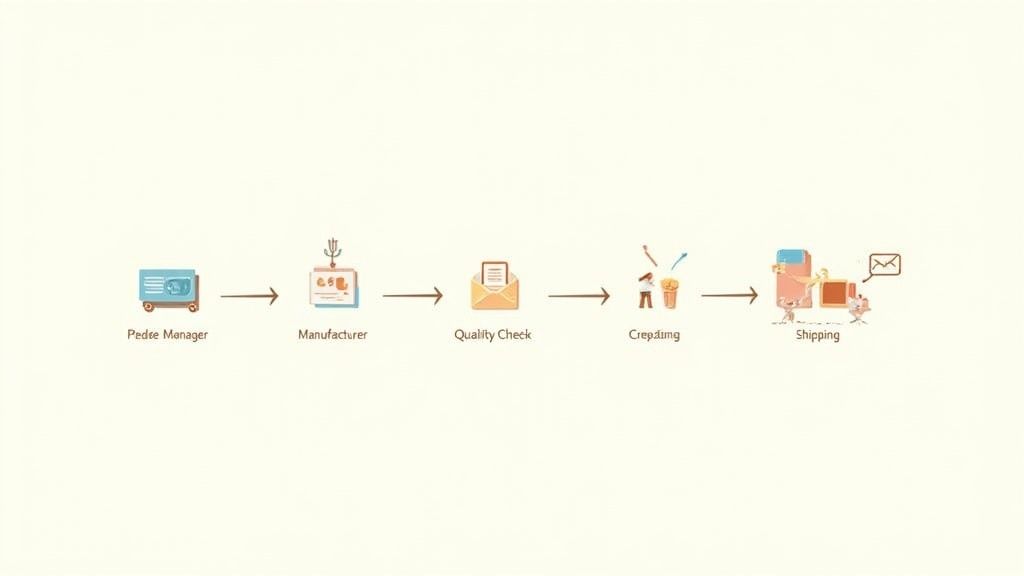
Once you have your backer data neatly organised, you must face the mammoth task of shipping. You will need a reliable partner for this. Choosing a fulfilment centre is probably one of the most important decisions you will make post-campaign. You need a company that understands the specific challenges of Kickstarter UK board games, from handling a massive freight shipment from a distant land to carefully packing hundreds of individual, unique orders.
When you parley with potential fulfilment partners, be sure to probe these key areas:
Choosing the right fulfilment partner is critical to a smooth post-campaign experience. There is no single "best" option; it all depends on the scale of your project and where your backers reside.
| Strategy | Pros | Cons | Best Suited For |
|---|---|---|---|
| Self-Fulfilment | Total control over quality, potentially lower cost for very small campaigns. | Hugely time-consuming, requires storage space, difficult to scale. | First-time creators with under 100-200 backers, mostly domestic. |
| UK-Based Partner | Excellent for UK/EU logistics, easier communication, clear VAT handling. | Can be expensive for backers outside Europe, may have limited global reach. | Campaigns where the majority of backers are in the UK and Europe. |
| Global Partner (with UK hub) | Streamlined worldwide shipping, regional hubs reduce customs/shipping costs for backers. | More complex setup, higher management fees, less personal contact. | Larger campaigns with a significant number of backers in multiple regions (e.g., UK, US, AUS). |
Ultimately, you need a partner who understands the crowdfunding realm and can provide a service that makes your backers happy. A bad fulfilment experience can sour an otherwise brilliant campaign.
Your backers did not just buy a product; they invested in your vision and put their faith in you. The single most effective way to honour that trust is with consistent, honest communication.
A delay you explain is an understandable setback. A delay met with silence feels like a betrayal. Your backers are on your team, so treat them as such.
Share the good news, like images of the first production copy arriving. But also be upfront about the bad, like a manufacturing error or a frustrating shipping hold-up. Aim for a regular update—once a month is a great baseline—and stick to it, even if all you can say is, "We are still waiting, and here is why."
Show them behind-the-scenes glimpses from the forge. Walk them through the challenges you are solving. This transforms them from customers into genuine partners on the journey. It is how you build a loyal community that will be excited for whatever you do next.
This level of dedication is what turns a one-off campaign for a game like the roguelite deckbuilder, TerraClash™, into the start of a real legacy in the tabletop industry. For a dose of inspiration, it is always a good idea to see how other creators are managing their own journeys by exploring other Kickstarter projects.
If you are considering launching a board game on Kickstarter, you are not alone. And chances are, the same questions that keep you awake at night have been asked by countless creators before you. Let us tackle some of the great beasts head-on.
There is no magic number here. Your funding goal is not a wish; it is a cold, hard calculation that must cover every single expense, or you will find yourself in a very deep dungeon.
You must tally the cost of manufacturing every component, paying your artists, and shipping the final games from the factory. Then, do not forget that Kickstarter takes its cut (around 5%), and the payment processors will want their slice too (another 3-5%). And for UK creators, the big one: VAT. It must be accounted for.
I always counsel creators to build in a contingency fund of at least 10-15%. Truly. Something will go wrong, a cost will be higher than expected, and you will need a buffer. A simple card game might get away with a £5,000-£10,000 goal, but a sprawling epic with custom miniatures could easily push past £50,000.
Never, ever guess your funding goal. Get firm quotes from manufacturers and fulfilment companies before you even think about launching. An accurate, well-researched goal is the foundation of a campaign that backers can trust.
Two major issues tend to ensnare UK creators: VAT and Intellectual Property (IP). Get these wrong, and you are in for a world of pain.
First, you absolutely must understand your VAT obligations. As a UK business, there is a threshold at which you must register for VAT and start charging it on your pledges. This is not something to "figure out later." My strongest counsel is to speak to an accountant who has experience with crowdfunding before you launch.
Just as critical is ensuring your game is legally yours. Do your research. Is the name you love already trademarked? Is your art or lore too close to something that already exists? A thorough check for trademark and copyright infringement is non-negotiable. Lastly, if your game could be played by children, it must meet UKCA safety standards. While our game, TerraClash™, is aimed at ages 12+, this is a vital step for many projects.
Long before you sound the launch horn. I speak of a minimum of three to six months out. Your campaign's success is often decided before it even goes live.
This is your community-building phase.
The goal is to have a crowd of eager fans waiting to back you the moment you go live. The dream scenario is funding at least 30% of your goal in the first 48 hours. This massive initial push signals to the Kickstarter algorithm that your project is hot, massively boosting its visibility across the platform.
For nearly any project that is not incredibly simple, the answer is a resounding yes. A pledge manager like BackerKit or Gamefound is a lifesaver once the chaos of the campaign is over.
Think about it: people move. A pledge manager lets you collect shipping addresses much closer to your actual fulfilment date, which drastically cuts down on returned packages. More importantly, it gives backers an easy way to upgrade their pledge or buy add-ons, which can genuinely add a significant amount to your final funding total. They are the tool that helps you untangle thousands of individual orders into a clean sheet for your fulfilment partner.
At TerraClash, we are huge believers in the power of indie creators and the communities that support them. Our own journey is just beginning, and we hope sharing what we have learned can help inspire you to begin yours.
Prepare for a new kind of quest with TerraClash™ Digital launching soon on Kickstarter.

