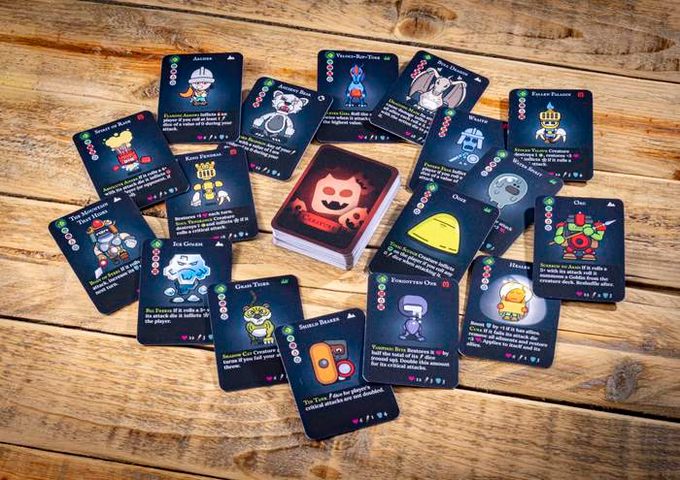
Gather 'round, adventurers, and lend an ear! You, who have spent countless nights weaving tales of heroism and strategy, whose minds have crafted worlds of wonder from mere cardboard and dice. You have forged a magnificent game, a treasure worthy of legend. But how, pray tell, do you summon it from the realm of dreams and place it upon the gaming tables of the worthy across the UK and beyond?
This, my friends, is where the true quest begins.
In ages past, the path to publishing was guarded by mighty gatekeepers – the great publishing houses. They held the keys to the kingdom. But a new magic has swept the land, a powerful incantation known as Kickstarter. It has shattered the old gates. As the wise sage Jamey Stegmaier of Stonemaier Games proclaimed, publishers are now "maximisers," not gatekeepers. They can amplify a great game's legend, but they no longer decide whose saga is worthy of being told.
That power, brave creator, now rests in your hands. But heed this warning: you are your own gatekeeper.
Launching a Kickstarter campaign is an epic adventure in itself. It demands strategy, a warrior's grit, and a wizard's foresight. I have witnessed many a creator, their games as brilliant as a dragon's hoard, falter on this journey for they underestimated its perils. Let this guide be your enchanted map, illuminating the critical trials of bringing a game to life, especially for those of us dwelling in the UK.
Together, we shall chart a course through these essential trials:
Consider the legendary campaigns that have come before. Think of the sprawling, epic tales of Gloomhaven or the whispered legends of the roguelite deckbuilder, TerraClash™. They did not merely sell a box of tokens and cards; they summoned backers into a shared saga. Their triumph was forged upon a foundation of meticulous preparation, laid long before the campaign banner was raised.
Ultimately, a triumphant campaign is born of connection. It is about igniting a spark of excitement that grows into a roaring fire. You must understand what makes your game a treasure, and more so, what makes tabletop gaming itself so powerful – the shared stories, the cunning stratagems, the thrill of discovery. A well-crafted deckbuilder can feel like mastering a spellbook, each card a new incantation to unleash.
Even the smallest creature can become a legend. A humble goblin, with the right lore and design, is not just a disposable foe but a character with its own mischievous magic. To see what I mean, explore our own grimoire on the design philosophy behind our Goblin magic cards.
The gate is gone. Look at what we have now: Kindle publishing, blogging, app stores, YouTube, and Kickstarter. There are so many ways to share your work with the world. The platforms are there. So what’s the problem? The problem is that you are your own gatekeeper.
Remember, you are not simply asking for coin to fund a project. You are summoning a fellowship, creating an experience that heroes will recount around their tables for years to come. The path is long, but with a true map, you can bring your vision to life. Let the adventure begin.
Hark, adventurer, for this is the most vital secret I can impart. The fate of your Kickstarter is not sealed on the day of its launch. It is decided in the moons leading up to it. Too many creators believe a brilliant game will magically summon its own audience from the ether. It will not.
A great campaign does not begin with a thunderclap; it begins with the quiet, deliberate gathering of a fellowship—those who believe in your quest. They are the vanguard who will pledge their support in the crucial first hours, creating a surge of momentum that draws in all others. They are your champions.
Before you even consider sounding the horn of launch, you must gather an inner circle. These are the heralds genuinely excited about your creation, who will spread its legend long before you ask.
The most sacred place to gather them is your scroll of email subscribers. Social media is a fickle beast, its algorithms shifting like desert sands, but an email list is your personal scrying pool—a direct link to your most loyal supporters. Here, you can share secret lore, early sketches of magical beasts, and tales from behind the curtain of your game’s creation.
To entice folk to add their names to your scroll, you must offer a worthy boon. A simple "sign up for news" is a weak cantrip. Offer something of true value. Perhaps a free print-and-play quest, exclusive lore from your world, or a first glimpse at a hero's design. For our own quest, TerraClash™, we have established a sacred grove where heroes can pre-register for the launch to be first to answer the call.
Once your core fellowship is formed, it is time to seek more allies. You must journey to the digital taverns and forums where tabletop gamers already gather. I speak of hallowed ground like the forums of BoardGameGeek and the many board game subreddits.
But a word of caution: tread with respect. These communities can spot a snake-oil salesman from a league away and will cast them out. Your heart must be true.
A Kickstarter campaign isn't where you start building a community; it's the culmination of it. Think of your funding goal as the finish line for your pre-launch work, and the starting gun for actually making the game.
All this requires time and genuine passion. The aim is to make people feel they are part of an exclusive order, insiders on a grand adventure. You are transforming them from passive spectators into active heroes.
This philosophy is woven into the very fabric of the platform. The Kickstarter chronicles tell of over 272,205 quests successfully funded worldwide. The vast majority of these (66.4%) raised under £10,000, while a tiny fellowship of legends (4.2%) summoned over £100,000. The lesson is clear: you do not need a dragon's hoard to succeed; you need a dedicated, impassioned community to make your dream a reality.
When you finally launch, this fellowship you have so carefully assembled will be there, ready to pledge and ready to spread the word. That is how you create an opening day surge so powerful, none can ignore it.
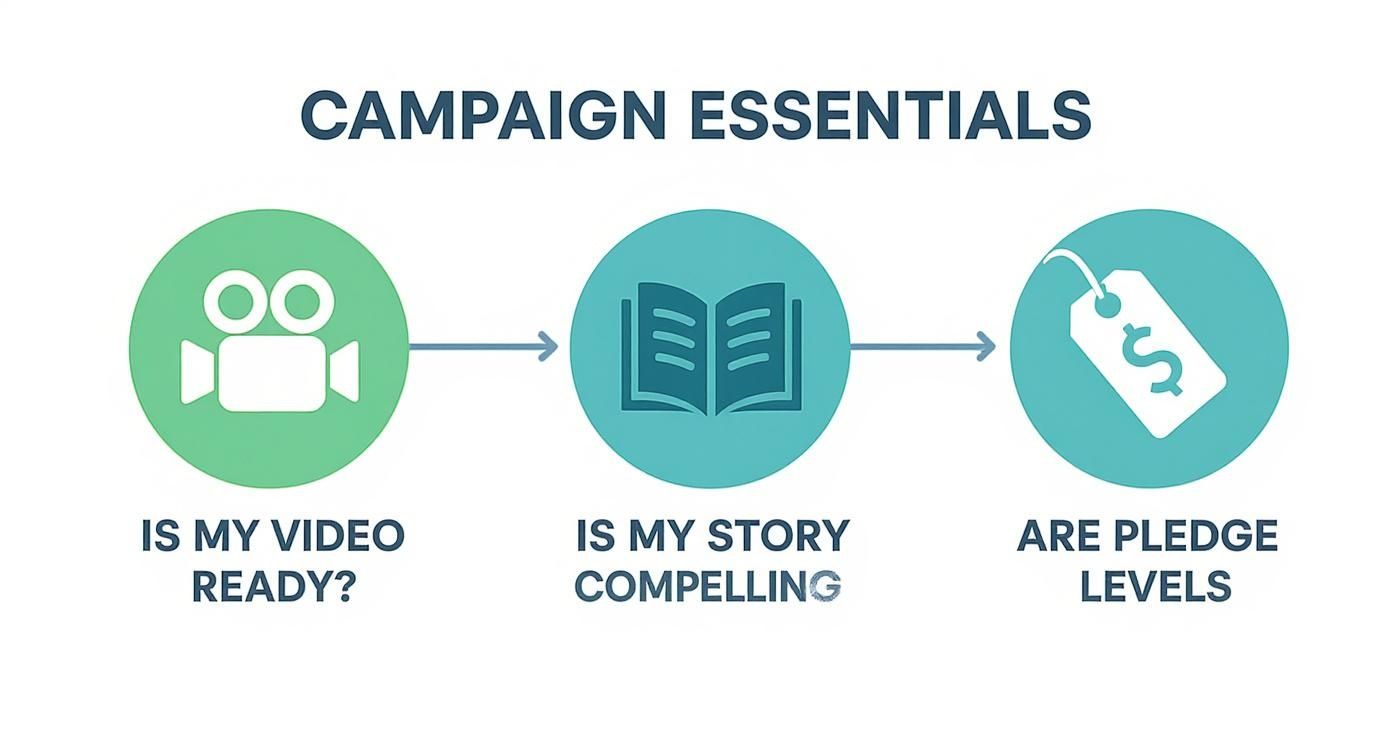
Think of your Kickstarter page not as a merchant's stall, but as the ancient tome that contains the soul of your game. This is your moment to enchant visitors, to draw them into the world you have so painstakingly crafted. Do it right, and a curious traveler becomes a sworn backer. Do it wrong, and they will simply wander on. This is not a product page—it is an invitation to an epic adventure.
You must blend the flair of a master storyteller with the foresight of a grand strategist. Your most potent spell is your campaign video. It must capture the feeling of your game. Forget a dry recitation of components; show mortals laughing, pondering difficult choices, and roaring in triumph. You are selling the experience, the legend, not just the box.
Words hold immense power. The saga you scribe upon your page must be as compelling as the game itself. Set the scene. Who are the heroes in the world you’ve built? What epic trials will they face?
Don't just list mechanics. Frame them as the heroic deeds your players will perform. Whether you have crafted a simple, elegant card game or a sprawling roguelite deckbuilder like the forthcoming TerraClash™ (suitable for brave souls aged 12 and up), the art lies in making the gameplay sound intuitive and thrilling. Connect what players do to the fantasy you’re selling them.
Your page is a portal. Every image, every paragraph, every video clip should serve one purpose: to transport the backer from their screen directly to your game table, imagining the adventure that awaits.
The hunger for such immersive quests in the UK is vast. This is a realm of players that has backed some of the most legendary campaigns on Kickstarter UK. Indeed, four of the top five most-funded UK Kickstarter projects are board games. Campaigns like Dark Souls™ - The Board Game summoned an incredible £3.77 million, with Monster Hunter™ World: The Board Game close behind at £3.44 million. This proves one thing: UK backers are eager to fund ambitious, story-driven tabletop worlds.
Your pledge levels are the various paths one can take to join your quest. They must feel like treasures, not price tags. Each tier should offer a clear and worthy upgrade from the last, tempting backers to venture just a little deeper.
Think beyond merely acquiring the game. How can you deepen their bond with your world?
Behold, the banner of the TerraClash™ Kickstarter. Note how the art and the clear funding goal immediately capture the eye and set a mythic tone.
The visual identity is established from the first glance, giving a professional first impression that beckons you to scroll down and learn of the secrets within.
When you frame it this way, backers feel they are becoming part of the story. If your game has cooperative elements, shout it from the highest tower. That shared experience is a powerful lure for many players. It may be wise to study the chronicles of the best cooperative board games to see how other masters have tapped into that feeling of fellowship and teamwork.
Ultimately, your campaign page is a sacred vow. It is a promise of a grand experience, a beautifully forged artifact, and a journey you will all take together. Pour your heart into it, and you shall find your fellowship.
So, your campaign is funded. A triumphant victory! But do not celebrate for too long, brave creator. The most perilous quest is just beginning – the one that leads through the tangled, treacherous forest of logistics, taxes, and shipping. I have seen too many glorious projects stumble here, their creative genius undone by the mundane beasts of numbers and paperwork.
This part of the journey is not about glorious stretch goals; it is about the meticulous planning of a master tactician. And for us creators in the UK, it comes with its own unique set of dragons to slay. We speak of VAT and the post-Brexit customs labyrinth. Ignore them at your peril. Miscalculate these costs, and your hard-won treasure will vanish like morning mist before the first game is even dispatched.
Mastering this is as fundamental as crafting a captivating video or a compelling story. It is one of the pillars that supports your entire enterprise.
Let us be clear: you must understand the ways of VAT. This is not an optional side quest. When a UK backer pledges coin for your game, it is a transaction, and it is subject to Value Added Tax. You must, by all that is sacred, factor this 20% cost into your budget.
Think of it thus: it is not your gold. You are merely its temporary guardian for the Royal Treasury. If you forget to build VAT into your funding goal and pledge prices, you will be paying it straight from your production hoard. This single oversight has been the doom of countless campaigns. Ensure your financial scrolls are in order from day one.
I recall a time when sending games to the European lands was a simple affair. Those days are now legend. After Brexit, every single parcel sent from the UK to an EU realm is an export. This means customs declarations, potential import fees for your backers, and a mountain of new paperwork.
Whatever you do, do not let your backers be ambushed by unexpected customs charges. It is the swiftest way to sour the goodwill you have spent months cultivating. You have two sound strategies here:
And this is before we even speak of manufacturing. Many of us have our games forged in the far-off land of China, so understanding the complexities of shipping goods from China to the UK is another colossal piece of the logistical puzzle you must solve early.
Your job isn’t done when the campaign funds. It’s done when a backer is holding your game, thrilled with the entire experience. Getting the logistics right is a massive part of keeping that promise.
The UK tabletop realm is thriving. Kickstarter has seen over 651,000 projects launched worldwide, with a success rate hovering around 42%. Closer to home, the UK’s crowdfunding market is on a grand ascent, projected to leap from $106.4 million in 2024 to an incredible $270.1 million by 2030.
The audience is here, and they are ready to back great quests. They simply expect a professional, seamless process from creators who have mastered their craft.
To aid your planning, here is a high-level accounting of the major costs you must consider. It is not exhaustive, but it covers the great beasts that can devour your budget.
| Expense Category | Key Considerations for UK Creators | Estimated % of Budget |
|---|---|---|
| Manufacturing | Art, graphic design, prototypes, and the final production run. Get multiple quotes. | 25-35% |
| VAT | Must account for 20% on UK pledges. Don't forget this! | ~15% (Varies with backer location) |
| Shipping & Fulfilment | Freight from the factory, warehousing, and postage to backers. EU-friendly options are key. | 20-30% |
| Kickstarter & Payment Fees | Roughly 5% for Kickstarter and 3-5% for Stripe. Budget for 10% total. | ~10% |
| Marketing & Promotion | Ad spend, reviewer copies, convention costs, and other pre-launch expenses. | 5-15% |
| Contingency Fund | The "uh-oh" fund for unexpected delays, price hikes, or errors. Absolutely essential. | 10-15% |
Treating logistics with the gravity it deserves is how you protect your treasure, keep your backers loyal, and ensure your brilliant creation actually makes it to the table.
You have done it. The campaign is victorious, the funding goal a distant memory, and the cheers have faded. It is a feeling of great triumph, is it not? Take a moment to celebrate – you have earned it. But do not rest on your laurels for too long. Reaching your funding goal is not the end of the quest; it is merely the beginning of the great expedition.
Now comes the sacred duty: keeping your promises. This is where a creator's legend is truly forged or shattered. The trust you spent months building with your backers is your most precious artifact, and now you must prove they were right to bestow it upon you. The single most important tool in your arsenal is communication.
Think of your backers as the new council for your project. They have invested in your vision, and they deserve to see how their treasure is being put to work. This means regular, honest, and transparent dispatches are not merely polite; they are mandatory.
Do not only post when you have good tidings. Of course, you must absolutely share the glorious moments! When the final artwork arrives from the scribes, display it proudly. When the first prototype from the forge arrives, perform a live unboxing. Your excitement is a powerful spell.
But you must also be forthright about the trials and tribulations. And trust me, there will be trials. Perhaps a shipment is delayed by a kraken, a printing run has a colour-matching flaw, or a component is delayed. It is tempting to remain silent until you have a solution, but that is the most perilous path. Silence breeds fear and mistrust.
Face the problems head-on. Tell your backers what has occurred, explain the impact on the timeline, and outline your plan to set things right. People are surprisingly understanding of delays when they are kept informed. They backed a creator, a mortal on a mission, not a faceless empire. Show them the true journey.
The post-campaign phase is a marathon, not a sprint. Consistent communication transforms anxious backers into patient allies. They're not just customers; they are your patrons, and they will follow you on future quests if this one ends with honour.
With the campaign funded, you are now the keeper of a mountain of data. You must know who ordered what artifact, where they reside, and how much they owe for shipping. In ancient times, this was a nightmare of spreadsheets and carrier pigeons. Thankfully, we now have powerful allies known as pledge managers.
Using a pledge manager is not just a good idea; it is essential. These platforms are designed to bring order to the chaos after the campaign ends, allowing backers to finalise their pledges, pay for shipping, and update their details.
Kickstarter now offers its own integrated Pledge Manager, which is a fine choice for keeping everything under one banner. Whatever you choose, these tools are vital for several reasons:
Once the orders are locked, the monumental task of fulfillment begins. You could attempt to do it all from your own workshop, but for most quests, that way lies madness. I strongly advise you to seek out specialized crowdfunding fulfillment services.
These companies are veterans of the crowdfunding battlefield. They know the unique challenges of a Kickstarter UK project, from sorting thousands of unique orders to navigating the labyrinth of international customs and VAT, especially post-Brexit. Entrusting this final, crucial step to the experts can be the wisest decision you make. It ensures your game is delivered safely and efficiently into the hands of your supporters.
Ultimately, this is your legacy. A smooth fulfillment is the satisfying final chapter that turns a backer into a lifelong fan. They are the ones who will be first in line for your next project, whether it’s a massive epic or a clever card game like TerraClash™. Deliver on your promise, and they will answer your call every time.
Every creator I have counseled, be they a seasoned master or a novice sketching their first map, reaches a point where nagging questions begin to haunt their thoughts. This is perfectly normal. These are the very same doubts that can halt a glorious project in its tracks if you allow them to fester.
Let us banish these shadows and address some of the greatest questions that arise for UK creators planning their first (or next) Kickstarter quest.
Determining the right length for your campaign is a classic balancing act. You seek to create urgency without rushing your potential backers. It is tempting to choose a long, 60-day campaign, believing it grants more time to be discovered. In my experience, this merely leads to a stagnant, lifeless middle period where all your momentum vanishes. A campaign's energy is almost always concentrated in the first few days and the final 48-hour call to arms.
Most sages of the industry, myself included, will tell you that 30 days is the sweet spot. It is long enough for word to spread and for travelers to find your banner, but short enough to maintain pressure and build towards a thrilling climax. If you have already summoned a massive, hyped-up fellowship, you might risk a punchier 21-day run to truly stoke the fires of urgency, but you gamble on your message reaching enough ears in time.
Yes. Absolutely, one hundred percent, yes. You would not ask someone to fund an expedition to a dragon's lair without a map, would you? Your prototype is your proof of concept. It is the physical evidence that your brilliant idea truly works and is a joy to play. It need not be the final, factory-forged version, but it absolutely must be a high-quality, fully playable artifact.
Consider this: your prototype is the hero of your campaign. It is what you will showcase in your video, what you will send to the town criers and reviewers, and what you will demo at conventions. A polished, playable prototype instantly builds trust and shows backers you are a serious creator who has mastered your craft.
Without a solid prototype, you are just selling a dream. With one, you are offering people a true glimpse of the treasure to come. For me, this is non-negotiable if you wish for backers to take your quest seriously.
Hush now and listen closely, for this is the beast that has slain more UK projects than any other. The single greatest mistake I see creators make is massively underestimating the cost of shipping and the bureaucratic nightmare that is VAT.
So many first-time creators have a wildly successful campaign, only to watch their treasure hoard evaporate when the time comes to actually dispatch the goods. For those of us here in the UK, Brexit has thrown a whole new set of enchanted obstacles in our path, especially when shipping to the EU. You simply cannot afford to guess these costs.
You must get proper quotes from fulfillment companies and, crucially, you must account for the 20% VAT in your budget and pledge levels from day one. Skipping this tedious but vital step is the fastest way to turn your crowdfunding dream into a financial disaster. Plan your logistics as meticulously as you plan your game's design.
The road to getting a new game onto the tables of heroes is challenging, but with the right preparation and a loyal fellowship behind you, it is more than achievable. We are actually on this very journey ourselves right now at TerraClash, preparing to launch our new roguelite deckbuilding adventure.
If you are interested in seeing how we put all this wisdom into practice, follow the TerraClash™ Kickstarter campaign today and be the first to know when the quest begins.