Well met, traveller. Hark, and gather ‘round the hearth, for we are about to speak of the very soul of heroes—the lineages and peoples that populate the vast realms of Dungeons & Dragons. Choosing from the myriad DnD races 5e is the first, most sacred pact you make with your character. It is the deep root from which their grand saga will sprout.
Consider this tome your divining glass, a complete field guide to navigating the breathtaking tapestry of cultures, abilities, and ancient histories laid before you. We shall speak of the timeless classics chronicled in the Player’s Handbook, then venture forth into the wilderlands to gaze upon the more esoteric folk scattered across the multiverse.
This chronicle is penned for all who gather at the table. It is for the seasoned loremaster seeking a fresh spark of creation and for the novice adventurer forging their very first hero. If you are but a fledgling on this path, our D&D for beginners scroll can help you find your footing.
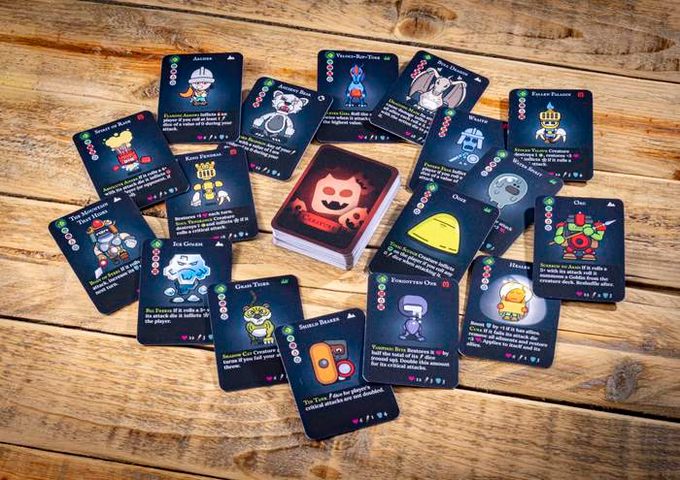
This moment of choosing a lineage is a familiar echo to those who have lost themselves in other grand fantasy sagas. It carries the same weight as swearing allegiance to a faction in a deep board game, or poring over your hand in a deckbuilder like TerraClash, seeking the perfect, world-altering synergy. Each choice sets you upon a unique destiny, unveiling a world of possibilities for the adventures that lie in shadow and light.
Let us begin our scrying where countless adventures have been born: with the foundational ancestries of the Player's Handbook. These are the very cornerstones of high fantasy, the iconic DnD races 5e that have kindled the flames of imagination for generations. Here you shall find the ever-adaptable Humans, the graceful Elves, the stoic Dwarves, and the plucky Halflings.
They are joined by the draconic Dragonborn, inventive Gnomes, diplomatic Half-Elves, formidable Half-Orcs, and the infernally-touched Tieflings. Selecting your race is much like choosing your starting faction in a grand strategy game of warring kingdoms; it sets the tone for your entire quest and imbues your character with a distinct flavour from the very first tumble of the dice. Let this section be your quick-reference field guide to these core peoples.
To help you conjure the essence of these classics in a heartbeat, I have scribed a quick-reference table. It is perfect for when you are divining a new character and desire a simple overview of what each Player's Handbook race brings to the table, mechanically speaking.
| Race | Primary Ability Score Increase | Defining Trait or Feature |
|---|---|---|
| Dwarf | Constitution | Dwarven Resilience |
| Elf | Dexterity | Fey Ancestry |
| Halfling | Dexterity | Lucky |
| Human | +1 to all scores | Versatility (or a Feat via Variant) |
| Dragonborn | Strength & Charisma | Breath Weapon |
| Gnome | Intelligence | Gnome Cunning |
| Half-Elf | Charisma & two others | Skill Versatility |
| Half-Orc | Strength & Constitution | Relentless Endurance |
| Tiefling | Charisma & Intelligence | Infernal Legacy |
This table is but the first step on the path, of course. True magic unfolds when you delve into the unique subraces and the narrative threads each one unspools.
The most storied races—Humans, Elves, Dwarves, and Halflings—are the very soul of classic fantasy. Humans are lauded for their raw versatility and boundless ambition, a trait perfectly captured by the potent Variant Human option that grants a starting feat. This alone makes them a mechanically wondrous choice for nearly any class, allowing you to specialise from your first level.
Elves, with their fey ancestry, are beings of natural magic and elegance, making for brilliant Rangers or Wizards. Dwarves are paragons of resilience, their innate toughness making them exceptional Fighters and Clerics who can hold the line against any darkness. And then you have the Halflings, whose uncanny luck is a trait that makes them superb Rogues, effortlessly sidestepping dangers that would doom others.
Beyond those classic four, the Player's Handbook gifts us ancestries with more exotic roots. Each of these brings a unique mechanical and narrative flair to the party, much like drawing a rare, strategy-defining card from your deck in a game of wits and power.
Strive to see this choice as more than mere statistics; it is the soul of your character's story. It is the history they carry, the culture that forged them, and the very lens through which they view the world. That principle lies at the heart of all great tabletop experiences, from sprawling roleplaying campaigns to the intricate, card-based sagas found in games like TerraClash.
Come, let us journey beyond the familiar campfires. The D&D multiverse is a vast, sprawling cosmos, and some of its most fascinating denizens are those who truly challenge the definition of an adventurer. These are the uncommon and monstrous lineages, the kind of heroes you might discover in forbidden tomes like Volo’s Guide to Monsters, perfect for players wishing to weave a different kind of tale.
To choose one of these is not merely to select different statistics; it is to alter the very fabric of your story. Entering a tavern as a celestial-touched Aasimar or a serpentine Yuan-ti will garner a vastly different reaction than if you were an elf or a dwarf. You are immediately embracing a narrative with more complexity, more flavour.
Many of these folk have a direct conduit to other dimensions, their very biology shaped by cosmic forces. This heritage grants them potent and truly unique abilities that serve as fantastic hooks for deep roleplaying.
The Aasimar are a classic example. They are mortals with a drop of celestial power in their veins, a divine spark that can manifest as healing hands, searing light, or even spectral wings. Their natural Charisma makes them compelling leaders, and they ascend effortlessly into classes like Paladin or Sorcerer, where their powers feel like a natural extension of who they are.
At the opposite end of the cosmic spectrum, you find the Yuan-ti Purebloods. With the blood of ancient serpent gods flowing through them, they are cunning, resistant, and often misunderstood. They are utterly immune to poison and possess an incredible advantage on saving throws against magic, making them exceptionally difficult to fell. This innate magical defence makes for a brilliant Warlock or a maddeningly resilient Rogue.
Not all uncommon folk are tied to other planes; some share a profound, primal bond with the natural world itself. To play one of these characters is to tap into a more untamed, instinctual side of adventuring. Their abilities feel ancient and deeply rooted in the world's soul.
"To embrace a 'monstrous' lineage is a narrative declaration. You are choosing to play the outsider, the wanderer, one caught between two worlds. That dramatic weight is the crucible in which truly memorable tabletop roleplaying is forged."
Take the Tabaxi, who embody feline curiosity and grace. Their Feline Agility trait is a game-changer, letting them surge across a battlefield in a blur. That incredible speed, paired with a natural climbing ability, makes them phenomenal Monks and Rangers, able to reach exactly where they need to be to cause the most delightful trouble.
And then there are the Firbolg. These gentle giants are true guardians of the woodlands, gifted with a touch of nature's own magic. The ability to speak with beasts and plants, and even to vanish into thin air for a moment, makes them a perfect fit for Druids or nature-focused Clerics. They possess a quiet strength, their powerful build masking a deeply peaceful spirit. These are but a whisper of what awaits when you begin to look beyond the Player’s Handbook.
The mists of creation are ever-churning, and the worlds of D&D are constantly expanding. As the game itself has evolved, so too have its people. This chapter of our guide addresses the modern design philosophy for DnD races 5e, a fundamental shift heralded by sourcebooks like Tasha’s Cauldron of Everything.
This new approach is easily one of the greatest shifts to strike character creation in years. It is a deliberate turning away from the old dogma that a character's ancestry hard-codes their innate talents and personality. Instead, it shatters those rigid moulds, granting players the freedom and customisation we have come to cherish in the best modern tabletop games.
The single most important decree introduced in Tasha's Cauldron of Everything is the Custom Origin. This optional rule set hands you, the player, the keys to your character's foundational statistics. No longer is an Elf automatically dexterous or a Dwarf inherently tough simply because of their bloodline.
Now, you may take the ability score increases that were once shackled to a specific race and place them wherever you desire. Suddenly, a whole galaxy of character concepts that were once mechanically cumbersome are now perfectly viable.
At its heart, this change means your choice of race can finally be about the lore, the culture, and the story you wish to tell—not merely about seizing the right stats for your class.
Beyond customisation, recent lore books have brought us entirely new ancestries called "lineages." These are more than mere races; they often come with a potent, built-in narrative hook and some truly unique mechanics. The Gothic Lineages from Van Richten's Guide to Ravenloft are the perfect example.
I believe this philosophy of flexible, story-rich origins is a wondrous development. It is a design that champions the player's story above all else, a core tenet we hold dear in our own creations like TerraClash. When a game empowers you to build a truly unique identity, the adventure becomes so much more personal and memorable.
This evolution in D&D is part of a grander trend in tabletop gaming toward modularity and player expression. From the mysterious, clockwork Autognomes to the spacefaring Astral Elves, the newer playable peoples offer fresh tales and mechanics. They challenge us to think beyond the classic archetypes and forge heroes who are genuinely one-of-a-kind.
Choosing a race is but the first brushstroke in the portrait of your character. To grant them a true identity, you must delve into their roots—the culture, the community, and the corner of the world that shaped them. This is where subraces truly shine, adding a fantastic layer of detail and personality to the core DnD races 5e.
Think of a subrace as your character's very soul, not just a handful of stats. The chasm between a Wood Elf and a High Elf is as stark as that between a primeval forest and a glittering, magical city. One is a born survivor and archer, their culture woven into the rhythms of the wild. The other is a creature of high magic and ancient lore, their society built upon ages of arcane knowledge.
It is the same tale for Dwarves. A Dwarf is not simply a Dwarf. A stout-hearted Hill Dwarf, raised on open slopes with a deep sense of community, is a completely different soul from a solemn Mountain Dwarf, born and bred in massive stone fortresses deep within the earth. These backgrounds influence everything, from the way your character speaks to their most deeply held beliefs.
To truly grasp my meaning, let us place some of the classic subraces side-by-side. It is much like choosing a specific clan or house within a larger nation—each has its own unique history, advantages, and story to tell.
| Subrace | Key Feature | Typical Role or Flavour |
|---|---|---|
| High Elf | Bonus Cantrip | The classic Wizard or arcane scholar, obsessed with knowledge and magical power. |
| Wood Elf | Fleet of Foot & Mask of the Wild | A perfect Ranger or Rogue, slipping through the wilderness as silently as a breeze. |
| Drow (Dark Elf) | Superior Darkvision & Drow Magic | An outcast from the dangerous Underdark, often a complex anti-hero like a Warlock or Assassin. |
| Hill Dwarf | Dwarven Toughness | A tough-as-nails Cleric or Fighter, representing the cheerful resilience and heart of their people. |
| Mountain Dwarf | Dwarven Armour Training | A heavily armoured bulwark on the front lines, perhaps a Paladin or Fighter, embodying the military strength of the mountain clans. |
This table provides a quick glimpse, but it is the cultural flavour behind these features that truly makes a character memorable.
Here is where the true alchemy of roleplaying begins. Your character’s subrace is a fantastic springboard for their backstory, their goals, and how they fit into the campaign world. If you are a Dungeon Master, weaving these cultural threads into your game makes the entire setting feel more real and responsive. For more on this, our Dungeons and Dragons Dungeon Master guide holds some great wisdom on world-building.
The history of a people shapes their present. This principle is shared by the most captivating fantasy games, where the lore is not just background text but an active force in the gameplay. It is the same magic you find in a great deckbuilding game like TerraClash, where each card represents a piece of a larger, interconnected world.
Delving into the specifics of subraces helps you build someone who feels as though they truly belong in the world, not just a collection of game mechanics. Ponder this: a Lightfoot Halfling’s inherent wanderlust might be the perfect reason they became a travelling Bard. Meanwhile, a Stout Halfling’s famed resistance to poison could stem from a long family line of master brewers. Every little detail is a story just waiting for you to tell it.
So, you stand before a mountain of fantastical peoples from all the DnD races 5e, and you must choose but one. How do you find the right fit for your new hero? It is one of the first great questions in character creation, and your answer will echo through every single session, defining not just what you can do, but who you are. This decision transcends mere numbers on a character sheet.
Before you put quill to parchment, ask yourself a simple question: what kind of story do I wish to tell? Are you seeking to build a mechanically perfect champion, a finely-tuned engine of martial prowess or arcane might? Or are you more drawn to a tale steeped in rich lore, where your character's history and culture shape their every action? There is no wrong path here, only the one that calls to your spirit.
If you lean towards mechanical strength, the name of the game is synergy. You will want to seek racial traits that bolt perfectly onto your chosen class features. A Half-Orc's Savage Attacks, for instance, is a dream come true for a Barbarian who lives for those glorious critical hits. Likewise, a High Elf's bonus cantrip gives an aspiring Wizard a brilliant head start. Aligning your stats and abilities in this way creates a character that feels powerful and satisfying to play from your very first session.
On the other hand, taking a narrative-first approach is all about the flavour and the story. You might be enchanted by the idea of a Tiefling Paladin, constantly battling their infernal heritage while upholding a sacred oath. Or perhaps the thought of a Rock Gnome Barbarian, whose 'rage' is actually a series of spectacular mechanical malfunctions, simply makes you smile. These kinds of choices lead to unforgettable characters whose inner conflicts become a driving force in the campaign. If you seek a more detailed walkthrough, our guide on how to make a Dungeons and Dragons character is well worth consulting.
This simple decision tree lays out a classic choice, showing how even within the same race, each subrace offers a completely different feel.
Of course, the true sweet spot is often found somewhere in the middle. The greatest heroes often blend both mechanics and narrative, creating a character who is not only effective but also genuinely compelling.
As a DM, the diverse backgrounds of your players' characters are a goldmine of plot hooks awaiting discovery. Do not shy away from weaving their heritage directly into the world you are building. How does the local village react to a Dragonborn striding down the high street? Is there an ancient Dwarven ruin nearby that holds a secret from one hero's clan?
Your sacred duty is to make their choice feel meaningful beyond the character sheet. When you reflect their ancestry in the world, you make their decision matter and deepen the shared story for everyone at the table.
This transforms character creation from a solitary act into a truly collaborative piece of world-building. It is a foundational principle of the best tabletop games, including strategic deckbuilders like TerraClash, where every choice a player makes helps to build a unique and evolving saga.
That feeling you get whilst poring over the list of dnd races 5e, your mind alight with possibilities? It is a feeling that runs deep in the very bones of tabletop gaming. It is the same spark that ignites when you choose a faction in a massive board game, already plotting your opening gambit. It is that same thrill of crafting a deck, card by card, hunting for that perfect synergy.
This is the creative energy that binds us, whether we are battling dragons or laying down a trump card. It is the spirit of adventure, strategy, and the weaving of a grand tale, and you can feel it in every corner of the hobby, especially in the worlds that indie creators are passionately forging from the ground up.
Projects like the deckbuilder TerraClash are a perfect example, carrying this legacy forward with fresh mythologies and new battlegrounds for us to explore. If you feel a thrill from the deep lore behind D&D's ancestries, you owe it to yourself to explore the indie tabletop scene. It is a treasure hoard of games born from pure passion, offering incredible depth and clever mechanics that will feel both familiar and wondrously new.
The heart of any great fantasy game, be it an RPG or a card game, is the power it grants you to forge your own story. Every choice, from your character’s race to the cards you play, is a step on a journey that is yours and yours alone.
Right now, countless amazing campaigns are brewing on platforms like Kickstarter, where creators are crafting the next generation of fantasy adventures. Supporting one of these is not just buying a game; it is helping to breathe life into a new world. It is how we ensure that our shared tradition of gathering around a table to tell stories continues to grow and flourish. So go on, explore these new horizons—you might just find your next great obsession.
Even veteran players have questions when faced with the sheer variety of playable peoples in D&D 5e. I have gathered a few of the most common queries I hear at the table to help you navigate the rules and create your next character with confidence.
Ah, the eternal question of power! The honest answer is that there is no single "best" race. A race's true strength comes from how well it synergises with your class, your party's makeup, and the kind of story your Dungeon Master is weaving.
That said, some choices are consistently top-tier because of their sheer flexibility. The Variant Human and Custom Lineage are perennial favourites for a reason. Snagging a feat at level one and placing your ability scores exactly where you need them is a massive head start for almost any build you can imagine. Races that grant unique abilities like flight or innate spellcasting also punch well above their weight, often providing solutions that bypass entire challenges.
This is a classic "session zero" conversation you absolutely must have with your DM. While most Dungeon Masters are quite open to incorporating any official race into their world, some campaign settings have very specific lore that might make certain choices a bit tricky.
A Warforged, for instance, might feel out of place in a gritty, low-magic historical setting. It is always best practice to check with your DM first to make sure your character concept fits the world they have built. At the end of the day, they have the final say on what exists in their universe.
D&D is a living game, and the rules evolve over time. A major shift, starting with Tasha’s Cauldron of Everything, introduced optional rules that completely changed how racial ability scores work. This is a game-changer for anyone diving into DnD races 5e today.
Traditionally, your race dictated your ability score increases (e.g., all dwarves got a bonus to Constitution). The new approach throws that out the window. You can now take the bonuses your chosen race provides and assign them to any ability scores you want. This brilliant change decouples your ancestry from your class choice, so you're no longer mechanically punished for making a Half-Orc Wizard or a High-Elf Barbarian. This flexible system is now the default in newer sourcebooks like Mordenkainen Presents: Monsters of the Multiverse.
The freedom to forge your own path and customise your hero is what makes tabletop gaming so special. If you love that feeling of building something unique, you might find your next adventure in the deck-building game from TerraClash, a game for ages 12 and up. Discover a world shaped by your decisions by visiting them at https://terraclash.co.uk. For more on other excellent indie tabletop games, check out these wonderful Kickstarter projects: Gloomhaven, Exploding Kittens, Wyrmspan.