Hark, adventurer, and listen well. Picture this: an artefact that can grant your wildest dreams or unleash your worst nightmares with a single draw. That, in a nutshell, is the Deck of Many Things 5e. It's a legendary item, whispered about in shadowy taverns and sought after by only the bravest—or most foolish—of heroes. This isn't just a pack of cards; it’s a direct line to fate itself, capable of rewriting a character's story or even the entire direction of a campaign.
Listen closely, because few items in the Dungeons & Dragons universe inspire the same mix of raw terror and irresistible temptation as the Deck of Many Things. It’s pure, unadulterated chaos bound in parchment and ink, promising untold riches and unspeakable ruin with every shuffle.
Do not mistake this for a simple magical trinket you can stuff in your backpack and forget. The Deck is a narrative atom bomb. It is a story engine that can instantly turn a straightforward dungeon crawl into a frantic, plane-hopping quest to reclaim a lost soul, or suddenly grant a character a fortress they now have to defend from jealous rivals. The true power of the Deck lies in its finality. The effects of each drawn card are often irreversible, etching their mark onto your character and the world forever.
The Deck of Many Things has been a legendary part of tabletop lore since the game's earliest editions, but its modern 5e version has seen it explode in popularity. The current design features 22 unique cards, each with its own dramatic boon or devastating curse, and it's widely praised for its high-stakes narrative potential. For a deeper dive into its long and storied past, the grand libraries of the Forgotten Realms wiki are a fantastic resource.
This razor's-edge balance of risk and reward is what makes so many tabletop games thrilling. The raw tension of that high-stakes draw is a feeling that hits home, whether you're pulling from a legendary D&D deck or carefully building a hand in a complex card game like the acclaimed Slay the Spire or Gloomhaven. It's that gamble with fate that creates truly unforgettable moments at the table.
To draw from the Deck is to declare that you are willing to risk everything you are for a chance at becoming everything you could be. It is the ultimate test of a hero's nerve and a Dungeon Master's creativity.
This core idea—of high-stakes, fate-driven gameplay—is the spark behind countless great games, from epic roleplaying campaigns to tactical deck-builders. If you're just starting your own journey into this world, understanding the foundations is crucial. For any new to the adventuring life, our simple guide on D&D for beginners offers a brilliant starting point for the epic tales you're about to create.
Very well, let us get to the heart of the matter. If you are to introduce the Deck of Many Things into your chronicle, you must know exactly what you're unleashing. Think of each card not just as a rule, but as a story prompt—a sudden, sharp turn in your campaign's narrative. This is not merely a magic item; it is a plot device disguised as a deck of cards.
Knowing what each card does is your only true defence against the beautiful, chaotic mess it can create. Let this be your guide to the twenty-two whispers of fortune and ruin that lie waiting.
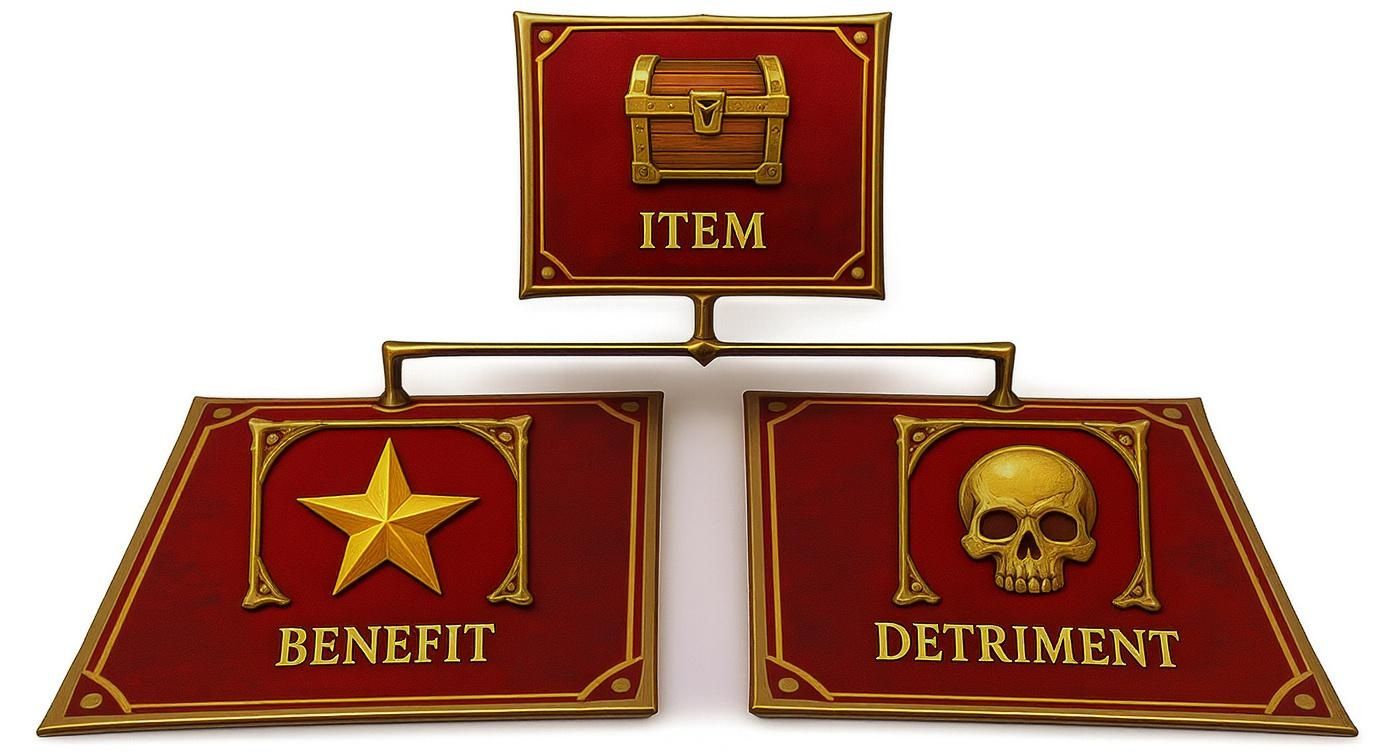
The image above gets to the very heart of it: every draw is a coin toss between a game-changing boon and a campaign-derailing disaster. For every taste of glory, there's an equal and opposite catastrophe lurking just a shuffle away.
Some cards are the stuff of legend. They are the answers to a character's desperate prayers, the kind of reward that makes an impossible risk feel worthwhile. When one of these lands on the table, it feels as though the gods themselves are smiling upon you.
Just as the Deck can build a hero up, it can tear them down in a heartbeat. These cards are the omens of disaster, the curses that can completely derail a character's life. Pull one of these, and your adventure is about to take a very dark turn.
Not every card brings triumph or despair. Some just… happen. They represent a change in fortune that isn't inherently good or bad, but will absolutely change your path.
To give you a clearer picture of the stakes, here’s a quick look at some of the most dramatic swings the Deck can deliver.
| Beneficial Card | Potential Boon | Detrimental Card | Potential Curse |
|---|---|---|---|
| The Fates | Erase one event from history. | The Void | Your soul is imprisoned, leaving your body an empty shell. |
| Moon | Gain 1d3 wish spells. | Skull | You must fight an avatar of death to the death. |
| Sun | Gain 50,000 XP and a wondrous magic weapon. | Talons | All your magic items are destroyed. |
| Throne | Gain a keep and proficiency in Persuasion. | Ruin | Lose all worldly wealth and possessions. |
| Knight | A loyal 4th-level fighter swears fealty to you. | Rogue | A trusted ally becomes your sworn enemy. |
As you can see, the outcomes aren't just minor buffs and debuffs; they're narrative earthquakes. That is the true magic of the Deck.
Drawing from the Deck of Many Things is an act of supreme faith in destiny. It's a truth that echoes in many great tabletop games, from the strategic gambles in Gloomhaven to the unpredictable event cards in Arkham Horror. Each draw is a story.
This deep sense of consequence is something we truly admire. The raw feeling of a single card dictating the next chapter of an epic tale is a magic that has inspired countless creators, including ourselves. We’ve sought to capture that same narrative weight in our card game for ages 12+, TerraClash, where your choices shape the world around you. Knowing what's in the Deck of Many Things is just the first step; next, you must figure out how to handle its beautiful chaos in your own campaign.
So, you are thinking about dropping the Deck of Many Things into your world. Excellent. It is a legendary artefact for a reason, but be warned: it demands a steady hand from the Dungeon Master. Using it is a delicate dance between fate and chaos, and you are the one leading the steps.
Before anyone even thinks about touching a card, you must lay down the ground rules. A player must declare, out loud, exactly how many cards they plan to draw. Once they say that number, their fate is sealed. They must draw that many. There is no backing out once the pact with destiny has been made.
And the effects? They are absolute. Most of the time, they are permanent. When a card is drawn, it vanishes from the deck, its magic spent. The consequences, whether a jaw-dropping boon or a soul-crushing curse, are instantly woven into the fabric of reality. This is not a video game with a reload button. That finality is what gives the Deck its terrifying, thrilling power.
So, how do you introduce something this monumental? Do not just toss it in a random treasure chest. The Deck's appearance should feel like a major event, a true turning point in your story.
Here are a few ways to give it some real weight:
Each of these methods gives the Deck context. It stops being just another piece of loot and becomes a genuine test of character, a central plot device that forces your players to make a truly meaningful choice.
The real test of a DM comes after the cards are drawn. One minute, your fighter is homeless; the next, they own a fortress. Your wizard might suddenly lose their soul, or the whole party could gain a powerful new enemy. Do not see these as campaign-breakers. See them as campaign-makers.
Every draw, for good or ill, is a seed for a new story. The warrior who gains a keep must now contend with politics and rivals. The party whose wizard has their soul stolen now has their most urgent quest yet: finding it. The Deck doesn't break stories; it forges new ones in the fire of chaos.
This kind of adaptability is a skill every tabletop gamer learns over time. It is all about taking an unexpected turn and weaving it into a compelling narrative, a principle that feels familiar to anyone who has navigated the shifting strategies of deck-building games where every draw changes everything. The key is to lean into the pandemonium and let it fuel your world's next great saga.
The real magic of the Deck of Many Things isn’t in its rules, but in the legends it leaves behind. Across countless tables, one little draw has turned humble adventurers into kings and brought mighty heroes to their knees. These are the chronicles whispered in taverns, the stories that serve as both inspiration and dire warning for anyone bold enough to test their luck against fate itself.
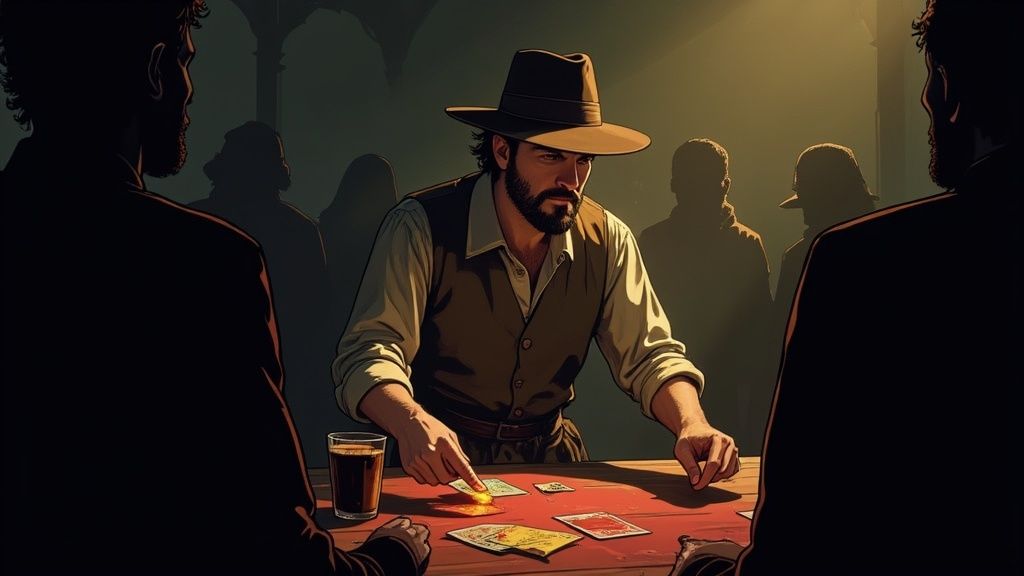
Just picture it: a rogue, down on their luck and haunted by past failures, pulls The Sun from a freshly discovered deck. In a flash of golden light, a sentient blade materialises in their hands, its hilt warm to the touch. This isn't just a powerful weapon; it's a companion, a guide, and the key to a forgotten prophecy. Suddenly, our rogue is no longer a shadow in the alleyways but a chosen hero, destined to turn the tide of a brewing war.
That single draw completely reframes a character’s personal journey, placing it at the very centre of the main quest. This is the Deck at its most brilliant—not just handing out loot, but forging destiny.
Of course, for every tale of glorious fortune, there’s a darker one lurking in the shadows—a story of profound loss that spirals into an even greater adventure. Imagine a barbarian, a titan on the battlefield whose strength is legendary, drawing The Void. In a silent, chilling moment, their soul is ripped from their body, leaving behind a listless, empty shell. The campaign’s current objective is immediately forgotten, tossed aside for a far more personal crisis.
The party now has a new, desperate purpose: to journey across the planes, bargain with cosmic entities, and face unimaginable dangers just to retrieve their friend's very essence. The barbarian's curse becomes the party's epic quest.
A draw from the Deck is never just a mechanical outcome; it is a narrative catalyst. The Void doesn't end a character's story—it begins a brand new, far more compelling one for the entire party.
This is the secret to managing the Deck's chaos. A curse is simply a story hook in disguise, a sudden plot twist that injects urgency and high emotional stakes into the campaign. It tests the bonds of the party and forces them to confront challenges they never saw coming.
Sometimes, the most memorable stories don’t come from the grandest boons or curses, but from the smaller, more personal shifts in fate. Consider the tale of a loyal paladin who draws Rogue. Their most trusted companion, a fellow adventurer they’ve shared countless battles with, suddenly turns against them with an inexplicable hatred. The party is fractured, trust is shattered, and a new, deeply personal enemy is born from the ashes of friendship.
This kind of outcome creates incredible roleplaying opportunities. Why did the ally turn? Is there a way to break the curse? These questions can fuel months of in-game drama and intrigue. It’s this potential for creating compelling, character-driven narratives that makes the Deck so legendary. For more inspiration on weaving these events into your game, you can find a wealth of D&D campaign ideas that can help you turn any card draw into an unforgettable adventure.
Ultimately, these stories show that the Deck of Many Things is a masterclass in narrative design. It’s a tool for creating the kind of emergent, player-driven stories that make tabletop games so special. It's this very spirit of unpredictable, fate-driven adventure that inspires countless other games, including our own card game, TerraClash, where every card played shapes the world and forges a unique legend.
The true power of the Deck of Many Things isn't just the physical item in the game; it's the idea behind it. It represents pure, unadulterated chance with consequences that can rewrite a character's story or even the world itself. For anyone crafting their own games, worlds, or house rules, the Deck is a masterclass in designing moments that players will talk about for years.
This is the kind of thinking that fuels the indie tabletop scene—taking a classic concept and giving it a fresh twist. It’s the very spirit guiding our own card game, TerraClash. Let us dig into how you can borrow that spark from the Deck and fan it into a flame that is uniquely yours.
The standard Deck is a fantastic agent of universal chaos, but what if you could tailor that power to fit your campaign's specific flavour? By creating a custom deck, you can weave its magic directly into the lore and atmosphere of your world, making the whole experience far more personal and immersive.
Just imagine some of the possibilities:
Building a themed deck gives you control over the kind of chaos you unleash. It makes sure that even the most random draw feels like it belongs in the story you and your players are telling together.
When you start designing your own cards, the secret is to keep that thrilling balance between high risk and high reward. For every card that offers a game-changing benefit, you need another with a potentially devastating drawback. That's the tightrope walk that makes the original so legendary.
Try to think beyond simple mechanical bonuses, too. Your cards should be story prompts. Instead of a bland "+2 to Strength," what about a card that says, "You gain the might of a giant, but your shadow now moves with a will of its own"? That immediately creates a new mystery and a fascinating narrative hook for the party to tug on.
The appetite for high-end, engaging accessories like this is undeniable, as many crowdfunding campaigns have shown. You can read more about how physical tarot cards for 5e captured players' imaginations. This trend proves that players truly value tactile, story-rich elements in their games.
A custom deck is more than just a homebrew magic item; it’s a statement about your world. It reflects the powers at play, the nature of its magic, and the kind of stories that can happen there.
This principle—taking a core idea and making it personal—is what drives so many of the incredible indie projects you see on platforms like Kickstarter. It’s a celebration of creativity, turning a simple game into a unique, shared story.
And there you have it. We have journeyed through the chaos of the Deck of Many Things, from its dark origins to the jaw-dropping power held in each card. We've talked strategy, weighed the risks, and hopefully given you the tools to handle this legendary artefact, whether you're a player reaching for it or a DM sliding it across the table.
At the end of the day, the Deck is more than just a magic item. It's a story engine, a pure, unfiltered shot of the glorious randomness that makes D&D so unforgettable.
If there's one piece of advice to take away, it's this: lean into the madness. The best D&D stories, the ones your group will talk about for years, rarely come from playing it safe. They're born from that one, wild decision. The Deck of Many Things doesn't just create a moment in your campaign; it creates a legend.
That same spark of creativity is what keeps our hobby alive and kicking, especially in the incredible work coming from indie creators. If you love the thrill of discovering something new, I can't recommend enough exploring the amazing board games and card games being brought to life by small studios. Supporting a project like Frosthaven on Kickstarter or picking up a new indie title like Root is how we, as a community, make sure the magic of tabletop gaming keeps finding its way to new players and new tables.
Even the most learned wizard or canniest rogue hesitates before an artefact like the Deck of Many Things. It is only natural to have questions when your very existence is on the line. Let's clear up a few of the most common ones I hear around the table.
They absolutely can, and often should! Drawing from the Deck of Many Things is a conscious, voluntary act. A player has to state out loud how many cards they intend to draw before they even lay a finger on the deck.
You cannot be pushed into it, and no amount of persuasion from a warlock's patron can force your hand. The magic itself seems to require your willing participation. As a DM, it is crucial to honour this; the power of the moment comes from the player making the choice, not from being tricked into it.
In a single session with one deck? It is impossible. Once a card's magic is unleashed, the card itself vanishes into nothingness. Poof. Gone.
It will not reappear until the entire deck is somehow reformed, which is the stuff of epic, plane-spanning quests. This means every single draw is a unique, one-time event, adding to the sheer tension of it all.
This is the big one, is it not? The secret is to stop thinking about game balance and start thinking like a storyteller. The Deck isn't something you control; it's something you react to.
When a player draws The Void and their soul is snatched away, that's not the end of their character. That is the start of an incredible new quest: "Operation: Rescue a Soul from an Unknown Prison Plane." If they draw The Keep, they don't just get a castle; they get the grumpy neighbours, the local goblin problem, and a hefty tax bill.
Every card, whether it feels like a blessing or a curse, is a plot hook. It is your job to weave that sudden, chaotic twist into a new and exciting chapter of the campaign. Instead of breaking your story, let the Deck's chaos become the catalyst for the next story.
We live for that heart-pounding moment when a single draw can change everything. It's the core feeling we've channelled into our own card game, TerraClash, a project launching on Kickstarter very soon, where your choices shape an ever-changing world. If you thrive on stories shaped by fate and choice, come see what we're building over at https://terraclash.co.uk and perhaps consider joining our quest. You may also find other great indie projects on Kickstarter to support.

