Gather 'round, adventurers, and let me tell you a tale. It’s a story whispered in hushed tones in the darkest corners of taverns and the most hallowed halls of magic. It speaks of an artifact with the power to grant your wildest dreams or to utterly destroy you with the flip of a card. This, my friends, is the Deck of Many Things 5e.
In the wide, weird world of Dungeons & Dragons, there are few magic items that inspire as much raw awe—and sheer terror—as the Deck of Many Things. It's the ultimate game of chance, a legendary item that can send your campaign spiralling into glorious triumph or spectacular ruin. More than just a collection of powerful enchantments, it's a direct challenge to destiny, promising a story that no one at the table will ever forget.
Think of this guide as your own personal sage, here to pull back the curtain on this infamous deck. We shall delve into its mysterious origins, break down the powerful magic trapped within each card, and speak of how to handle its magnificent chaos as a Dungeon Master. So, steel thy nerves. Learning of the Deck is the first step; daring to use it is another thing entirely.
What makes the Deck so compelling? It's that gut-wrenching, exhilarating feeling of pure, unadulterated chance. It’s the same thrill you get when you pull the one card you need to win a game, or when you’re praying for a good roll in a desperate fight. The Deck of Many Things bottles that lightning.
It doesn’t matter if you’re a grizzled veteran or just starting out; the dance between risk and reward is a feeling every gamer understands. If you are new to the table and wish to get your bearings, our guide on D&D for beginners is a fine place to start your own adventure.
The Deck of Many Things is more than an item; it’s an event. It’s a challenge to the players and the Dungeon Master to embrace chaos and build a new story from the pieces, whatever they may be.
This idea—this raw, unpredictable potential—is the lifeblood of so many great games. You can see its spirit in countless modern board games and indie projects, that same spark of daring and destiny that fuels new creations, including fantasy adventures like TerraClash.
Picture this: you hold in your hands a small, unassuming deck of cards. But it is not for a game of chance – it is chance. This is the Deck of Many Things, a legendary D&D artefact that’s less a magic item and more a direct line to the forces of chaos.
Its power is beautifully, terrifyingly simple. A player decides how many cards they shall draw, and once they start, there’s no backing out. Each card pulled unleashes an immediate, permanent, and often reality-shattering effect. One card might grant you a castle. The next could literally rip your soul from your body and imprison it god-knows-where. This isn't just a gamble; it's a conversation with fate itself, and fate does not always play fair.
Now, not all Decks of Many Things are created equal. It generally comes in two flavours. Most groups will encounter the classic 13-card deck, which is more than enough to turn a campaign on its head. But for the truly brave (or foolish), there’s a rarer, more potent 22-card version, packed with even more spectacular rewards and soul-crushing punishments.
Deciding which version to use is a classic Dungeon Master's dilemma. My own experience, and what I have seen in the realm's bustling D&D scene, suggests that a vast majority of DMs stick to the 13-card version. It's the perfect tool for injecting a shot of high-octane chaos without completely derailing a long-running story. The full deck? That is for when you are ready to potentially set your entire world ablaze. It's a choice that says a lot about the culture of tabletop role-playing games and how much a group is willing to risk for a great story.
No matter the size, the core rule is ironclad: the magic is binding, and the results are absolute. This is what gives the deck its fearsome reputation. It’s a legend-maker and a campaign-ender, all in one neat little stack.
To truly get a sense of what you're dealing with, let us put the two versions side-by-side. Think of it as choosing between playing with a firecracker and juggling sticks of dynamite.
| Feature | 13-Card Deck (Standard) | 22-Card Deck (Full) |
|---|---|---|
| Risk Level | High | Extreme |
| Composition | A curated mix of seriously good and devastatingly bad outcomes. | All 13 standard cards, plus nine more that often bend the very rules of reality. |
| Narrative Impact | Can dramatically alter a character’s path or the party's current quest. | Can fundamentally rewrite the campaign, altering history, power dynamics, and the world itself. |
| Common Use | A fantastic choice for DMs who want a thrilling twist that’s still somewhat manageable. | Usually reserved for high-level play, one-shots, or campaigns where total chaos is the main event. |
Ultimately, both decks tap into that core fantasy of high-stakes, game-altering power. It's the same kind of thrilling uncertainty that makes modern deck-building games so addictive, where one lucky draw can completely define your strategy. The legacy of the Deck of Many Things is alive and well in indie games that carry this torch, and you can see its spirit in adventures like the ones promised by TerraClash.
Right then, let us look at what is truly inside this infamous deck. This is where the magic, and the mayhem, truly begins.
So, you are ready to see what destiny has in store? Good. Every single card in the Deck of Many Things isn't just a piece of enchanted parchment; it's a potential story, a new chapter in your adventurer's life written in a split second. There's no turning back once a card is drawn.
We are going to break down all 22 cards, from the soul-shattering terror of The Void to the reality-warping power of The Moon. Think of them as falling into three loose piles: the ones that bring unbelievable fortune, the ones that bring absolute ruin, and the ones that just throw a spanner in the works of reality itself.
To get a sense of the power a Dungeon Master wields, take a look at the two classic ways this deck can appear in a game.
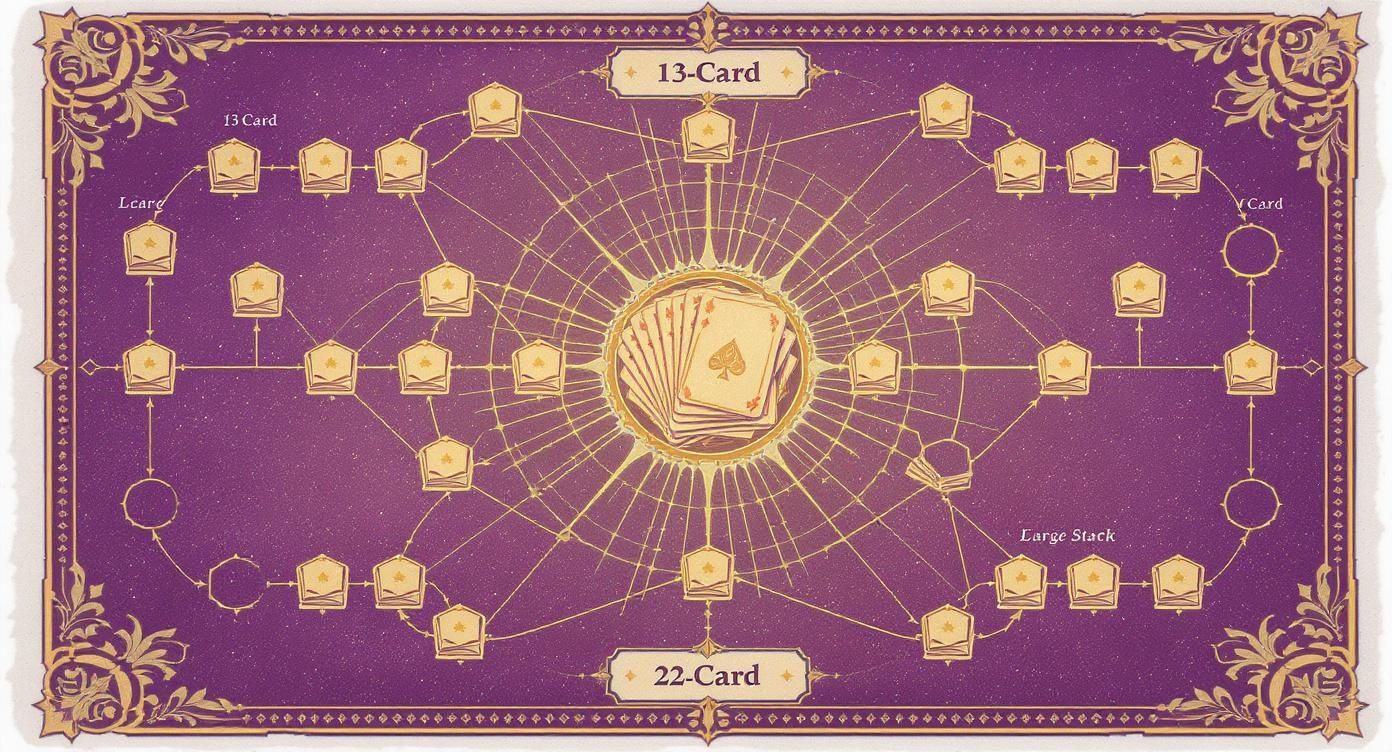
This truly gets to the heart of the choice a DM must make. Do you introduce the focused chaos of the 13-card version, or do you unleash the world-breaking potential of the full 22-card set?
Let us dive into each card and the fate it carries.
These are the cards you pray for. Drawing one of these is the stuff of legend, the kind of moment that can turn a struggling adventurer into a hero of the realm overnight. They are all about wealth, power, and a bit of divine favour.
Of course, for every dream, there's a nightmare waiting in the wings. These are the cards of ruin, the draws that can tear a character's life apart. Pulling one of these is to invite utter tragedy.
To draw from the Deck is to accept that ruin is as likely as reward. The cruelty of a bad draw is what makes the good ones feel so triumphant. It is the core of the gamble.
Some cards are not purely good or bad. They are agents of pure chaos, narrative hand grenades that change the rules and send the campaign spinning off in a wild new direction.
Drawing one of these is like that heart-stopping moment in a great indie board game when a single card flip changes everything. It’s that same thrill of strategic chaos that powers new projects like TerraClash, where every single draw can rewrite the board.
Here are the cards that reshape the story:
So, you wish to drop the ultimate agent of chaos into your campaign? It is a bold move, and one that can create stories your players will speak of for years. The Deck of Many Things 5e is pure narrative dynamite. Handled with care, it forges legends. Handled carelessly, it will blow your campaign to smithereens.
This guide is for you, the storyteller behind the screen. I am here to give you the forbidden knowledge you need to handle this potent artefact. Because introducing the deck isn't just about dropping a magic item in a treasure chest; it's about inviting raw, unfiltered destiny to pull up a chair at your table.
Timing, as any good storyteller knows, is everything. The Deck isn't some trinket for first-level adventurers still figuring out which end of the sword to hold. It is a test for seasoned heroes, the kind who think they have seen it all.
Think about dropping the deck at these pivotal moments:
The key is to make its appearance feel momentous. It should never be found tucked away in a dusty old barrel. It should be discovered, earned, or offered when the stakes are at their absolute highest.
Once a card is drawn, there is no going back. The world is different now. Your job as the DM is to be the steady hand that guides the storm, not the one who tries to cancel the weather forecast. If a player draws The Void, their character's soul is ripped from their body. Do not cheapen it. Honour the draw. The new adventure is the quest to get it back.
If someone draws Throne, they suddenly own a castle and have a title. Do not just hand-wave this! Make it real. Give them responsibilities, political rivals, and a leaky roof in the west tower. These consequences are not campaign derailments; they are the new campaign.
Embrace the chaos. The most memorable stories aren't the ones that go to plan. They're the ones that spiral into glorious, unpredictable new territory. The Deck is your greatest tool for making that happen.
The cultural impact of this item is undeniable, especially in how it pushes players to embrace genuine risk. This was explored brilliantly in a recent video which looked at why the Deck of Many Things resonates so strongly with players and its wild effect on campaigns. It showed a fascinating blend of caution and "go on then," a desire to see what fate holds, which truly gets to the heart of the whole tabletop experience.
While the deck is a raw force of magic, you are still the master of your world. You have the power to temper its chaotic nature with a few well-placed house rules, tailoring the experience to your group's appetite for mayhem. You are not breaking the rules; you are reforging them to fit your table.
Here are a few variants I've seen work well:
This kind of customisation is truly the spirit of modern card games. It’s all about understanding the core mechanics and then building something unique on top of them. For anyone intrigued by the art of game design, our guide on how to play card games offers some great insights into that kind of strategic thinking.
This flexibility lets you wield the deck's incredible power without becoming its victim. It's a balance of chance and control that defines the very best tabletop experiences, from a simple dice roll to the deep strategy in games like TerraClash.
That heart-stopping moment just before a card is revealed—the core thrill of the Deck of Many Things—is a feeling that reaches far beyond the high-fantasy worlds of Dungeons & Dragons. It's woven into the very DNA of tabletop gaming. It’s that delicious, terrifying uncertainty of a single draw that can completely upend an entire campaign.
This little spark of magic is what keeps us all leaning over the table, holding our breath. You can feel the same tension in modern deck-building games, where your fate is shuffled into a stack of cards and dealt out one hand at a time. The spirit of the draw is alive and well.
Just think about the exquisite tension in a game like Gloomhaven when you flip an attack modifier, praying it isn't the dreaded "miss." Or consider the brilliant strategic gamble in digital deck-builders like Slay the Spire, where every card you add to your deck is a calculated risk that reshapes your entire run.
These games, and countless others, perfectly capture what makes the Deck of Many Things so magnetic. They prove that true engagement comes from meaningful choices mixed with a healthy dose of pure, unscripted chance. It’s a design philosophy that has become a cornerstone of the tabletop world, fuelling so many beloved indie titles.
The spirit of the deck isn't just about chaos; it's about the promise that the very next card you draw could be the one that turns a hero into a legend. This blend of strategy, luck, and narrative consequence is the lifeblood of any truly memorable gaming experience.
The appetite for these kinds of tactile, high-stakes moments is stronger than ever. A recent crowdfunding campaign for a physical, animated version of the Deck of Many Things saw its premium tier become a massive hit with gamers clamouring for the set. It just goes to show how much we appreciate items that bring the magic of the game to life. You can read more about the incredible demand for these collectible D&D accessories.
This legacy of risk and reward continues to fire up a new generation of game designers. You see it all the time on platforms like Kickstarter, where ambitious projects try to capture that same lightning in a bottle. They're building on the foundations laid by titans like D&D, exploring fresh mechanics and entirely new worlds.
These modern games are carrying the torch, reminding us why we first fell in love with shuffling a deck and hoping for the best. For anyone who enjoys the strategic puzzle of building the perfect hand, you might want to check out our deep dive into the mechanics of popular fantasy card games.
games like the fantasy adventure TerraClash, aimed at players aged 12 and up, are set to continue this grand tradition. They blend the thrill of the unknown with real strategic depth, proving that the simple act of drawing a card remains one of the most powerful and captivating experiences gaming has to offer. It’s in these new worlds that the next tabletop legends will be forged.
We have travelled together through the myths and madness of the Deck of Many Things, from its wild origins to the indelible scars it leaves on our campaigns. Its power is something you cannot ignore. This isn't just another magic item to be found and forgotten; it's a story bomb waiting to go off, a catalyst for the kinds of legends that get told for years to come.
It takes guts to use this deck. Real guts. Whether you're the player staring down that first draw, heart pounding, or the Dungeon Master about to unleash this beautiful chaos onto your world, you are making a choice. The cards are not the end of a story; they are the explosive start of a whole new, unwritten chapter.
Always remember that the real magic of the deck isn't in the wishes it grants or the devils it summons. It's in the unforgettable, off-the-rails stories it creates. It's the ultimate reminder that in these fantasy worlds we build, the best moments often spring from the wildest risks. That feeling—of discovery, consequence, and a little bit of terror—is the very soul of roleplaying.
You see that same spark in the clever design of so many indie board games, from well-loved classics to the next big thing on Kickstarter. It’s what makes ambitious fantasy games like TerraClash (designed for ages 12 and up) so compelling; they capture that same spirit of high risk and high reward, inviting a new generation to shape their own epic sagas.
To draw from the Deck is to agree to a story without knowing the ending. It's a leap of faith, a trust in the collaborative tale you and your friends are telling, and a promise to see the adventure through, no matter how strange it gets.
So, as you stand there on the edge, card in hand, take a breath. May your draws be bold, may your nerve hold true, and may the stories that follow be ones worth singing about.
Even seasoned adventurers get sweaty palms when the Deck of Many Things hits the table. It’s an artefact that bends reality, so it’s only natural to have a few questions about how it all works. Let’s clear up some of the most common queries that pop up when fate comes knocking.
So, you’ve boldly declared you’ll draw three cards. The first is The Fates, awesome! The second is The Void… not so awesome. Can you just… stop?
The short answer is a hard no. Once you state how many cards you're drawing, a powerful compulsion magic kicks in. You have to follow through. There’s no backing out, no take-backs, no saying you were just kidding. This is what makes the Deck so terrifying and thrilling; the moment you commit, your destiny is locked in.
Let's say a player draws the Donjon card and vanishes. The party, in a desperate move, decides the only way to get them back is to destroy the Deck itself. Can they do that?
Absolutely, and it’s a brilliant story hook. Destroying the Deck of Many Things is no easy feat, mind you. It's a legendary artefact, so you'd be looking at a proper quest – maybe it needs to be thrown into the volcano where it was forged, or un-woven thread by magical thread on an outer plane.
If they succeed, the magic of every card ever drawn from that specific deck is instantly reversed. That terrible fate? Undone. It’s a fantastic way to turn a moment of catastrophic bad luck into a high-stakes adventure for the entire party.
As the Dungeon Master, you are the master of your own universe. While the Dungeon Master’s Guide gives you the classic 13 and 22 card versions, you should feel empowered to create your own. This is where you can truly make the Deck your own.
A custom deck is a Dungeon Master's signature on the world. It allows you to control the flavour of chaos you wish to introduce, tailoring the ultimate gamble to fit the unique story unfolding at your table.
Maybe you want a slightly less world-ending version for a lower-level party. A common and wise move is to simply remove the most extreme cards, like Donjon and Void. This keeps the high-stakes fun without risking a TPK (Total Party Kill) from a single draw.
Or you could go the other way entirely!
The spirit of customisation and strategic play is exactly what makes tabletop gaming so special. It's the same energy that fuels exciting indie tabletop games like TerraClash, where every choice you make carves out your own unique adventure.
The thrill of drawing from a deck that shapes your destiny is a cornerstone of tabletop gaming. At TerraClash, we are crafting an entirely new fantasy adventure built on that same foundation of strategy, chance, and epic storytelling. Follow our journey towards Kickstarter here.

