Hark, adventurer, and listen well. For we shall speak of an artefact whispered about in hushed tones, a catalyst of cosmic chance known as the Deck of Many Things. Even uttering its name sends a shiver down the spine of veteran Dungeon Masters and a thrill through the most daring players. This is no mere magic item; it is a legend, a force of pure, unadulterated chaos that can rewrite a hero's destiny with the turn of a single card.
With one draw, entire campaigns can be derailed, new legends forged, or a hero’s journey brought to a sudden, tragic end. It is the ultimate gamble, and its siren call is nigh impossible to resist.
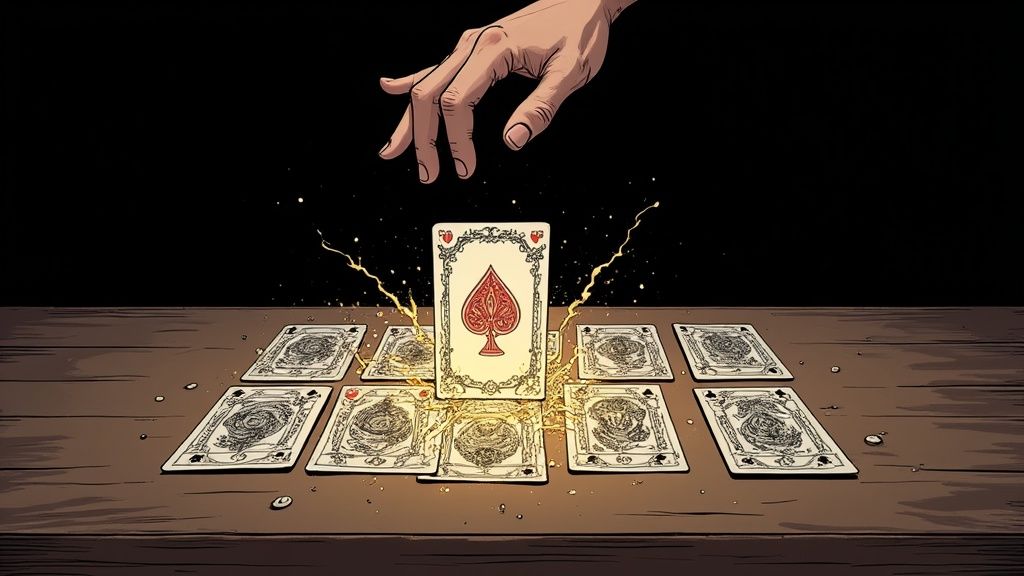
So, what is this revered and feared artefact? Forget simple enchanted trinkets. The Deck of Many Things is a vessel of raw, untamed magic, a crucible where fortune and calamity are locked in a dangerous, inseparable dance.
Think of it as a tangible challenge from the cosmos itself. Drawing a card might grant you a wish, shower you in gold, or even undo a past tragedy. But the other side of the coin is just as potent. It could steal your soul, erase your mind, or summon a literal grim reaper to hunt you to the ends of the earth. Its reputation is built on the hushed whispers you hear in tavern corners—stories of nobodies who became kings overnight and mighty heroes who simply vanished, their tales left unfinished.
At its heart, the Deck is the purest expression of high-stakes gameplay. It forces a simple, yet profound, question upon every player who finds it: how much are you willing to risk for a shot at greatness? This razor-thin balance between awesome power and devastating ruin is precisely what makes it one of the most exciting, and terrifying, items a Dungeon Master can introduce to a campaign.
The Deck’s true power isn't just in the magical effects of its cards. It is a narrative grenade. It generates the kind of moments that your players will speak of for years to come. It is a force of nature that cannot be planned for or controlled, capable of birthing new adventures from thin air. Should you be at the start of your own grand journey, our D&D beginner's guide can help you find your footing before you face such chaos.
To draw from the Deck is to surrender to destiny. It's an act of supreme bravery or ultimate folly, and the line between the two blurs with every card that's turned. The only certainty is that things will never be the same again.
This thrilling idea—embracing the unknown for game-changing results—is a cornerstone of what makes tabletop gaming so special. The chaotic spirit of the Deck lives on in modern deck-building games and countless indie projects that dare to put fate squarely in the players' hands. You can see its influence in games like TerraClash, which captures that same spirit of randomised elements to ensure no two adventures are ever the same.
The Deck of Many Things is a stark reminder that at the heart of every great fantasy story is a moment of pure, unpredictable magic. For any player or DM looking to harness its chaotic power, understanding its true nature is the first, crucial step toward creating a truly unforgettable tale.
So, you’ve found a Deck of Many Things. Before you dare to tempt fate, you must understand exactly what you’re trifling with. Each card is a sliver of cosmic power, a fragment of pure magic that can grant legendary boons or unleash curses that will haunt you for eternity. Let this be your guide to the reality-shattering effects packed into this unassuming collection of cards.
To truly grasp this deck, you must appreciate its infamous reputation. Its chaotic nature has fuelled countless moments of high drama at gaming tables across the realms. The Deck of Many Things is a legendary agent of narrative chaos. In fact, you'll find it cropping up in many campaigns that feature high-powered magic items.
What's fascinating is how different adventurers approach it. Many prefer the slightly more manageable chaos of the 13-card version. But there are always those daring souls who dive headfirst into the full 22-card pandemonium, chasing that ultimate high-risk, high-reward story. For some grand animated explainers of the cards, see what the scribes at Geek Native have put together.
This humble deck taps into a core desire for genuine unpredictability. It’s a spirit you see echoed in many modern deck-building games and indie projects, like TerraClash, which seeks to capture that same thrilling sense of the unknown in every match.
Some cards offer gifts that most mortals only dream of—rewards for those brave, or perhaps foolish, enough to draw. These are the whispers of hope that lure adventurers in, dangling the promise of power, wealth, and a second chance at life.
For every glimmer of hope, the Deck holds an equally deep shadow of despair. It plays no favourites, and its curses are just as absolute as its blessings. These are the cards that have ended heroic careers and shattered even the most powerful adventuring parties.
To draw a card is to accept that your story may not have the ending you envisioned. It might end right here, in a flash of cosmic judgment, or take a turn so dark you'll wish it had.
When you’re staring down the Deck, it helps to have a quick idea of what’s at stake. This table breaks down some of the most dramatic cards, showing the fine line between triumph and disaster.
| Card Name | Potential Boon (Good Fortune) | Potential Bane (Ill Fortune) |
|---|---|---|
| Vizier | Grants the answer to one question, providing powerful, divine knowledge to overcome a future challenge. | Not applicable; this card is purely beneficial, though the knowledge gained can be a burden. |
| The Fates | Allows you to erase one event from history, good or bad. You can undo a tragic mistake or avert a disaster. | Not applicable; this powerful ability comes without a direct curse, but altering the past can have unforeseen consequences. |
| Flames | A powerful devil becomes your sworn enemy, hunting you relentlessly until one of you is destroyed. | This card has no boon; it creates a powerful, recurring antagonist for the entire party. |
| The Fool | You lose a massive amount of experience points, but you get to draw one additional card. | A double-edged sword. It sets you back but offers another chance at a great reward. A true gamble. |
| Talons | All your magic items disintegrate into dust. Unlike Ruin, it only affects magical gear, but for some characters, this is a fate worse than death. | Purely negative; this strips a character of the very tools that define them. |
| Skull | A grim reaper-like avatar of death appears and you must fight it to the death, alone. | The ultimate test of survival with no direct boon. Winning merely means you get to live. |
Of course, the other cards offer their own unique twists of fate. Balance will forcibly shift your alignment, turning a noble paladin chaotic or a cynical rogue lawful. Comet grants you a level-up, but only if you single-handedly defeat the next monster you face. Euryale slaps you with a permanent, nasty curse. The Idiot strips away your intelligence but offers the tantalising chance to draw again. And finally, the Jester offers either a pittance of experience or the choice to draw two more cards, forever preying on the greedy.
Every single pull from the Deck of Many Things 5e is a new story just waiting to happen. The only question is whether you'll be around to tell it.
Interfering with an artefact like the Deck of Many Things is no casual game of cards; it is a ritual governed by ancient, unbending laws. The raw magic woven into each card follows a strict set of rules that dictate how its incredible—and often terrible—power is unleashed.
If you are a Dungeon Master looking to drop this chaos bomb into your campaign, or a player foolishly brave enough to draw, you must understand these mechanics. The entire experience hinges on one single, crucial decision made before any card is even touched.
First, you absolutely must declare how many cards you intend to draw before you pull the first one. This is no mere suggestion; it is a binding contract with fate itself. Whether you choose one card or five, that decision is locked in.
Once you have spoken the number, the wheels of destiny are in motion. There is no backing out, no changing your mind after a disastrous draw, and no stopping until you've pulled every last card you committed to. This simple rule is what makes the act of drawing so incredibly tense and dramatic.
This idea of committing to a play is a core principle in many great fantasy card games. Understanding the fundamentals is the key to any good strategy, whether you're staring down cosmic destiny or just your friends across the table. For anyone wanting to brush up on their skills, you can learn more about how to play card games and get a solid footing for any tabletop challenge.
Each card you draw is a self-contained, immediate event. The moment a card leaves the deck, its effect happens. Instantly. There are no delays, no saving throws to dodge the magic (unless a card specifically says so), and zero time to prepare for what's coming. The effect of one card resolves completely before you even think about drawing the next.
This means you could gain a keep with one pull, only to have your soul whisked away to an extraplanar prison with the next. The cards are only shuffled back into the Deck once all your declared draws are finished, resetting the chaos for the next brave soul. And if something happens that stops you from drawing—like the Donjon card trapping you in a state of suspended animation—any remaining draws you declared are lost.
Ultimately, the Dungeon Master has a choice: present the party with a 13-card deck, or the full, wildly unpredictable 22-card version.
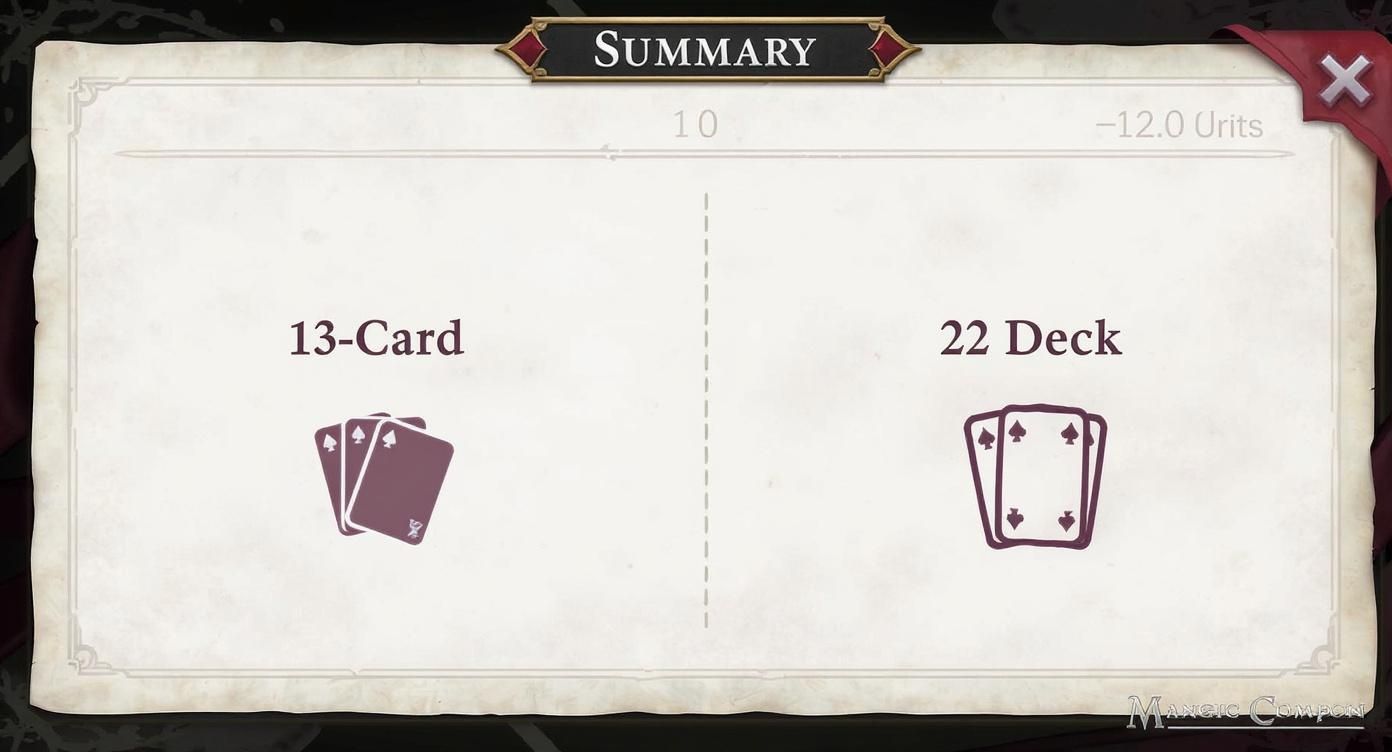
This decision massively shifts the odds, with the 22-card deck throwing far more bizarre and reality-bending outcomes into the mix.
Once you touch the Deck, you belong to it until your declared draws are done. Your fate is no longer your own; it is written on the cards yet to be turned. This is the solemn law of the Deck of Many Things 5e.
So, you are thinking about unleashing the Deck of Many Things on your unsuspecting players. For a Dungeon Master, this item isn't just another piece of loot; it’s a stick of narrative dynamite. Handle it carelessly, and you could blow your entire campaign to smithereens. But use it with foresight, and you can create the kind of legendary, jaw-dropping moments that players talk about for years.
The trick is to make its appearance feel earned, not just a random drop in a goblin’s hoard. Foreshadow it. Weave its legend into the world through hushed tavern tales, cryptic prophecies, or dusty old tomes that speak of an artefact that holds the power to rewrite fate itself. By building this mystique, you turn the simple act of drawing a card into a genuinely tense, climactic event.
The moment a player draws a card, your real work begins. The consequences are often instant, dramatic, and can completely alter the course of your story. A hero might be whisked away to another plane, gain godlike power overnight, or find themselves with a new, very angry devil for an enemy. Your job is not to prevent this from happening – it is to weave the chaos into a compelling new story.
This is where your skills as a storyteller are put to the ultimate test. For a deeper dive into managing these kinds of complex narratives, our comprehensive Dungeons and Dragons Dungeon Master guide is an absolute lifesaver.
Let us be honest: the raw, unfiltered power of the Deck of Many Things 5e can be a bit much, especially for a long-running campaign where you've all invested so much in the story. Never feel chained to the rules as written. You are the final authority on how magic works in your world, so feel free to tweak it.
For instance, maybe instead of trapping a character's soul in an unknown prison, The Void card places their soul inside a locket that a party member is carrying. The stakes are still incredibly high, but now there's a tangible path to fixing it. This turns a potentially frustrating, game-ending moment into a thrilling challenge.
Many seasoned Dungeon Masters admit to modifying the Deck’s effects to sidestep a campaign catastrophe. It’s all about finding that sweet spot between chaos and cohesion.
Remember, your goal is not to protect a perfectly planned plot. It is to help create an unforgettable story. The Deck is your tool for injecting a dose of true, untameable magic.
So go on, embrace the chaos. By hinting at its arrival, reacting to the fallout, and fine-tuning its effects to suit your game, you can transform a simple deck of cards into the stuff of legends.
The true magic of the Deck of Many Things isn’t found in its item description. It is measured in the stories told around the tavern fire long after the game has ended. As a Dungeon Master, I’ve seen this simple prop produce some of the most memorable, unscripted moments of brilliance you could ever hope for. These are just a few tales of the brave, and the foolish, who dared to draw.
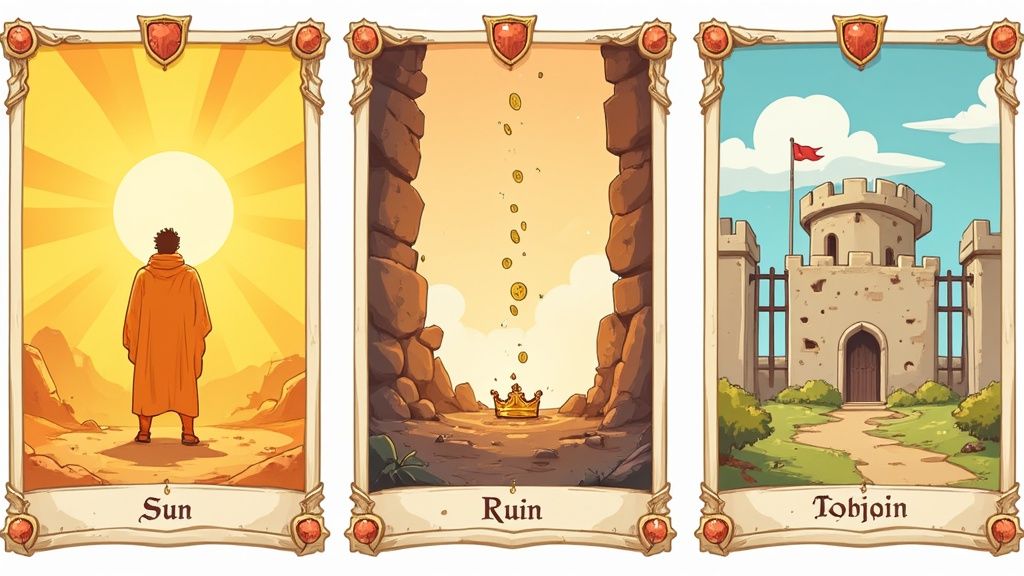
I’ll never forget a wily rogue named Finn. He was a classic case—pockets perpetually empty, luck always running sour. With a hand that visibly trembled, he drew a single card. The Sun. In a flash of brilliant light, he suddenly had a mountain of experience points and a legendary magical dagger. Just like that, he went from a nobody to a hero.
Of course, fate has a wicked sense of humour. Spurred on by a mix of envy and greed, his dwarven companion, Borin, declared he’d draw two. His first card was nothing special. His second? Ruin. We all just sat there, jaws on the floor, as the magical warhammer he’d treasured for years crumbled into dust and his gold pouches turned to ash. Finn’s incredible luck was immediately soured by Borin’s tragedy—a perfect, bitter narrative twist created by pure chance.
Not every story ends in disaster, though. I once had a party on the brink of a total wipe, staring down an ancient red dragon they had absolutely no chance of beating. In a final, desperate gamble, their sorcerer drew from the Deck. She pulled The Fates.
This card gave her the power to erase one event from history. They chose to undo the moment they’d woken the dragon from its slumber. The world literally shifted around them. Suddenly, the dragon was gone and the immediate threat was over, but they all kept the memory of their near-death experience. That single card didn't just save their skins; it created this profound, shared moment of absolute terror and awe that they talked about for months.
A draw from the Deck is a pact with chaos itself. The story is no longer yours to write alone; you have invited an unpredictable co-author to the table, and its pen is mighty indeed.
These are the moments that truly define the Deck of Many Things 5e. They come from that same thrilling, unpredictable spirit that makes tabletop gaming so special, whether it’s in sprawling roleplaying campaigns or even modern deck-building games. It's this beautiful mix of risk, reward, and emergent story that inspires new projects, like the indie game TerraClash, which aims to bottle that same lightning for a new audience.
Ultimately, the Deck teaches us the best lesson in D&D: the greatest stories aren't always planned. They’re discovered.
https://www.youtube.com/embed/X4QoarVhmPk
That thrill you get when a player reaches for a card, knowing it could change everything? That is not just a D&D thing. It is the very soul of the Deck of Many Things, and its chaotic spirit is the beating heart of so many brilliant modern tabletop games. Its real legacy isn't about specific rules, but a philosophy: true adventure is found when you embrace the unknown.
Countless indie game designers have picked up on this idea, weaving that same beautiful thread of chaos and consequence into their own work. They understand. A game becomes truly memorable not when a strategy goes off without a hitch, but when a single, unpredictable twist forces everyone at the table to throw their plans out the window and just react. It turns a game from a puzzle into a story.
Once you start looking for it, you see the Deck's influence everywhere. It’s there in the random event cards of a sprawling strategy game that can bring an empire to its knees. You'll find it in co-op games where a sudden crisis card makes the team abandon their careful plan and scramble to put out a fire.
These games bottle that high-stakes lightning in their own unique ways:
The best stories told around a table aren't about avoiding risk, but about embracing it. They’re born in those moments when a player stares at the odds, takes a breath, and decides to draw anyway.
This love for emergent storytelling and high-stakes gambles is what keeps the indie scene so vibrant. It's the philosophy that inspires incredible new projects, often funded directly by the players who can't wait to get their hands on them. Games born from Kickstarter campaigns often take risks bigger studios won't, giving us fresh experiences we've been craving.
That's the spirit we wanted to capture with TerraClash. We wanted to build a world where every single card drawn can shift the balance of power, creating new challenges and unforgettable heroic moments every time you play. It's our love letter to that glorious chaos and a nod to the indie creators who keep the flame of classic fantasy burning bright, always finding new ways for us to test our luck and forge our own stories, one card at a time.
Even the most seasoned Dungeon Masters get a little nervous when this legendary artefact hits the table. It’s a chaotic force of nature, and it’s only natural that questions bubble up when someone dares to draw a card. Let’s tackle some of the most common ones that pop up mid-session.
So, your wizard's first instinct might be to whip out a Counterspell or Dispel Magic when a nasty card appears. Can they stop it? The short answer is a hard no. The Deck's magic isn't a spell you can un-weave; it’s a direct, instantaneous rewriting of reality. Think of it less like a magical effect and more like a cosmic law being handed down from on high.
But what happens when a card’s effect just doesn't make sense? Say a penniless monk with a vow of poverty draws the Ruin card, which says they lose all their worldly wealth. What do they lose? This is where a DM has to get creative and lean into the spirit of the card. The card means total loss, so maybe the monk loses their monastery's favour, their hard-earned reputation, or even the memories of their training. The goal is to make the draw feel meaningful, even if the literal interpretation doesn't fit.
On the flip side, players often ask if they can turn down a "good" card. What if a devout paladin draws the Knight card, and the warrior who appears is an evil, bloodthirsty cut-throat? Can they just say, "No thanks"? Again, the answer is no. The Deck doesn’t offer you a choice; it imposes its will. You get what you’re given, for better or worse.
The Deck does not negotiate. It does not compromise. It simply is. Its pronouncements are final, its judgments absolute. To draw is to surrender control to a power far greater than mortal magic.
And the ultimate question: what if the party somehow manages to destroy the Deck? Destroying a legendary artefact is a campaign-worthy quest in itself. But if they succeed, any effects it has already dished out remain firmly in place. The fates it has spun don’t just unravel because their source is gone. The chaos lingers.
That same spirit of embracing the unknown is what we’re pouring into our own creation. TerraClash is a deck-building game for anyone who loves high-stakes decisions and stories that write themselves. If you're intrigued by the power of a single card draw, follow our journey and see the new world of fantasy and chance we're building. Prepare for an adventure at https://terraclash.co.uk.

