Hark, adventurer, and draw near. You stand upon the precipice of creation, where a mere flicker of an idea is spun into the tapestry of a living legend. In this age of wonders, a D&D character maker is your arcane scribe, a digital grimoire that deftly handles the complex runes and calculations of character creation. This frees you, the true architect of fate, to focus on what truly matters: the heart, soul, and story of the hero you are about to unleash upon the realms.
Every grand saga, every song sung by bards in fire-lit taverns, begins with a single question: who are they? Before you even touch the dice, you must listen for the whispers of your hero's spirit. This guide is your scrying pool, showing you how to use a D&D character maker to translate those nascent thoughts into a character sheet pulsing with potential, saving you from being ensnared by dusty old rulebooks.
This is a ritual that transcends mere numbers. It is the sacred art of weaving a backstory, a personality, and a destiny. These digital familiars make the entire process—from choosing your lineage to honing your skills—flow like a mystic river, letting your imagination be your guide without getting caught in the weeds of mechanics. If this is your first foray into such realms, you may find wisdom in the scrolls detailing d and d for beginners.
The chart below illuminates how these tools act as a conduit, transforming a faint concept into a hero ready for glory.
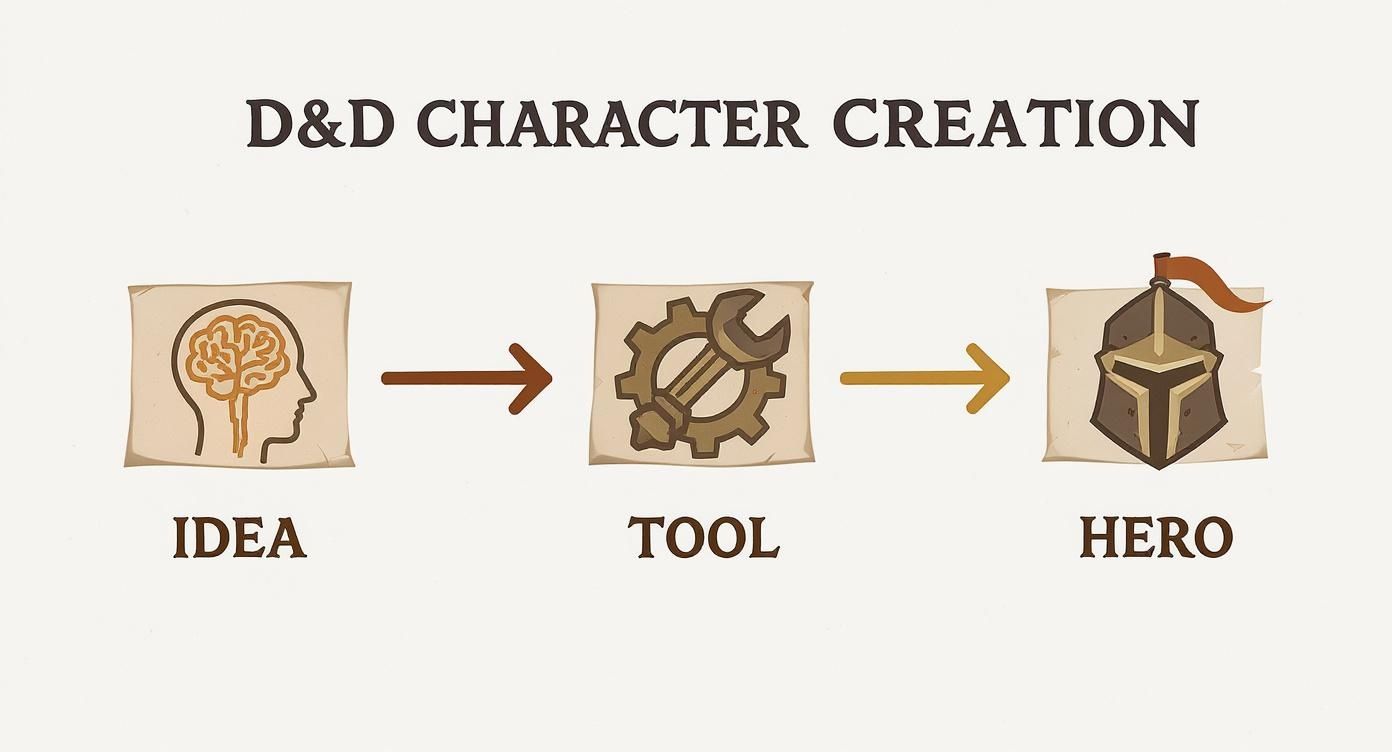
As you can see, a character maker is the perfect bridge, connecting that first creative spark to a hero whose tales will be told for ages to come.
The true enchantment lies in the details, and a character maker is a wondrous vessel for keeping all those narrative threads untangled. I implore you to look beyond the numbers on the parchment and consider what truly gives your hero their depth.
The heroes whose names echo through eternity are not the flawless ones. They are those with relatable flaws and genuine desires. Using a character maker frees your mind to focus on weaving these crucial story threads.
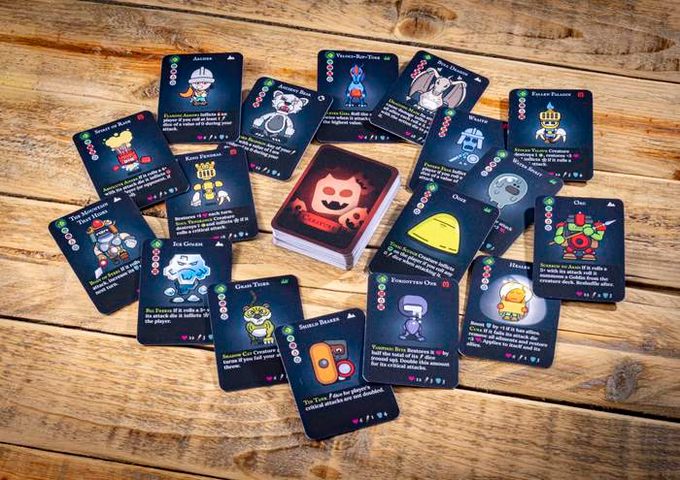
This sacred blend of storytelling and mechanics is a cornerstone of all great tabletop games. Whether you are summoning a D&D adventurer from the ether or strategically assembling a deck for a game of wits and power, the quest is the same: to forge a cohesive and captivating experience. This same spirit of creation is the very essence of many an indie passion project, like the deck-building game TerraClash, where strategy and story dance in harmony. If you wish to truly master the art of bringing characters to life, consult the ultimate guide to character design fundamentals.
Ah, now the real ritual begins. You stand at a crossroads of destiny where every great adventurer must make two fundamental choices: whence do they hail, and what is their calling? This is more than a matter of statistics; it is the first brushstroke in the grand portrait of your hero.
When you consult your D&D character maker, a grand panorama of ancestries—or races, as they are commonly known—will unfold before you. Do you envision a stoic Dwarf, as unyielding as the mountains from which they carve their halls? Or perhaps a graceful Elf, who hears the whispers of ancient magic in the rustling of leaves. You could, of course, be a Human, their spirit alight with the boundless ambition and adaptability that lets them prosper in any land.
Each choice imbues your character with a unique essence. A Dragonborn carries the immense pride of their draconic heritage, while a Halfling might be more concerned with a warm meal and the comfort of good fellowship. These are not mere bundles of mechanical boons—they are story hooks, pure and simple, waiting for you to cast your line.
Once you know who they are, you must decide what they do. This is their class. It is their training, their source of power, and their sacred role when blades are drawn and spells are cast.
Is your character a furious Barbarian, a tempest of destruction on the battlefield? A devout Cleric, calling upon their deity to mend the wounded and smite the wicked? Or perhaps a cunning Rogue, who plies their trade in secrets, shadows, and the glint of a well-placed dagger. Think of these as the archetypes that will shape your hero's deeds throughout their saga.
Discovering a natural synergy between race and class is a timeless part of the craft. A good character creator will often illuminate some powerful, time-honoured combinations for your consideration. For example:
But do not let these classic pairings bind your imagination in chains! Verily, some of the most compelling heroes I have ever witnessed have been those who shattered the mould. A Half-Orc Bard whose booming voice commands the roar of sea shanties? A Tiefling Paladin striving to conquer their fiendish blood with unwavering faith? It is in such unexpected unions that the most potent stories are born.
This foundational choice of ancestry and calling is the bedrock upon which all else is built. It is a concept that echoes across the fantasy landscape, from grand strategy board games like Gloomhaven to the intricate machinations of deck-building card games.
This is the same strategic mindset you might employ in a game like TerraClash, where victory is forged in the synergy between a hero's inherent abilities and the cards fate has dealt you. The identity you forge right here, in your D&D character maker, is the foundation of your legend. It does not merely define what your character can do—it shapes who they are destined to become.
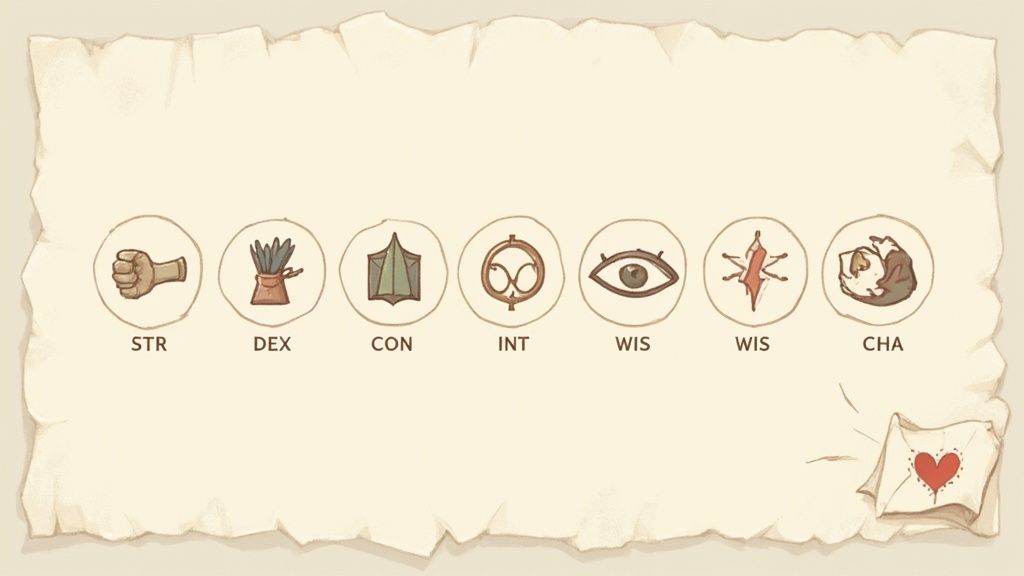
A hero is far more than their lineage or vocation. They are a living, breathing soul, shaped by their innate talents and the winding path that led them to this moment. Here, we delve into the heart of the matter—defining who they are through the six classic Ability Scores.
Using a good D&D character maker makes this part a simple enchantment. Whether you crave the old-world thrill of casting the bones and letting fate decide, or you prefer the strategic mastery of the point-buy system, a digital tool will handle the arithmetic. These six scores—Strength, Dexterity, Constitution, Intelligence, Wisdom, and Charisma—are the mechanical skeleton upon which your character is built. They influence everything from the cleaving blow of a greatsword to a persuasive whisper in a monarch's ear.
Think of it as assembling a deck for a game of high strategy. You do not simply toss in cards at random; you seek synergies and build a foundation for a competent, believable hero. These scores are your opening hand.
But let us speak plainly: a hero is not a mere collection of numbers. Those statistics require a story to give them meaning. A high Strength score is just a digit on a page until you decree it was earned through years of toil in a mountain quarry. A dismally low Charisma score becomes a fascinating character trait when you tie it to a sheltered life in a remote monastery.
This is where your character’s Background enters the tale. A character maker will present you with chronicles such as Acolyte, Soldier, or Urchin. Each offers more than a few skill proficiencies; it grants you a narrative seed—a glimpse into your character's life before destiny's call.
These backgrounds help you define three crucial personality facets:
These are the elements that breathe life into a block of stats. With the growing trend of online D&D play, digital tools have become as indispensable as a wizard's staff, allowing players to weave these complex tapestries with ease.
Remember this, young storyteller: a flaw is not a mistake in design. It is an opportunity for greatness in roleplaying. A hero with a -1 Charisma modifier attempting to deliver a rousing oration to a royal court is a hundred times more memorable than the silver-tongued Bard for whom such feats are trivial.
When you weave your character's raw abilities together with the story of their past, you create a soul that feels real. They have strengths to champion and flaws to overcome. It is here that the spirit of your hero is truly born.
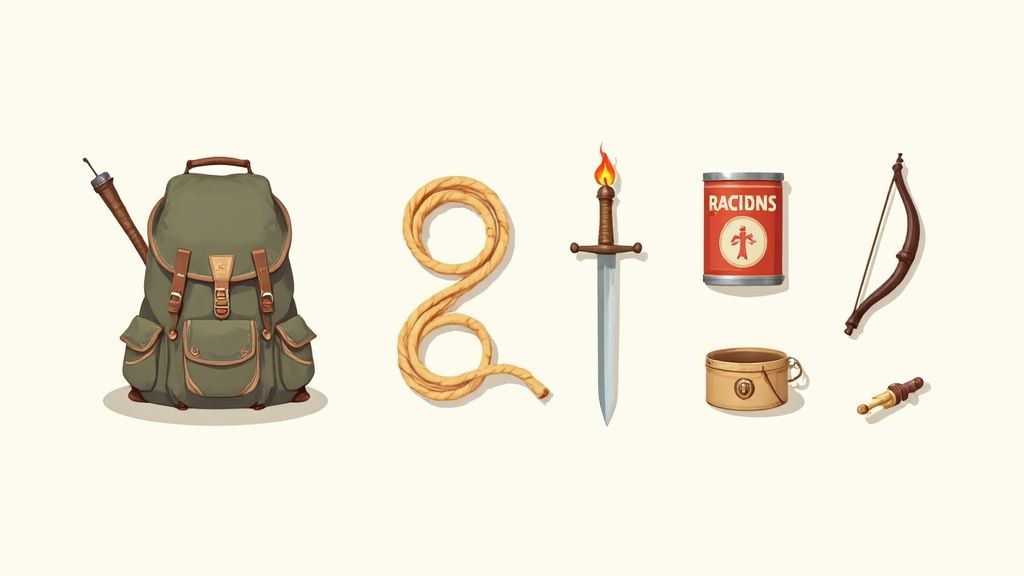
No adventurer, however mighty, steps onto the path empty-handed. This is the final stop at the armoury and the market before the grand saga begins. A good D&D character maker serves as your personal quartermaster, sorting through starting equipment and ensuring you possess the right tools for the trials to come.
But this ritual is about more than choosing a longsword over a battleaxe. It is about gazing into the mists of the future and anticipating the dangers that lurk there. A Cleric’s holy symbol or a Ranger’s trusty bow are vital, of course, but I have found that true survival often depends on the unsung heroes of the adventuring pack.
I speak of items such as fifty feet of good hempen rope, a handful of pitons, and the humble rations that sustain you in a forgotten catacomb. You are not merely arming for a battle; you are preparing for the great, perilous unknown.
A character maker will often present you with equipment packs tailored to your class or background, which greatly hastens the process. This frees you to think like a seasoned wayfarer. What small, clever items could grant you an edge when fate turns against you?
These simple, inexpensive items are often what separates a cunning escape from a grim fate. They are the mark of a veteran, distinguishing them from a novice.
Consider your inventory not merely as a list of items, but as a pouch of potential solutions to problems you have not yet encountered. A simple flask of oil can be a lubricant, fuel for a fire, or a slippery trap for your foes.
This philosophy of wise preparation is the very heart of tabletop gaming. Whether you are selecting gear in a D&D character maker or building a deck for a strategic card game like TerraClash, every choice carries weight. The weapons you bear will shape your combat style, just as the cards in your hand dictate your strategy. To better understand the impact of your arsenal, you might consult our writings on the most effective D&D martial weapons.
Ultimately, your equipment tells a story. A gleaming sword, a tattered map, a small trinket from a loved one—they all add flavour and depth to your hero. These are the tangible fragments of your character's history and the very tools they will use to carve out their future. So choose wisely. The road ahead is long, and it is fraught with peril.
https://www.youtube.com/embed/kwZEc21lyTY
Behold, your champion is nearly manifest. The core of who they are—their story, their skills—has been forged in the fires of your imagination. Now it is time for the final details, the arcane wards and sigils that will preserve them when darkness falls.
Here, we inscribe the crucial numbers that stand between your hero and an untimely end. I speak of Armour Class (AC) and Hit Points (HP). A worthy D&D character maker removes the burden of these calculations, handling the arithmetic so you can be certain your hero is as resilient as their tale proclaims.
Think of these numbers as your character’s grit and mettle. They are what will carry them through a dragon’s fiery breath or a cultist’s vile curse, representing their raw capacity to not just survive, but to endure all that the world might cast at them.
But a hero is more than a walking bastion of statistics. To truly breathe life into them, we must delve deeper still. What secrets do they guard? What ghosts of the past haunt their waking moments? This is the true alchemy, the moment a sheet of numbers gains a soul.
A rich backstory is the greatest boon you can offer your Dungeon Master. It is a treasure map, filled with plot hooks, personal quests, and dramatic conflicts just waiting to be unearthed. It is the difference between playing a generic tale and starring in your own grand saga. Using a character maker gives you a sacred space to record these vital chronicles so they are never lost to the winds of chance.
To set your mind to this sacred task, consider these narrative threads:
The most memorable moments in any campaign often spring forth from these personal details. A wise DM will seize upon these hooks, weaving your character's sworn nemesis into the main plot or having a long-lost sibling appear at the most inopportune time. This is how the game becomes a living, breathing world that truly revolves around you and your companions.
This practice of building a complete persona resonates far beyond a single D&D sheet. It is a skill you will find yourself using when crafting a strategy in other great indie board games, many of which take their first fledgling steps on platforms like Kickstarter. And once you have truly brought your hero into being, you might even consider immortalising them with some custom character art on canvas.
Your hero is now complete. A living legend, ready to step forth and carve their name into the annals of history.
And so, your hero is forged, the ink upon their character sheet is dry, and a grand saga awaits its beginning. That feeling—that spark of bringing something new into the world—is one of the purest joys of tabletop gaming. It is a magic that fuels countless other adventures, far beyond the realms you know.
If the ritual of piecing together a character, meditating on their backstory, and aligning their stats just so excites your spirit, then you will feel a deep kinship with the incredible world of indie board and card games. So many wondrous projects, like the deckbuilder TerraClash, are born from that very same passion for strategy and storytelling. You will often find them taking their first steps on platforms like Kickstarter, brought to life by communities who revel in tactical, engaging gameplay.
Consider this: the skills you have just honed are universal. Understanding how mechanics and narrative intertwine, planning your build, and thinking several moves ahead—that is your passport to an entire multiverse of new games. That same strategic mind you used to craft a formidable Barbarian is exactly what you need to delve into fresh D&D campaign ideas or master a completely new set of rules.
The greatest heroes are defined not just by the quests they undertake, but by the new worlds they have the courage to explore. Your journey as a player is no different.
Every character you create, every sheet you complete, is another step on your own grand adventure. You are not just making a character; you are mastering the art of the game itself.
Whether you are a fresh-faced adventurer stepping into your first pair of leather boots, or a grizzled veteran of countless campaigns, certain questions always arise when it is time to summon a new hero. Let us address some of the most common whispers I hear around the gaming table.
In a word? Clarity. A digital character builder handles all the arcane mathematics for you—calculating ability modifiers, hit points, and skill proficiencies without you needing an abacus.
This clears the fog of number-crunching, leaving you free to focus on the heart of the matter: your character's personality, their history, and the burning reason they have chosen to risk life and limb for adventure.
Not in the slightest. Think of a D&D character maker as a framework for the mundane, not a cage for your imagination. I have found the opposite to be true.
By lifting the burden of rules, it frees your creative spirit to soar. You can spend more time delving into what truly makes your character tick—fleshing out their background, their personal ambitions, and their flaws. These are the narrative threads that make them feel real.
A character maker does not replace creativity; it organises it. It ensures the mechanical foundation is sound so you can build a truly compelling story upon it, without worrying that you have miscalculated your attack bonus.
Listen closely, for this is a great secret: the "best" class is simply the one you will have the most joy in playing. Cast aside notions of what is supposedly the most powerful or optimal. Instead, ask yourself what kind of fantasy you wish to inhabit.
Do you yearn to be a charismatic leader who inspires their allies to greatness? A silent, stoic guardian watching over the party from the shadows? Or a mysterious scholar piecing together forgotten lore? Choose the class that lets you become the hero you were meant to be.
The magic of tabletop gaming begins in the sacred act of creation itself. If this process ignites your imagination, I invite you to keep a watchful eye on indie projects like TerraClash. This deck-building adventure, suitable for ages 12 and up, is a unique journey of strategy and lore. You can learn more about our quest at the official TerraClash website.
Explore other fantastic indie games on platforms like Kickstarter and Gamefound.