Hark, travellers, and gather 'round the digital campfire. You, who know that a well-placed word can be sharper than any blade, and a timely tune can mend the most grievous of wounds. In the grand tapestry of adventure that is Dungeons & Dragons, the Bard is the golden thread, binding the party with inspiration and unravelling the enemy's schemes with cunning magic. The Bard is a master of versatility, a true jack-of-all-trades whose spell list reflects a symphony of support, control, and surprising devastation.
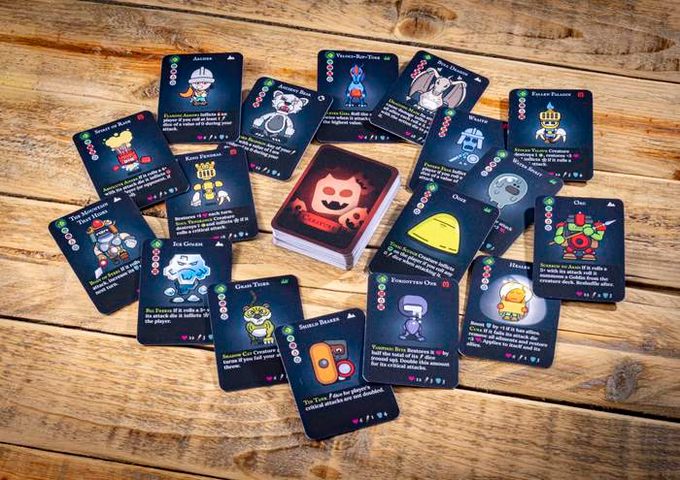
But which arcane verses are most worthy of your repertoire? Which magical melodies will turn the tide of battle, and which silver-tongued enchantments will unlock the secrets of the realm? This chronicle delves into ten of the most potent D&D Bard spells, examining not just their raw power, but their strategic nuance. Much like mastering a hand of cards in a game of wits and strategy, such as one might find in the deck-builder TerraClash, choosing the right spell at the right moment is an art form.
We shall explore how these incantations create powerful synergies, turning your Bard into the linchpin of any adventuring party. As you compose your own epic chronicle with these spells, understanding powerful narrative writing techniques can greatly enhance your storytelling, both at the table and beyond. Prepare your lute, ready your voice, and let us explore the magic that makes the Bard a legend.
Ah, the sweet melody of rejuvenation! Among the most cherished dnd bard spells, Healing Word is a foundational piece of any support-focused spell repertoire. It is a whispered verse, a single potent word of power carried on the wind, that mends wounds from afar. Unlike its touch-based cousin, Cure Wounds, this spell’s true strength lies in its incredible efficiency.

As it only requires a bonus action to cast, you are free to use your main action for another crucial task, be it a dazzling performance, a vicious mockery, or a swing of your rapier. This action economy is the key to mastering the battlefield's tempo, turning a desperate struggle into a symphony of victory, a principle that any veteran of board or card games will recognise as paramount.
The best time to utter this healing verse is when an ally falls to zero hit points. Bringing a companion back from the brink of unconsciousness, even with a single hit point, is one of the most powerful moves you can make. It forces your enemies to expend another attack to down them again, buying precious time for your party.
Key Insight: Healing Word isn't about massive healing numbers; it's a strategic tool for action management and preventing party-wide collapse. Its value is measured not in hit points restored, but in actions gained for your team.
There is no sound more satisfying than the abrupt silence that follows a rival spellcaster’s failed incantation. Among the most game-changing dnd bard spells available, Counterspell is the ultimate magical rebuttal. It is a sharp, discordant note played at the perfect moment, a forceful performance that unravels an enemy’s arcane weave before it can take form. This spell turns a bard from a mere performer into a formidable arcane guardian, capable of negating a dragon's fiery breath or a lich's deadliest curse with a single, defiant reaction.
The power of Counterspell lies in its immediacy. Cast as a reaction, it doesn't consume your turn, allowing you to intercept a magical threat the very instant it appears. This capacity to dictate the magical flow of combat is a signature of high-level play, a tactical depth familiar to players of strategic card games where a single well-timed response can completely alter the outcome of a pivotal encounter.
The true art of Counterspell is knowing precisely when to unleash it. Wasting it on a simple cantrip is a fool's errand; the key is to identify the enemy's most devastating magical threats and nullify them. This requires battlefield awareness and, often, communication with your fellow adventurers to pinpoint the most dangerous caster on the field.
Key Insight: Counterspell is not just a defensive tool; it is an aggressive act of control. Using it effectively demoralises enemy casters and seizes magical supremacy, protecting your party while forcing your foes to waste their most valuable resources.
Behold, the power of a single, perfectly crafted joke! Among the most iconic dnd bard spells, Tasha's Hideous Laughter weaponises mirth, turning a fearsome foe into a helpless, giggling mess. You weave a string of nonsensical sounds and gestures, forcing a creature to perceive everything as hilariously funny. If they fail a Wisdom saving throw, they fall prone, completely incapacitated by uncontrollable laughter.
This spell is the ultimate single-target lockdown at early levels. It doesn’t deal a single point of damage, yet it can neutralise the most dangerous combatant on the field, allowing your party to focus their efforts elsewhere or mercilessly pile on the unfortunate victim. The spell can last for up to a minute, offering a precious window to reshape the battlefield to your favour.
The most opportune moment to cast Tasha’s Hideous Laughter is when a single, high-threat enemy with a presumably low Wisdom score enters the fray. Think of a raging barbarian, a hulking ogre, or a slavering beast. Shutting down the primary damage-dealer for even a few rounds can completely derail the enemy's strategy.
Key Insight: Tasha's Hideous Laughter shines brightest when used to create tactical advantages. Its purpose isn't just to disable one foe, but to fundamentally alter the action economy of the entire encounter in your party’s favour.
Why persuade with simple words when you can weave a melody of influence? Among the most iconic dnd bard spells, Suggestion is the art of planting a seed of an idea so perfectly that your target believes it was their own. It's a single, resonant sentence that can defuse a tense standoff, bypass a stubborn guard, or convince a greedy merchant to offer a "friends and family" discount without a single coin changing hands.
Unlike a direct command, this spell's power lies in its subtlety. You propose a course of action that must sound reasonable to the creature, a masterful tool for the clever bard who can read their audience. For up to eight hours, your target will dedicate themselves to carrying out your request, turning potential foes into temporary, unwitting allies. This is where a bard's roleplay and quick thinking truly shine.
The key to a successful Suggestion is framing your command as a benefit to the target. A city guard might be convinced that "investigating the strange noises from the sewer is far more important for the city's safety than standing at this boring post." This approach is far more likely to succeed than demanding they simply abandon their duty.
Key Insight: Suggestion is a narrative-shaping tool. It's not for direct combat control, but for rewriting a scene to your party's advantage, turning social encounters into puzzles you can solve with a single, well-chosen phrase.
Behold, the crescendo of destruction! While not naturally part of a bard's lyrical repertoire, the legendary Fireball is an explosive addition to the list of powerful dnd bard spells for those who seek it. It is a deafening roar of arcane power, a blooming flower of fire that engulfs your foes. The spell is an iconic symbol of raw magical might, capable of turning the tide of a desperate battle by incinerating entire groups of enemies in a single, glorious moment.

Acquiring this spell through Magical Secrets transforms a support-oriented bard into a devastating battlefield controller. The sheer awe and terror inspired by a well-placed Fireball can be a performance unto itself, clearing the stage of lesser threats and allowing your allies to focus on the main event.
The key to mastering Fireball is timing and placement. Unleashing its fury on a tightly packed horde of goblins or a swarm of undead is its most efficient use, often ending an entire encounter before it truly begins. You must become a conductor of chaos, choosing the precise moment to strike your fiery chord.
Key Insight: Fireball gives a bard an unparalleled tool for area-of-effect damage. Its value is not just in the high damage numbers, but in its ability to solve the problem of being outnumbered, allowing your party to dictate the terms of engagement.
Behold, the grand art of transformation! Among the most game-changing dnd bard spells you can learn, Polymorph is a masterpiece of creative potential. This is not merely a combat trick; it is a key that unlocks countless doors, turning a creature into a beast of your choice. A bard wields this spell not with raw power, but with cleverness and foresight, reshaping the battlefield or circumventing obstacles entirely.
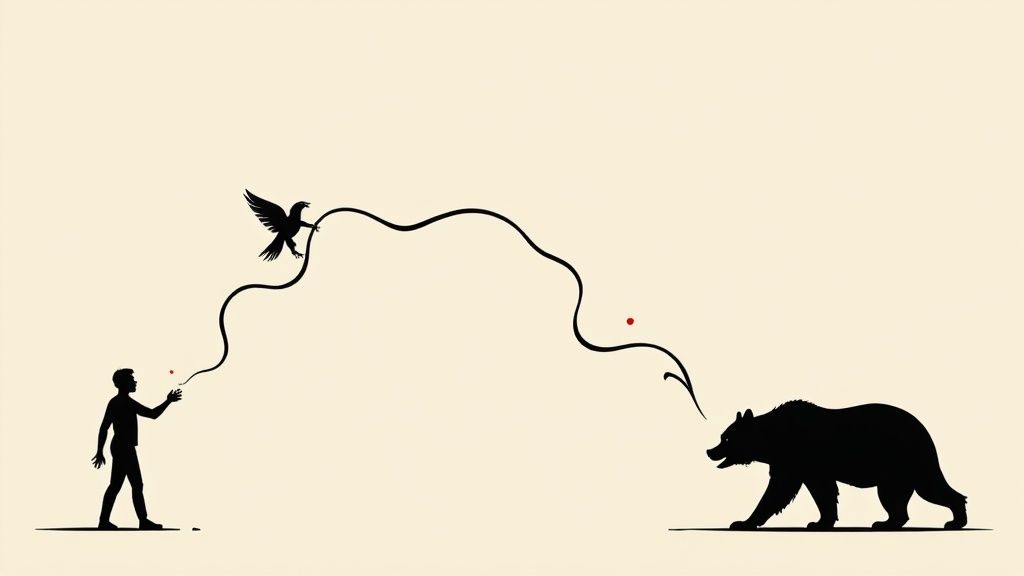
This potent 4th-level magic can neutralise a fearsome foe by turning them into a harmless snail, or empower an ally by granting them the form of a Giant Ape. It’s a spell that rewards preparation and knowledge of the creature catalogue, allowing a truly inventive bard to become the party’s ultimate problem-solver, adapting to any challenge with a flourish.
The true power of Polymorph lies in its adaptability. On one turn, you can remove the biggest threat from combat. On the next, you could transform a wounded ally into a beast with a massive pool of temporary hit points. Communication is key; ensure your party understands your intent before you turn the fighter into a Tyrannosaurus Rex in a crowded ballroom.
Key Insight: Polymorph is more than a spell; it's a creative statement. Its effectiveness is limited only by your imagination and your knowledge of the beastly forms available. Master it, and you master the art of adaptation itself.
Hush the battlefield with a single, compelling command. Among the most potent dnd bard spells for shutting down a single, formidable humanoid foe, Hold Person is a showstopper. This spell is a focused note of pure control, a mental shackle that can freeze a dangerous enemy in their tracks, rendering them completely paralysed and defenceless against your party’s onslaught.
As a bard, your power lies in controlling the flow of battle, and this spell is a masterclass in dictating the terms of engagement. A single failed Wisdom saving throw can transform a fearsome bandit captain or a cunning enemy spellcaster into a helpless statue, a perfect target for your allies to unleash their most devastating attacks upon.
The true artistry of Hold Person is in its timing and targeting. Unleash it just before your party’s heaviest hitters are about to take their turns to guarantee maximum impact. A paralysed creature not only fails its turn but also makes any attack roll against it from within 5 feet an automatic critical hit.
Key Insight: Hold Person is not just a defensive measure; it’s an offensive catalyst. Its purpose is to create a window of extreme vulnerability, turning the most fearsome humanoid enemy into the party’s easiest target.
Ah, the subtle art of enchanting the senses! While not a mighty combat spell, Glamour is an essential cantrip for any bard who understands that many battles are won long before swords are drawn. This is the magic of presence, a wisp of illusion that ensures all eyes are on you, hanging on your every word. It is the secret flourish that can turn a simple performance into a legendary one.
As a cantrip, this spell's power lies in its limitless availability. You can weave these minor illusions to clean your clothes, style your hair with impossible flair, or project an aura of captivating confidence. It is a tool of pure roleplay, reinforcing the bard's core identity as a masterful artist and socialite, able to command a room with nothing more than their charm and a touch of arcane assistance.
The true stage for Glamour is any social encounter where first impressions are paramount. Walking into a noble's court, a tense negotiation, or a crowded tavern, you can use this cantrip to present yourself in the best possible light. A clean, well-kept appearance and an air of otherworldly charisma can grant you unspoken advantages before you've even uttered a single word.
Key Insight: Glamour is a roleplaying powerhouse. Its value is not found on a stat block but in the creative opportunities it unlocks, allowing you to shape perceptions and control social dynamics with subtle, ever-present magic.
Behold, the ultimate phantom’s aria! Among the most potent dnd bard spells for pure tactical supremacy, Greater Invisibility is a masterpiece of magical misdirection. This is no mere trick of light; it is a profound enchantment that allows its beneficiary to attack, cast spells, and perform any action without revealing their location. The curtain of invisibility remains drawn, turning a hero into an unseen, untouchable force on the battlefield.
Unlike its lesser counterpart, this 4th-level spell doesn't falter when you take hostile action. You can unleash a torrent of attacks, all with advantage, while your enemies swing wildly at empty air, suffering disadvantage on their attempts to strike back. This sustained, untargetable presence can completely dismantle an enemy's organised assault, sowing chaos and fear with every unseen blow.
The true artistry of Greater Invisibility is in its application. Cast it upon yourself to become a phantom conductor of the battle, safely casting other spells and inspiring allies. Or, bestow this gift upon a high-damage companion, like a Rogue or Paladin, and watch them unleash a truly terrifying offensive without fear of immediate reprisal. It’s a concert of coordinated destruction.
Key Insight: Greater Invisibility shifts the action economy fundamentally in your favour. It's not just about being unseen; it's about guaranteeing offensive advantage while imposing defensive penalties on your enemies for a full minute.
Herein lies a glimpse into a darker, more terrifying power. Exclusive to certain bardic traditions, Psychic Scream is not a spell of charming melodies but a symphony of pure mental anguish. This potent entry on our list of dnd bard spells unleashes a devastating wave of psychic energy, shredding the sanity of all creatures caught in its radius and potentially leaving them stunned by the sheer horror of the mental assault.
This spell embodies the bard's potential as a manipulator of minds, forgoing physical harm for a more intimate, psychological violation. When cast, it targets not the body but the psyche, demonstrating that the most profound wounds are those that cannot be seen. It's a fantastic tool for area-of-effect damage and control rolled into one dreadful performance.
Unleash this cacophony of the mind when you are faced with a cluster of enemies, particularly those who rely on intellect over brawn. The beauty of targeting an Intelligence saving throw is that many brutish foes possess a feeble mind, making them highly susceptible to your psychic onslaught. The stun effect is the true prize, potentially neutralising multiple threats for a full round.
Key Insight: The value of Psychic Scream lies in its dual nature. It is not merely damage; it is a tactical weapon that creates openings by stunning key threats. Use it not just to weaken foes, but to completely dismantle their coordinated assault.
| Spell | 🔄 Implementation Complexity | ⚡ Resource Requirements | 📊 Expected Outcomes (⭐) | 💡 Ideal Use Cases / Key Advantages |
|---|---|---|---|---|
| Healing Word (Level 1) | Low — bonus action, no concentration | 1st‑level slot, scales with upcasting | ⭐⭐⭐ — small ranged emergency heal | Emergency battlefield heals; preserves action economy; pairs with Bardic Inspiration |
| Counterspell (Level 3) | Moderate — reaction timing + contested check | 3rd‑level slot, no concentration, reaction-limited | ⭐⭐⭐⭐ — can fully negate enemy spells | Shut down high-impact enemy casters; best saved for big spells |
| Tasha's Hideous Laughter (Level 1) | Low — straightforward save-based incapacitation, concentration | 1st‑level slot, concentration up to 1 min | ⭐⭐⭐ — strong single-target control but repeat saves | Disable dangerous melee threats; set up allies for follow-up attacks |
| Suggestion (Level 2) | Moderate — social framing and DM interpretation required | 2nd‑level slot, long duration (up to 8 hrs), no concentration | ⭐⭐⭐⭐ — high out-of-combat utility | Social negotiation, problem-solving, nonviolent solutions; reward creative roleplay |
| Fireball (Level 3) | Moderate — area placement, friendly‑fire risk, line of sight | 3rd‑level slot (not typically on bard list without access) | ⭐⭐⭐⭐ — massive AoE damage | Grouped enemies / area denial; requires coordination to avoid allies |
| Polymorph (Level 4) | High — complex rules, concentration, CR limits | 4th‑level slot, concentration up to 1 hr | ⭐⭐⭐⭐ — transformative utility & combat versatility | Boost allies or bypass obstacles (flight, swim, tank forms); plan forms in advance |
| Hold Person (Level 2) | Moderate — concentration, humanoid-only, upcastable | 2nd‑level slot, concentration up to 1 min | ⭐⭐⭐⭐ — paralyses targets for guaranteed hits | Neutralize humanoid threats; combos with melee/rogue for heavy damage |
| Glamour (Cantrip) | Low — at‑will, mostly cosmetic, subclass-limited | Cantrip (no slots) | ⭐⭐ — strong social flavor, weak combat impact | Social encounters, courtship/infiltration, roleplay enhancement |
| Greater Invisibility (Level 4) | High — concentration, grants attack-compatible invisibility, not always accessible to bards | 4th‑level slot, concentration up to 1 min (often via multiclass/items) | ⭐⭐⭐⭐ — sustained tactical advantage | Enable stealthy burst damage (rogues), protect casters during setups |
| Psychic Scream (Level 4) | Moderate — large AoE with damage + brief stun, subclass-limited | 4th‑level slot, large radius, scales with upcasting | ⭐⭐⭐⭐ — area psychic damage + short stun; strong crowd control | Hit low‑Int groups for stun + damage; thematic for certain builds |
And so, our performance draws to a close, but the echoes of the magic we have discussed are just the prelude to your own grand saga. The spells detailed in this compendium, from the tide-turning whisper of Healing Word to the battlefield-warping power of Polymorph, are more than mere entries in a player’s handbook. They are the notes and chords from which you will compose legendary tales of wit, charm, and audacious heroism. Each incantation is a brushstroke, and you, the player, are the artist painting a masterpiece of adventure upon the canvas of your campaign.
Mastering the Bard’s spell list is an art form in itself. It is a delicate dance of knowing precisely when to unleash a devastating attack and when a simple, well-placed Suggestion will unravel a far more complex knot. This strategic foresight, this understanding of synergy and timing, is the heart of what makes tabletop gaming so endlessly compelling. It is a skill honed not just in Dungeons & Dragons, but across the vast landscape of strategy games, where every choice has a consequence and every card played builds towards a stunning final act.
Think of your spell selection not as a fixed list, but as a carefully curated hand of cards in a deck-building game. The true power lies not in any single spell, but in their combination and the clever ways you deploy them.
The essence of a great Bard, and indeed a great tabletop gamer, is the ability to see the connections between disparate elements and weave them into a coherent, powerful strategy. It’s a mindset that values creativity, cleverness, and the thrill of pulling off an unexpected and brilliant play.
This love for strategic depth and creative problem-solving is the very soul we are pouring into our own fantasy deck-building adventure, TerraClash. We believe that the most memorable gaming moments come from those flashes of insight where you combine abilities in a way no one saw coming, turning the tide of a desperate conflict with a single, genius move.
The world of tabletop gaming is a grand, ever-expanding theatre filled with countless stories waiting to be told and infinite strategies yet to be discovered. If the thrill of mastering these dnd bard spells and crafting clever combinations resonates with you, we encourage you to explore further. Delve into the complex tactical puzzles of games like Gloomhaven: Jaws of the Lion, or test your deck-building mettle against the ever-shifting challenges of Slay the Spire. Let their ingenious designs inspire your own campaigns and fuel your passion for strategy.
Until our paths cross again on some new adventure, may your dice roll in your favour, may your stories be grand, and may your songs of power echo through the ages, a testament to the legend you create.
You can print and play TerraClash Lite free, and the Kickstarter for TerraClash Digital is live until 22 November 2026. We are building a world where every card you play is a new verse in your heroic ballad. To learn more about other fantastic indie projects, check out campaigns for games like Frosthaven or The Witcher: Old World on Kickstarter and Gamefound. And to follow our own journey, visit our website at TerraClash.