Hark, adventurers, and lend an ear! If you've ever felt the call of a blade in each hand, a whirlwind of steel answering your command, then you have found your path. The art of two-weapon fighting 5e is a tempest of strikes, a battle-dance that lets you attack with your off-hand weapon as a bonus action after your main assault. It is a style for the bold, for those who favour a relentless offence over the stalwart defence of a shield.
Let us delve into the arcane secrets of two-weapon fighting, a style as deadly as it is breathtaking. We have all heard the skalds' tales of heroes diving into the fray with twin blades flashing, a whirlwind of death to overwhelm their foes. It is an iconic vision of martial prowess, torn from the pages of epic sagas and whispered in tavern hearths.
But this path is more than mere spectacle. It is a profound tactical choice, bound by ancient rules that one must know to unleash its true power. Let this guide be your elder, laying out the forgotten knowledge needed to master this demanding but deeply rewarding fighting style. Think of this not as a dusty tome of rules, but as learning a new, secret language of combat—one where every feint and parry tells a story of pure aggression.
To truly grasp the flow of dual-wielding is much like building a powerful deck in a game of high strategy. In a realm like the indie chronicle of TerraClash, one cannot simply cast down cards at random; each must synergise with the others to weave a tapestry of victory. It is the same with twin blades. Mastering two-weapon fighting means understanding how every element of your build—your actions, your chosen steel, your very essence—comes together.
We shall begin with the sacred fundamentals, the bedrock of the entire style:
Together, we shall explore why this fighting style, often overlooked by those who seek a single, mighty weapon or a sturdy shield, offers a unique tempo and a tactical edge upon the field of battle. It allows you to maintain ceaseless offensive pressure, keeping sorcerers off-balance and whittling down the resolve of even the most monstrous beasts.
The true magic of two-weapon fighting is not merely striking twice. It is about seizing control of the battle's rhythm through unending pressure. Your turn ceases to be a single, heavy drum beat and becomes a rapid, relentless storm.
This aggressive creed makes it a natural fit for certain character classes that are born of speed and opportunity. Rogues, Rangers, and certain warrior archetypes find that extra attack to be a gift from the gods. For a Rogue, it is another chance to deliver a crippling Sneak Attack. For a Ranger, it might be another opportunity to invoke their Hunter's Mark. This guide is your first step into their hallowed ranks, to carve out your own legend, one blade at a time.
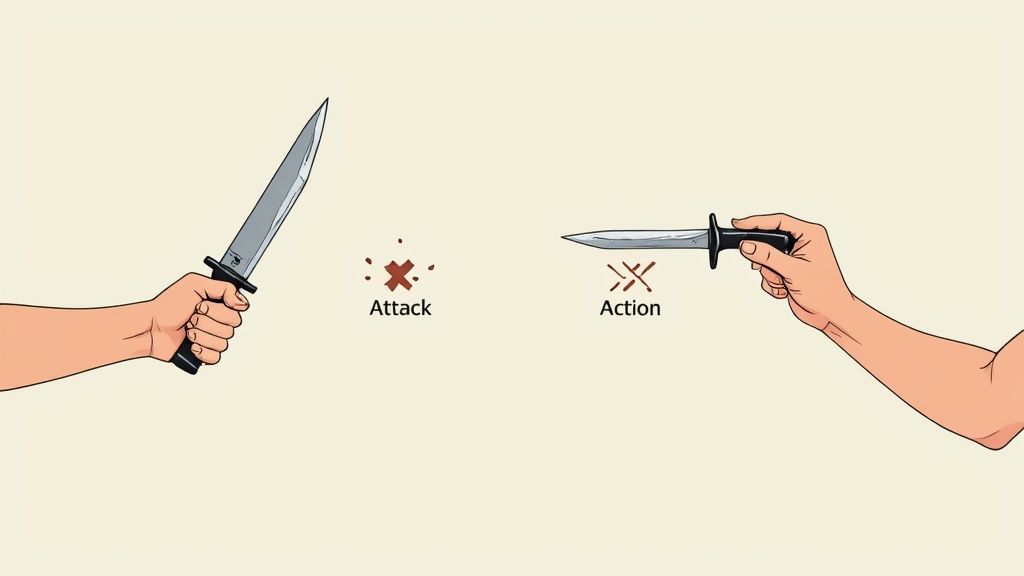
Before you can master the art of fighting with a weapon in each hand, you must attune yourself to the core rhythm of combat. Imagine a turn not as a chaotic scramble, but as a series of swift, deliberate moments. In a single round, every hero is granted an Action, a Bonus Action, and a Reaction.
The entire secret to two-weapon fighting in 5e lies in how it cleverly commands your bonus action. The rule is specific: if you take the Attack action and strike with a light melee weapon in one hand, you may use your bonus action to attack again with a different light melee weapon in your other hand.
There is a cost, of course. You do not add your ability modifier to the damage of this bonus attack. This is the crucial balancing act that prevents a flurry of smaller cuts from instantly eclipsing a single, crushing blow from a greatsword.
This entire fighting style is forged upon a single weapon property: ‘light’. You cannot simply seize any two weapons and unleash your fury; they must be nimble, built for swiftness rather than raw power. It is this specific quality that makes the fluid, one-two strike of dual-wielding possible.
Some of the favoured choices for any aspiring dual-wielder will be familiar:
Attempting to use heavier weapons like longswords or battleaxes will fail under the basic rules. Their weight and balance are ill-suited for the rapid sequence of attacks that defines this style. Should you wish to delve deeper into the armoury, our guide on D&D martial weapons holds further secrets.
Picture your turn as a small pouch holding three enchanted coins: your action, bonus action, and reaction. How you spend them can mean the difference between glorious victory and a grim fate. Using your bonus action for that extra attack is a significant tactical choice, for it means you cannot use it for aught else.
A Rogue, for instance, might need that bonus action to Disengage or Hide with their Cunning Action. A Ranger might wish to cast or move their Hunter's Mark. Choosing to make that second attack means forsaking those other paths for the round.
To wield two blades is to make a constant choice: do I press the attack, or do I use my swiftness for evasion and strategy? The answer separates the reckless brawler from the true weapon master.
Despite this tactical cost, the fantasy of the dual-wielder is as potent as ever. Yet, its true application in campaigns has been debated in adventuring guilds for ages. It's a style that often finds its true calling with classes like Barbarians or Rogues who can truly make those multiple attacks sing a song of doom. Mastering these fundamentals—the action economy, the light weapon rule, and the damage limit—is the first, most vital step on your pilgrimage to becoming a whirlwind of steel.
Not every hero is forged for the path of twin blades. Choosing your class is like selecting your champion in a grand cosmic game; it sets the entire tone for your strategy. Some classes possess a natural rhythm for two-weapon fighting in 5e, making it the very heart of their combat identity.
This choice is one of the most fateful you shall make, so it is wise to choose well. For a deeper scrying into that first crucial step, our guide on how to make a Dungeons and Dragons character can help you begin your journey.
Now, let us see which adventurers are best suited for this whirlwind of steel. We shall begin with those who seem born with a blade in each hand.
For some adventurers, fighting with two weapons is as natural as drawing breath. Their class features do not just permit this fighting style; they actively reward it, turning every attack into a more potent and deadly dance.
Fighter: The undisputed master of arms. Fighters can claim the Two-Weapon Fighting Style at their first level, allowing them to add their ability modifier to the damage of their off-hand attack. This is a tremendous boon to consistent damage that other classes must wait for, or spend a precious feat to attain. When they gain Action Surge, they become a true maelstrom of destruction.
Ranger: Like the Fighter, Rangers gain access to the Two-Weapon Fighting Style early, making them an obvious choice. But where they truly shine is with spells like Hunter's Mark. That extra whisper of damage applies to every single hit, meaning a Ranger's two swift strikes can easily outpace one great blow from another warrior.
Rogue: For a Rogue, that extra attack from your bonus action is a second chance to land what truly matters: Sneak Attack. Since you can only apply that massive burst of damage once per turn, having another opportunity to hit if your first attack misses is invaluable. It adds a safety net that makes them a consistently lethal threat.
These three are the classic champions for a reason. They possess the innate tools to make dual wielding not just a thrilling concept, but a devastatingly effective way to fight from the very beginning.
Beyond that core trio, a few other heroes find their own unique harmony with two weapons. Their approach may be less traditional, but it is no less deadly when their special abilities are unleashed.
Consider the Barbarian. They do not learn the official Fighting Style, but their Rage grants them a flat bonus to damage on every melee strike. That bonus applies to both their main-hand and off-hand attacks, turning their flurry of blows into a brutally effective assault. Each connection lands with raw, primal force.
Then you have the Bard from the College of Swords. These swashbuckling artists can choose a Fighting Style at their third level—including Two-Weapon Fighting—and even use their weapon as a mystical focus. Their Blade Flourishes add spectacular effects to their attacks, allowing them to damage extra foes or bolster their own defence with a stylish flick of the wrist.
Finally, some Paladin oaths can make dual wielding work. While many prefer the security of a shield, landing an extra hit gives them another chance to unleash a devastating Divine Smite. This can be a godsend when you must unload a massive amount of radiant energy to vanquish a single, powerful foe. Each class finds its own unique song in the clash of twin steel.
The basic tenets for fighting with two weapons are but the starting point of your chronicle. If you truly wish to master the art of two-weapon fighting in 5e, you must transcend the basics. This is where Feats and Fighting Styles enter the saga—they are the specialised training that transforms a skilled fighter into a legend whispered on the wind.
Think of it as assembling a deck for a strategic card game, like Gloomhaven or the upcoming Frosthaven. You begin with basic cards, but true power comes from discovering rare and potent additions that create powerful synergies. It is the same principle in D&D; Feats and Fighting Styles are the special cards you add to your hand to unlock devastating new strategies.
For warriors who live and breathe the twin-blade style—I speak of you, Fighters and Rangers—the Two-Weapon Fighting Style is an absolute necessity. It is the first great awakening for any dual wielder.
The benefit is direct yet powerful: it allows you to add your ability modifier to the damage of your off-hand attack. On a dusty scroll, it might not seem like much, but in the heart of battle, it is a revelation. That second attack transforms from a minor jab into a genuinely menacing blow, massively increasing your damage output round after round.
If the Fighting Style is a refinement, the Dual Wielder feat is a revolution. It utterly shatters the limitations that once bound you. Choosing this feat is a defining moment for your character, unlocking a whole new level of martial prowess.
Behold what it grants you:
This next diagram offers a glimpse into which classes are naturally destined for the path of dual wielding.
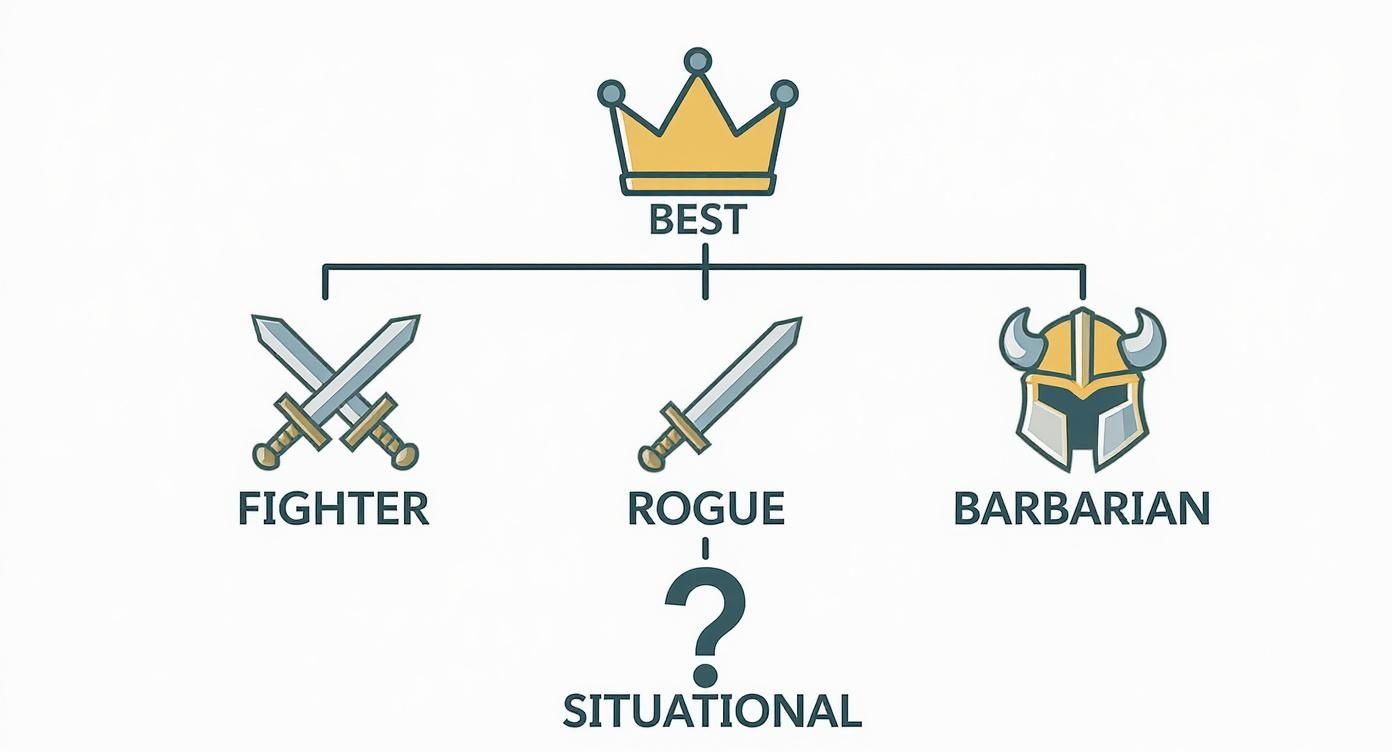
As you can see, some classes like Fighters, Rogues, and Barbarians are a perfect fit, while for others, it is a more specialised calling.
It is difficult to overstate how much these enhancements alter the flow of battle. Yet it is curious how many adventurers overlook them. If you seek deeper knowledge, you can find more great insights about the complex mechanics of two-weapon fighting on brandesstodd.com.
A warrior without the Dual Wielder feat is like a sorcerer who knows only a single cantrip. They understand the basic principle, but the true power of their art remains forever beyond their grasp.
The choice between these options, and when to embrace them, truly defines your character's saga. Are you merely dabbling in this art, or are you committed to becoming a true master of the twin blades?
To walk the path of the twin blades is to embrace a philosophy of pure, relentless offence. It is a thrilling way to play, but as any seasoned adventurer knows, every choice on the battlefield bears a consequence. To truly master two-weapon fighting 5e, you cannot just celebrate its strengths; you must understand its vulnerabilities. Here, we shall lay bare the tactical realities of this demanding style.
The most immediate trade-off is your defence. By forgoing a shield, you sacrifice a major source of Armour Class. That +2 AC bonus is often the difference between a clean miss and a grievous wound. While the Dual Wielder feat helps somewhat with its +1 bonus, a dual wielder will almost always be easier to strike than their sword-and-board counterpart. This means you must rely on clever positioning, agility, and felling your foes before they can strike back.
Another great consideration is the toll on your action economy. Your bonus action becomes almost exclusively dedicated to that second attack, which can create difficult choices for classes that have other wondrous uses for it.
Many class features compete for that same, precious bonus action. When you choose to attack with your second weapon, you are actively choosing not to use these other abilities. At times, they are the more strategic option in a conflict.
This constant demand on your bonus action requires careful, moment-to-moment foresight. You must read the flow of battle and decide which resource is the most valuable right now.
Despite these limitations, the path of the twin blades offers its own powerful triumphs. Its greatest strength is not always raw, single-target damage, but its incredible flexibility and pressure. The ability to make two attacks allows you to split your focus, something warriors with one mighty weapon struggle with. You can strike one foe with your main hand and finish off a wounded enemy with your off-hand, controlling the battlefield with brilliant efficiency.
This is especially potent against hordes of weaker minions. While a greatsword-wielding barbarian might waste their massive damage on a goblin with but a few hit points remaining, you can eliminate two such threats in a single turn. It is this capacity for damage distribution that makes dual wielders masters of controlling the horde. Designing such challenges can be a Dungeon Master's delight; a good encounter builder for 5e can help forge the perfect swarm for you to cut through.
The twin-blade warrior is the bane of enemy spellcasters. Each separate hit forces a separate concentration check, dramatically increasing the chances of disrupting a powerful, ongoing spell.
What's more, the annals of battle support this. Many chronicles tell of two-weapon fighters being far more likely to land at least one blow when facing multiple enemies, all thanks to their higher number of attack rolls. The sagas conclude that the style is most effective against groups of lesser foes, where spreading the damage is key. You can explore more of these fascinating findings about two-weapon fighting on skullsplitterdice.com. By understanding both the risks and the rewards, you can learn to turn every perceived weakness into a decisive tactical advantage.
Even in the most boisterous taverns, where grizzled veterans trade tales of glory, you will hear certain questions about fighting with two blades whispered with a hint of confusion. When the dice are cast and the battle map is unfurled, the finer points of the rules can become as hazy as morning mist. So, let us pull up a chair and unravel these common conundrums.
You are not the first adventurer to wonder about the limits of this fighting style. The core rules are direct, but they can feel restrictive, which naturally leads players to seek creative ways to bend them. Let us address the questions that arise most often.
Ah, the classic gunslinger legend – a hand crossbow in each fist, unleashing a storm of bolts. It is a striking image, but the ancient texts are very clear on this. The basic two-weapon fighting 5e rule is strictly for light melee weapons. You simply cannot use it to fire a second ranged weapon as your bonus action.
But do not hang up your crossbows in sorrow! That dream is not lost, it merely follows a different path. The Crossbow Expert feat is the key you seek. It specifically allows you to fire a hand crossbow as a bonus action after you attack with a one-handed weapon. It is a separate mechanic from two-weapon fighting, but it grants you that same satisfying rhythm of attack and follow-up shot.
Once you reach your fifth season of adventuring, many martial classes gain the glorious Extra Attack feature. Suddenly you can strike twice with your Attack action, and it feels magnificent. A common misinterpretation is thinking this newfound speed applies to your off-hand as well.
Alas, it does not. The bonus action from two-weapon fighting is a singular gift each turn. It grants you one, and only one, off-hand attack. It matters not if your high-level Fighter can attack four times with their main action; the bonus action remains but a single strike. Think of it as the swift, final jab after a flurry of primary attacks, not an entire second combination.
A round of combat has a strict rhythm: you get an action, a bonus action, and a reaction. Two-weapon fighting uses your bonus action for one extra hit. That is its entire purpose, no matter how many attacks your action grants you.
This rule is a matter of cosmic balance. It ensures that the whirlwind of attacks from a dual wielder does not completely overshadow the heavy-hitting great weapon specialist. Your swiftness comes from your main attacks, while your off-hand provides that reliable, extra measure of damage.
The image of a warrior laden with two weapons and a shield is a powerful one, but it meets the simple reality of possessing only two hands. A shield requires a free hand to grip and brace it properly to deflect blows. Because of this, you cannot gain the AC bonus from a shield while both of your hands hold weapons.
This is the core pact you make as a dual wielder. You are trading the solid defence of a shield for greater aggression and offence. As we covered in our earlier teachings, the Dual Wielder feat helps soften this blow by granting you a +1 bonus to your AC, but you will almost always be an easier target to hit than your sword-and-board comrades. Your defence lies not in absorbing blows; it is in felling your enemies before they can strike you back. It is a philosophy built on aggressive, proactive fighting, and it is central to the two-weapon fighting 5e style. Every build choice, much like playing a card in a strategic game, shapes how you will win the fight.
At TerraClash, we believe every choice should feel this meaningful. If you relish deep strategy, tactical combat, and the thrill of forging a unique path to victory, keep your eye on our campaign. Discover a world of adventure where every card you play shapes your legend. Find out more about the journey that awaits.
For those who enjoy other journeys of tabletop strategy and adventure, we salute the creators behind fantastic campaigns like Gloomhaven, Mage Knight, and the cooperative deck-building game The Loop. These games, much like our own aspirations for TerraClash, offer deep, rewarding experiences for players aged 12 and up who love a good challenge. Supporting independent creators on platforms like Kickstarter helps bring new and exciting worlds to life for all of us.

